Group Studio Arts and Culture Journal, entry 8: Nic Wilson

Way back on February 5th (feels like eons ago), I attended Nic Wilson‘s Art for Lunch . I was so enthralled by what he shared that I got in touch with him to chat some more. We met (via Zoom) to talk about art, being an MFA student, and writing. He also gave me a copy of the talk he’d written for this Art for Lunch, admitting that he’s the type to do that—to carefully write out a talk in advance. I asked him for this text because I wanted to look at what he’d shared again, and also because there were names they mentioned that I wanted to look up.

It’s taken me until now, April 11th, to finish writing up this response to Nic’s talk. Partially, I just got lost in other work in the meantime, but mostly it’s because I’ve wanted to process what he said and write a proper response. It’s now near the end of the semester, and deadlines are looming. I don’t feel I’ve had the time or mental space this term to do the processing I wanted to do, and nor have I had time to look up any of the writers Nic mentioned… though of course that opportunity doesn’t end with this semester’s classes. I look forward to July, when my teaching duties will be on pause and I’ll be less busy. For this assignment, I’ll post a bit of my response to Nic’s talk, as it stands right now, and mostly as documentation to jog my own memory down the road. Quotations are given in red (from the text Nic sent me).

This is Nic’s bio: “Nic Wilson (he/they) is an artist and writer who was born in the Wolastoqiyik territory now known as Fredericton, NB in 1988. He graduated with a BFA from Mount Allison University, Mi’kmaq territory, in 2012, and an MFA from the University of Regina, Treaty Four Territory, in 2019 where he was a SSHRC graduate fellow. He has shown work across Canada and internationally at Third Space Gallery, Art Mûr, the Remai Modern, Modern Fuel, and at Venice International Performance Art Week. Their work often engages time, queer lineage, and the distance between art practice and literature. Their writing has appeared in publications such as BlackFlash Magazine, Headlights Anthology, and Public.”

Near the start of their talk, Nic said the following:

There is a kind of hiccup when I try to talk about the fact that most of my activity as an artist is spent putting pen to paper to form words rather than images. I don’t often dwell on it because I know so many other people engaged in the same activities that I don’t feel I need to explain myself that often, but it is a bit of a pickle. How do I define myself as an artist? Why is it that I feel a pang of anxiety about placing my work in relation to ‘Literature’? Is it because hundreds of years ago some monks used to do the letter and others did the pictures? Is it because some dudes made the splatter paintings and other dudes wrote about them? If the one dude who makes the paintings is also writing about them, what does the one activity owe to the other? Which action begins and which follows. Can you make a painting about an essay? Can you make a sculpture or series of sculptures that functions as an essay? Thankfully, there remain many areas of ambiguity between the visual arts and literary practice.

I found Nic’s statements and questions particularly insightful because I have a background in English literature (a BA and an MA in it) and have dabbled in creative writing in the past. In fact, until 2015, I figured that if I were going to carve out some time for creativity, it would be writing, not visual art, that I’d give that time to. When I returned to ceramics later that year, I didn’t anticipate that clay—or visual art in general—would come to have such a large role in both my day-to-day life and my identity. Nic’s talk also interested me because I’ve noticed how I’m still hanging on to writing much more than I need to while taking this MFA. It’s as though the writing is a part of my art-making (which Nic would clearly understand). Keeping up this blog, for instance, is my own choice; no one told me to start blogging, and apart from these “Arts and Culture Journal” entries for one class, nothing else I write here is for a grade, yet I keep spending a lot of time on these blog posts despite being stupidly busy with other work and responsibilities. (WordPress recently informed me that I’d published my 50th post). At first, this was a good way to keep track of my readings (thank you, Risa Horowitz), but I soon realized that I also enjoy writing about what I’m doing for my course projects, and at times I feel nearly as good after writing one of these posts as I do after resolving an issue with a sculpture. This is my second semester as an MFA student, and I think that “growing” into/with this blog has a lot to do with the fact that I’m growing to accept myself as an emerging artist.

To record a bit more about Nic: Nic shared a work from his installation Pavilion of Shadows in which he was exploring the formal/aesthetic connections between his mother’s eyes and his eyes. He made this piece after his mother was diagnosed with glaucoma. In it, he shows an image of an eye with glaucoma next to an image taken from the Hubble space telescope when it briefly had a flaw that blurred its images. I’m interested in these types of connections between patterns as well. This piece reminded me of Holly’s work, especially in Floating Series, where she reflects on how “patterns of structure that are self similar can be observed over a wide range of scales.”
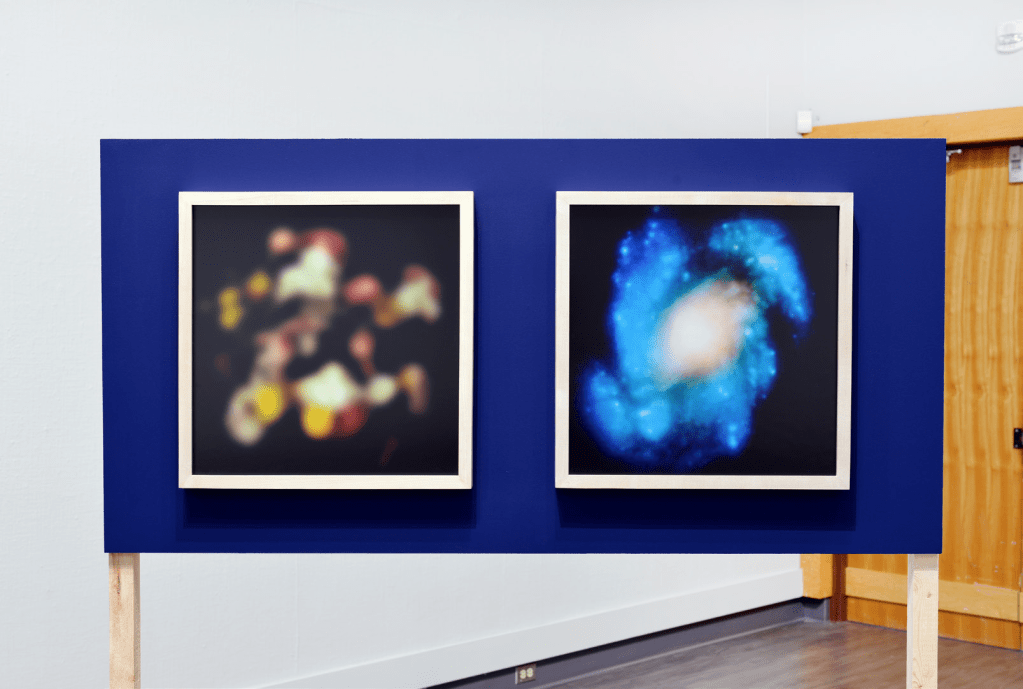
From Pavilion of Shadows, Art Gallery of Regina, November 13, 2020 – January 28, 2021 catalogue.

The piece also includes writing that he presented as computer print-outs pinned to a board:
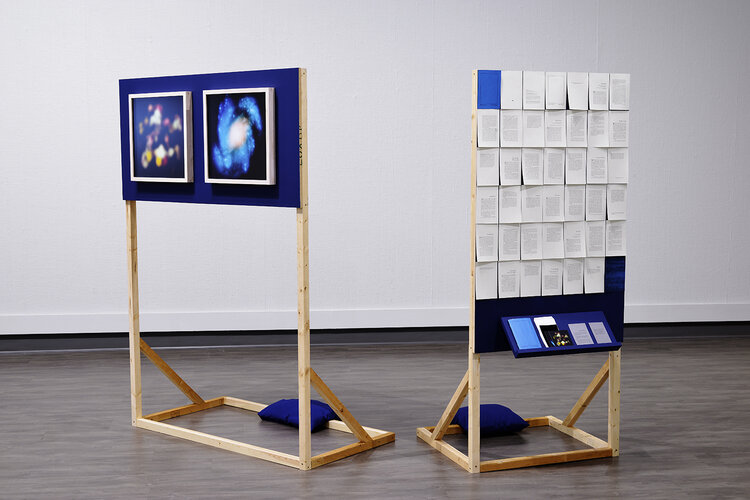
From Nic’s website: “Pavilion of Shadows is an ever-expanding database of mourning and decay. Marble, ashes, celebrity death merchandise, and photographs of distant galaxies create analogies, both personal and public, to the finite nature of bodies. Though many of the histories, anecdotes, and objects that make up this database are drawn from communal experiences, this work is seated in a particular body and subject-position. Wilson draws on their own embodied experiences and observations to wade through histories of life, death, and the distance between these two states.”

In this Art for Lunch lecture, Nic talked about including writing in a gallery, and how it is normally perceived as supplementary to the work:

There is undoubtedly a kind of privileged information in this work and in many other artworks. Many institutions use didactic panelling, guided tours, and publications as a way of supplementing work with this type of context. In my work I prefer to do the words part too and bring the ‘supplement’ into the realm of my art practice.

A point Nic made that I found interesting was about an obvious intersection of visual art and text: titles.

I once heard a curator say that if there was any artistic merit to be found in the work of Damien Hirst, it was in the titles of his work which include “Some Comfort Gained from the Acceptance of the Inherent Lies in Everything” and “The Physical Impossibility of Death in the Mind of Someone Living”. In some ways, I agree with this statement. These terse little poems do something for me, the way a great book cover might do something for me. There is a crisp quality to their use of language. When I think about the convention of naming in general, I am tempted to describe an artwork as the ‘main thing’ and the name as a ‘supplementary thing’ ascribing more value or weight to one ‘thing’ over the other but I know this is a loosing game. In my experience, art is always a social thing, a product of the stories we tell about it and what function it holds in a culture. How one refers to a thing, an image, an action, an object, is deeply imbricated with the supposed subject.

overview
“Some Comfort Gained from the Acceptance of the Inherent Lies in Everything,” 1996 Damien Hirst image source

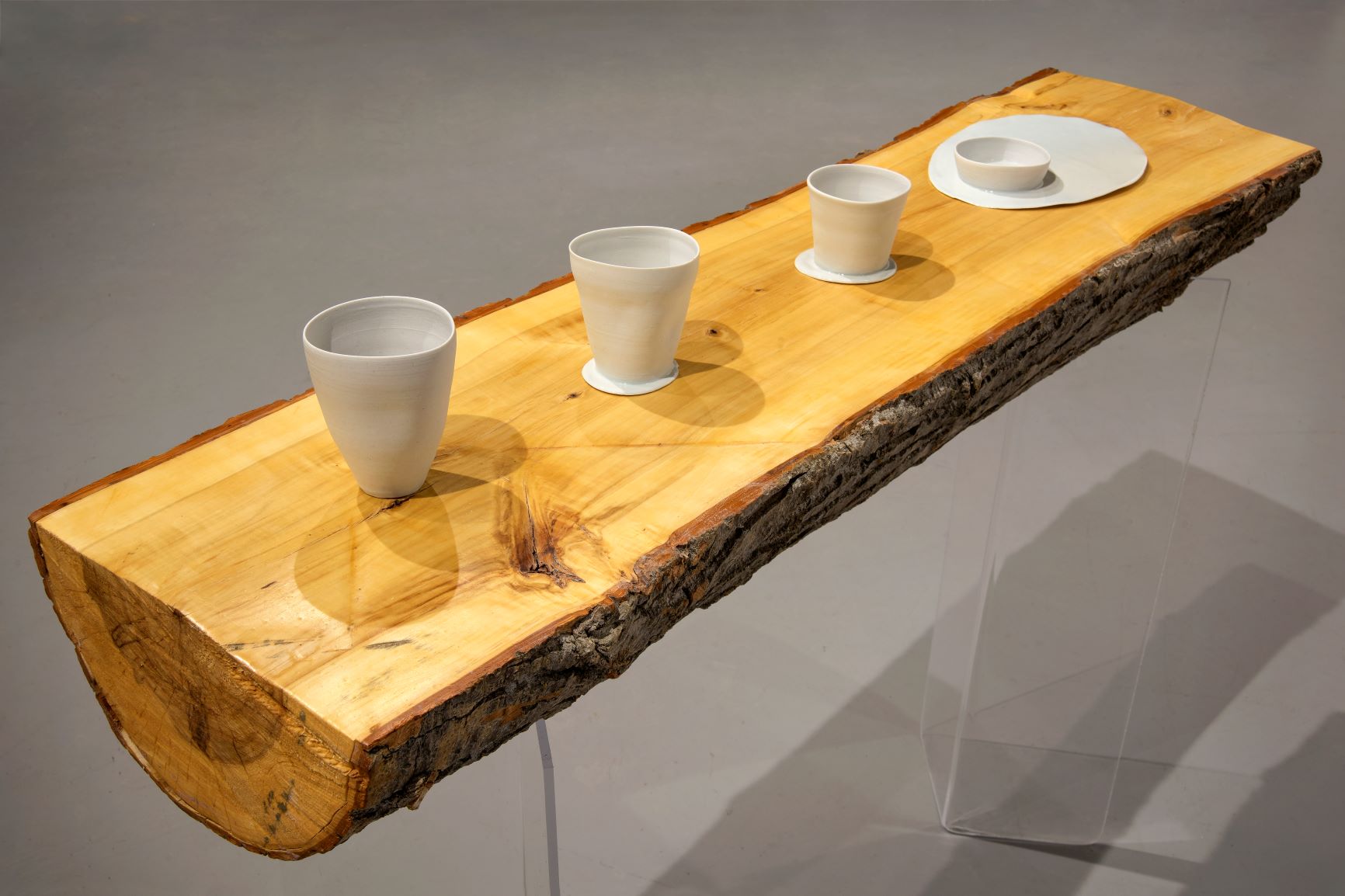
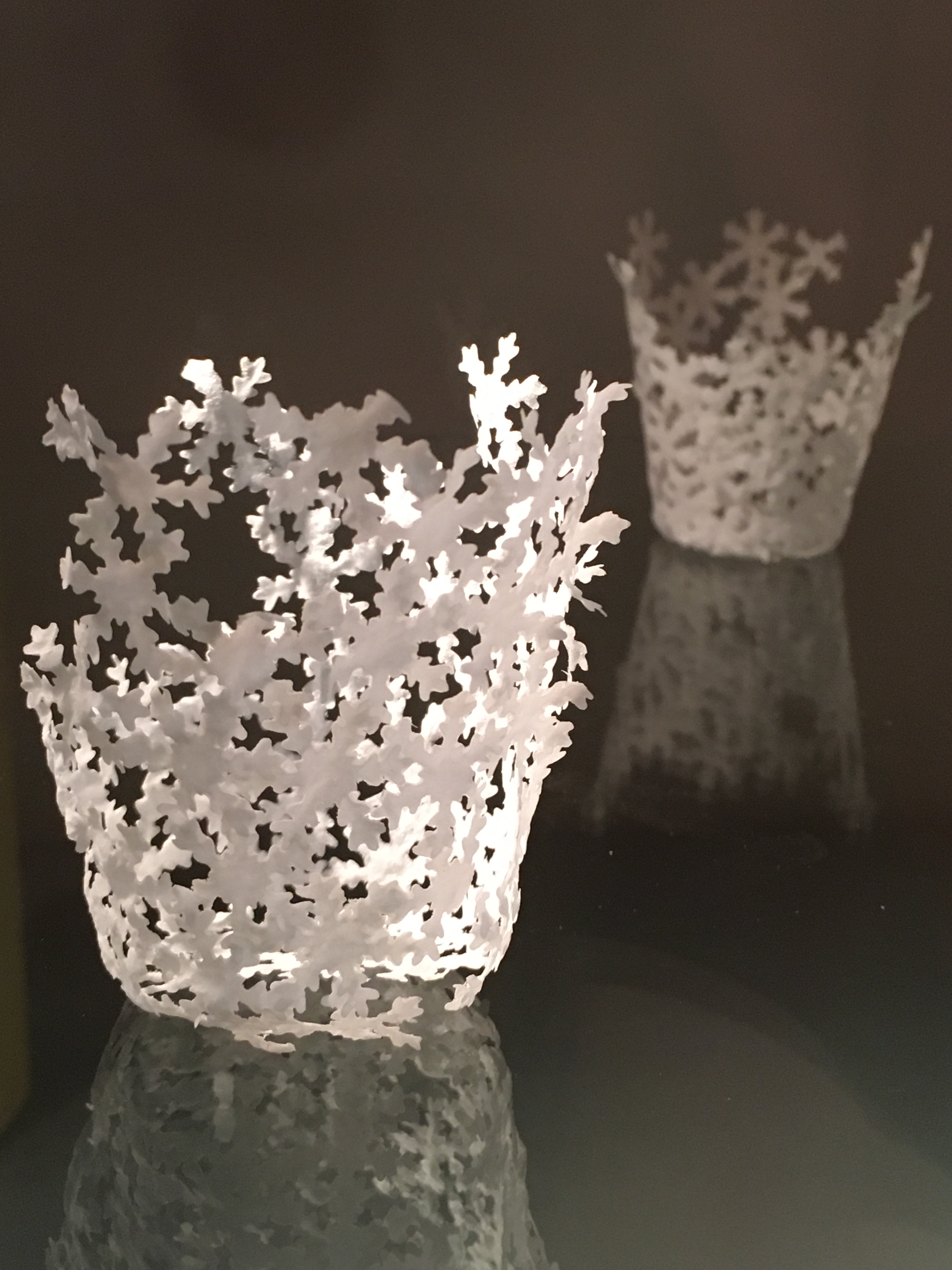
Titles of my work have been very important to me. I’ve often used them to convey the meaning I’m trying to get across. For instance, in “Athabasca Glacier: 2018-2019,” no one would likely know to associate that piece with a melting glacier were it not for the title. Likewise, with “Saskatchewan Glacier,” I suppose, which would just be “pretty snowflake cups” without those two words.
Another point of interest to me from Nic’s talk was the fact that he referred to several writers I know, such as Annie Dillard, Karl Ove Knausgård, Lydia Davis, and Sadie Smith. It was really something to hear someone referring to these people in the context of an artist talk. I came across these people either through my degrees in English or as a reader since completing them. It was/is kind of groundbreaking to think about the connections between literature and visual arts, and how I may be not as far from where I began (in English) by taking this MFA as I’d imagined. Nic asked,

What does it mean for a text to act like art? What is the ethos of art making? How and why do we have spaces that claim merely to comment on this activity, and is it possible for such spaces to remain unfettered by the subject they are purporting to comment on?

I was a bit of a hog in the question period. Maybe not just a bit. I asked Nic about W. G. Sebald (the writer on whom I wrote my MA research paper) and what it means to have art in writing or writing in art. You can tell I’m a keener; hence, I contacted Nic and the two of us chatted via Zoom. I hope to bump into him again; David (my supervisor) has suggested that he and I put on a kind of symposium of writers/artists. I shared the idea with Nic, and he seemed keen. I just don’t know when either of us would be able to find the time to organize such an event. If I could be a full-time MFA student and not also a full-time faculty member at the University (plus Mom, plus activist), I imagine I’d do all kinds of neat art-related things. For now, I’m happy just to be taking these classes and making the most of them that I can.

I was certainly delighted to meet Nic and get to chat with him.

Dust update 5 / endings + beginnings show

As I’ve mentioned in recent posts, I was offered an opportunity in the middle of this semester, late-February, to have my work in a show with six other first- and second-year MFA students.

It was quite a bit of extra stress to get new work ready to show in this short time-frame, but totally worth it, of course. I’m grateful to Amber Phelps Bondaroff for inviting MFA students to show their work.

I suggested the theme of “endings and beginnings” for this show to the others, and everyone agreed, seeing possibilities to fit their work into it. This is the show’s statement I wrote:

endings + beginnings is an exhibition showcasing the works of Shima Aghaaminiha, Shamim Aghaaminiha, Larissa Kitchemonia, Raegan Moynes, Alyssa Scott, Amy Snider and Brenda Watt, a group of emerging artists and artists in the beginning of their careers as candidates in the MFA program at the University of Regina.

Our lives are filled with beginnings and endings that result from changes of all sorts. In our recent time, the Covid19 pandemic has imposed another ending and a beginning on us. Like with all defining events, our lives now have a line drawn through them: pre-Covid/post-Covid. What makes this situation exceptional is that these new definitions apply to every person’s experience. Other global changes, political, technological, and environmental, are also looming or already happening at what feels like a continuously increasing pace. These constant changes to our lives and our understanding of the world lead us to the question of where one contemporary moment ends and another begins. The works in endings + beginnings are each reflections on this question.

I suppose my work fits into this theme’s “endings” component. 😉

I just posted about one of the two projects I installed in the show, a set of three plates title “Keep it Up,” “Hold it Together,” and “Build a Wall.” Here, I’ll summarize the work I installed of my second project I’ve been developing this term, “Dust.”

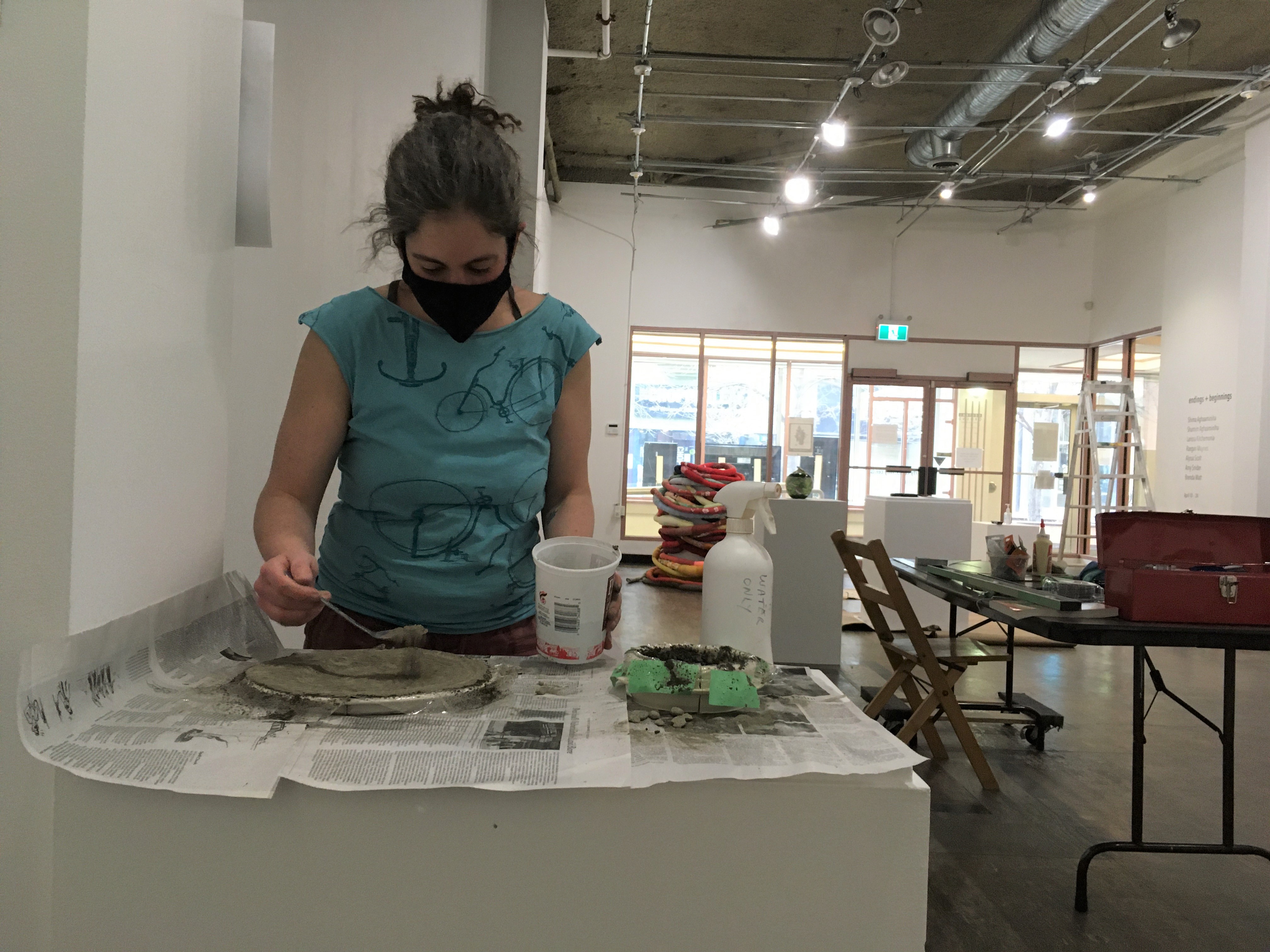
Arriving at the gallery to install, spatially-challenged husband and broken plate in tow, I got to work creating pieces of the project “Dust” I’ve been experimenting with all semester.

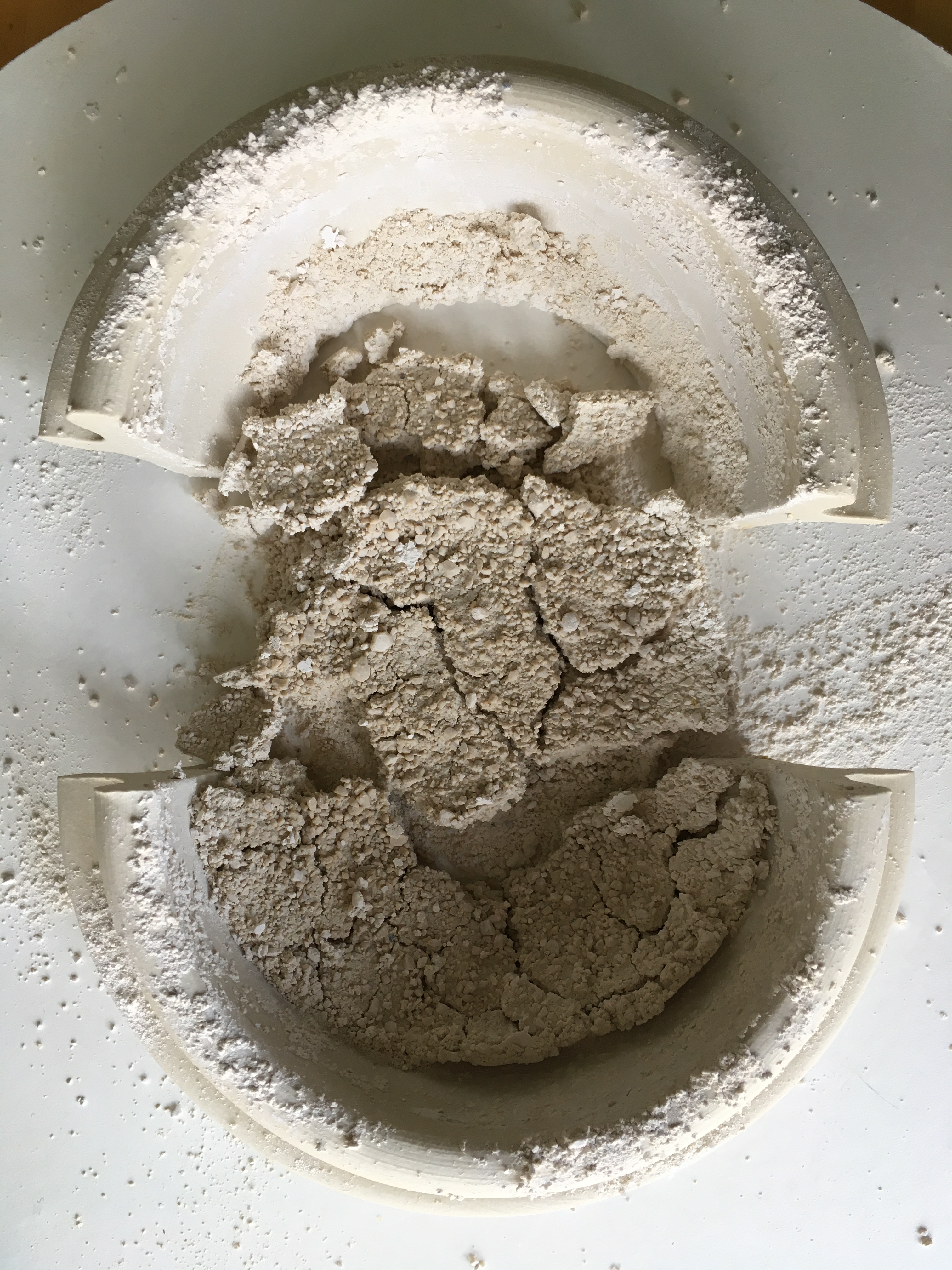
The plinth that I was expecting to use for a “Dust Plate” had been taken by another student (we had to book individual appointments to install due to Covid), so I was left with either one that was quite low to the ground or one that was much larger in width (more rectangular) than I’d expected to have. Fortunately, I’d brought the bowl-mold with me as well as the plate-mold, and I immediately realized that I was being told (by the art gods?) to go for it and create both a plate and a bowl in this gallery space. I took the larger plinth and got to work. This was my first time trying to use this mold in a while; the previous time had been a complete flop.

I got them set up and then left, hoping very much that when I returned the next day, they would hold their form while I slid their molds out from under them.
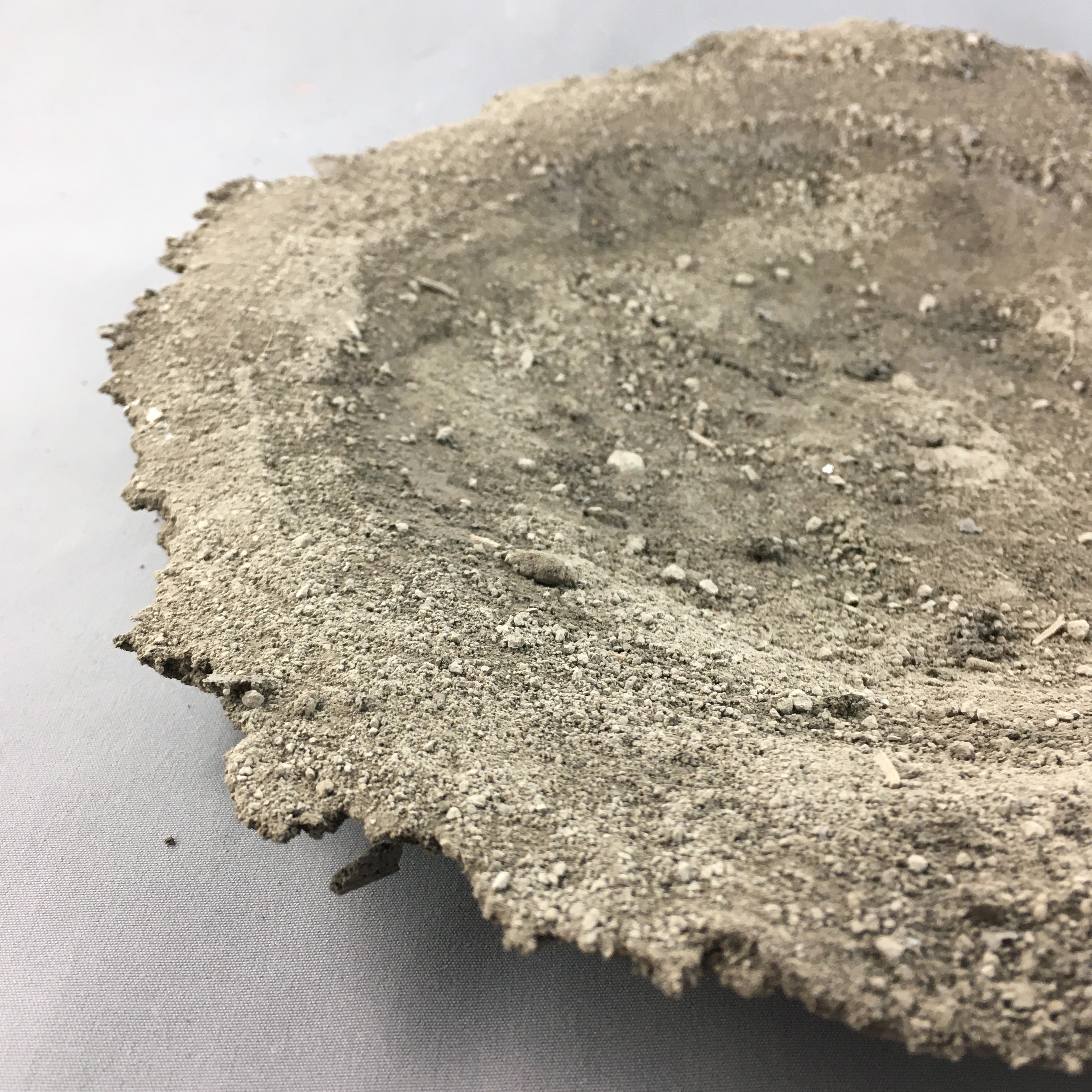
And did they?

They did!

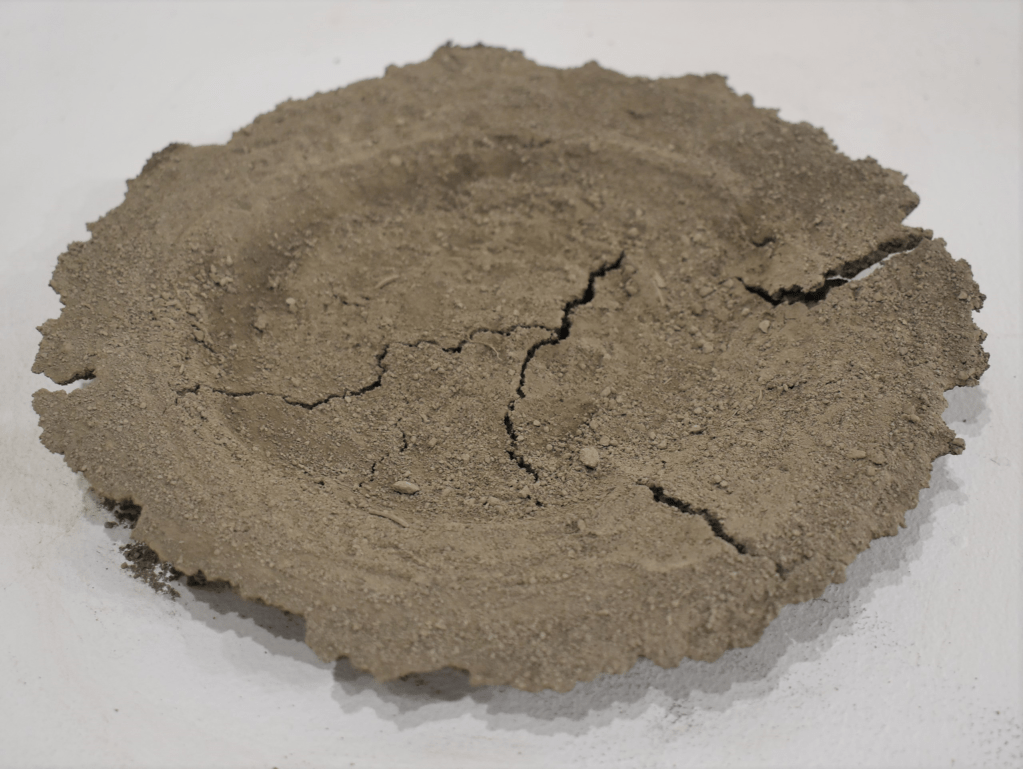
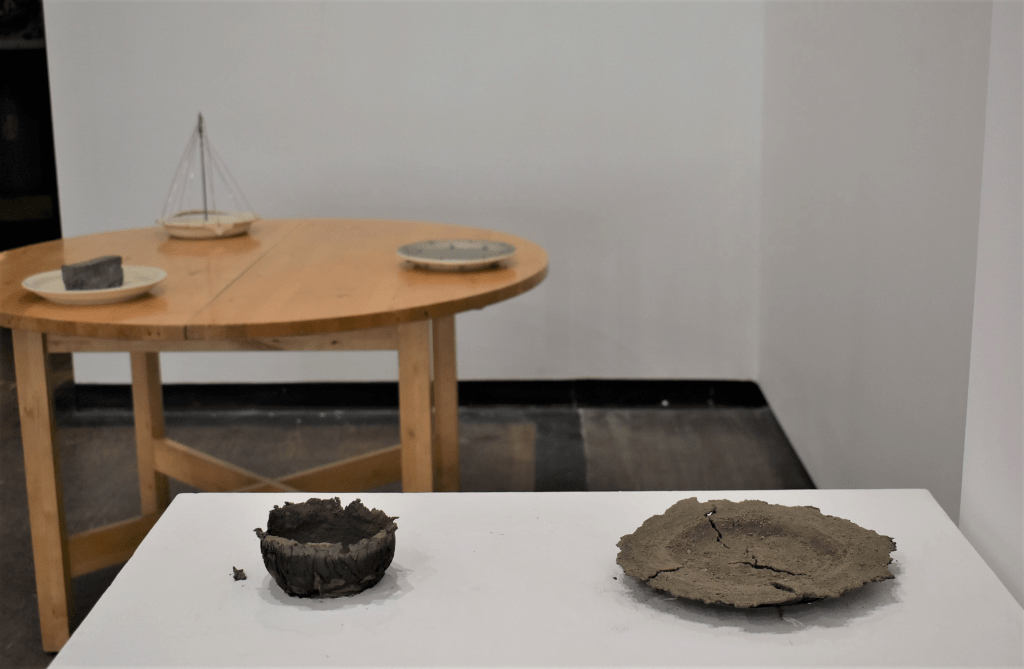
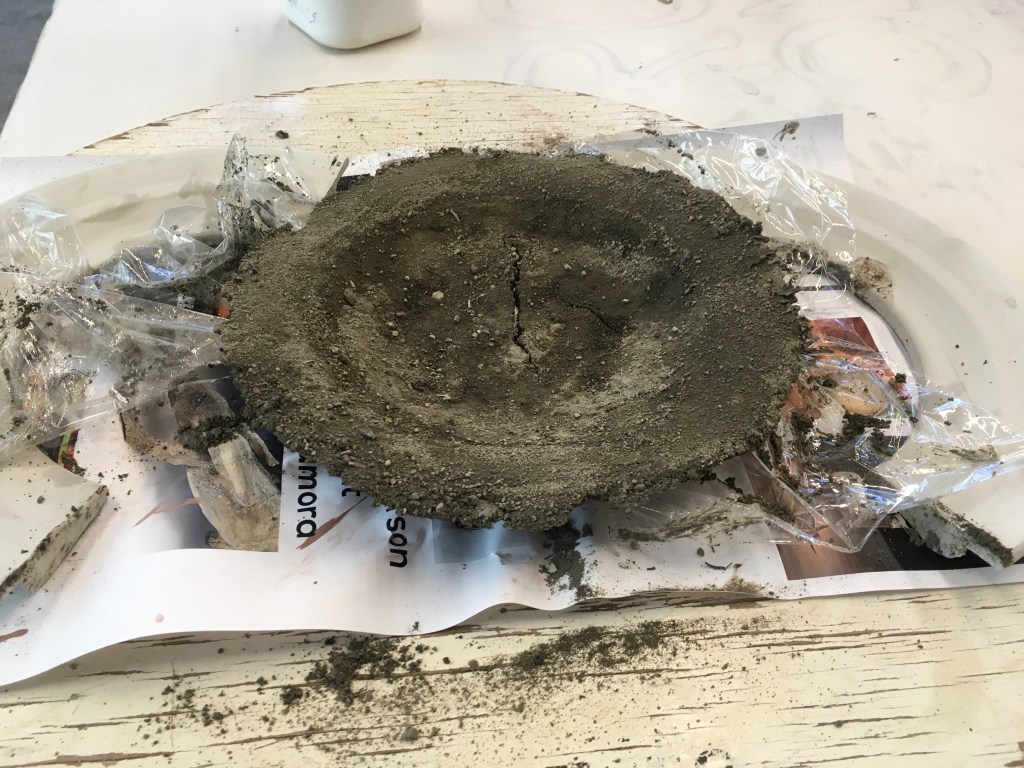
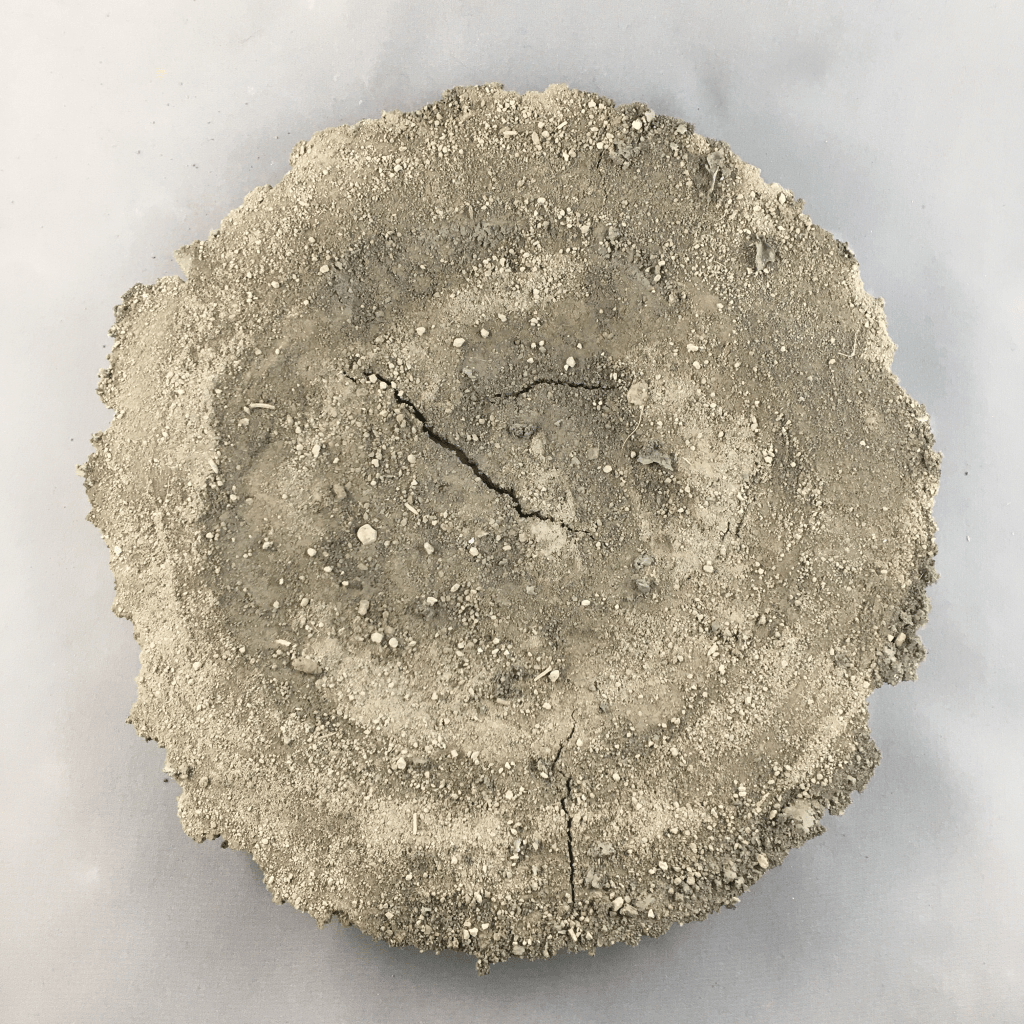
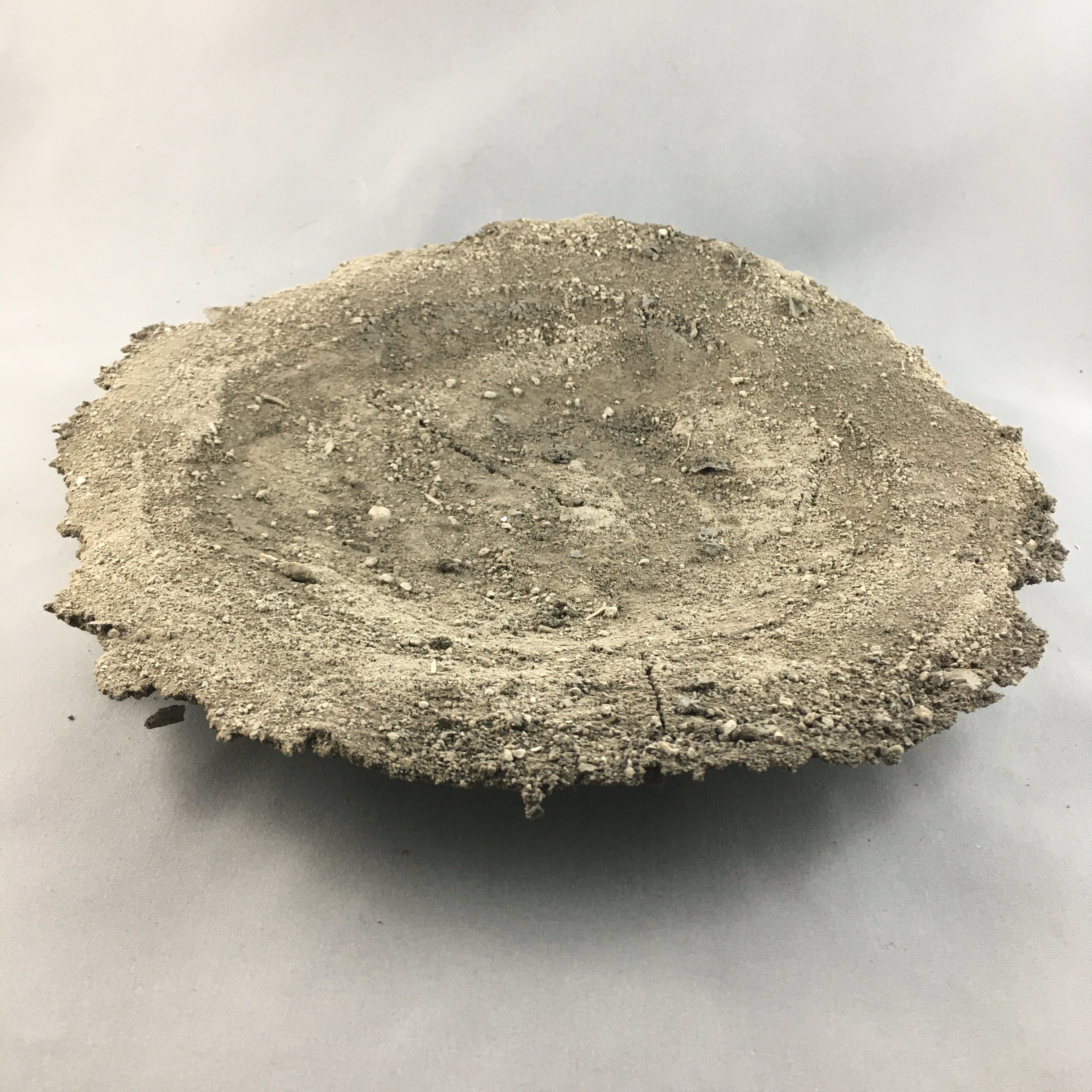
“Dust Plate”
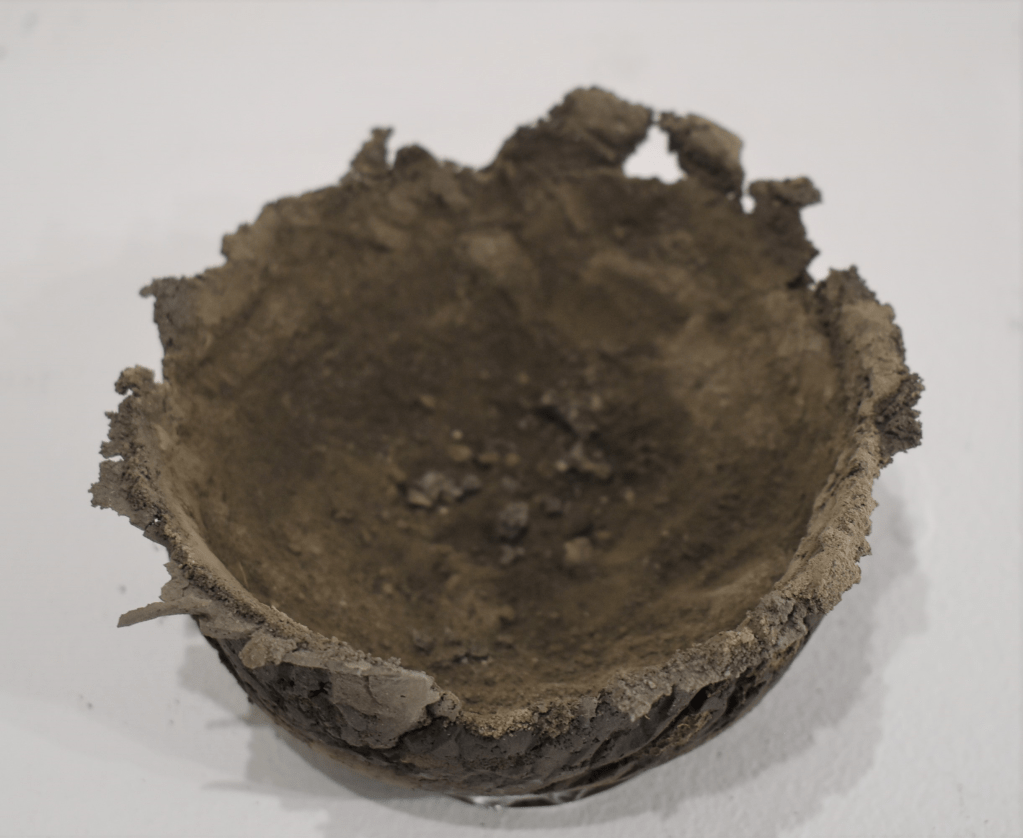
“Dust Bowl”

It’s kind of funny that “Dust Plate” has cracks in it… given my other project’s beginnings.
As with the other pieces I have in this show, I know I could develop this idea further and improve the end-product, the objects themselves. These aren’t perfect, and they’re far from what I’d originally envisioned: a plate that would look more perfectly plate like until it would blow away (on video), revealing that it was made entirely of dust. As with the other work in this show, though, I’m satisfied enough with the result of “Dust” after three months of experimenting and thinking about it. I’m now curious to see what others will say about it. I’m happy I decided to find and use local, brown-coloured clay, and I’m relieved that I found a technique that allows this clay dust to hold a shape. At least, these two pieces had held up for one day when I last saw them… I’ll return to the gallery when it reopens on Tuesday and see what I find on this plinth.

Now I need to turn my attention to writing up an “End of Semester Review Statement” by Tuesday. How will I summarize all that I’ve learned this semester in just 600 words?

update: cracked / a pound of cure / hold it together

It’s been a long while since I posted about this project (actually, it’s been four weeks, but it feels like four months). In the meantime, it has gone from being titled “Cracked,” to “A Pound of Cure,” to being a set of three pieces, each with their own titles, which I’ll get to shortly.

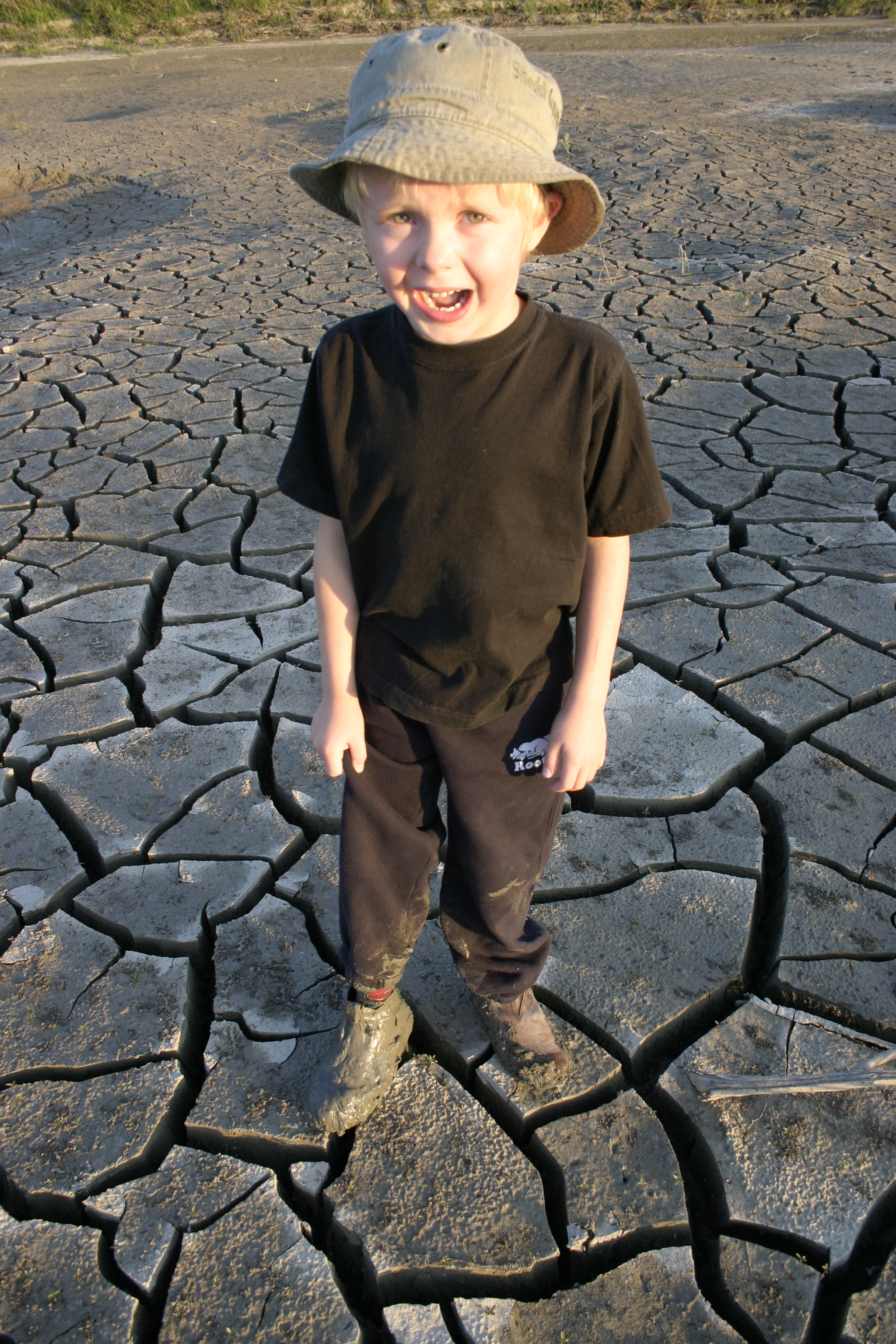
To re-cap, I’d originally envisioned pieces of cracked earth that are shaped as plates underneath, inspired by formations of dried riverbank mud I came across on the shores of the North Saskatchewan River a few years back. These pieces were meant to convey the drought we’ll face in this part of Canada as a result of climate change.

My attempts at getting clay to crack in a way that mimics the forms caused by drying riverbank earth/clay failed.

I may return to this idea once I can use the natural elements found outdoors. It was -30C when I worked on this project.

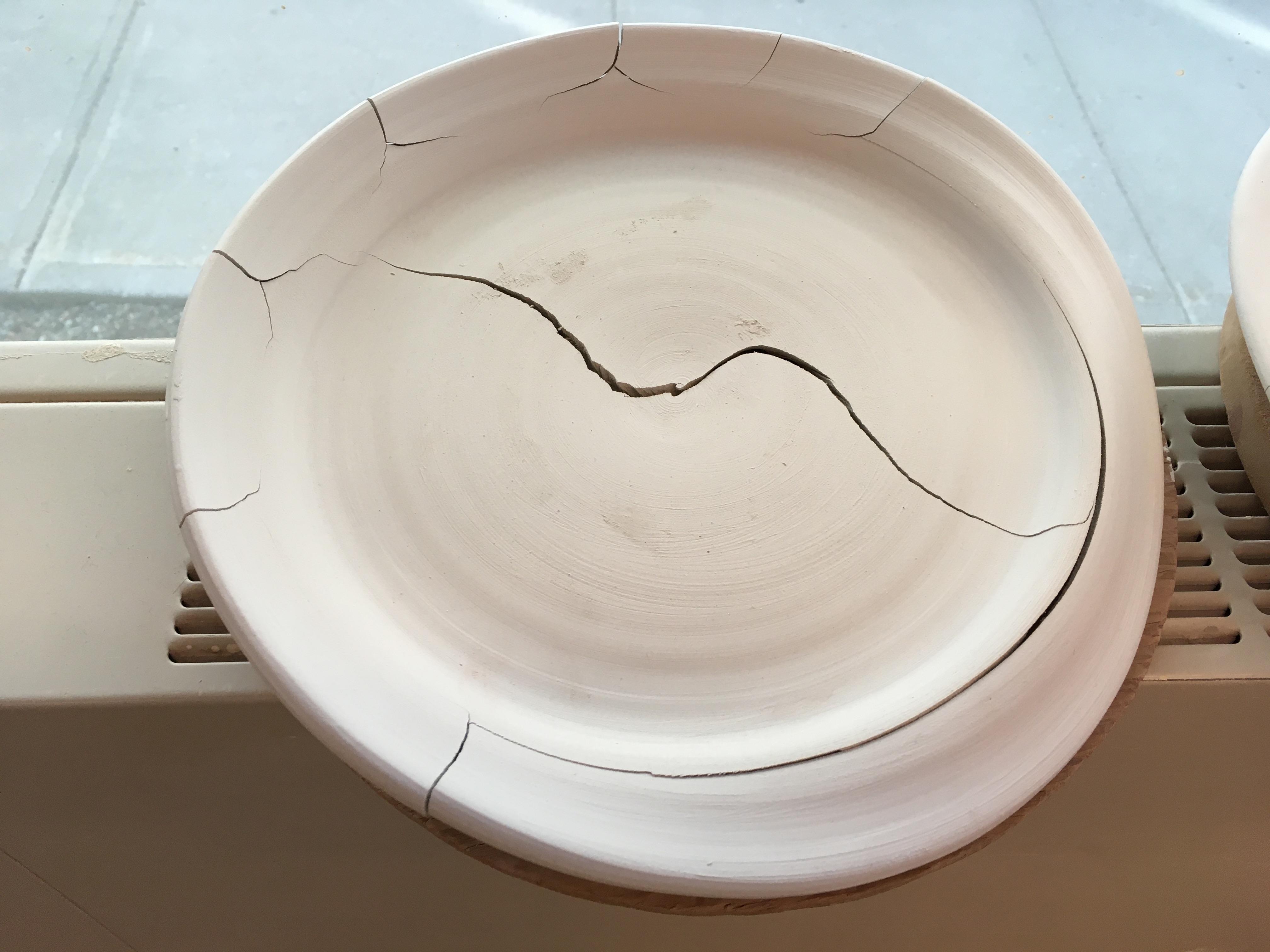
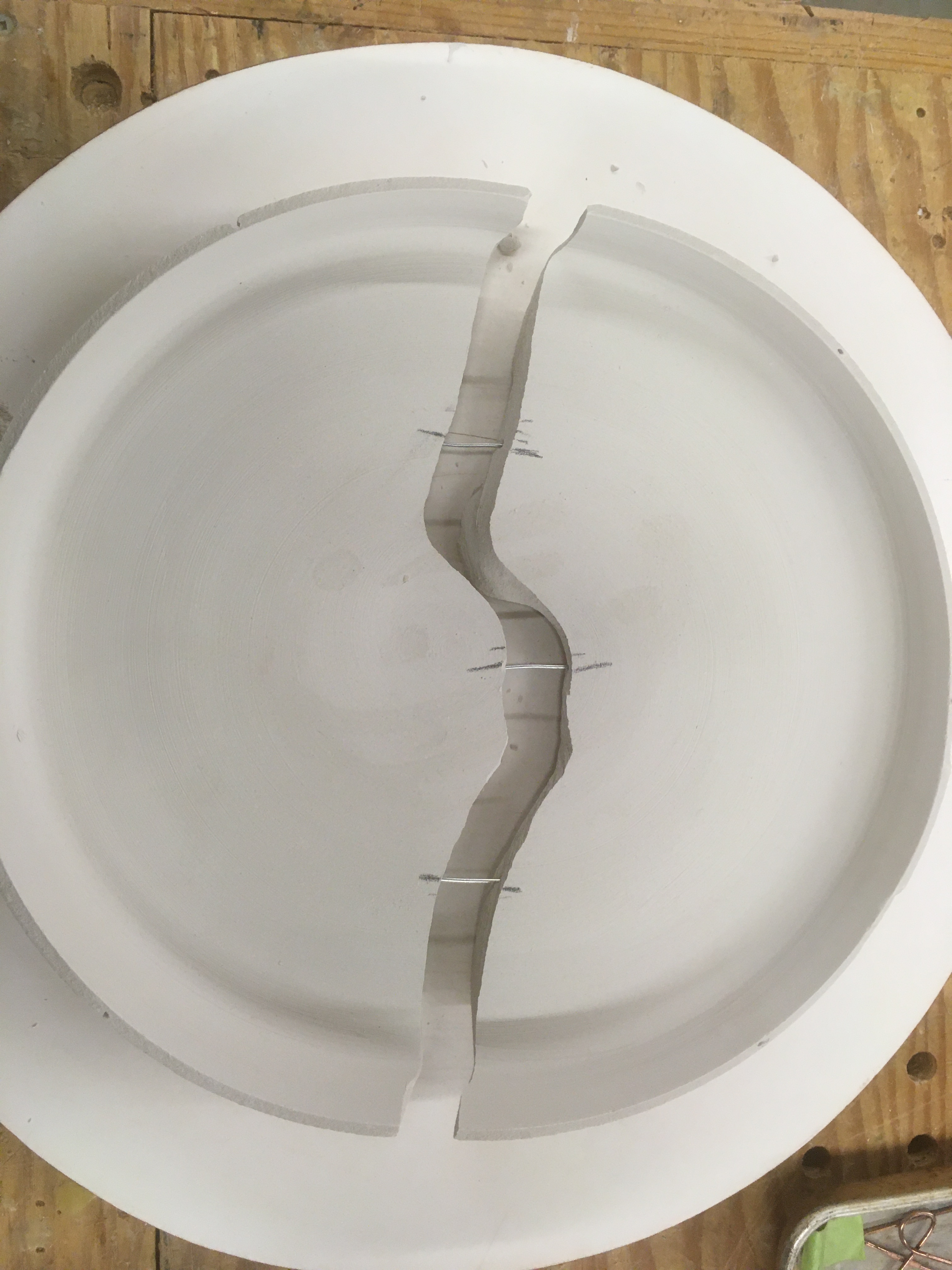
So, I came up with a second version of this project: throwing plates on the wheel that have cracks in them. Plates are very difficult to throw, and they are notorious for cracking if any part of the process isn’t done well.

It took me a while, but by doing everything as wrongly as possible, I achieved very cracked plates.

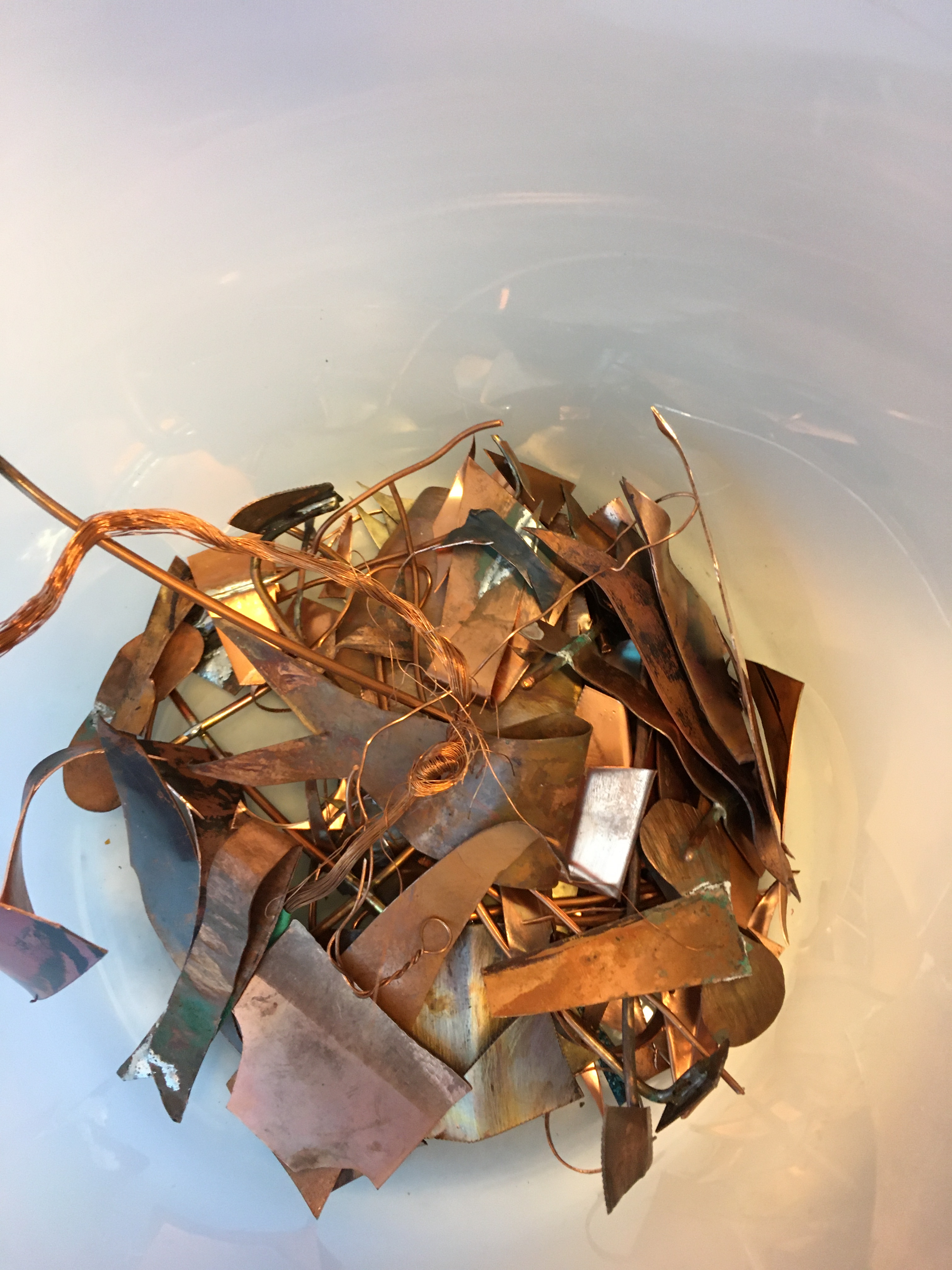
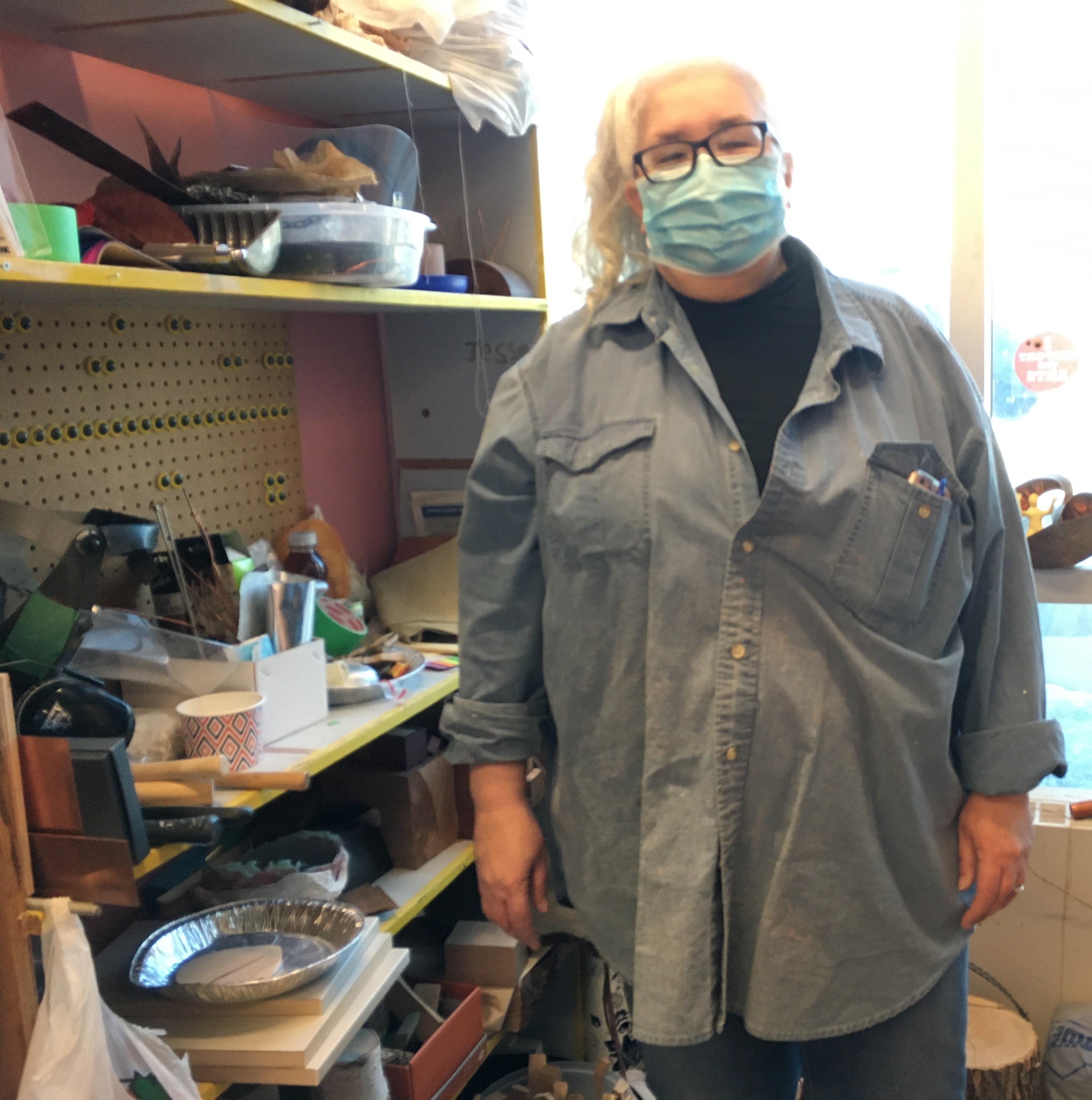
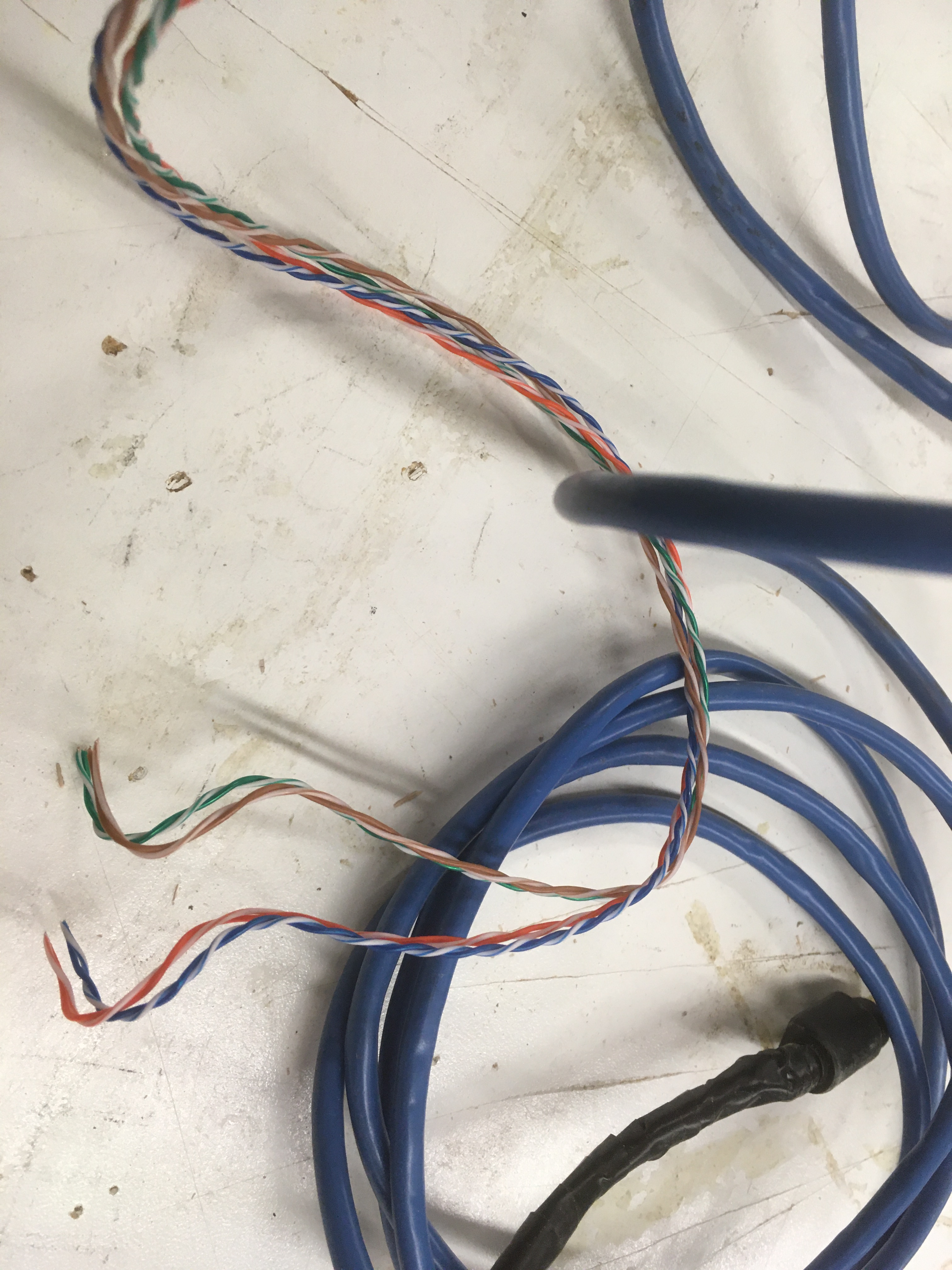
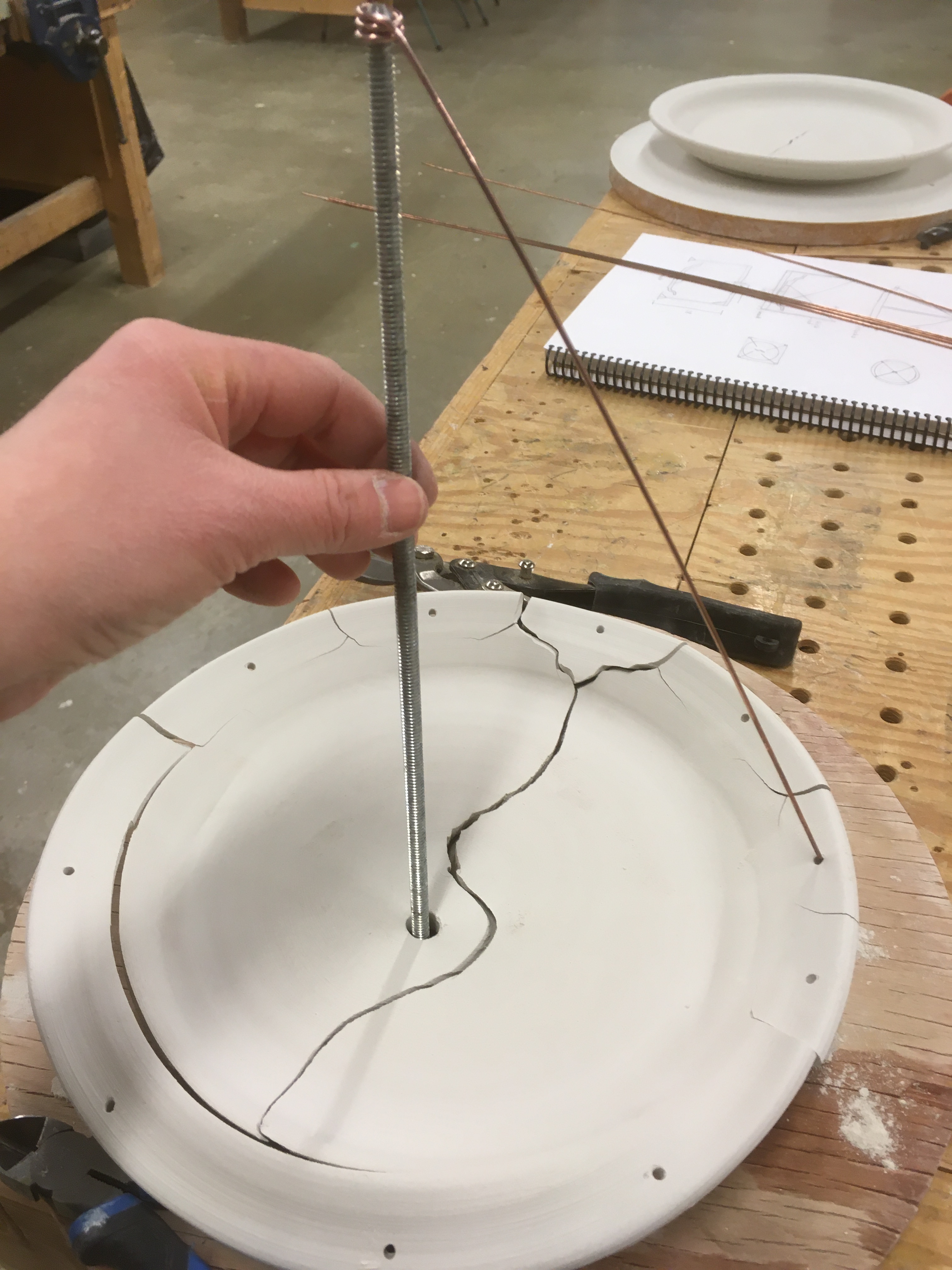
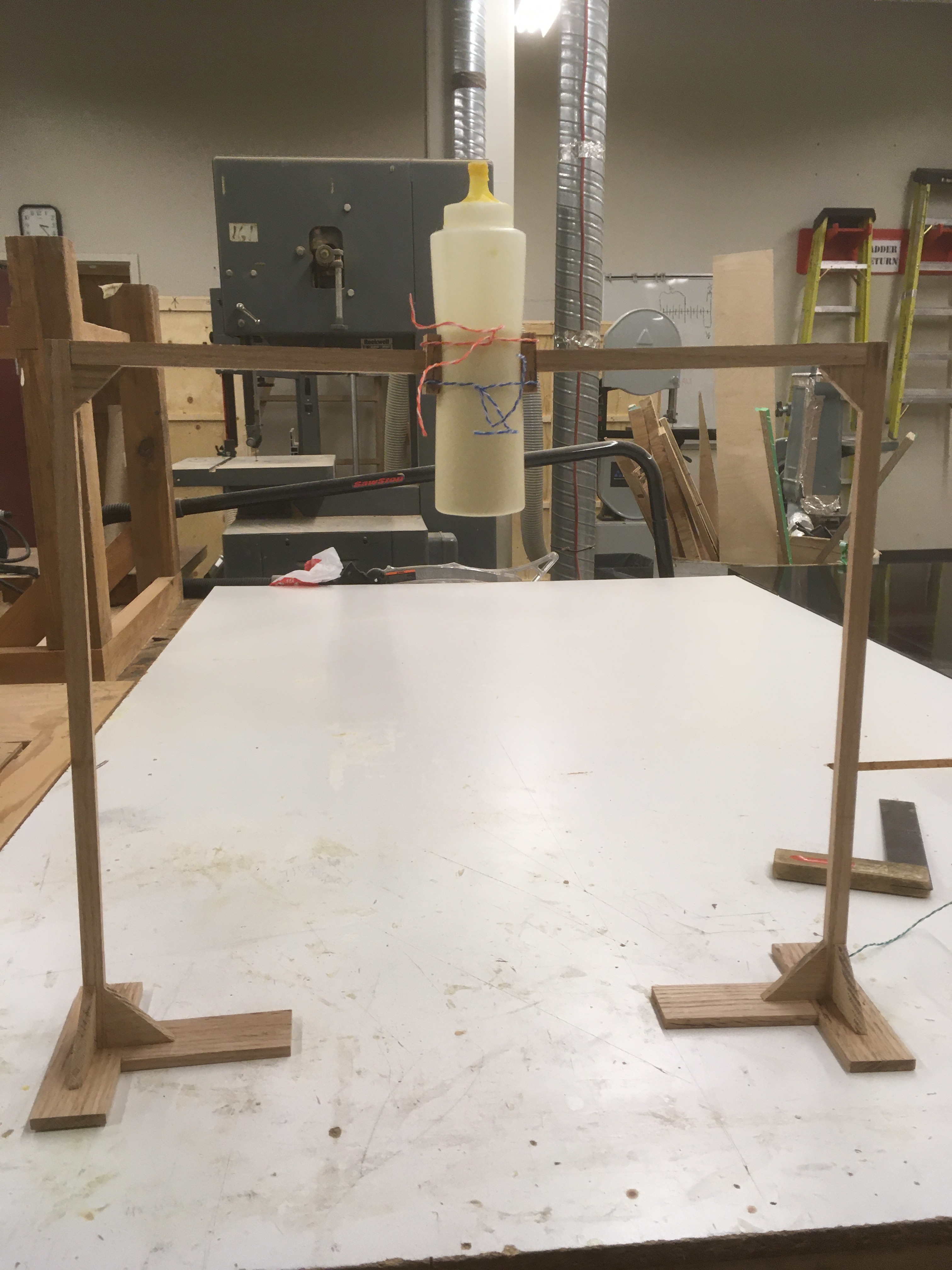
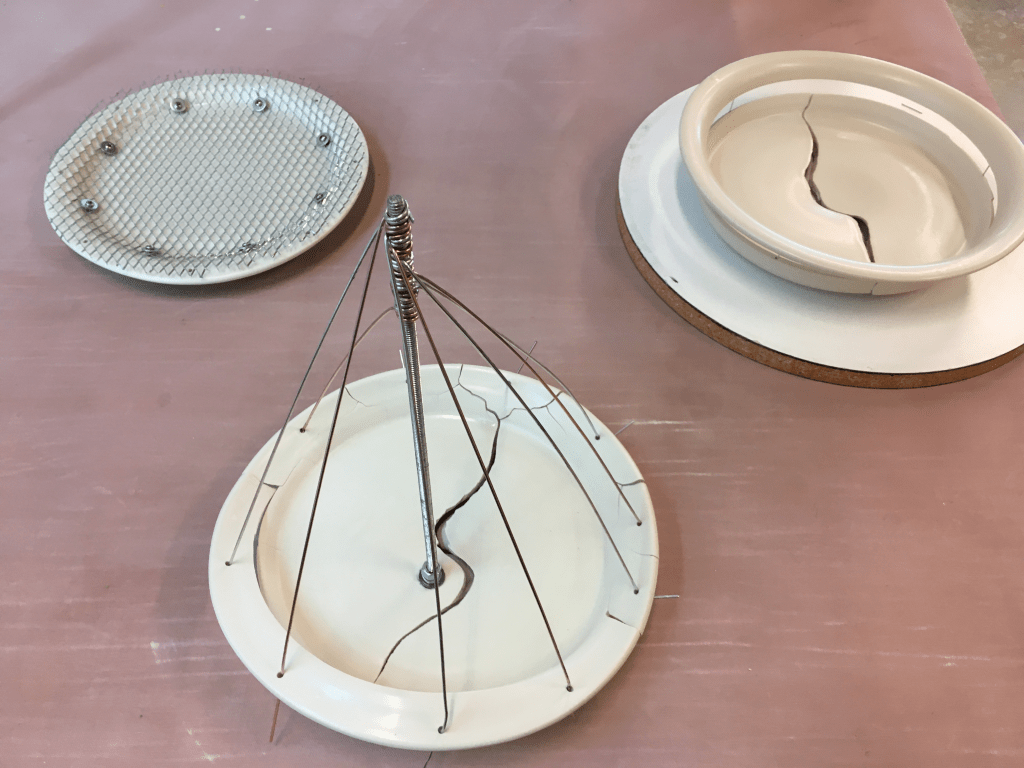
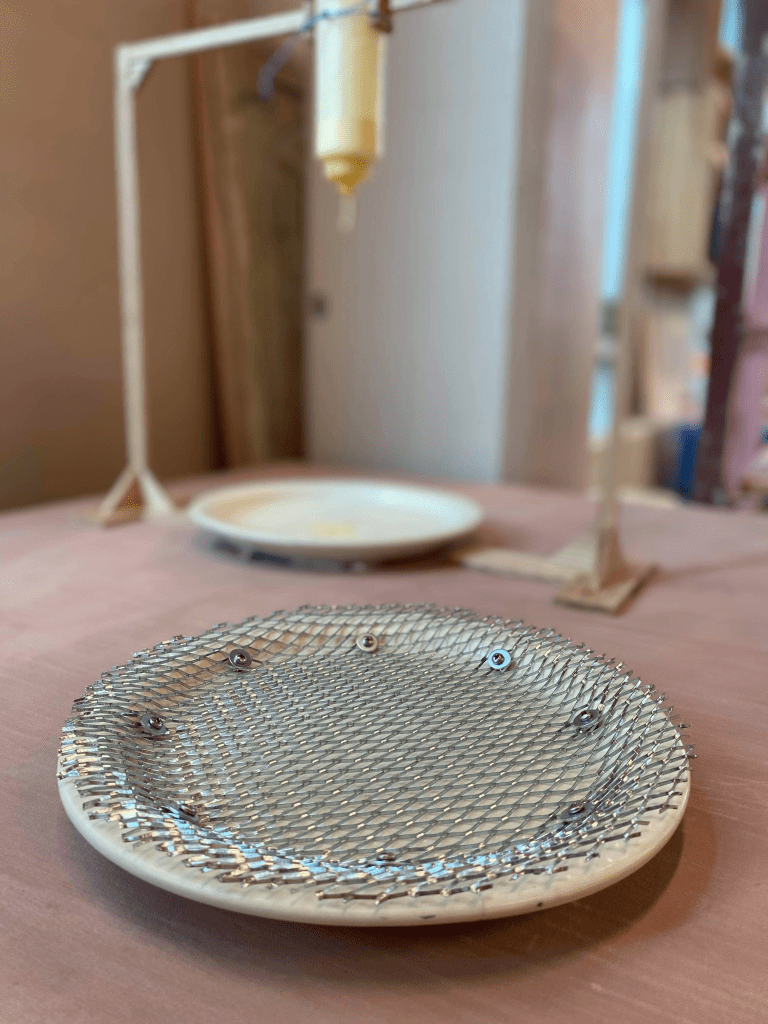
Around this time, I had the great fortune of meeting a fellow Visual Arts student, Maggie Dixon, and receiving a few scraps of metal from her treasure-trove studio. I got to work designing and building “repairs” for these plates. Jesse Goddard, a Visual Arts Technician, let me use the woodshop and helped me build a stand from which to suspend a bottle of white glue.

At this point, my idea with this set of cracked plates, which I’d titled “A Pound of Cure,” was to convey the foolishness of relying on technology alone to save us.

My thinking was (and still in part is) to build these contraptions that are meant as ridiculous attempts at repairing these plates. Rather than improve the skill with which we live (or throw pots), we continue to destroy the planet (throw faulty pots) and hope others will find ways of repairing the damage. I’ve read a bit about proposed technological solutions to climate change. As I posted about recently, Elizabeth Kolbert’s Under a White Sky: The Nature of the Future gives a good overview of the situation we’re dealing with and a glimpse into several extreme technological solutions being developed (and in some cases, employed) around the globe. In her concluding comments, Kolbert writes:

This has been a book about people trying to solve problems created by people trying to solve problems. In the course of reporting it, I spoke to engineers and genetic engineers, biologists and microbiologists, atmospheric scientists and atmospheric entrepreneurs. Without exception, they were enthusiastic about their work. But, as a rule, this enthusiasm was tempered by doubt. The electric fish barriers, the concrete crevasse, the fake cavern, the synthetic clouds—these were presented to me less in a spirit of techno-optimism than what might be called techno-fatalism. They weren’t improvements on the originals; they were the best that anyone could come up with, given the circumstances. (200)

Kolbert, Elizabeth. Under a White Sky: The Nature of the Future. New York: Random House, 2021.

I saw my cracked plates as a response to this situation. Even the experts, sincere in their efforts to find solutions to this crisis, regret that their work is necessary, worry about the consequences of putting it to use, and doubt whether it’ll suffice. At this stage, the statement I’d written to accompany these plates went like this:

In “A Pound of Cure” (2021), I am suggesting the foolishness of relying on technology alone to save us. While some technology can help us reduce the damage we are causing to the planet, these solutions also require us to change much of the way we lead our lives, and we are not changing quickly enough. Other innovations proposed for getting us out of this crisis are too expensive, too slow, and too dangerous.

My supervisor, David, very usefully pointed out all kinds of problems with these pieces, most importantly:

  • What is special enough about these plates to warrant saving them?
  • Why would anyone fire broken plates?
  • White glue??? No one would ever come up with a solution that ridiculous; it’s a strawman argument. Are all technological attempts at solving this problem equally foolish?

By the end of this conversation, I was completely freaking out. Not wanting to pass up an opportunity that had come up suddenly just weeks earlier, I’d agreed to enter work in a show at a local artist-run gallery, Neutral Ground, and was struggling to come up with finished pieces in time for my install date. My other project, “Dust,” was nowhere close to being ready to show, and I started to think I’d have to withdraw from the show.

David gave me a lot to think about. On the one hand, he told me about a couple of artists who only ever put out work that is perfect. On the other hand, there are always spaces out there where people can show work that isn’t perfect… and perhaps doing so could be useful somehow too. It was, or course, my call. I’m deeply indecisive. I hated being in this situation, and even though I understood that this was certainly not a life-or-death decision, the stress of it, on top of work, parenting, MFA classes, and Covid-anxiety, was wearing.

I sat on this decision for a while, then decided to speak with the organizer-curator at Neutral Ground, Amber Phelps Bondaroff to get her input. I explained the situation to her—that I had one project that was conceptually strong (“Dust”) but still in the experimental phase, and another project that could be finished on time but that was much weaker. Amber told me that the gallery is a space for, among other things, artists (especially emerging ones) to take chances. Our chat encouraged me to install “A Pound of Cure” as well as “Dust” and to take any input I got from the experience and put it to use in developing these projects further. Done. I was reassured I’d have something in the show, though I still felt uncomfortable about showing work that I knew was flawed.

Then, on the day of the install, I had an “aha moment.”

These pieces aren’t a criticism of technology, or even a criticism of my species (well, maybe there’s still a bit of that); these pieces are mostly about my own anxiety over the crisis we’re dealing with. While biking to the studio that morning to do the finishing touches on one of these plates, it hit me that they represent how I feel about the idea of “people trying to solve problems created by people trying to solve problems.” I feel utter hopelessness at the prospects of anything working out. At the same time, there’s nothing I can do about the crisis or how I feel. I can’t solve the climate crisis. I can’t help feeling that all of my efforts are futile. I can’t tell my son that things are going to be okay. Likewise, I can’t just quit living. Really, I’m the one who needs repair.

Kolbert writes about an idea to keep the ice from melting:

“it’s been proposed that sea-level rise could be slowed by propping up the Arctic ice shelves or by blocking the mouth of one of Greenland’s largest outlet glaciers, the Jakobshavn ice stream” with a “three-hundred-foot-tall, three-mile-long concrete-topped embankment” (199)

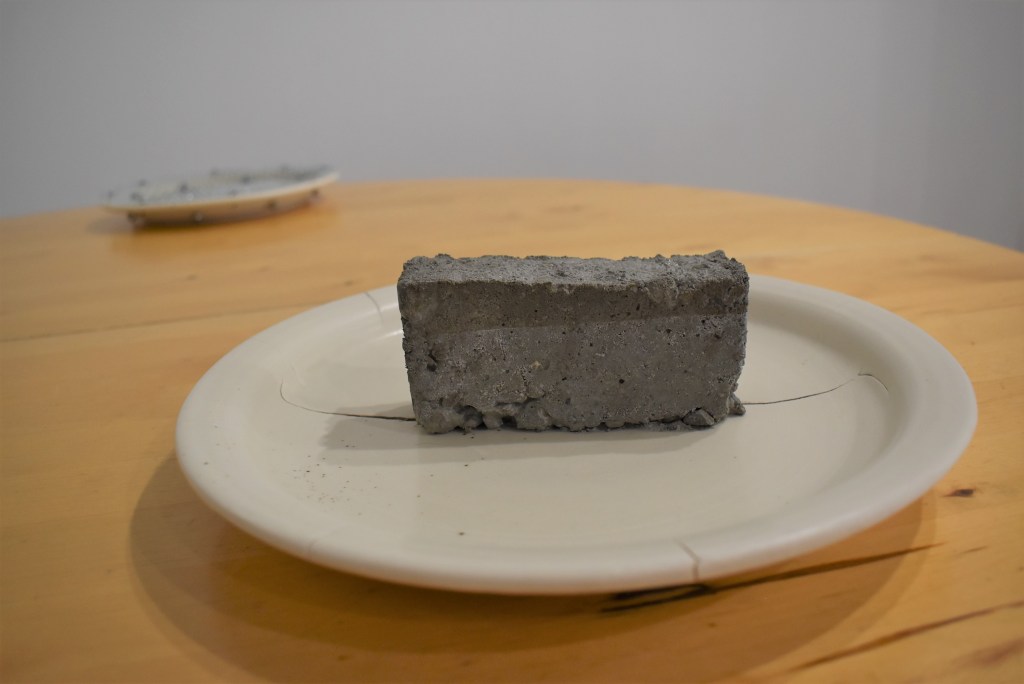
That 300-foot wall? I’ve got my own, equally futile one!

“Build a Wall”

Build a Wall

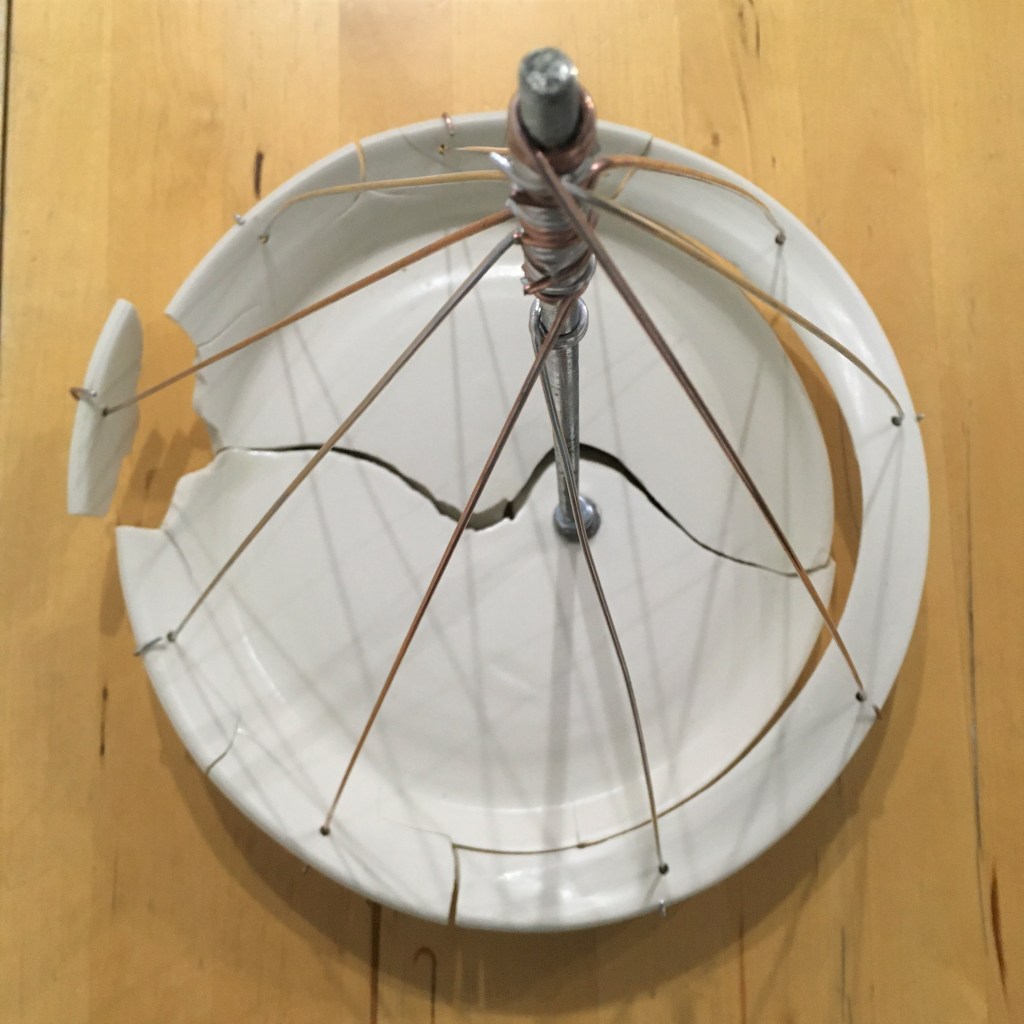
This plate with the entirely cracked rim being held up by steel and copper rods? What am I holding up? You guessed it. Myself.

“Keep It Up”

Keep It Up

Ultimately, what am trying to do in my day to day life, going about the busyness of working, parenting, studying, making art, and being a climate activist all at the same time, while simultaneously feeling as though we’re all living on a precipice? (Note: it was at this point that I changed the title of this blog/website. I’d been wondering what to call it. Now I know.) Answer:

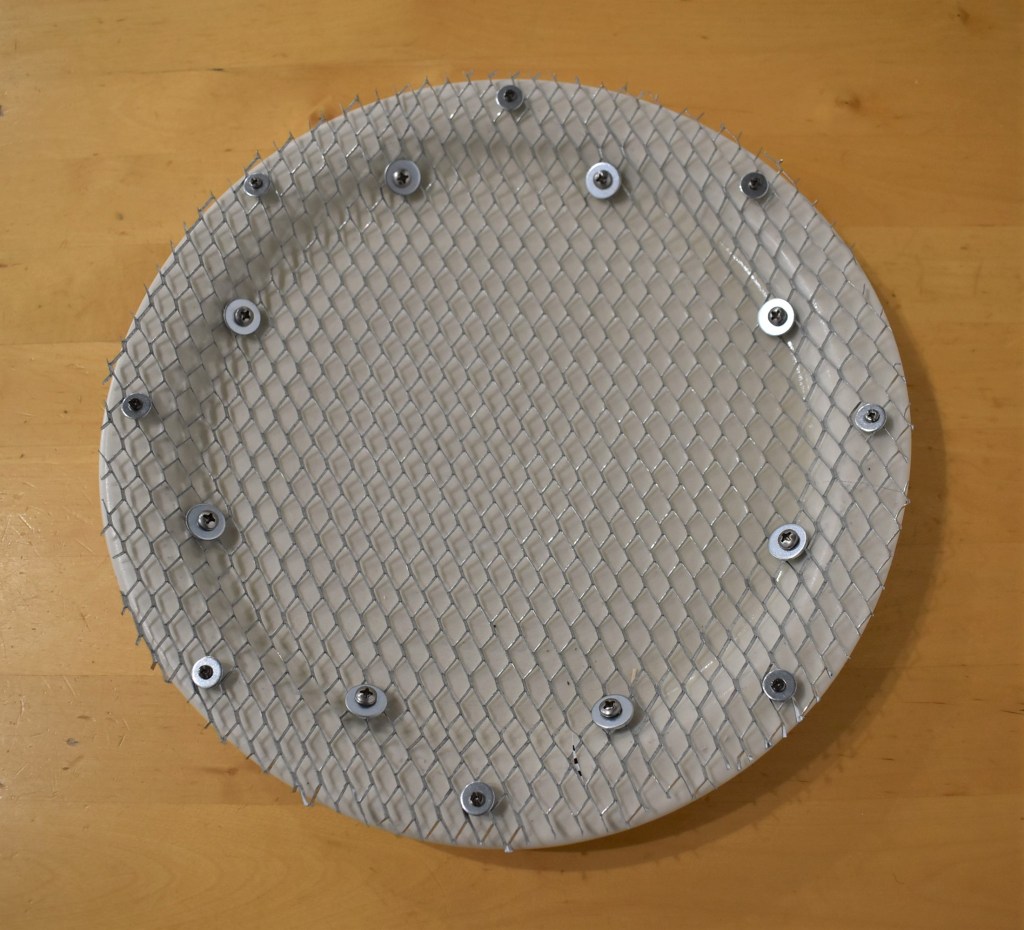
“Hold It Together”

Hold It Together

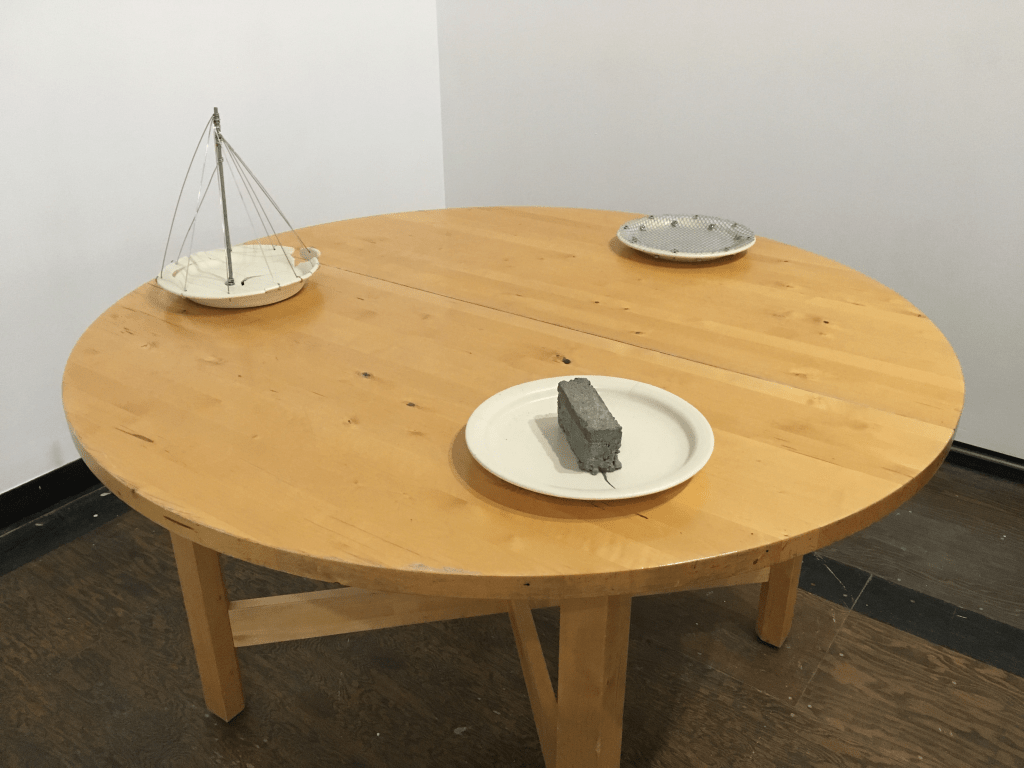
So, I installed these pieces (on my kitchen/dining room table) in Neutral Ground two days ago. There were going to be four, but one suffered just a few too many cracks when a gust of wind blew it out of my spatially-challenged husband’s hands and onto the road on the way into the gallery. Coincidentally, it was the one piece I didn’t have a title for yet. Amber told me that she thinks three plates on the table works better than four would have, and that “the wind was my curator.” Too funny!

Keep It Up; Hold It Together; Build a Wall

I still recognize that this isn’t great work, but I feel good enough about it now that I’ve figured out where it comes from in me, and I’m very curious to see what feedback I receive on it. If nothing else, I feel I’ve taken this idea a long way from where I started with it in January. I wonder where, if anywhere, I’ll go with it next.

This is the statement that accompanies these pieces as well as the “Dust” ones at Neutral Ground:

We are facing planetary system failure that will make it difficult for many species, including our own, to survive. As a ceramicist, I express my constant feeling of living on a precipice via a series of preposterous dinner plates. “Keep It Up,” “Hold It Together,” and “Build a Wall” (2021), convey my worry about relying on technology to repair the world. While some technology can help us reduce the damage we are causing to the planet, these solutions also require us to change how we lead our lives, and we are not, as a society, changing quickly enough. Other innovations proposed for getting us out of this crisis are too expensive, too slow, and too dangerous. The situation has me imagining a potter not learning how to make a pot properly (cracks are a potter’s bane), yet hoping to fix the problem after the fact. “Dust Plate” and “Dust Bowl” (2021) are the final pieces of ceramics, made entirely of clay dust. Their own impossibility conveys the situation we are in. Enduring drought, as seen in the Great Depression, is likely to be one of worst consequences of climate change we will face in this part of Canada. These works stem from my personal dilemma: how to face the fact that we are destroying the planet while continuing to live and create nonetheless?

I’ll post an update on “Dust” with photos of it installed in the gallery next.

dust update 4

“Dust” adventures continued yesterday and today.

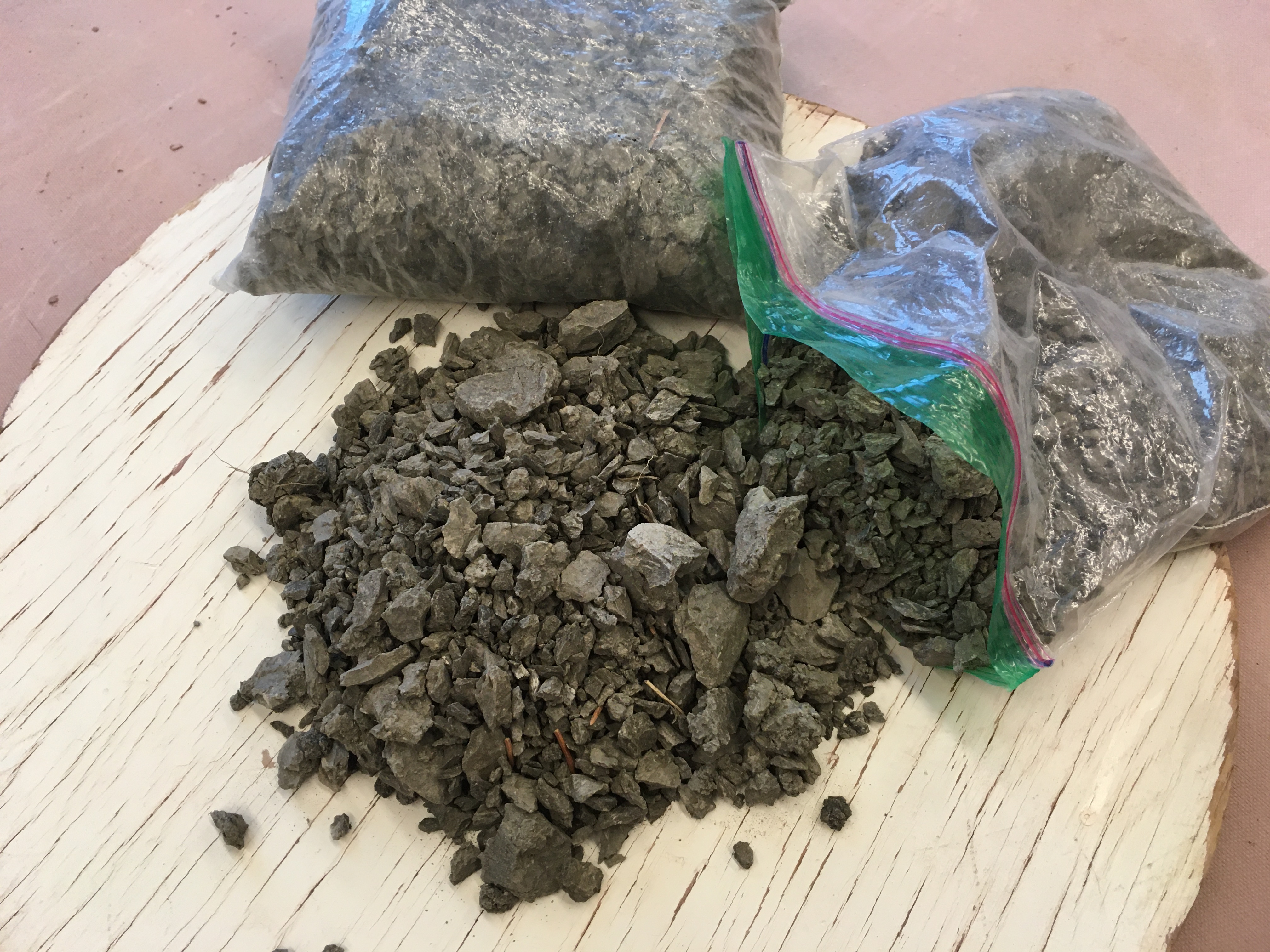
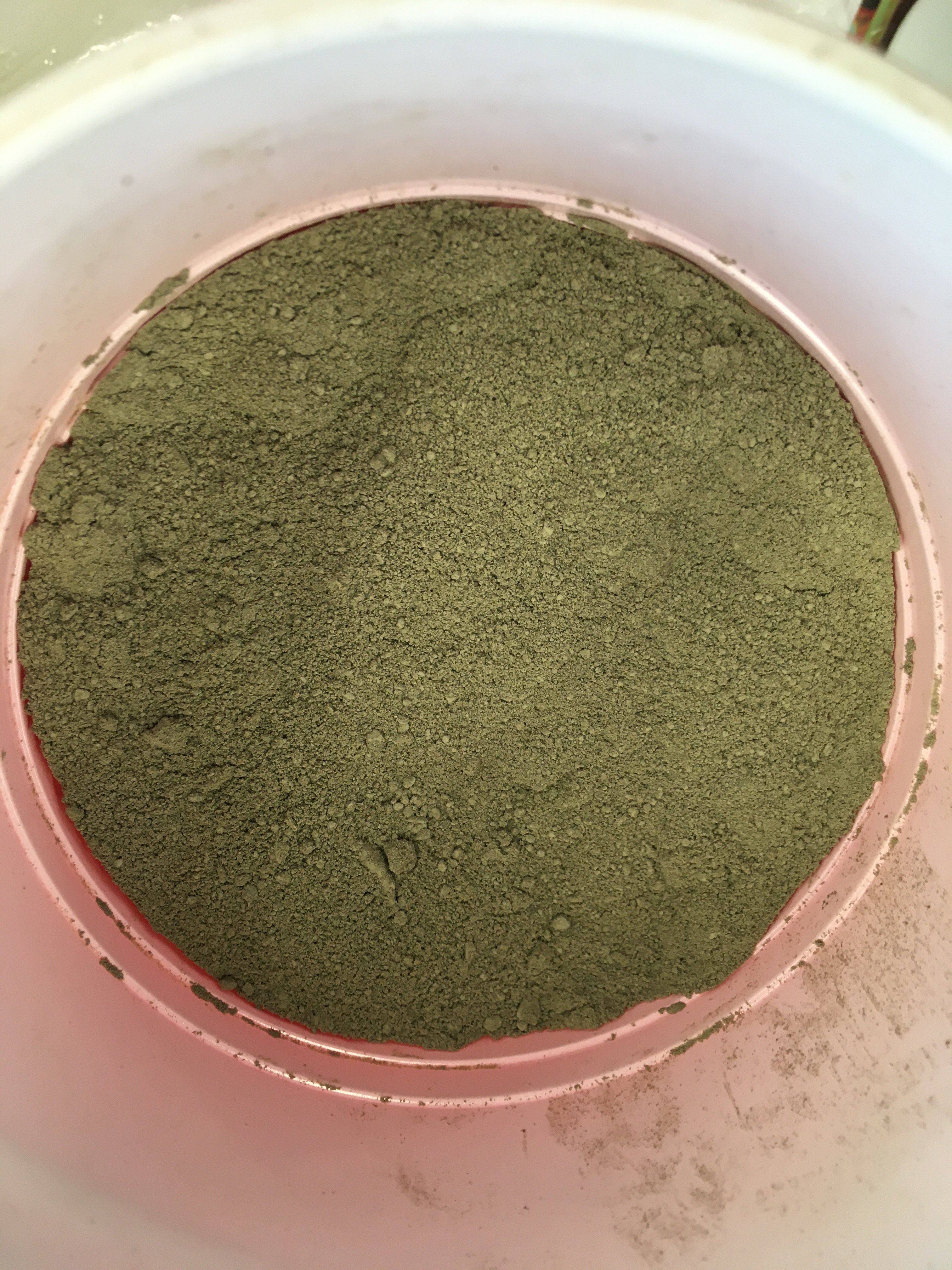
Yesterday morning, I biked over to someone’s house to pick up a used coffee grinder for $5. As I discovered by testing this out own my own grinder at home, this technology is lifesaving (a bad joke for the one or two people reading all my posts). I can now grind a handful of dry clay pieces into to a fine powder in roughly 3.5 seconds. Bits of plant matter included.

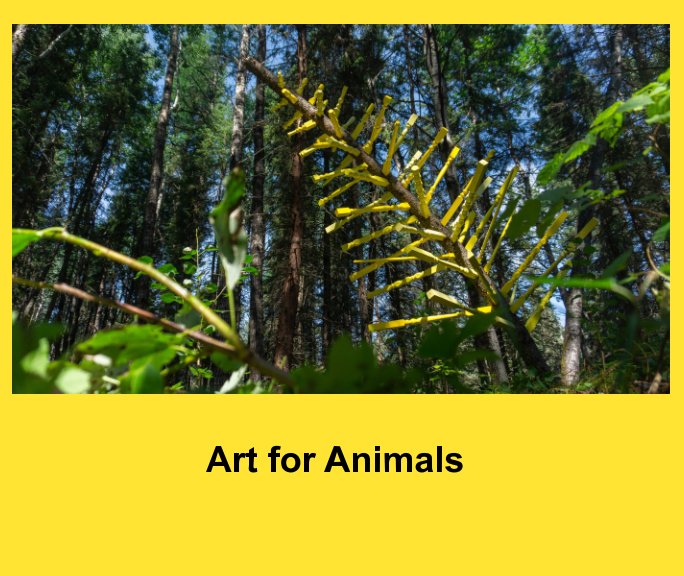
As you can also see, I’ve been busy with the local clay that I got from Jeff Meldrum, a very cool artist doing work such as Art for Animals.

View Art for Animals by Jeff Meldrum

Jeff dug this clay up from a band of it he’s found on his land in Northern Saskatchewan, the very same land where he installs sculptures and then has motion-detecting cameras “shoot” animals interacting with them: “In recruiting wild animals as stand-ins for the human viewer/collaborator, I hope to subvert the dichotomy of human vs. animal which has erroneously placed humankind at the top of the pyramid” ( Art for Animals). I picked the clay up from his place in Regina two days ago, and yesterday got busy grinding and applying it to a new dinner plate-sized mold I made last weekend.

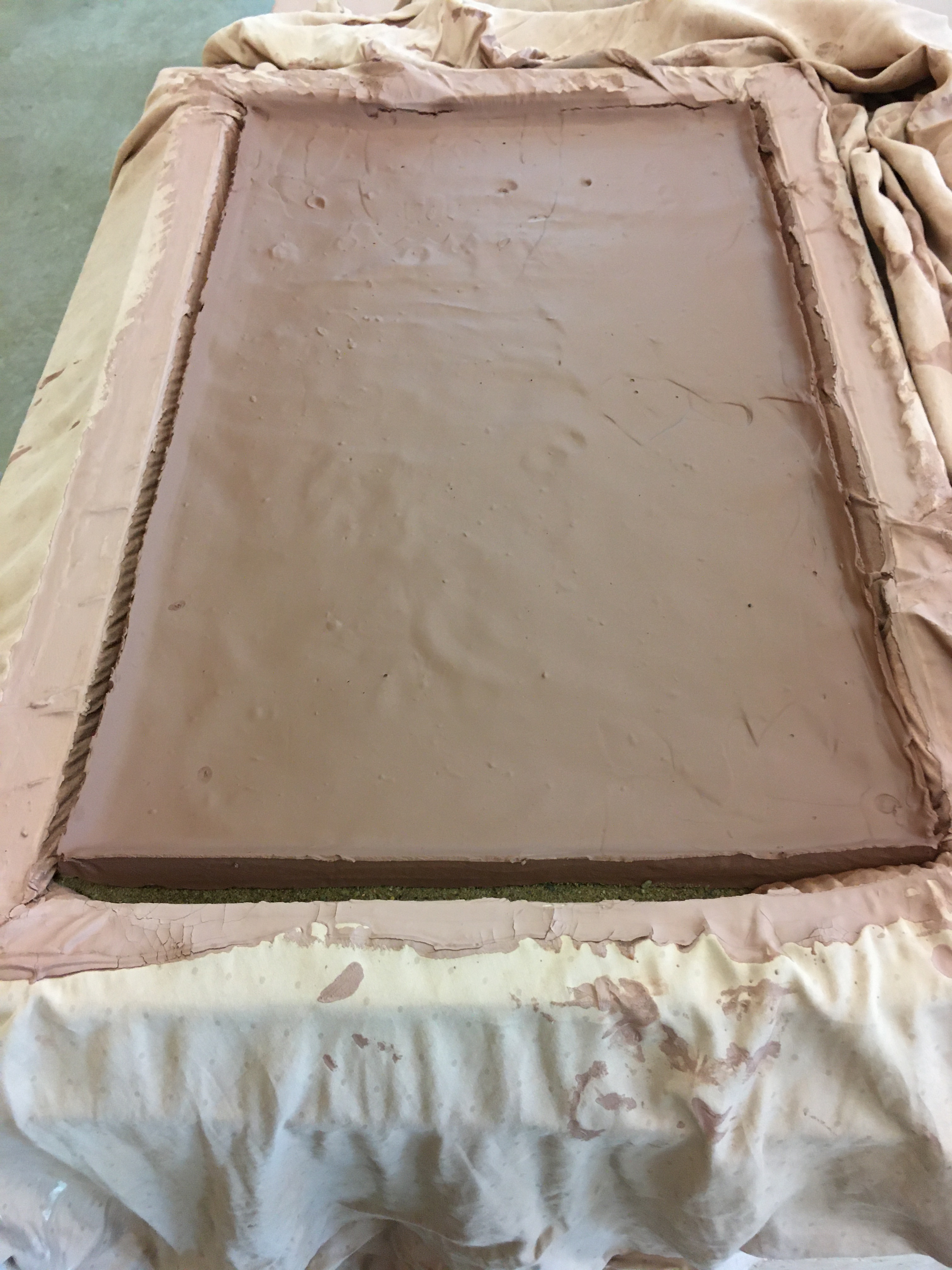
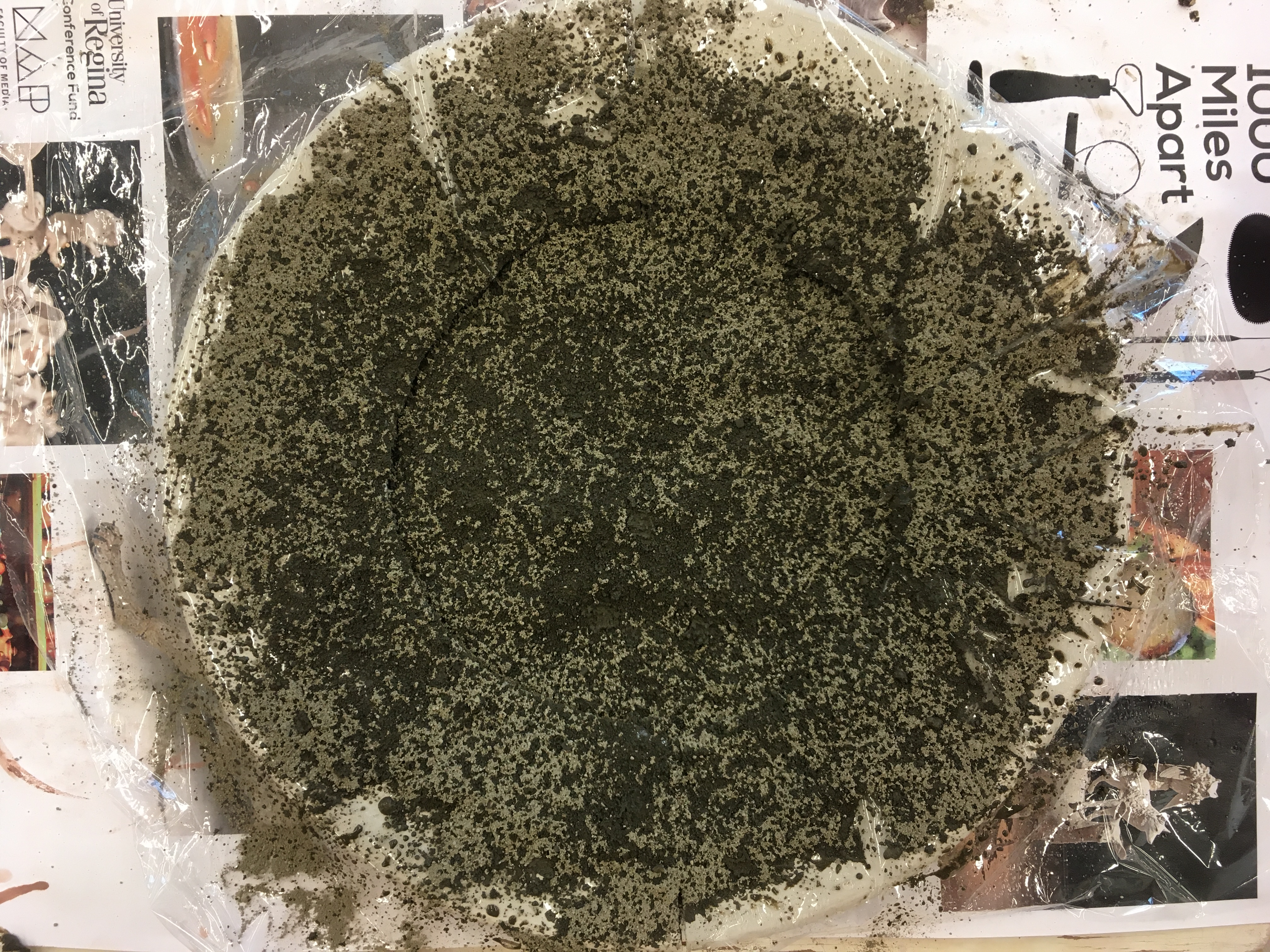
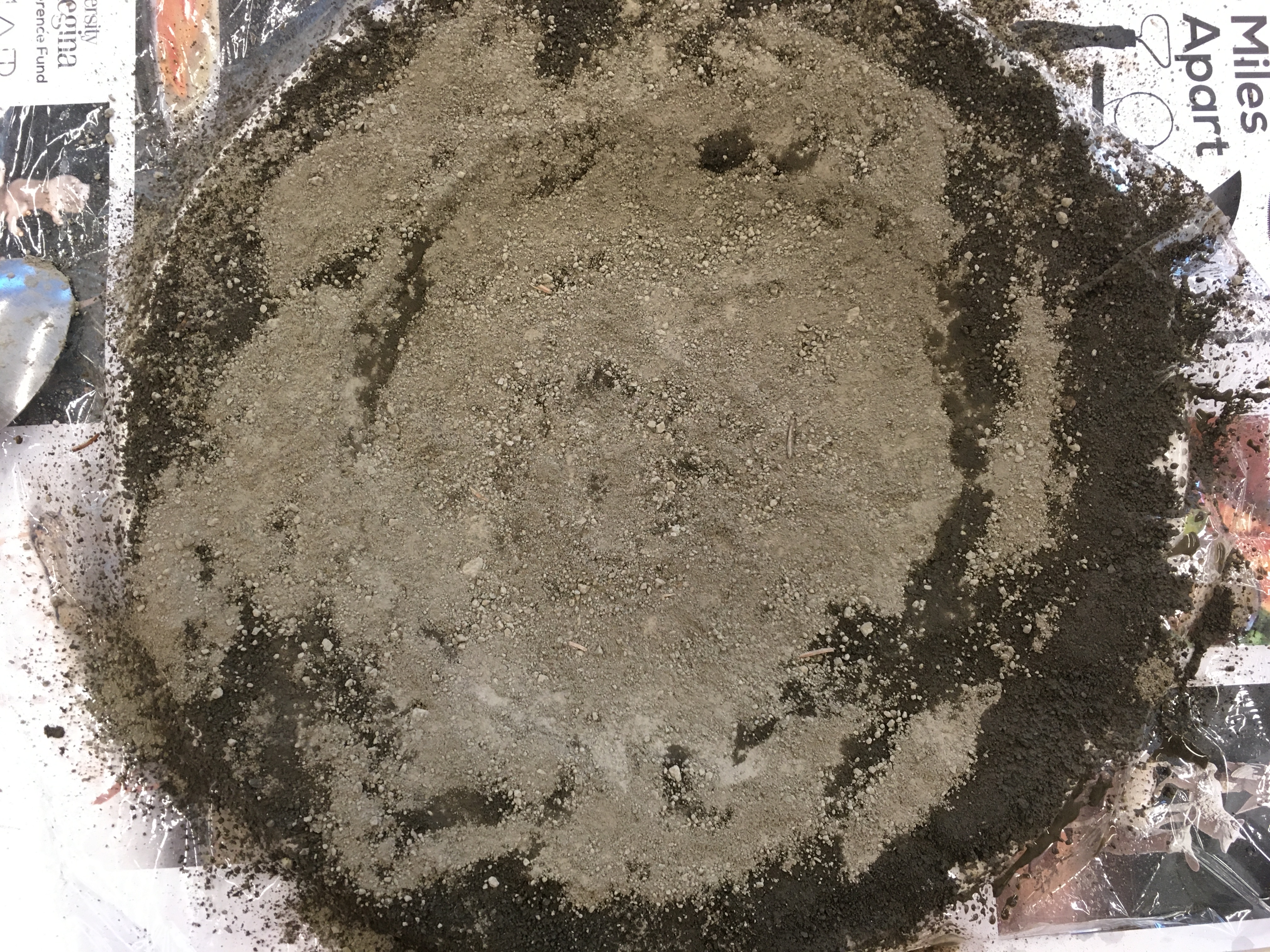
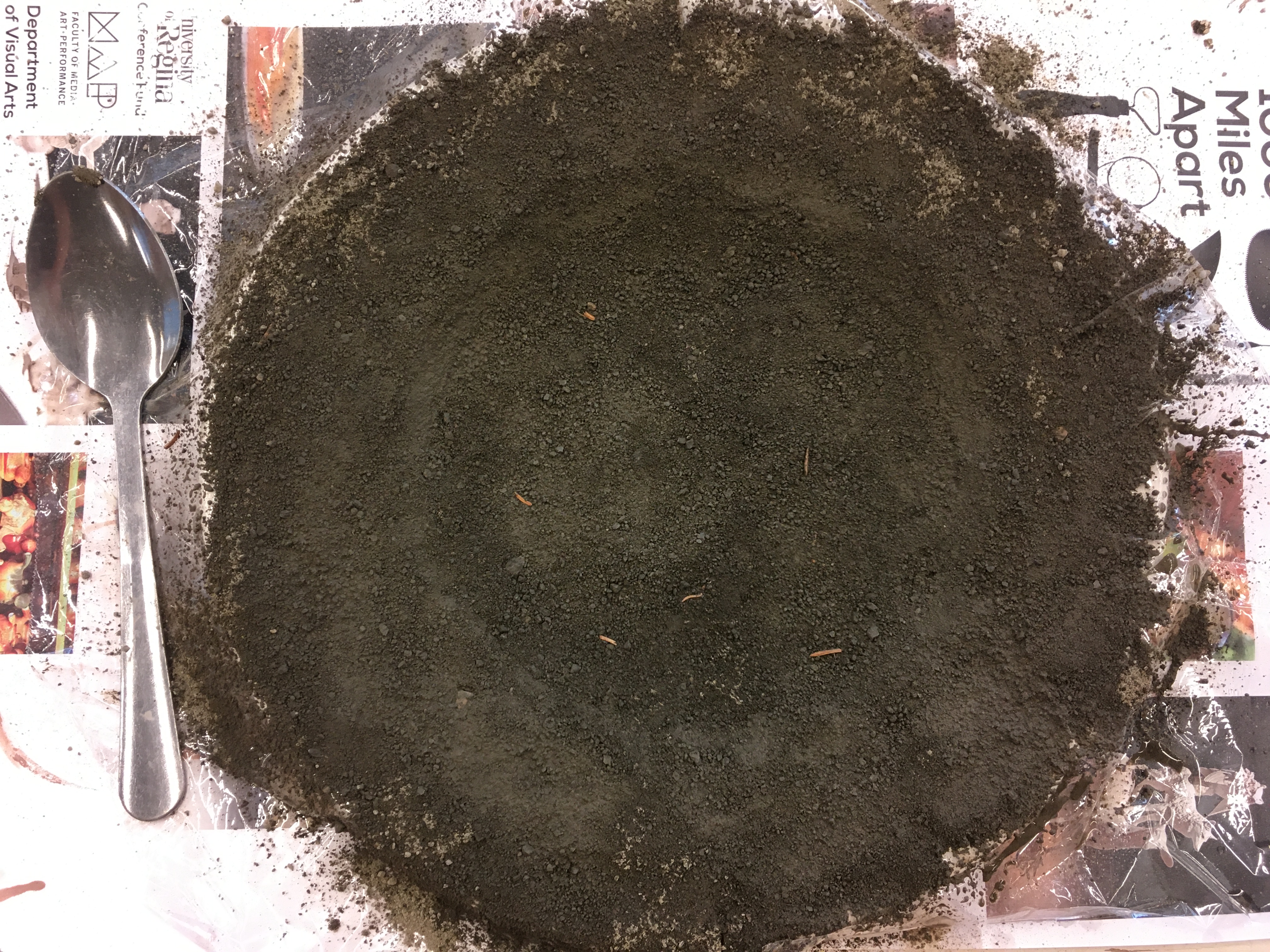
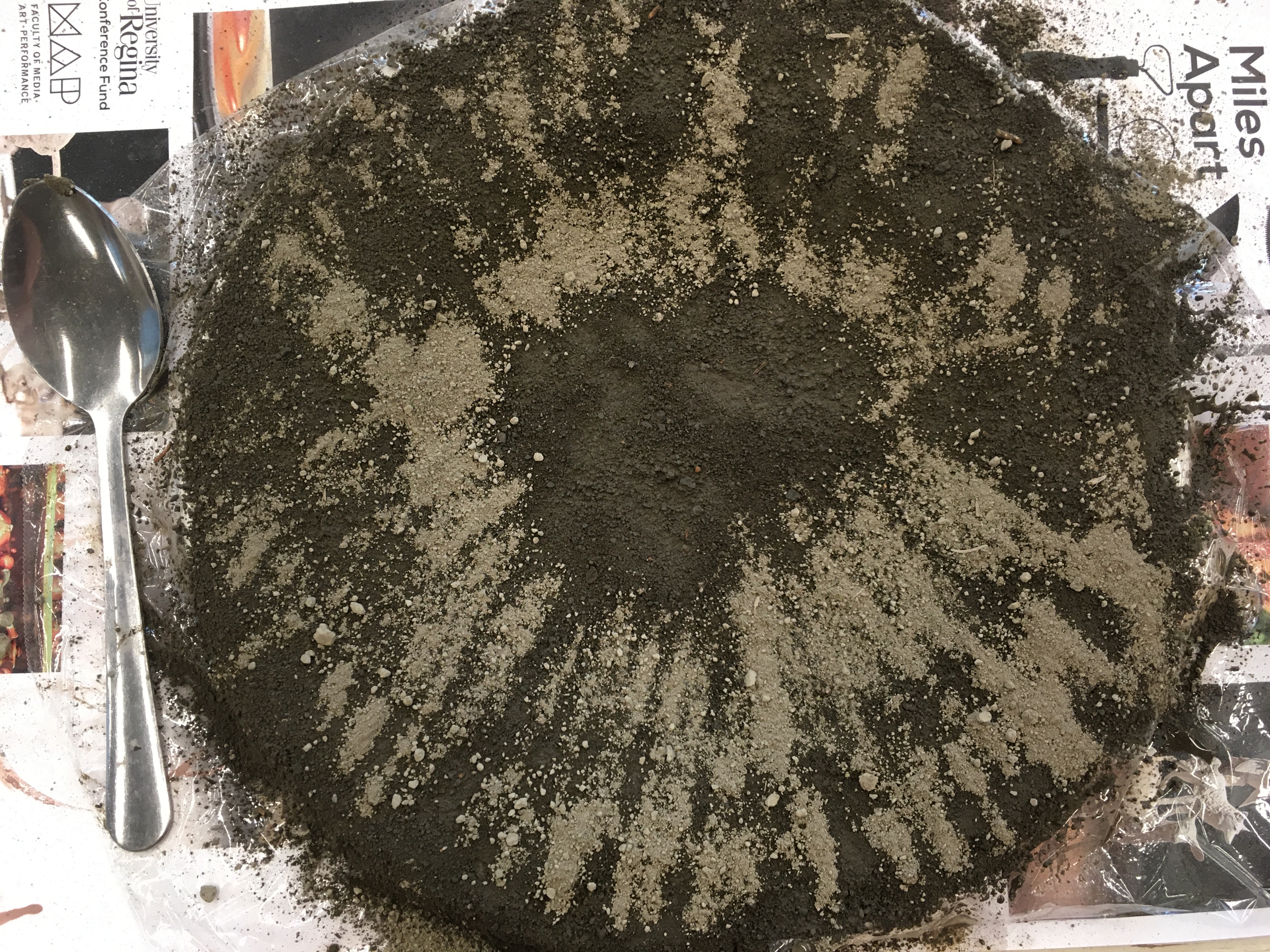
I applied very little at a time, misting it with water and occasionally stopping to tamp it with a spoon.

This afternoon, I returned to see how it dried overnight, and I’m pleased enough with the result; the plate made of this pulverized local clay can exist as a free-standing entity! The fact that it’s local and that looks more like dust (especially thinking of Great Depression dust) than the porcelain version does means it’s the winner. I’m nowhere near finished experimenting with this project, but at least I’ll have something to show at Neutral Ground and to the End of Semester Review Committee that I feel is as good as I can get it for now.

I went back to check on its drying this evening, and I was able to move it off of the paper and board I’d set it up on and onto a small photo-box a fellow ceramics student owns. At least at this stage, while it’s still quite wet, I can actually lift it with my hands. This assures me that I’ll be able to set up a plate like this at Neutral Ground tomorrow (I’ll create it in the gallery tomorrow and then remove the mold on Friday); it also means my next step, photographing a plate like this blowing away, will be another challenge to overcome.

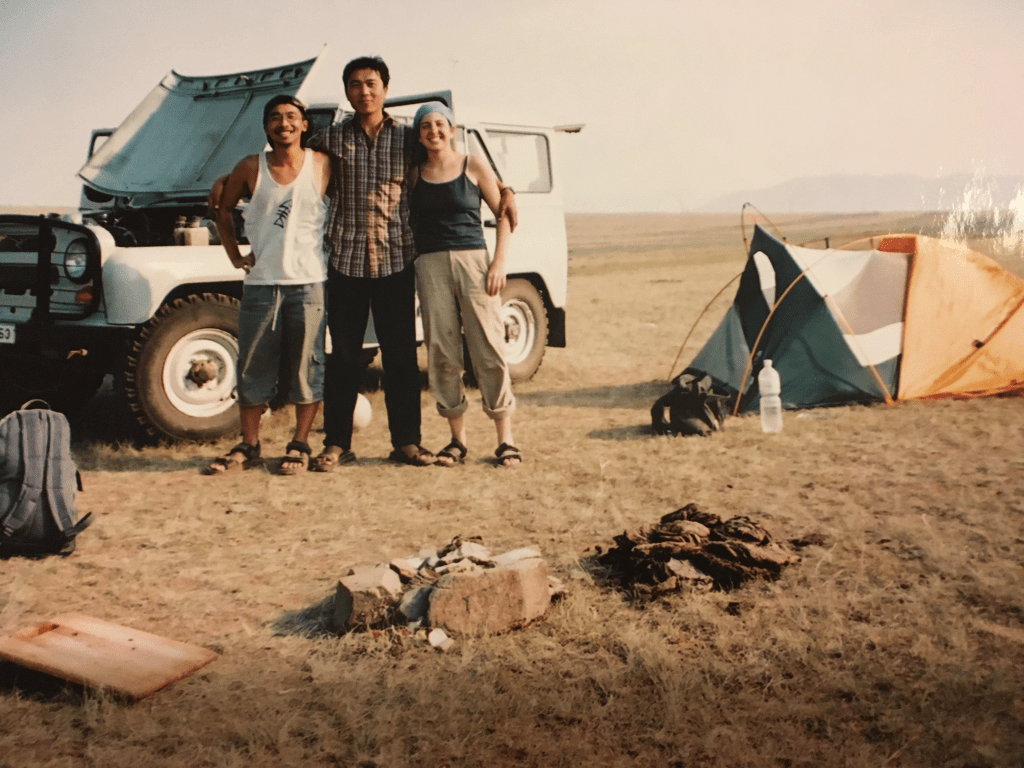
I like that it definitely reads as dirt. I’m not sure how much the idea of dust comes across. I’m also slightly concerned that it could read as cow pie. It reminds me of of the dried camel dung patties that we burned for cooking fuel when stranded in Mongolia, twenty years ago. There’s a pile of them to the right of the fire pit in this old photo I dug up.

My neighbour-friends tell me that from photos shared, this dust plate look more like plate than dung, which is reassuring. One of them observed that “the drying process reflects the drought.” The other commented that the object reminds them of “the cross section of a tree or fungus” — interesting! My husband thought “tree” when he saw it too.

That’s where things are at with “Dust” for now. I’ll see if I can create a “Dust Bowl” of this material tomorrow, if I have time between work, installing at Neutral Ground, and then hosting a For Our Kids meeting in the evening. It’ll be a full day.

dust update 3

Here are a few photos and then a few thoughts about where I’m at with this project at this time.

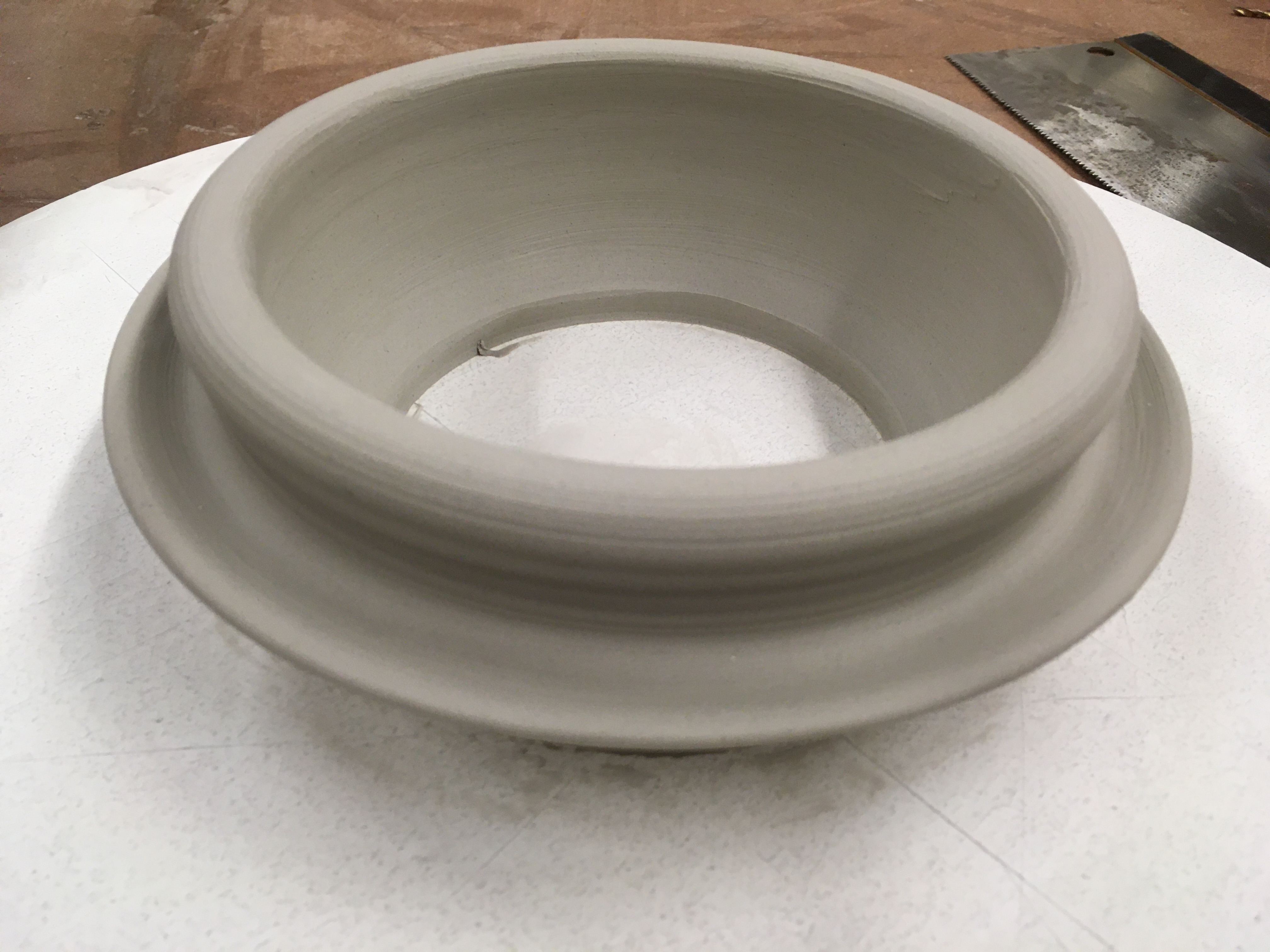
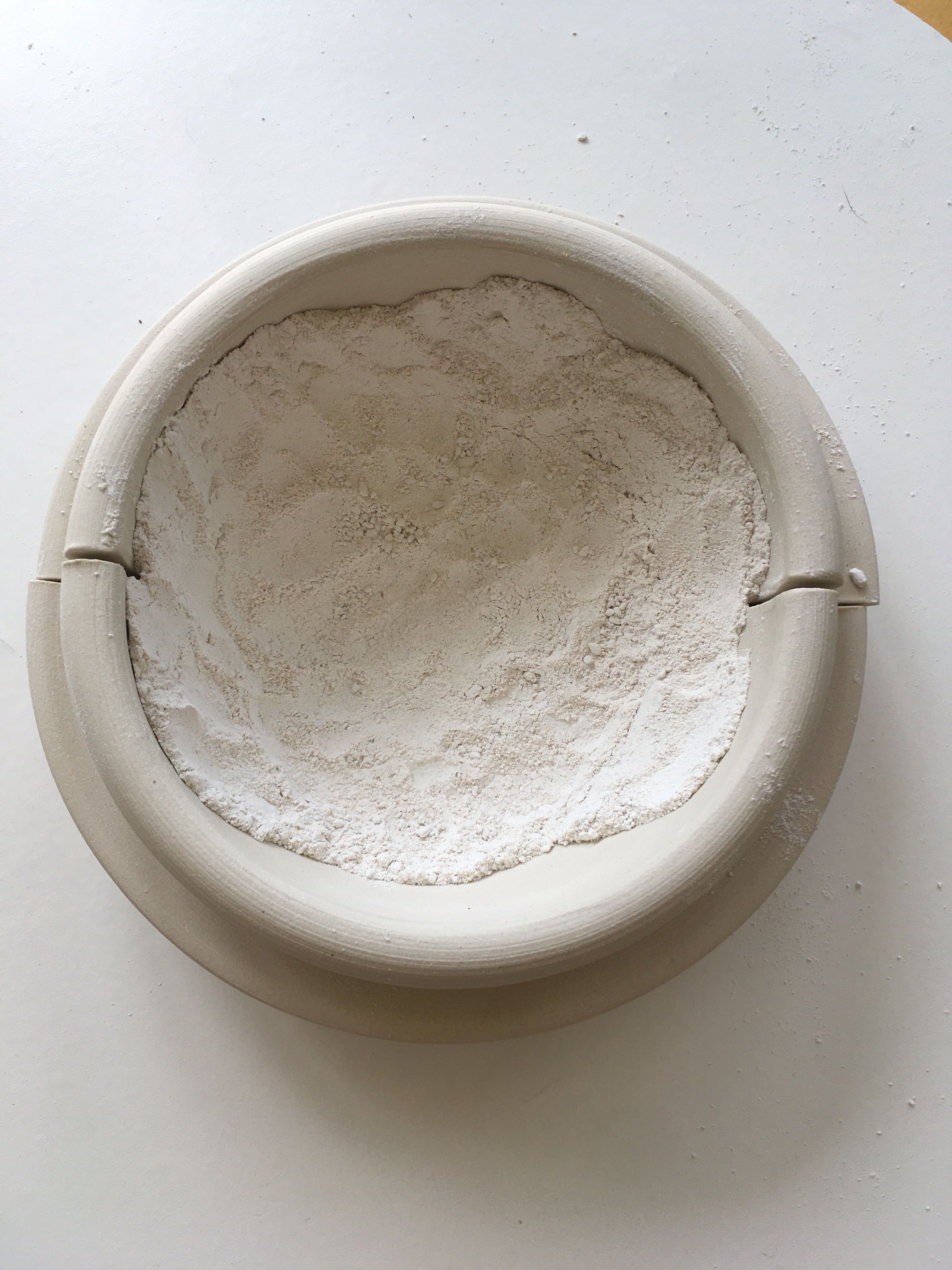
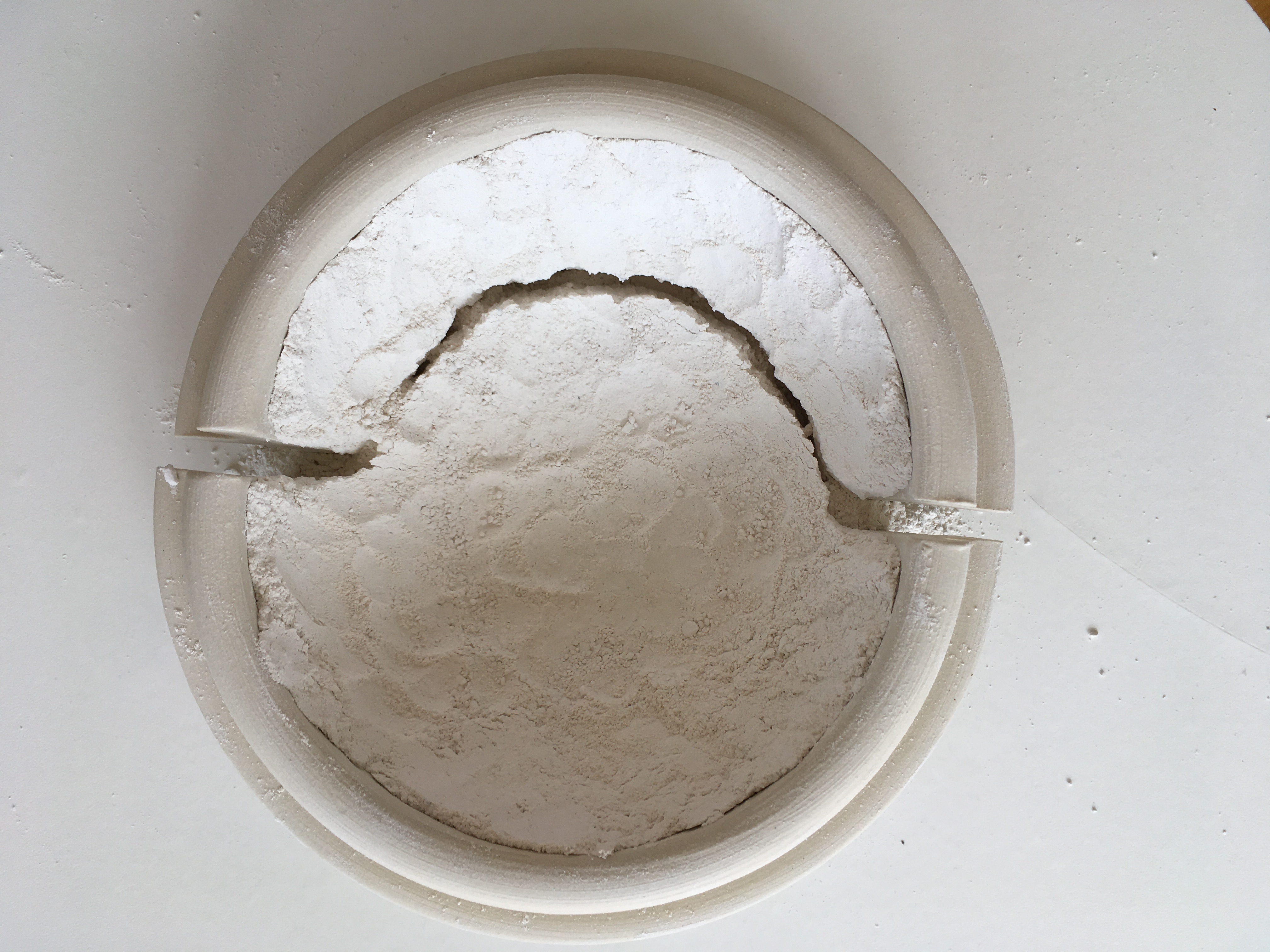
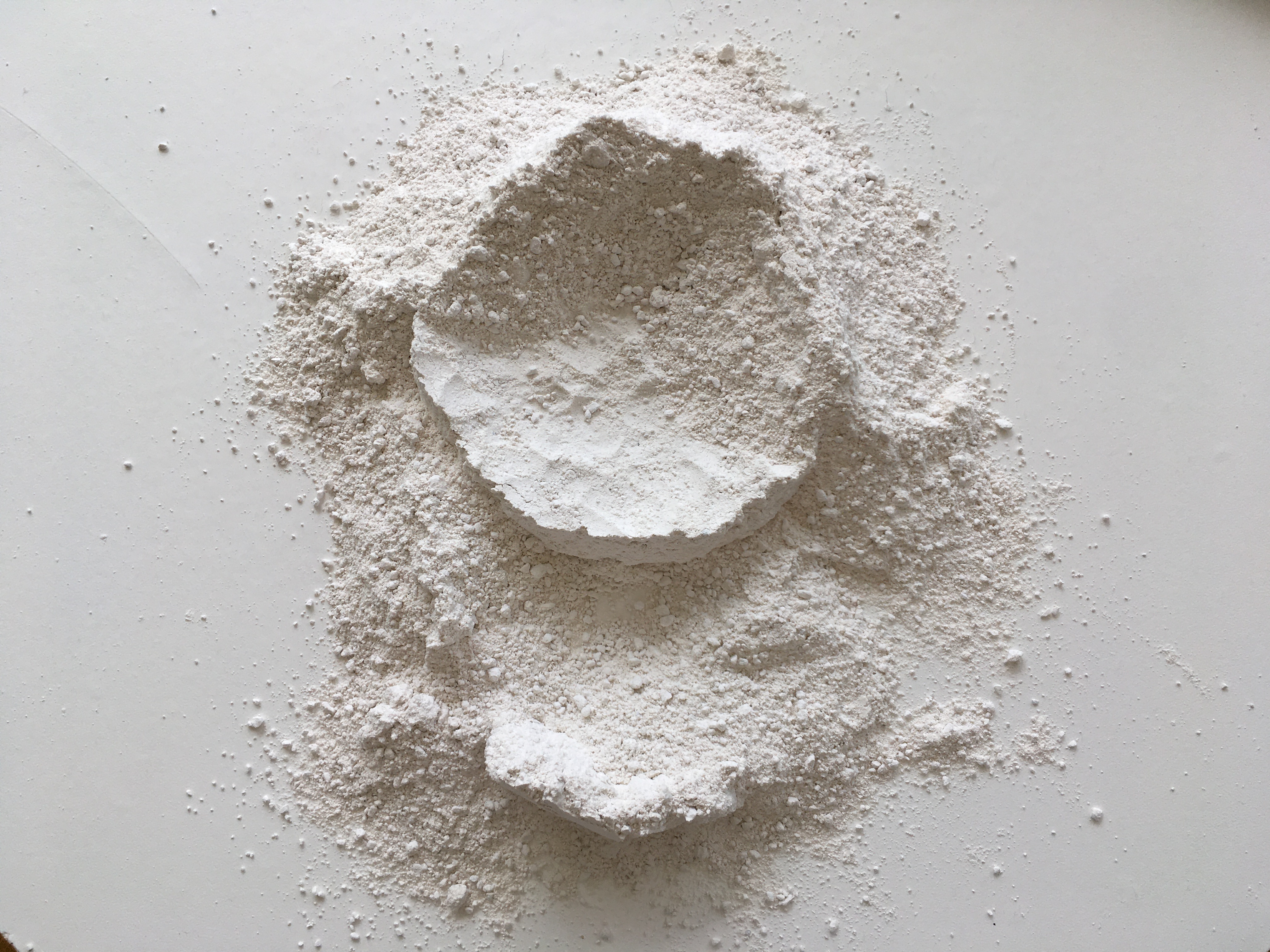
  1. From experimenting with a bowl-mold I threw (using only porcelain and water to create the “dust bowl”):

Result of the bowl mold: It could work, but on its own the bowl form is no easier to use than the plate form.

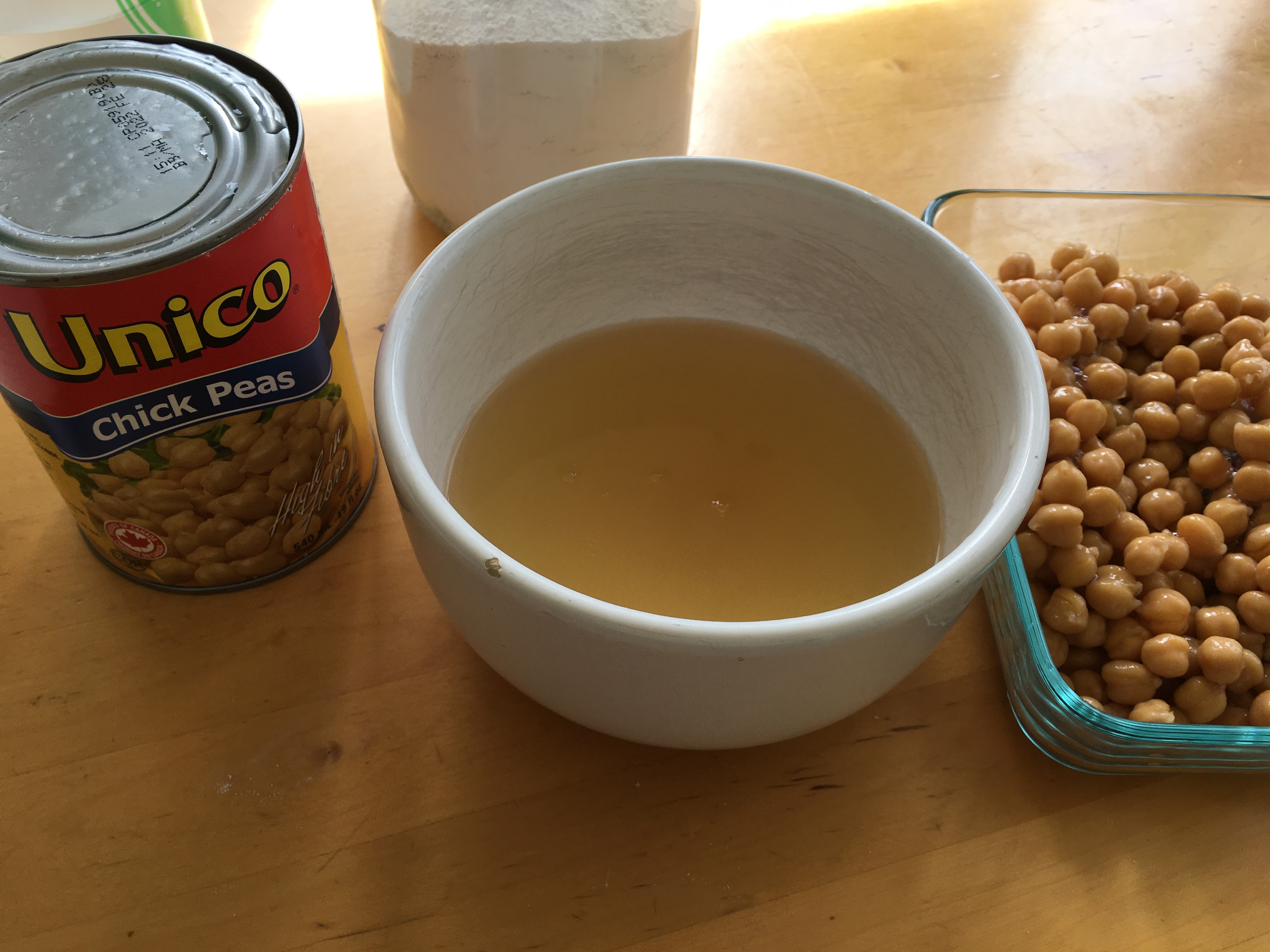
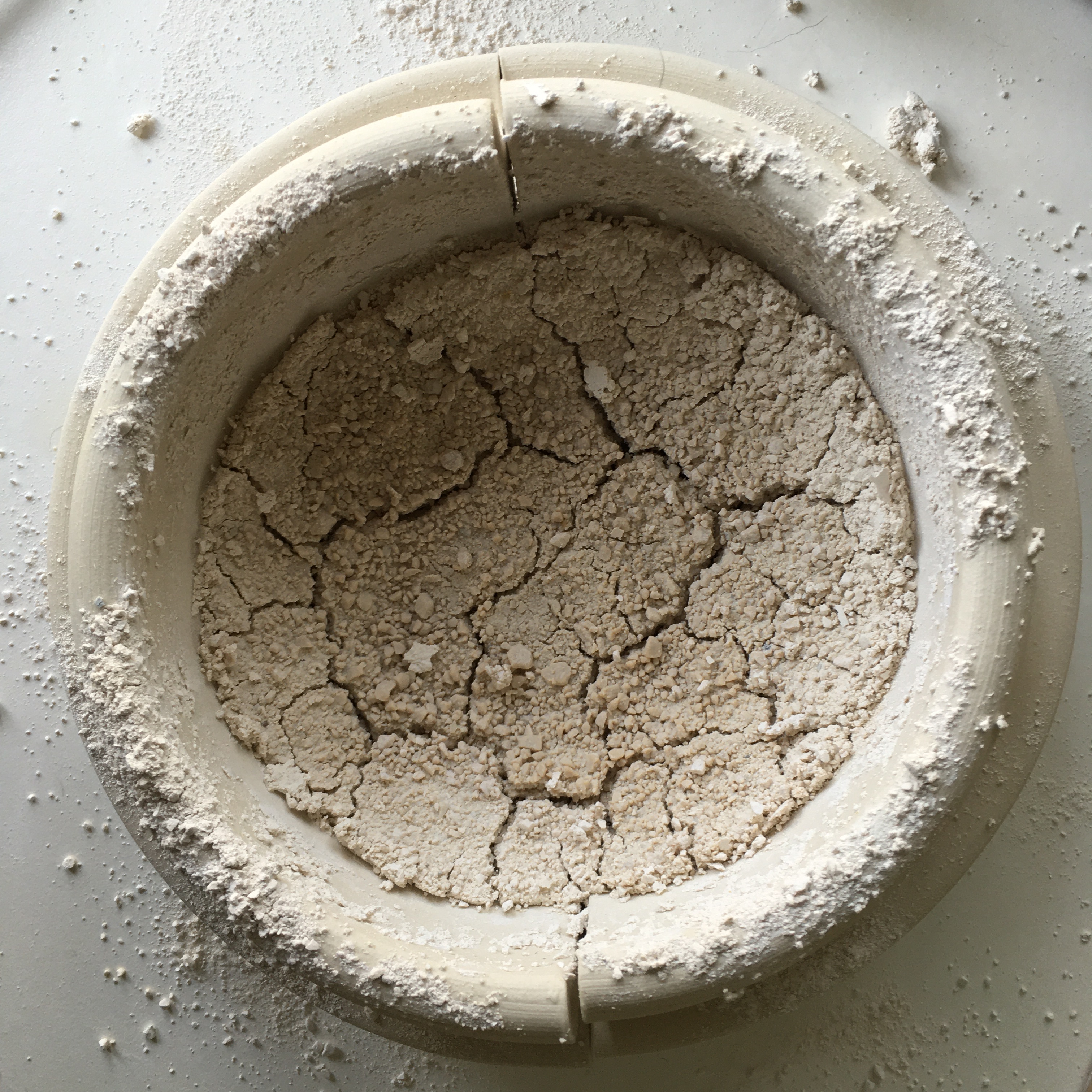
2. From experimenting with adding aquafaba (the liquid in a can of chickpeas)* as a natural adhesive:

Result of aquafaba and likely any liquefied adhesive: clumpy and not all that useful.

*My closest friend is a vegan; she’s taught me a thing or two about reducing my meat and dairy consumption, and one trick is to use aquafaba as a substitute for egg white.

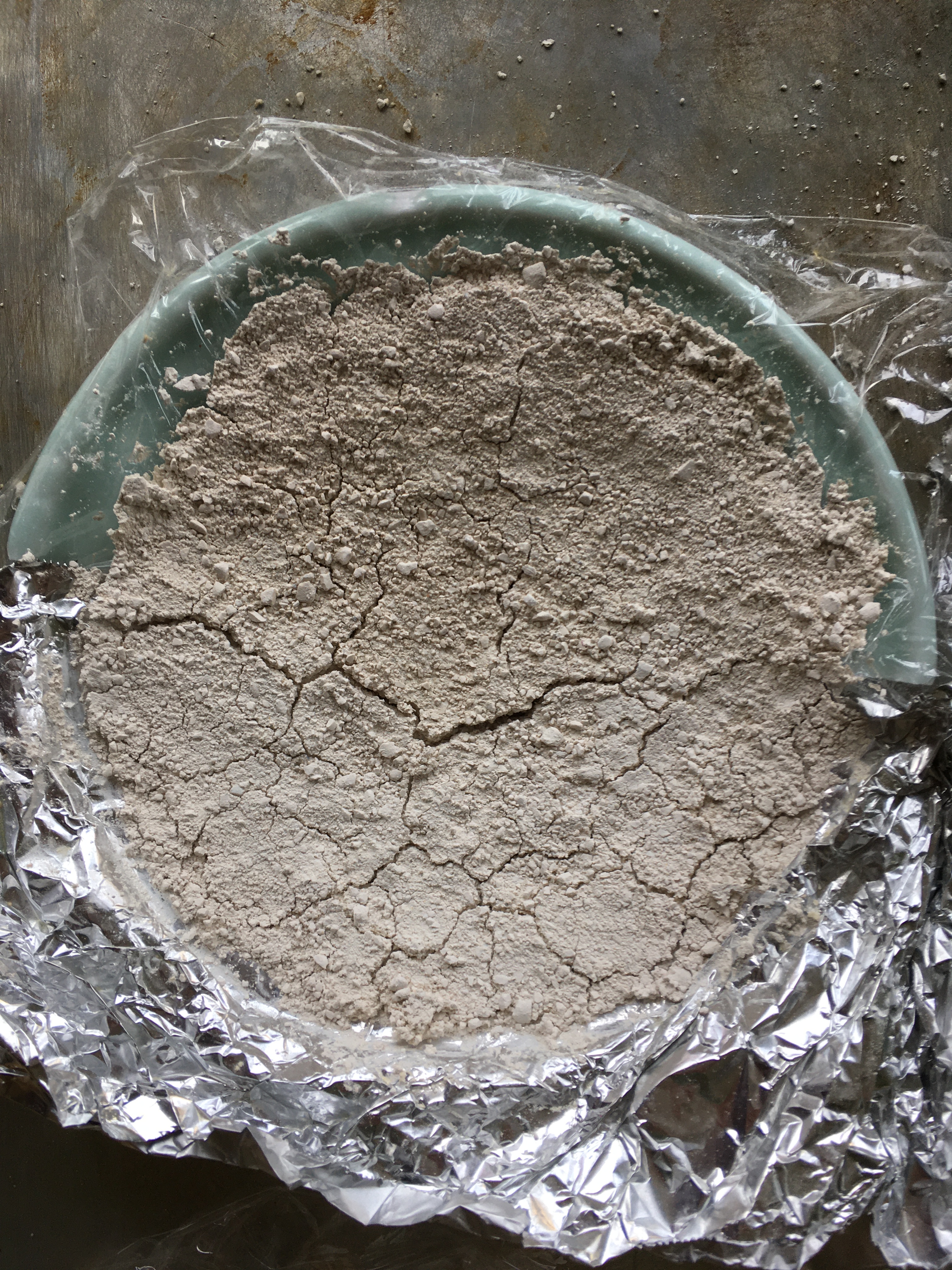
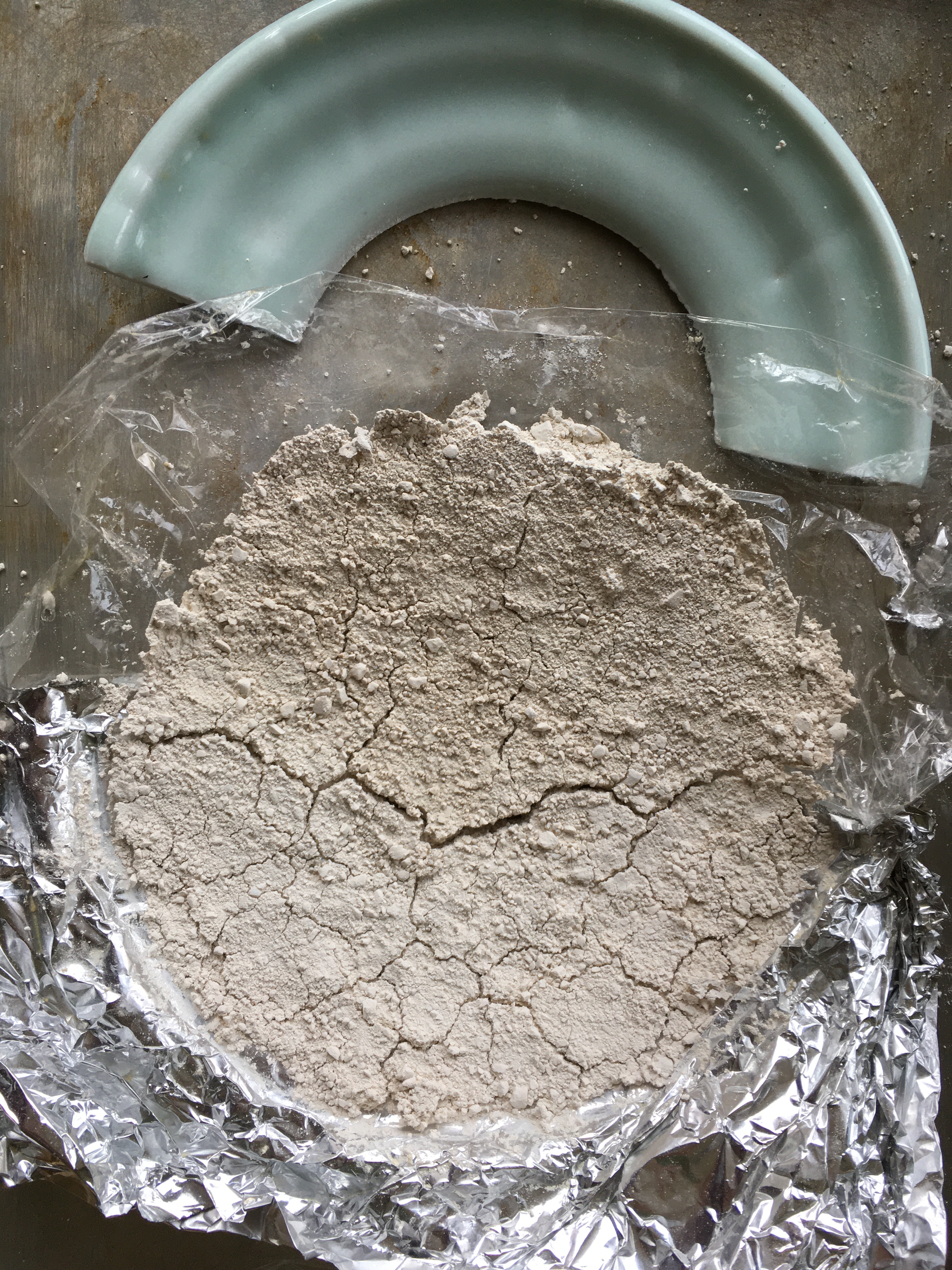
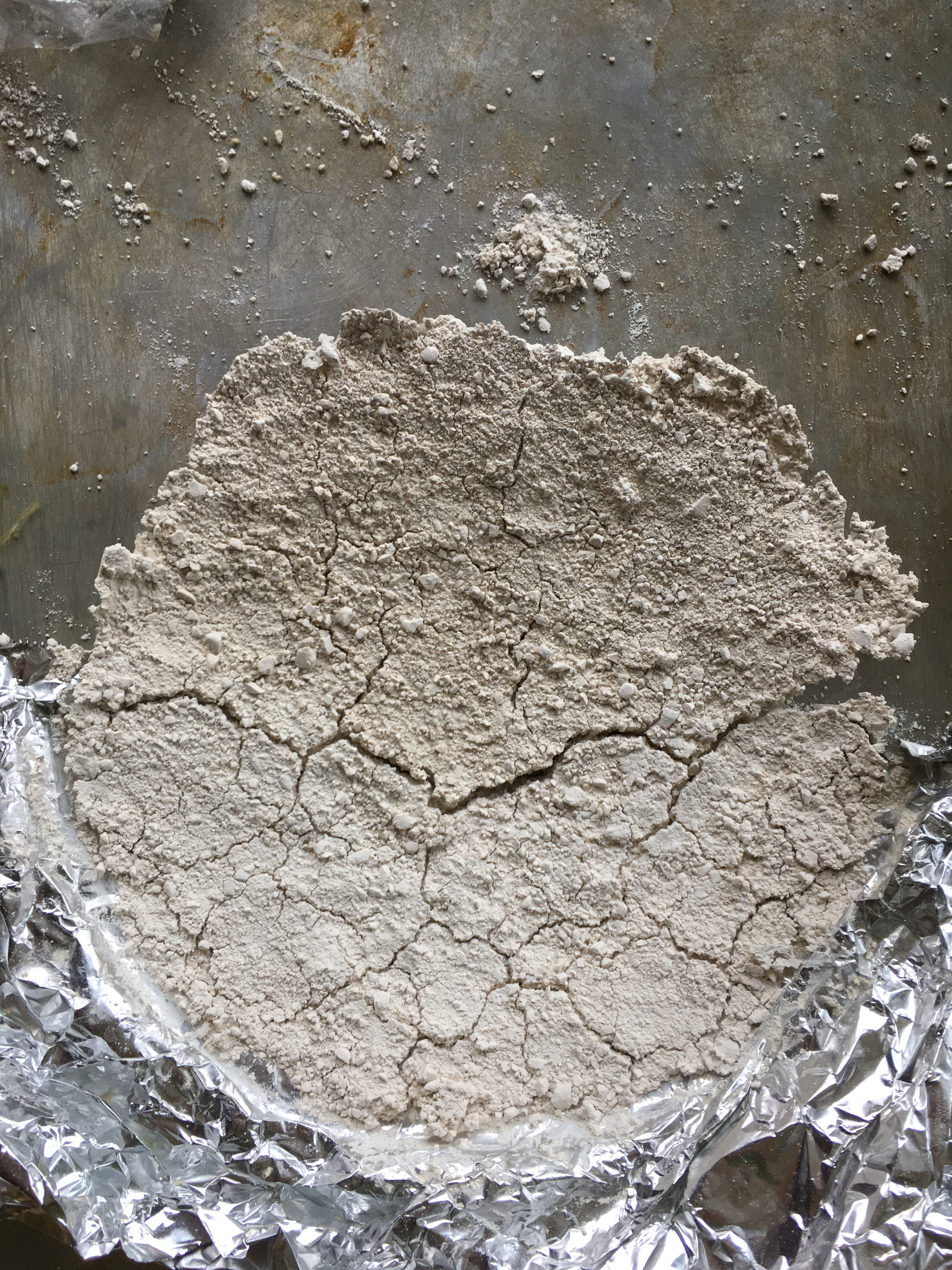
3. From experimenting with covering the plate mold in plastic-wrap and in aluminum foil (back to porcelain and water; misting the water while sprinkling the porcelain, not in layers):

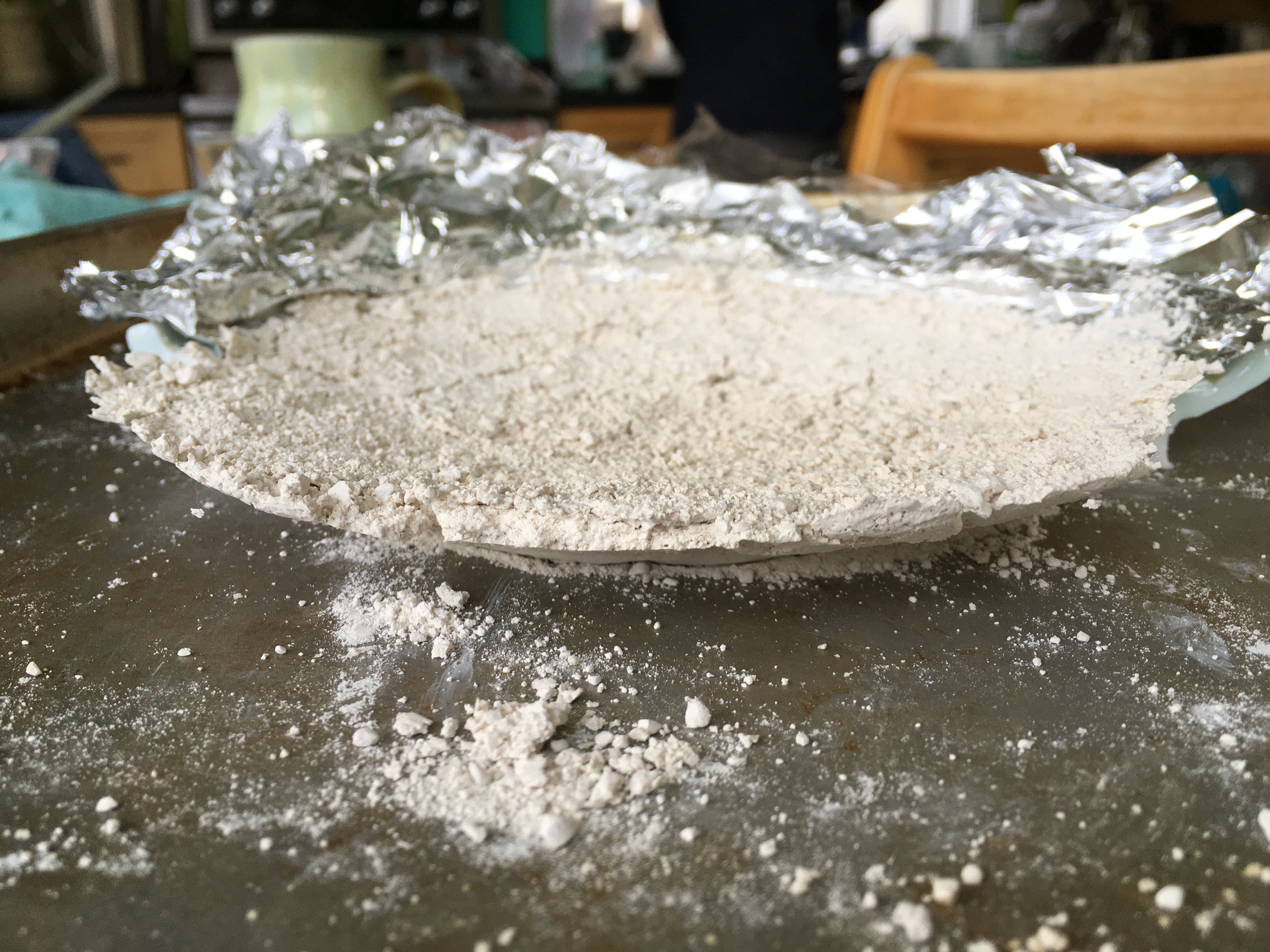
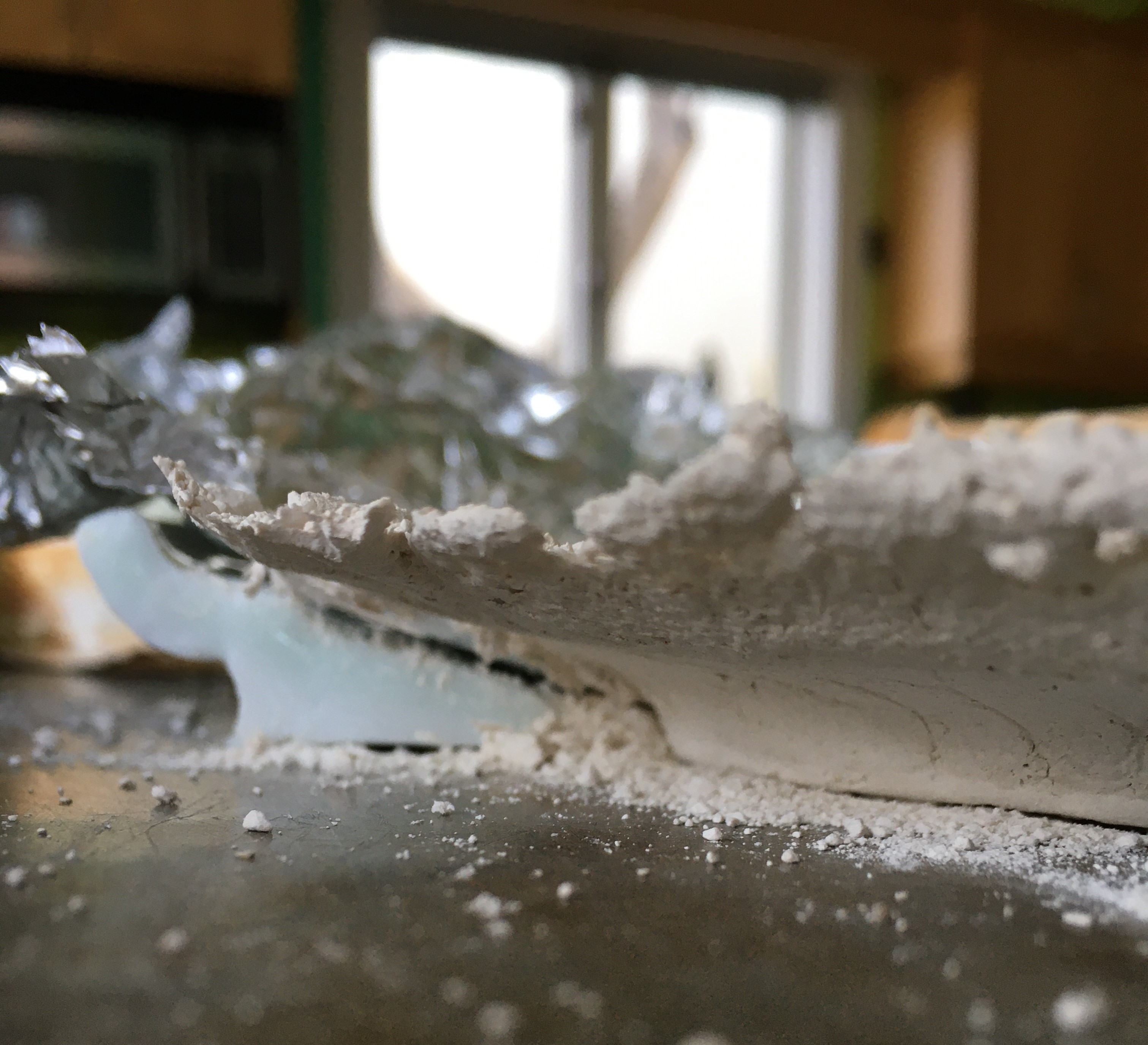
Aha! The plastic wrap was the ticket. If I unstuck it from the glazed mold as the dust was drying, I was then able to slide the mold out from under the clay without disrupting the clay at all. THE PLATE STAYED STANDING:

This tells me a few things: it is possible to do this(!); the mold doesn’t need to be fired (or glazed); paper may also work, which would be better if I choose to fire these pieces.

4. Speaking of firing, this is what the material looks like when fired:

As expected, the clay dust is much whiter when fired to temperature (the temperature at which the clay-body vitrifies, which is Cone 6, a bit over 2000 degrees Fahrenheit). I now have a dilemma: to fire or not. While aesthetically more pleasing when fired, firing this clay means creating CO2 through the burning of fossil fuels that an electric kiln uses… our electricity in this place (Saskatchewan, Canada) is predominantly created through burning natural gas and coal.

Figure 2: Electricity Generation by Fuel Type (2018)
Source of electricity in Saskatchewan. Source.

It seems to be black and white: burning CO2 is hypocritical when producing work about the climate crisis; ergo, don’t do it. However, I don’t know if it’s that simple. Just as people who view people like me as and environmental nut-bar are quick to point out, I still burn gas to heat my home. In other words, the line of argumentation is false: it’s not being a hypocrite to have behaviours that you in general are striving to reduce. In the scheme of things, the electricity I’d be using to fire part of a kiln (I’d coordinate with others students to fill the kiln) is minimal. Compare firing a kiln to burning a private jet. (I don’t have a private jet). Besides, we’re already screwed, right? What may slow down our fall will be mass changes to institution, corporation, and government policy. I work towards influencing those changes in my activist life. Does all of this mean I shouldn’t fire a kiln? Unlikely. However, I know that the medium is always part of the message, and that the message is all that matters (if anything matters) in a work like this. For the moment, I’ll leave these plates unfired. Clay is clay; ceramic is ceramic. Ashes to ashes, dust to dust and all that jazz. Besides, I can always fire them later.

I’m now waiting for five large plate molds to dry sufficiently so that I can use them (unfired). I’m due to install work in the Neutral Ground (a local artist-run gallery) in three days for a show of Master of Fine Arts students titled endings + beginings. I’m planning to create four of these dust plates on my dining room table while installing in the gallery this Thursday. Wish me luck.

One last update on this project, and one other dilemma, is the clay itself. I’ve just today procured (via a trade for local eggs) some local clay — clay that was dug up on land just about two hours north of Regina. It’s brown in colour. I plan to grind it tomorrow and test out what it looks like in dust-plate form. So…. porcelain (highly processed; ingredients from far far away) or local clay taken from the very soils of the province where I live? Local, right? The dilemma stems from aesthetics (I’m realizing this semester how much I like the colour white in my work) and from content: most plates in our homes are made of some form of porcelain. I have exactly one and a half days to figure this and everything else out before I install something in Neutral Ground.

Group Studio Arts and Culture Journal, entry 7: Madeleine Greenway’s Artist Talk on Show — Propagation

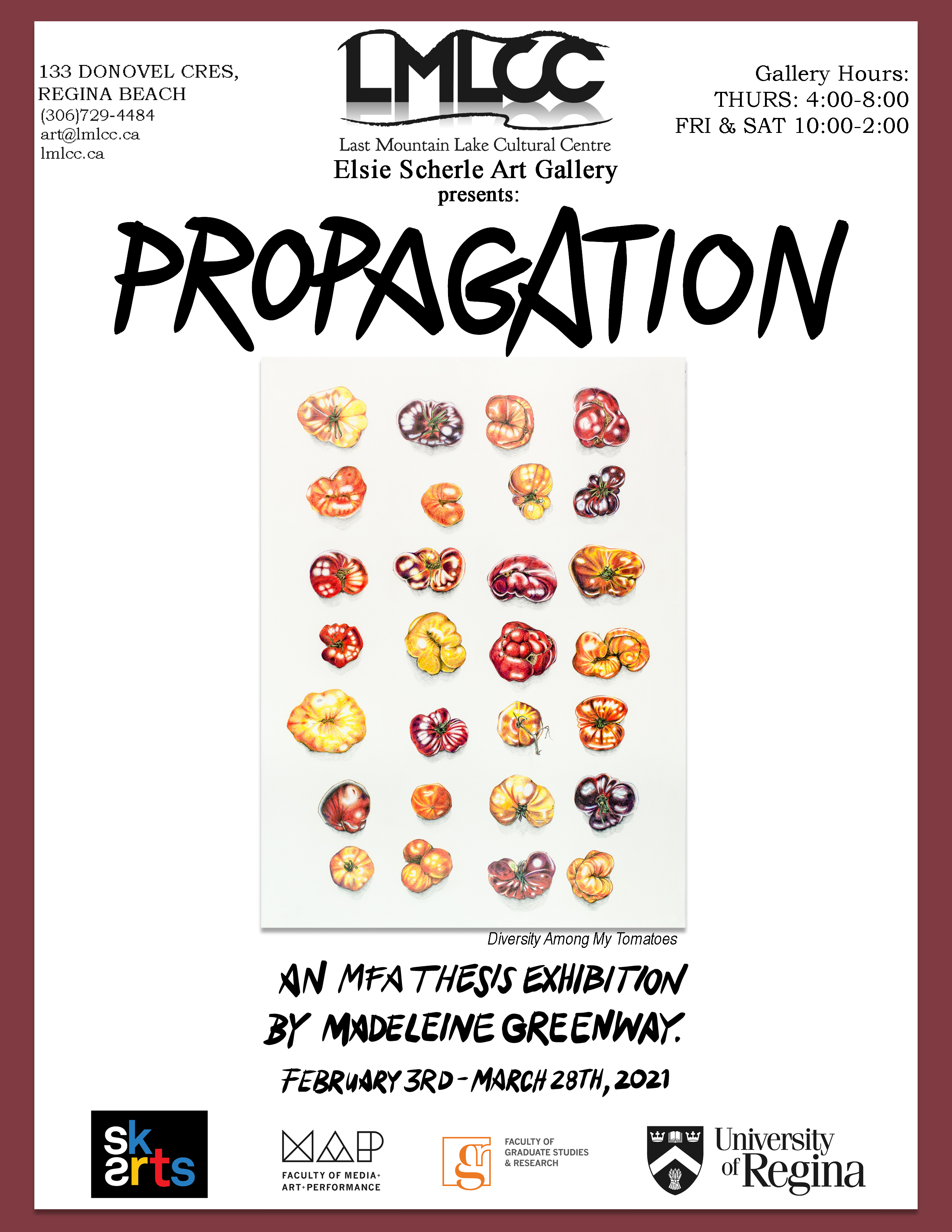
A fellow MFA candidate, Madeleine Greenway, gave a wonderful artist talk last Sunday to accompany her show Propagation.

Madeleine began the talk by explaining the reason behind her choice of title. She said that the word “propagation” was an appropriate choice because it has several meanings that coincide with her work’s themes: “how plants reproduce; how people and animals reproduce in a biological sense; how we create families; how ideas can spread among groups of people and beyond – especially in this case the knowledge of women that’s been propagated, but also with a show I can propagate my own ideas.”

She went on to describe the ideas that she’s propagating with this show, largely that food is “meaningful, and it has value, and it deserves being invested in.” She spoke about not just the way our bodies are formed from the nourishment we gain from food, but also how many aspects of our lives revolve around, or should revolve around, the growing, harvesting, and consuming of food. Eating food, and especially growing one’s own food, is often a social act: “it’s obvious how meaningful and emotional food can be just in terms of how central it is to celebrations and how sharing food is such a universal human act.”

I really admire the way Madeleine engages her audience through her work. Her drawings and prints certainly do propagate the ideas that she wishes them to. At the same time, the work is visually stunning — full of voluptuous shapes and colours that attract viewers to spend time looking at these images of the items we often gloss over at our kitchen counter or table. We may realize that the produce we brng into our homes pales in comparison (and is literally paler) than the produce in these works, and we should consider that fact. What are we losing by allowing corporations to feed us what big-ag produces in the name of produce? As Barbara Kingsolver puts it in Animal, Vegetable, Miracle: A Year of Food Life, “How did supermarket vegetables lose their palatability, with so many of us right there watching?” (48). She points out elsewhere in the book that food—a requirement of life, something we take into our bodies at least three times a day— is now nearly completely outside of our control: most of us don’t grow it, we don’t even hardly know it. We don’t even know what could or could not grow from the soil and climate in which we live. The food we now eat is far removed from its source, not only geographically as is often the case (apples from Chile; kiwi from Greece) but also in terms of its nutritional value. The situation is quite insane. Madeleine’s prints and drawings convey it beautifully and simply in “Diversity Among My Tomatoes,” “My Sister’s Apples,” “Silverbeet Rainbow Chard, Red Leaf” and many works.

Propagation also includes a personal essay Madeleine printed out by hand on large sheets of paper that hang on the wall. It tells the story of her family’s next-door neighbours from when she was a child who tragically died in a house fire, their land then sold to Madeline’s parents who continue to garden on it to this day. This garden is an extension of as well as the source of her recent artistic practice. Madeleine’s love for this subject matter—these ideas she’s propagating—is clear. Hearing her read this essay out loud during her talk was remarkable. She opened herself up entirely to the audience. As David would describe this work of writing as well as her prints and drawings, she is entirely sincere.

I admire Madeleine for taking on subject matter that is so hugely important and responding to it through her work in such a deeply personal way. I asked her if she sees her work as activist in nature, to which she replied that it isn’t explicitly so, but she’s thinking she’ll explore more directly activist work in the future. I’ll be interested to see if/where she takes that, but to be honest, her current approach grounds me somehow; I take reassurance from her courage to convey so much important content through work that appears modest (in the positive sense, as in not vain, not didactic) as well as beautiful. Thank you, Madeleine.

Work cited:

Kingsolver, Barbara. Animal, Vegetable, Miracle: A Year of Food Life. Toronto: Harper Collins, 2007.