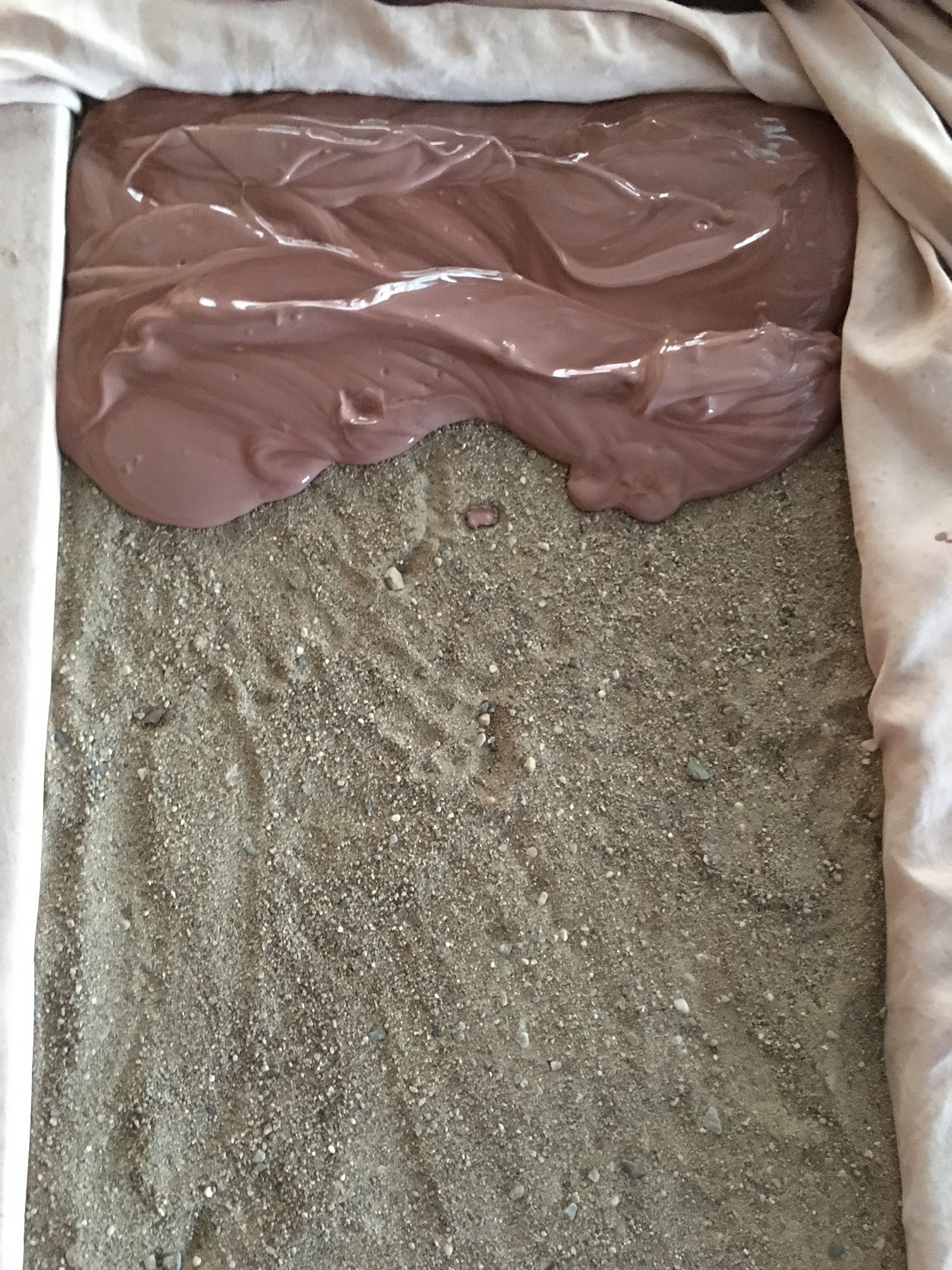
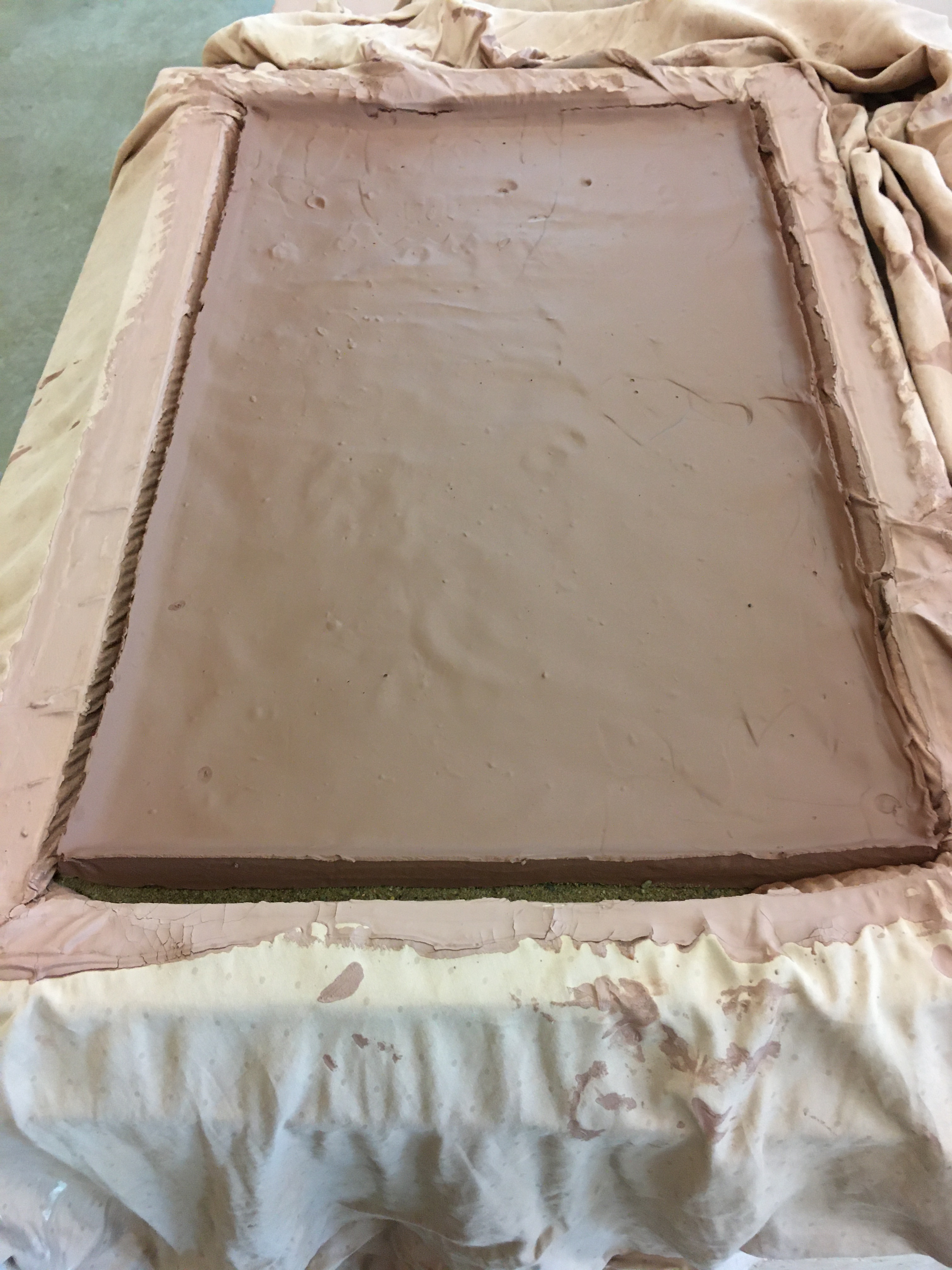
My attempts at getting terracotta clay to dry in a cracked formation similar to what’s found on dry riverbeds and areas of drought are just not working out, so I think it’s time to put this idea on hold until the summer when I can use the natural elements for it.
I’ve now turned my attention to a version of this project (still tentatively called “Cracked”) in which I throw plates on the wheel that end up with the types of cracks that are the potter’s bane: s-cracks and rim-cracks
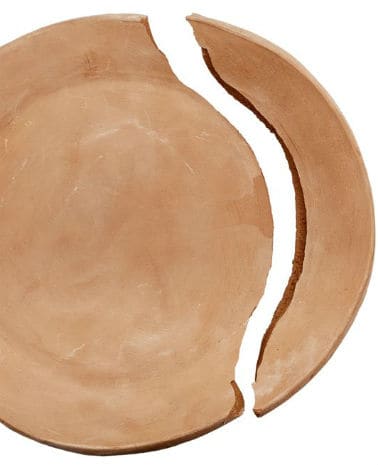

Don’t lose another plate to s-cracks!”
My idea is to purposefully create failed plates only to then build apparatuses that are clearly stupid attempts to save them — these apparatuses would in fact make the plates more unfunctional than the cracks themselves.
Here are a couple of the ideas I’ve sketched out. Others involve an automatic spray bottle, ratchet straps, and a bottle of white glue. However, I need to decide if I’ll purchase these materials or use only salvaged metal scraps, bits of wood, and other discarded materials I can find.

The meaning of the work? Rather than learn how to do this thing called “living on the planet” better, we’re hoping that the same technological thinking that got us into this mess in the first place is what will get us out of it.
The technology-based climate change “solutions” I’ve read about range from reasonable (ex. develop better plant-based meat alternatives so more people start consuming less meat) to completely ridiculous, in my view, including refreezing the poles, greening the oceans with CO2-absorbing algae, and spraying sea salt into the ozone to reflect the sun’s rays, just to name a few. The idea, I gather, is that these more ridiculous-sounding projects would only be considered in a worst-case scenario. Many could lead to more problems than they’d solve.
Johnathan Watts quotes Elizabeth Kolbert’s Under a White Sky in his review, saying that it is a “book about people trying to solve problems created by people trying to solve problems” and about the devastating problems that these solutions may cause. Watts tell us that the book
concludes with the ultimate example of fiddling with the planetary controls: the kind of geoengineering that might produce a white sky. This section could almost be printed in red with a warning sign, “Do not open, except in the event of a catastrophe – and even then think twice.” Solar radiation management, ocean seeding and other efforts to fix the world’s thermostat are no mere tweaks, no simple re-wiring jobs. Some of the scientists involved tell Kolbert they hope their research will never be applied.
source
Rebecca Solnit summed it up nicely in a Facebook post from February 23rd this year in which she describes a couple of the geoengineering “schemes” that Bill Gates has funded (“the technocratic path is a treacherous one”) and the “alternative path” — to make the sociopolitical changes that we already have the power to make: “no miracle needed.”
I’m at the stage now where I’ve been trying to throw plates that crack. I’ve done everything right (or should I say I’ve done everything wrong?): not compressing the clay; leaving the bottoms too thick in comparison to the rims; drying them very quickly. Plates are notoriously hard to throw, with cracking being one of the biggest issues, and I don’t consider myself at all an expert thrower (more like an advanced-beginner). But they’re just not cracking. I just don’t get what’s going on. Murphy’s Law?

Our ceramic technician, Darcy Zink, suggested I cut a shallow crack into the bottom-side of the plates and hope that as they dry this fissure will produce a complete crack. I’m awaiting the results from this test. I’ve also just thrown a couple larger plates from reclaimed terracotta that I hope will be thrown poorly enough this time to result in what I’m after.

I’ll keep throwing for another few days, and if nothing cracks, I’ll have to start breaking them apart with force. I’m running out of time for this semester.

2 thoughts on “Cracked update: trying very hard, but not failing enough”