Reading: Under a White Sky: The Nature of the Future by Elizabeth Kolbert

The following are key quotations (in italics or quotation marks) and a summary of points from this book that I’m storing here for easy reference:

Kolbert, Elizabeth. Under a White Sky: The Nature of the Future. New York: Random House, 2021.

This material is extremely relevant to my work on “cracked,” which I’ve since given a different working title: “A Pound of Cure.” I refer to a review of the book in a previous update on this project. I’m grateful to Mike for buying me this book for my birthday… what a gift!

From Kolbert’s intro (7-8):

An obvious lesson to draw from this turn of events is: be careful what you wish for. Atmospheric warming, ocean warming, ocean acidification, sea-level rise, deglaciation, desertification, eutrophication—these are just some of the by-products of our species’ success. Such is the pace of what is blandly labeled “global change” that there are only a handful of comparable examples in earth’s history, the most recent being the asteroid impact that ended the reign of the dinosaurs, sixty-six million years ago. Humans are producing no-analog climates, no-analog ecosystems, a whole no-analog future. At this point it might be prudent to scale back our commitments and reduce our impacts. But there are so many of us—as of this writing nearly eight billion—and we are stepped in so far, return seems impracticable.

And so we face a no-analog predicament. If there is to be an answer to the problem of control, it’s going to be more control. Only now what’s got to be managed is not a nature that exists—or is imagined to exist–apart from the human. Instead, the new effort begins with a planet remade and spirals back on itselfnot so much the control of nature as the control of the control of nature. First you reverse a river. Then you electrify it.

A few of the Negative Emissions Technologies (NETs) and geoengineering solutions described in the book:

  • CO2 scrubbing—blasting CO2 into basalt rock deep in the earth’s crust: Climeworks is a company doing this; one can purchase CO2 “credits” with them, but it’s still very expensive ($1,000 per ton CO2); (pages 143-44)
  • Forcing CO2 into water sent deep into the earth where it “would react with volcanic rock and minearlize” (145): Reykjavik Energy power plant—a sign reading “out of thin air” placed at the cite of a the power plant (144-146)
  • CO2 beads: Center for Negative Carbon Emissions at ASU in 2014; German-born physicist Klaus Lackner; tiny beads made of some kind of resin used in water treatment dried out—-the powder absorbs CO2 when dry, releases it into water when wet; the CO2-filled water can be “piped out of the container and the whole process restarted” (152)
  • enhanced weathering: bring basalt rock to the surface, crush it and spread it on cropland where it will absorb CO2 (158-159)
  • Olivine in oceans: a green-coloured mineral found in volcanic rock; crush it and dissolve it in oceans to make them absorb more CO2 (and will help offset acidification) (159)
  • plant a trillion trees: effectiveness of forest-CO2-sequestration is still debatable; what do you do with tree rot? —cut down mature trees and bury them in trenches!” so the release of CO2 would be forestalled” (159)
  • Reforestation combined with underground injection, so “bioenergy with carbon capture and storage”: technique called BECCS (pronounced “becks”); for example: plant trees (or other crops) to pull CO2, then burn them to create electricity, and then capture that CO2 and force it underground (160)
  • Stratospheric Aerosol Injection Lofter (SAIL) (starting from page 166): David Keith, prof of applied physics at Harvard; use airplanes to spread aerosols in the stratosphere (around 60,000′); this could make the sky appear white (book’s title) and/or perhaps create amazing sunsets; in a list of concerns about this idea, climate scientist Alan Robock has that it could also change rainfall patterns, create “conflict between countries” and… number 28: “do humans have the right to do this?” (181)
  • Keeping the poles from freezing: “it’s been proposed that sea-level rise could be slowed by propping up the Arctic ice shelves or by blocking the mouth of one of Greenland’s largest outlet glaciers, the Jakobshavn ice stream” with a “three-hundred-foot-tall, three-mile-long concrete-topped embankment” (199)

The way Lackner [see CO2 beads above] sees things, the key to avoiding “deep trouble” is thinking differently. “We need to change the paradigm,” he told me. Carbon dioxide, in his view, should be regarded much the same way we look at sewage. We don’t expect people to stop producing waste. “Rewarding people for going to the bathroom less would be nonsensical,” Lackner has observed. “At the same time, we don’t shit on the sidewalk. One of the reasons we’ve had such trouble addressing the carbon problem, he contends, is the issue has acquired an ethical charge. To the extent that emissions are seen as bad, emitters become guilty. (153)

“I think what the IPCC really is saying is, ‘We tried lots and lots of scenarios,'” Klaus Lackner told me. “‘And, of all the scenarios, which stayed safe, virtually every one needed some magic touch of negative emissions. If we didn’t do that, we ran into a brick wall.” (155-56)

Of the cutting down mature trees idea: As strange as these ideas may sound, the, too, take their inspiration from nature. In the Carboniferous period, vast quantities of plant material got flooded and buried. The eventual result was coal, which had it been left in the ground, would have held on to its carbon more or less forever. (159)

I suggested humans didn’t have a very good track record when it came to the sort of intervention he was studying [Keith — see SAIL above]. […] Keith suggested I was revealing my own biases: “To people who say most of our technological fixes go wrong, I say, ‘Okay, did agriculture go wrong?’ It’s certainly true that agriculture had all sorts of very unexpected outcomes. People think of all the bad examples of environmental modification,” he went on. “They forget all the ones that are more or less working.” (178-79)

Conclusion (200-01):

This has been a book about people trying to solve problems created by people trying to solve problems. In the course of reporting it, I spoke to engineers and genetic engineers, biologists and microbiologists, atmospheric scientists and atmospheric entrepreneurs. Without exception, they were enthusiastic about their work. But, as a rule, this enthusiasm was tempered by doubt. The electric fish barriers, the concrete crevasse, the fake cavern, the synthetic clouds—these were presented to me less in a spirit of techno-optimism than what might be called techno-fatalism. They weren’t improvements on the originals; they were the best that anyone could come up with, given the circumstances.

It’s in this context that interventions like assisted evolution and gene drives and digging millions of trenches to bury billions of trees have to be assessed. Geoengineering may be “entirely crazy and quite disconcerting,” but if it could slow the melting of the Greenland ice sheet, or take some of “the pain and suffering away,” or help to prevent no-longer-fully-natural ecosystems from collapsing, doesn’t have to be considered?

Andy Parker is the project director for the Solar Radiation Management Governance Initiative, which works to expand the “global conversation” around geoengineering. His preferred drug analogy for the technology is chemotherapy. No one in his right mind would undergo chemotherapy were better options available. “We live in a world,” he has said, “where deliberately dimming the fucking sun might be less risky than not doing it.”

Suppose that the world—or just a small group of assertive nations—launched a fleet of SAILs. And suppose that even as the SAILs are flying and lofting more and more tons of particles, global emissions continue to rise. The result would not be a return to the climate of per-industrial days or to that of the Pliocene or even that of the Eocene, where crocodiles basked on Arctic shores. It would be an unprecedented climate for an unprecedented world, where silver carp glisten under a white sky.
Group Studio Arts and Culture Journal, entry 6: Dunlop’s “Date Night: Land Art Travel Tour”

Last night, I attended Dunlop Art Gallery’s “Date Night: Land Art Travel Tour,” led by their Education Assistant Sarah Pitman. The idea behind the “Date Night” series is to offer people a chance to view and discuss art in a virtual setting once a month. In a Carillon article about the series, Sarah says, “If you have nothing to do on a Friday night (due to the pandemic), there’s this idea of travel in our Date Nights. We try to pull artists or art works that are from around the world.”

This was my first time attending one of these events, and I’m glad I did. I was especially interested in last night’s event because its topic was land and environmental art. I wasn’t really aware of how the Date Nights run and was expecting a more indepth conversation around this type of art than what it turned out to be (it was more of a survey class), but it was still a great way to see examples from many artists’ works pulled together and discussed. Sarah did a great job of introducing us to a range of works, a few of which I didn’t know. I’m still a beginner in this world of land art and environmental art, so this was a good way for me to expand my knowledge on the topic.

Sarah started the talk by showing examples of historical land art, including Stonehendge in England, the Great Serpent mound in Ohio, and Nazca Lines in Peru. She then covered several contemporary artists, including Robert Smithson, Nancy Holt, Andy Goldsworthy, Walter De Maria, Ana Mendieta, Agnes Denes, Andres Amador, Niles-Udo, and the Red Earth Environmental Group.

I’ll say a bit about a couple of the works I was introduced to that really struck a chord.

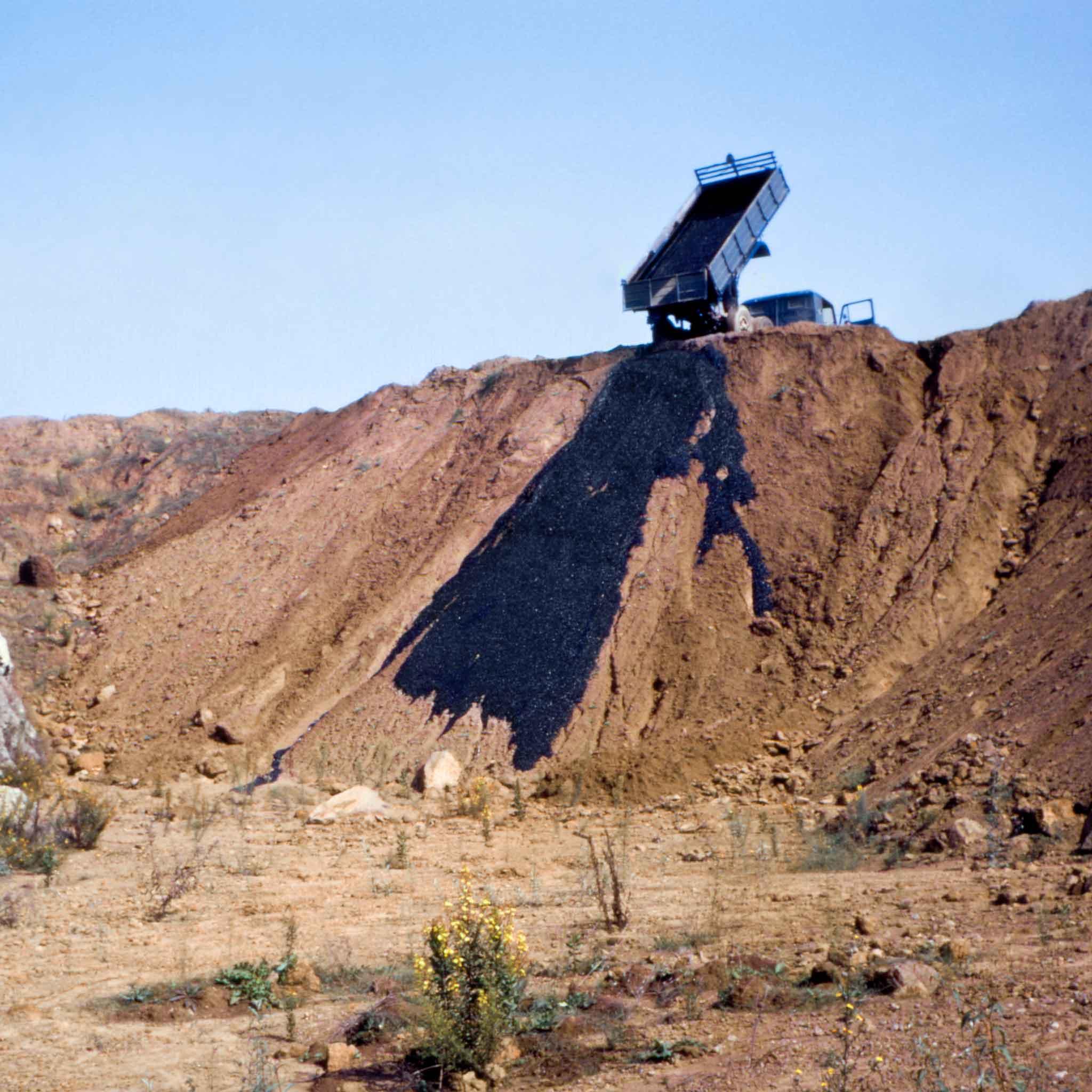
Robert Smithson’s first large-scale earthwork Asphalt Runway (1969) is a piece I hadn’t known about before.

I was immediately convinced that this work was meant to say something about how we’re leaving negative impact on the planet with our industrial waste, pit mining, and elimination of natural habitats for our sprawling cities. I was surprised to find out from Sarah that Smithson was more trying to speak to time, that it is meant to be seen “as time frozen, mid-flow, or as yet another sedimentary layer in the infinite accumulation of time” (according to the Holt/Smithson Foundation). When another participant made a comment about how they didn’t like the piece because it was damaging the environment, I piped in and spoke about my interpretation. Reading up about this piece after the talk, I found that I am not alone in seeing the work as a statement about our environmental footprint. In a post for a website used for a grad course in Sweden titled Anthropocene: A History of the World, Lisa Martin writes that

Smithson’s “action” or performance, the act of pouring asphalt over the edge of an open-pit mine, further disrupts the landscape as well as functionally re-covering the exposed strata. This ambiguous act reflects the mutually destructive and conservationist forms that human impact may take in the Anthropocene.

I can’t find a lot about this work online, which surprises me given Smithson’s fame from other works such as Spiral Jetty. From everything else I’ve been able to find, the work really is about time and the earth, and what time does to the earth. For instance, in John Culbert’s blog I found a quotation which I believe to be from Smithson:

Each landscape, no matter how calm and lovely, conceals a substrata of disaster — a narrative that discloses “no story, no buoyancy, no plot” (Jean Cayrol: Lazare parmi nous). Deeper than the ruins of concentration camps, are worlds more frightening, worlds more meaningless. The hells of geology remain to be discovered. If art history is a nightmare, what is natural history? (Writings, 375)

I like the idea of how “the hells of geology remain to be discovered,” but I’m still stumped at how this piece, Asphalt Runway wasn’t meant to address the human imprint on the planet. This just makes me question (again) what role an artist’s intention plays/should play in how their work is viewed. I also became aware last night how tainted (and obsessed?) I am: how I viewed nearly every work shown as saying something about the negative impact of people on the planet, even when this wasn’t the artist’s intent for the work.

By the way, I also learned from the above blog that Smithson performed a version of this piece in Vancouver (my home!) three months after the one in Rome. This time, he poured a barrel of glue down a muddy slope in Glue Pour (1970).

It’s funny, I’ve been working with glue in one of my projects recently, trying to figure out if it’s the right medium for the job. It’s just neat to come across it being used by someone else.

The other piece I’ll mention as it was new to me was Anes Denes’s Wheatfield — A Confrontation(1982).

This piece comprised two acres of white that was hand planted and then harvested in Manhattan (on a landfill of rubble created by the building of the Twin Towers) in the summer of 1982. According to Denes’ website, the project took place “on land worth $4.5 billion dollars.” The grain produced became part of “The International Art Show for the End of World Hunger,” travelling to 28 countries. Sarah told us that to complete this project, Denes had 200 trucks of soil brought in, as well as fertilizer, pesticide, and irrigation system that used to grow the wheat.

Just as in the case with the Smithson piece, my mind immediately shouted consumption! man-made landscapes! destruction of native prairie grasslands! neonicotinoids and the insect apocalypse! industrial and capitalist catastrophe! the sixth mass extinction! (and it went on like that for a while, as Sarah took comments from people about how much they love gardening).

Denes did make this piece at least partially in response to climate change (at first I thought she was only reflecting on world hunger, based on the conversation last night), and I see her described as “ahead of her time” for it (“Agnes Denes’s Prophetic Wheatfield Remains as Relevant as Ever”). I guess the pessimist in me just sighs and says “well, if this huge of a project took place in ’82…. getting this much attention to the issue…. and we’re still where we are today…. fuuck.”

Denes’ website includes a description of the work and how it included a microfilm that was

desiccated and placed in a steel capsule inside a heavy lead box in nine feet of concrete. A plaque marks the spot: at the edge of the Indian forest, surrounded by blackberry bushes. The time capsule is to be opened in 2979, in the 30th century, a thousand years from the time of the burial. There are, still within the framework of this project, several time capsules planned on earth and in space, aimed at various time frames in the future.

It boggles the mind to imagine what will come of that steel capsule stuck in nine feet of concrete over millennia as the earth continues its movements that only appear slow because of our incapacity to imagine epochal time. In the nearer future, I don’t expect people to be opening it up in 2979, or for anyone to be around for there to actually be a “30th century.” At least, I doubt the water bears will know what time it is.

If anyone reading this is interested in another cool project of Denes’ and what she has to say about her work, check out Sheep in the Image of Man (1998).

I’m glad I attended this talk to learn about these and other works. Thanks, Dunlop Art Gallery, for the wonderful events you’ve hosted in these last few months.

Group Studio Arts and Culture Journal, entry 5: Art for (Lunch) with Nasrin Himada

Today, I attended an Art for Lunch featuring Nasrin Himada. The description for the talk was as follows:

“Nasrin’s curator talk will delve into the personal, experiential and embodied forms of knowledge by exploring the ways in which art can be a catalyst in constituting a radical, intimate and poetic ecology that extends beyond the work. Instead of talking or writing about artwork as a way to analyze, explain or interpret, art criticism and curation can engage with art as relation, rather than representation.”

Quotations are what I transcribed from the (I’m a fast typist) and either noted in quotation marks or in red.

As stated in this event’s description, Nasrin is interested in “frameworks” (they used this word a few time) of knowledge: who creates them, who controls them, and how we may shift them. They opened the talk with a quotation from Solmaz Sharif’s book, Look, from a poem of that same title:

“Let it matter what we call a thing” – Solmaz Sharif 

They went on to explain how they’re interested in how art, curation, and writing can “challenge ways of seeing, manipulate our perception, and give us a new framework for ways we can form a thought.” Their epistemological inquiry is deeply rooted in an considering the ways political and institutional systems attempt to control these knowledge frameworks. They gave a few clues as to what it means to them to be Palestinian and how that diaspora (and lost original materials, such as Palestinian film footage) has impacted their life, including their work, in part because of what it means to have had your history (a knowledge system) attacked and nearly wiped out. Suspicious of knowledge systems and frameworks, they ask, what does it mean to “break form” in both language and in exhibition? Their work often involves writing, and even within the structures of writing (imposed by academia, for instance), they say,

“I do not function from a place or representation; my intention in curating and writing about my experience is not to come at it from a place of representation but a place of experiential and process-based formation, so for me it’s so difficult to bring language to this and why I find it so fascinating to bring language to process-based work.”

This is really fascinating to me, as I’m just starting to understand what it means to me to create work (artwork) in a serious way. In the last week, actually, I made huge progress in one of my two projects (“Cracked”), and I was thickly aware of how I was letting “process” just take over. At times, I felt as though I was relinquishing control over the work. I have yet to write about this experience of my last few days, but I’ve been mulling over how I’ll even go about doing so in a near-future blog post. I guess, I’ve been thinking, that I’ll do the usual combination of a few photos and a bit of text. But how, I have yet to figure out, will I adequately convey what it felt like to be working on this piece and to nearly feel like I was the medium that the work was using to bring itself to this stage? Can I get that into a blog post? Also, for whom and for what purpose am I writing these posts (the ones on my art practice this term)? Will writing that post about this past week help me understand something about the experience I had? This has been the case several times, that writing has helped me “think through” or “process” what I’m doing, and it’s also a good way for me to keep track of what I’m doing/thinking, but I should continually question this practice rather than fall into it as a comforting routine or structure to my work.

Nasrin gave a brief overview of a few publications they contributed to, such as Scapegoat journal Issue 07: Incarceration and What Is Invisible Labour? MICE Issue 01

In this writing, they say,

I try to think about what is the right space for something to be expressed that is going to make the most sense. “I think about intention and how in intention we position ourselves as practitioners. How to extend beyond the materiality of the work, the outcome. Often it’s the process, the relationships, the events around making and doing that spark the initial idea. In this way, I also think often about form, what it enables. Form conditions content.” (this was quotation of their own writing they had up on the screen during their talk) (emphasis mine)

Artists are aware of (or at least questioning) how their work fits into the form—content relationship. Some more than others (and for Nasrin for sure), the process of making the work determines the end form. I think that what this boils down to for me is that the very process of art-making has influences not only on the result (the art) but also on my relationships: with the art I’m creating, with the people involved in making it, with the people I speak to about the work and show it to, and with the way I live in the world at large.

For another writing piece, Project: For Many Returns, Nasrin described how they were in a transition period, going through a lot in life, and was facing a deadline for a commissioned piece of writing. They felt entirely unable to write yet another piece of academic writing (or read any), and how after stumbling on a writing project for a while, text they really needed to write just came out of them:

I sat for two hours and I just wrote something, it’s the most … it resonated so much with so many people, but it goes to show that I really just pushed myself to be the writer I wanted to be without any pressure, and this is what came out, and I was so thankful for that moment because now this is an entire project, I’m at part five, and now it’s allowing me to create a manuscript out of this work. When I said fuck it, I decided I was going to turn my back away from academia because I’d had enough of writing in that framework. I didn’t like the kinds of pressures that come with that kind of writing, I didn’t even like reading it, and also I was so bored of reading art reviews that just gave nothing, and I didn’t want to just write another boring art review that doesn’t really say very much. I wanted to move away from art writing as an analytical tool, and rather as a relational one, and not as a review that explains the object in question, but as a way to extend the work by seriously confronting my love for it. So, I really started to think about the form that this writing was taking was a love letter, and I really stuck to that. How was I going to write a love letter to this work that I love so much?

I love the way they spoke about their writing about art as a love letter. I could see myself getting into doing writing like that about my own work as well as the work of others.

Holly asked Nasrin to elaborate on the reactions they got to this type of writing. In their response, Nasrin gave a few names of writers who’ve inspired this type of writing in them, but I wasn’t able to get their names (I’ll see if Holly will forward my email to them so I can get in touch and ask for these names). They also said that the reactions they got show that people have wanted to write on art in the way they were doing, but they thought they couldn’t. After writing this first “love letter,” they realized “what a beautiful challenge it would be to bring the experience (of viewing art) through art writing, rather than writing about it in this analytical mode above the work.” They said about this type of art writing,

I realized I was writing alongside it, like it was living beside me, sitting right here all the time, and what did that feel like, and what did that do, and what did it bring up? And that’s what I articulated in that piece.

I wished that Nic Wilson had been listening in on this talk, as I know from his Art for Lunch that he’d have an interest in this topic.

Larissa Tiggelers asked Nasrin to describe what it means to “find the right form” for their work. Nasrin spoke more about how their exhibitions have come from the relationships they’ve built with the artists, how they often become close friends with these artists and then the exhibition comes from that relationship. They also said they care a lot about context when deciding what to take on:

It’s driven by the conversations I’m already having with the artists themselves: what are we grappling with right now? I think the most import thing for me right now is context. I don’t want to show work that has nothing to do with what’s going on in the world right now. I think the questions I’d have are how are we going to do better, how are we going to be better, how are we going to create language that’s going to make us think better, in order to change this world that we live in that’s riddled with all of this violence? I don’t stop thinking about that. I don’t stop thinking about that. The artists who come into my life are doing the same kind of work.

In short, I would love to one day be one of the artists who come into Nasrin’s life. I wonder what they think about climate change.

Group Studio Arts and Culture Journal, entry 4: Dunlop Art Gallery’s Artist Talk: End of the World/Beginning of the World with Andrea Carlson

Last night, I attended (can we still use that word for YouTube livestreams?) Dunlop Art Gallery’s Artist Talk: End of the World/Beginning of the World with Andrea Carlson. Andrea has work in the Dunlop’s States of Collapes show that’s currently on, a show that couldn’t be more informative to my own work these days. I’ve really lucked-out. Earlier this winter, I attended their “Opening Remarks and Artist Talk” on this show and wrote an entry for this journal on it as well.

The Facebook event description of tonight’s talk was as follows: “Chicago-based artist Andrea Carlson will discuss her work that interrogates the historical role of the museum in the collection and interpretation of cultural objects as a form of misrepresentation and colonialism.”

After introducing herself in Anishinaabe, Andrea began her talk by showing photos of the land she is from, Grand Portage, Minnesota. She said of this place that “when I think of where my work ‘sits,’ I think of this place.” I found it powerful to hear someone else say this because I have the landscapes of British Columbia in my mind when I work with clay, as I’ve previously expostulated on in a personal essay “on clay.” While I am of immigrant ancestry and by no means claim to truly belong to British Columbia (I was born in Montreal, in fact), that province feels like home, and my work is in part a response to its landscapes.

Andrea also spoke about storytelling, and how “our stories are frozen, we breathe life into them when we perform.” Describing a painting of a plate that depicts the Dakota 38 + 2, when the US Army simultaneously hung 38 Indigenous men for their resistance during the Dakota war and uprising of 1862. She asked, rhetorically, how can anyone eat off of this plate? We “heap stories onto objects,” she said, “and my paintings are objects too.” I wonder, when hearing this, how every object is a “heap of stories.” What are the stories in my work? How important is it that these stories are easy for viewers to “read”?

Storytelling is key in Andrea’s work. She showed examples of her massive paintings (painting-drawings? she uses oil, acrylic, ink, and colour pencil on paper) that function both as temporal and spacial film strips; she explained this to us — in short, these pieces show movement when viewed both horizontally and vertically. The connection to film goes beyond their structure of multiple individual “frames” — with their size and bright forms that “pop out” at you, the works mimic movie billboards, leading us to ask what is the film we’d see? What is the story taking place here? Even Andrea’s website requires viewers to scroll through images of her work from left to right rather than from top to bottom, more closely imitating the way we read.

One work of Andrea’s that I’m particularly interested in is Red Exit (115 x 183 inches).

Andrea described this piece as being about recreating the world, about healing, and about survival. Images central the work are the loon from the Ojibwe narrative as the earth re-creator, the infinity sign, and the “Man Mound” that appears to be walking away.

These are themes that are in much of her work. The piece that she is showing in States of Collapse is Apocalypse Domani. Dunlop’s web page for this exhibit describes this work in the following way:

“Through the implication that the colonizer, as a consuming machine, is incapable of forging its own path, Andrea Carlson’s Apocalypse Domani proposes that it is Indigenous peoples who are better equipped [than settlers] for survival.”

The connection between colonization and the climate catastrophe that we’re experiencing is a topic I’ve spent some time thinking and reading about. I would have liked if Andrea had talked about Apocalypse Domani during her talk. I wish that I could have another conversation with her about this issue as well as other questions I have about her practice.

In the Q&A period, via the YouTube chat-box, I asked Andrea the following question:

While very different, “Red Earth” and other multi-paneled pieces of yours remind me of David Opdyke. ​Opdyke’s “This Land” also embodies a hugely rich landscape comprised of individual and highly detailed images. What is the significance of the fragment to your work?

Andrea elaborated on how she views the genre of landscape art and what the history of the landscape reveals, especially from an Indigenous perspective. She talked about how the Flemish became very interested in landscape art after they removed the Spanish occupation. She said it was a sign that they were exhibiting pride in their landscapes again, “owning a little piece of the land in the painting.” She also talked about the relationship between landscape art and the colonial gaze, and how she thinks about decolonizing landscapes and landscapes that one can’t access (they only exist in her paintings). There is so much here to think about, though I wish she’d also answered my question about the significance of the fragment in her work! 🙂

I’ll report one final detail from her talk that I found especially beautiful. She spoke about painted turtles, and how they carry on their body a painting that “they keep between themselves and the earth” — a very intimate painting that one only gets to see only when the turtle is in trouble. This is an image (or description) of art, earth, and Indigenous ways of thinking that I’ll be pondering for a long while.

Once again, I am grateful to the Dunlop for organizing this show and this talk.

Cracked update: trying very hard, but not failing enough

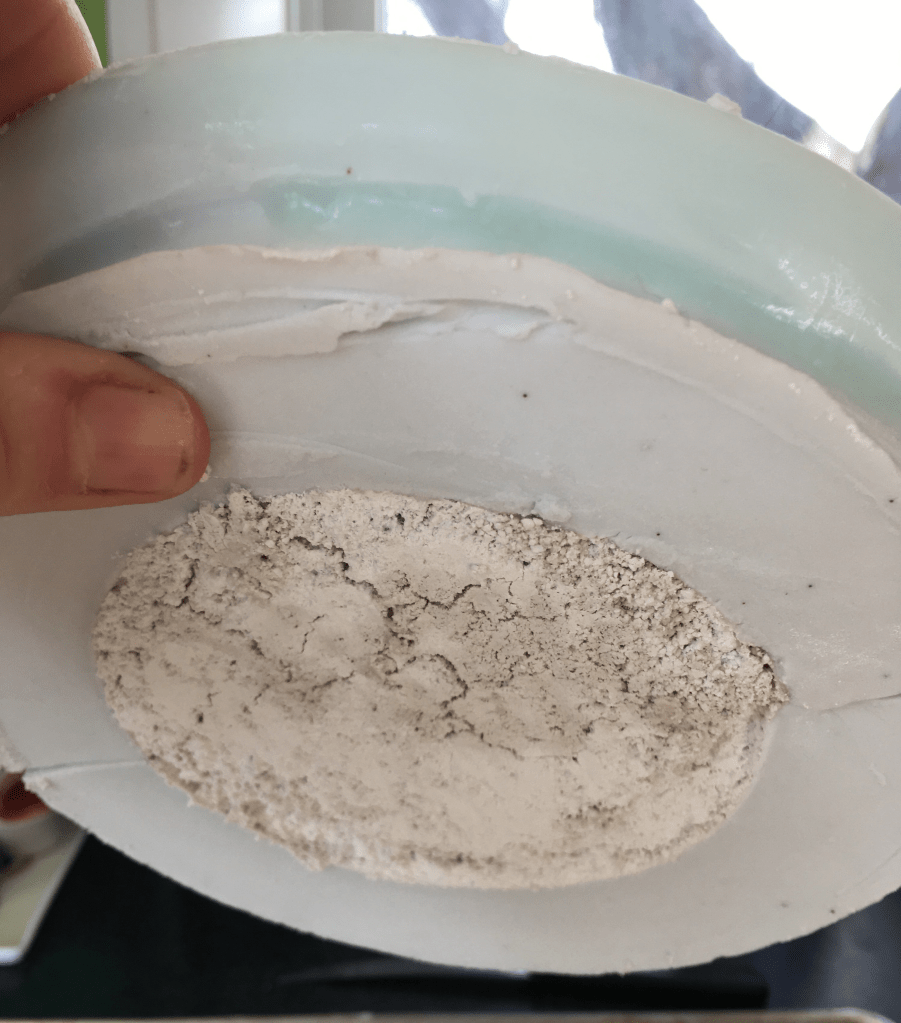
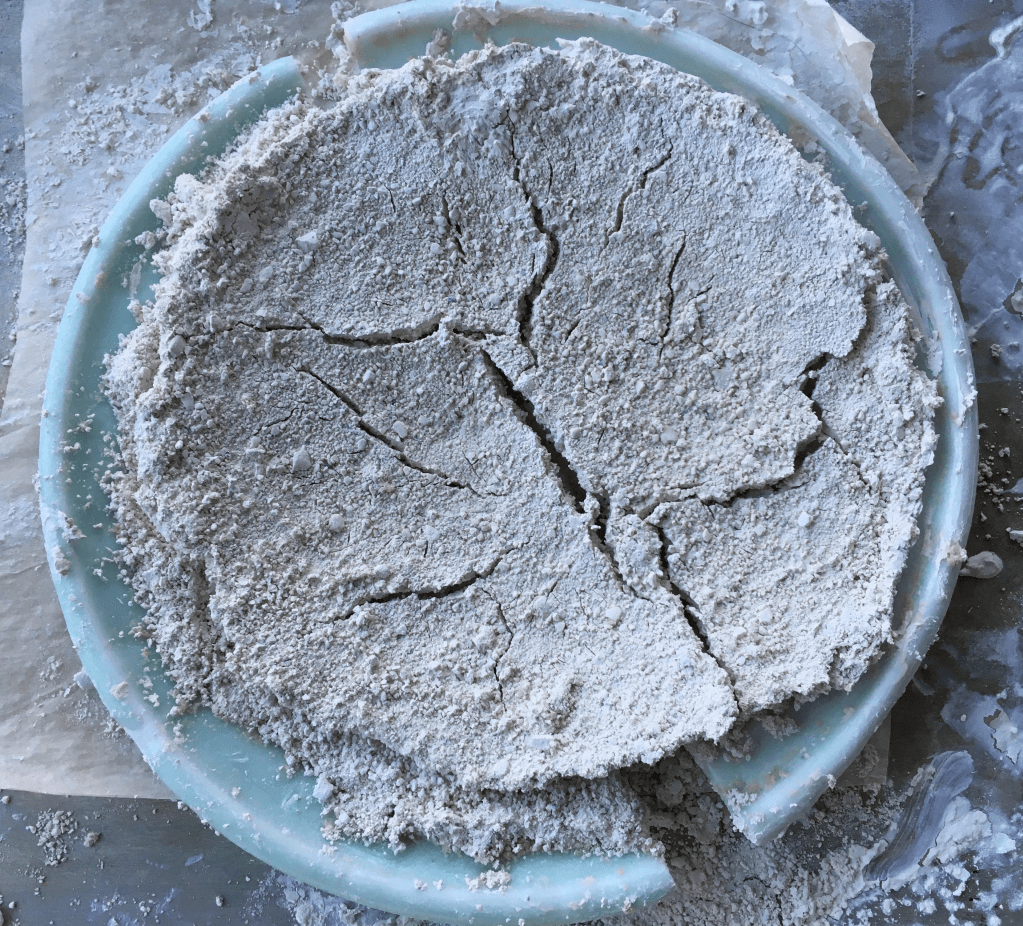
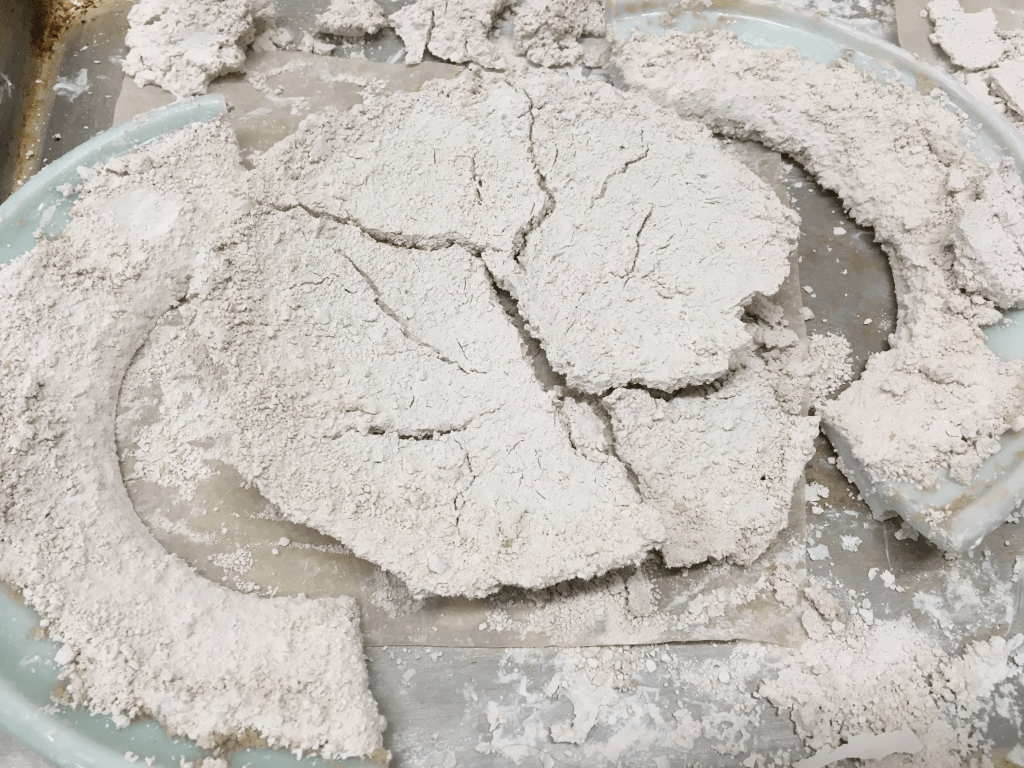
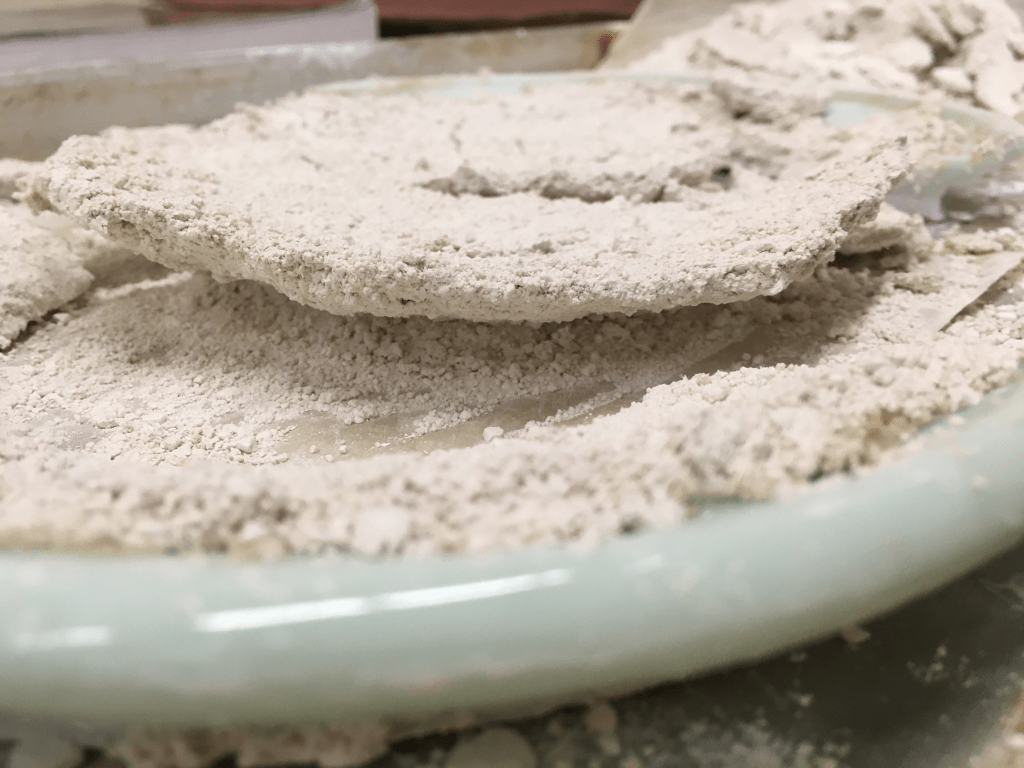
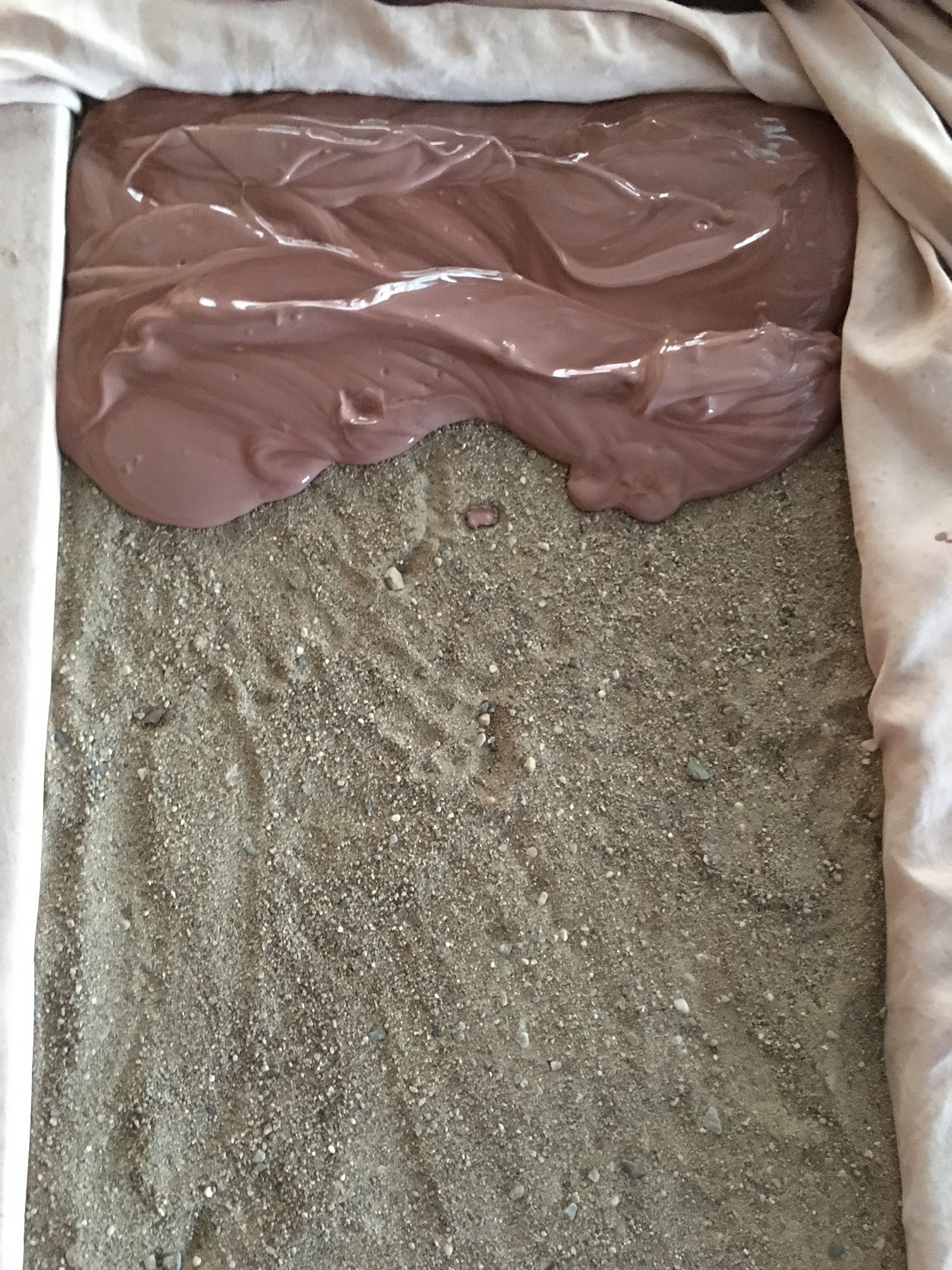
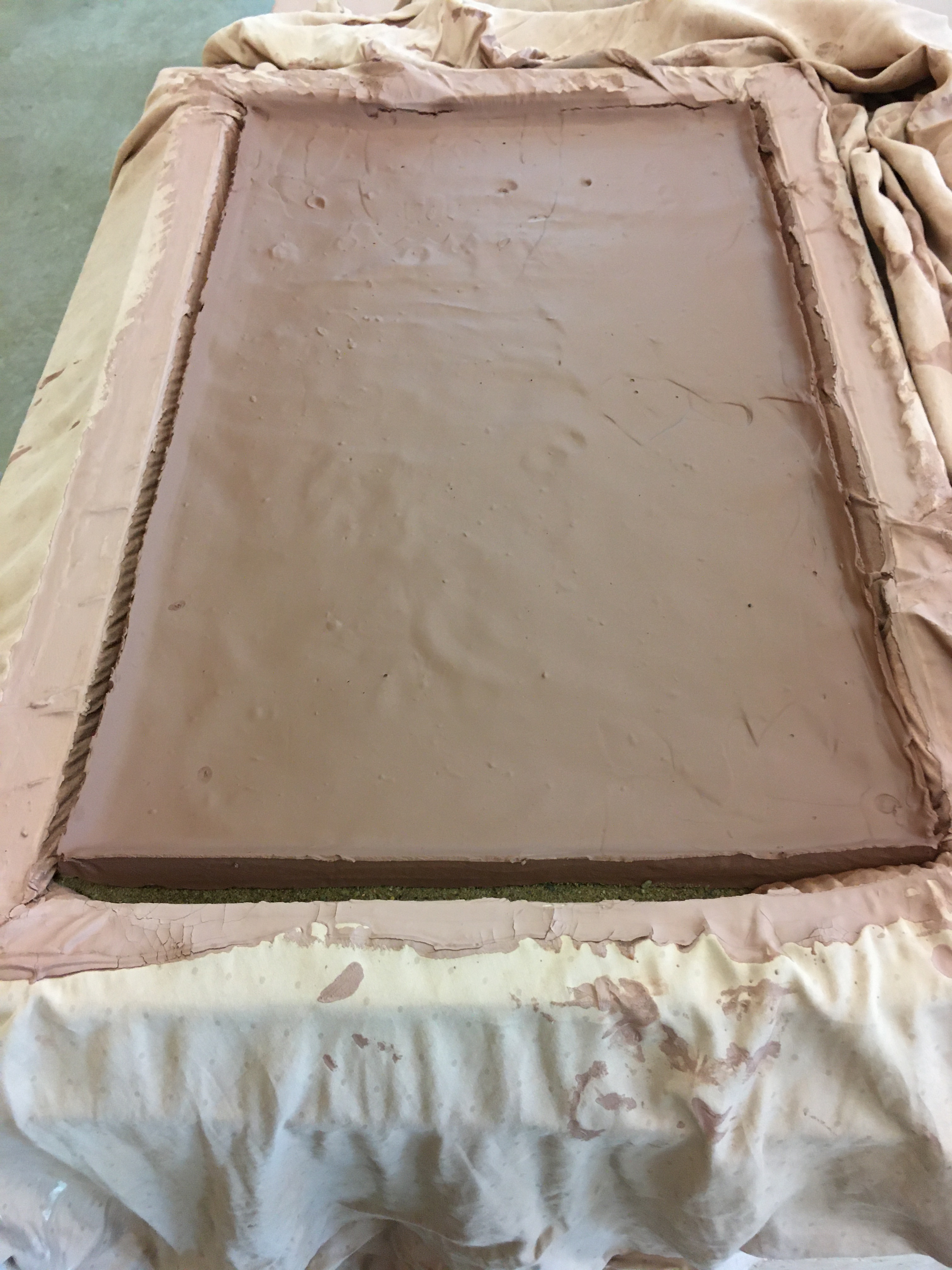
My attempts at getting terracotta clay to dry in a cracked formation similar to what’s found on dry riverbeds and areas of drought are just not working out, so I think it’s time to put this idea on hold until the summer when I can use the natural elements for it.

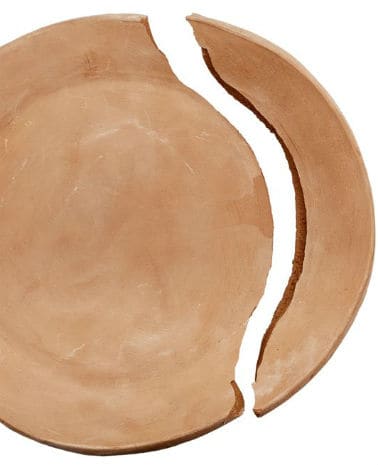
I’ve now turned my attention to a version of this project (still tentatively called “Cracked”) in which I throw plates on the wheel that end up with the types of cracks that are the potter’s bane: s-cracks and rim-cracks

image source: “Why Pottery Cracks”

preventing s-cracks
image source: “Tips for Centering and Preventing S-Cracks in Dinner Plates
Don’t lose another plate to s-cracks!”

My idea is to purposefully create failed plates only to then build apparatuses that are clearly stupid attempts to save them — these apparatuses would in fact make the plates more unfunctional than the cracks themselves.

Here are a couple of the ideas I’ve sketched out. Others involve an automatic spray bottle, ratchet straps, and a bottle of white glue. However, I need to decide if I’ll purchase these materials or use only salvaged metal scraps, bits of wood, and other discarded materials I can find.

The meaning of the work? Rather than learn how to do this thing called “living on the planet” better, we’re hoping that the same technological thinking that got us into this mess in the first place is what will get us out of it.

The technology-based climate change “solutions” I’ve read about range from reasonable (ex. develop better plant-based meat alternatives so more people start consuming less meat) to completely ridiculous, in my view, including refreezing the poles, greening the oceans with CO2-absorbing algae, and spraying sea salt into the ozone to reflect the sun’s rays, just to name a few. The idea, I gather, is that these more ridiculous-sounding projects would only be considered in a worst-case scenario. Many could lead to more problems than they’d solve.

Johnathan Watts quotes Elizabeth Kolbert’s Under a White Sky in his review, saying that it is a “book about people trying to solve problems created by people trying to solve problems” and about the devastating problems that these solutions may cause. Watts tell us that the book

concludes with the ultimate example of fiddling with the planetary controls: the kind of geoengineering that might produce a white sky. This section could almost be printed in red with a warning sign, “Do not open, except in the event of a catastrophe – and even then think twice.” Solar radiation management, ocean seeding and other efforts to fix the world’s thermostat are no mere tweaks, no simple re-wiring jobs. Some of the scientists involved tell Kolbert they hope their research will never be applied.

source

Rebecca Solnit summed it up nicely in a Facebook post from February 23rd this year in which she describes a couple of the geoengineering “schemes” that Bill Gates has funded (“the technocratic path is a treacherous one”) and the “alternative path” — to make the sociopolitical changes that we already have the power to make: “no miracle needed.”

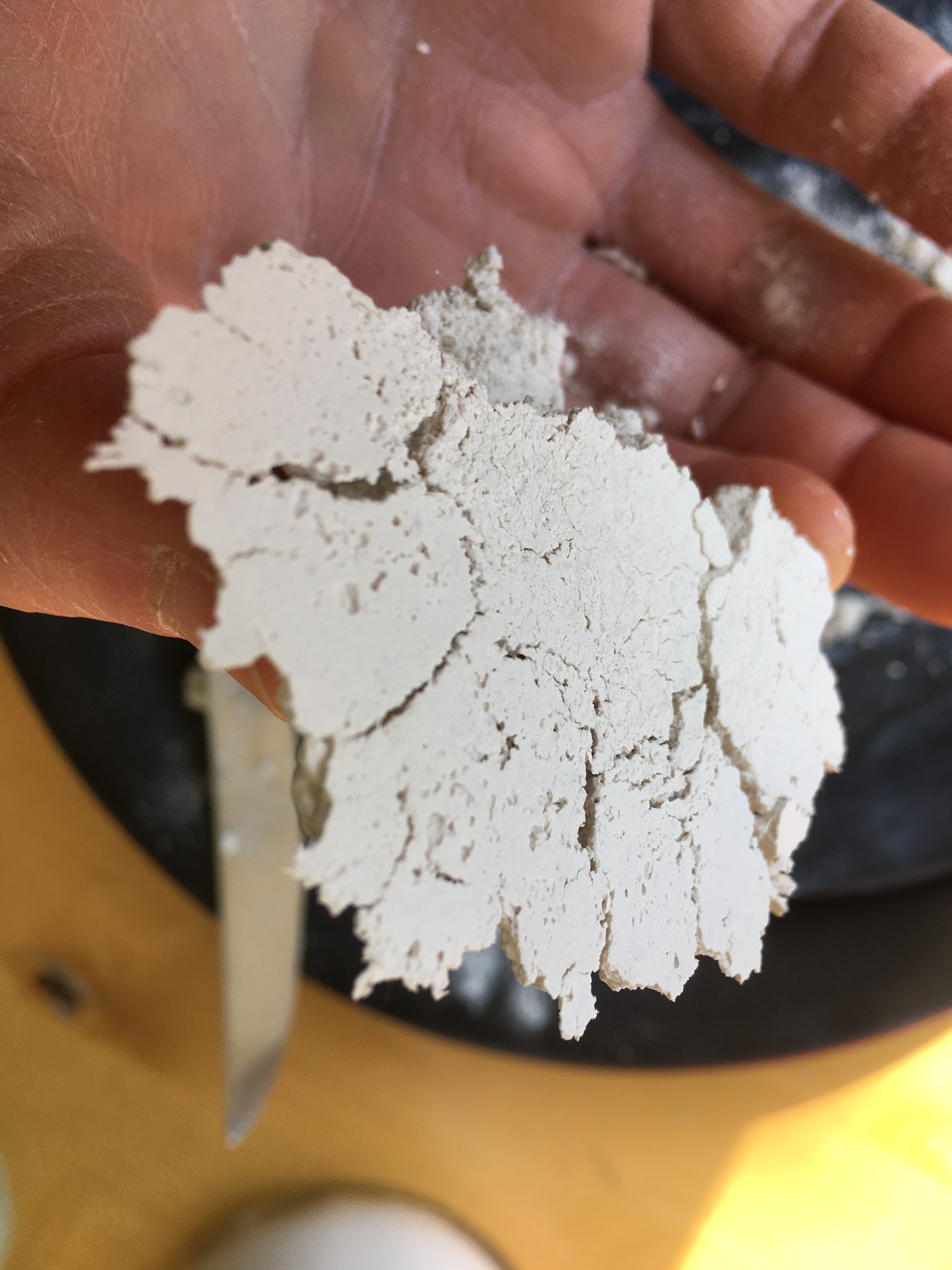
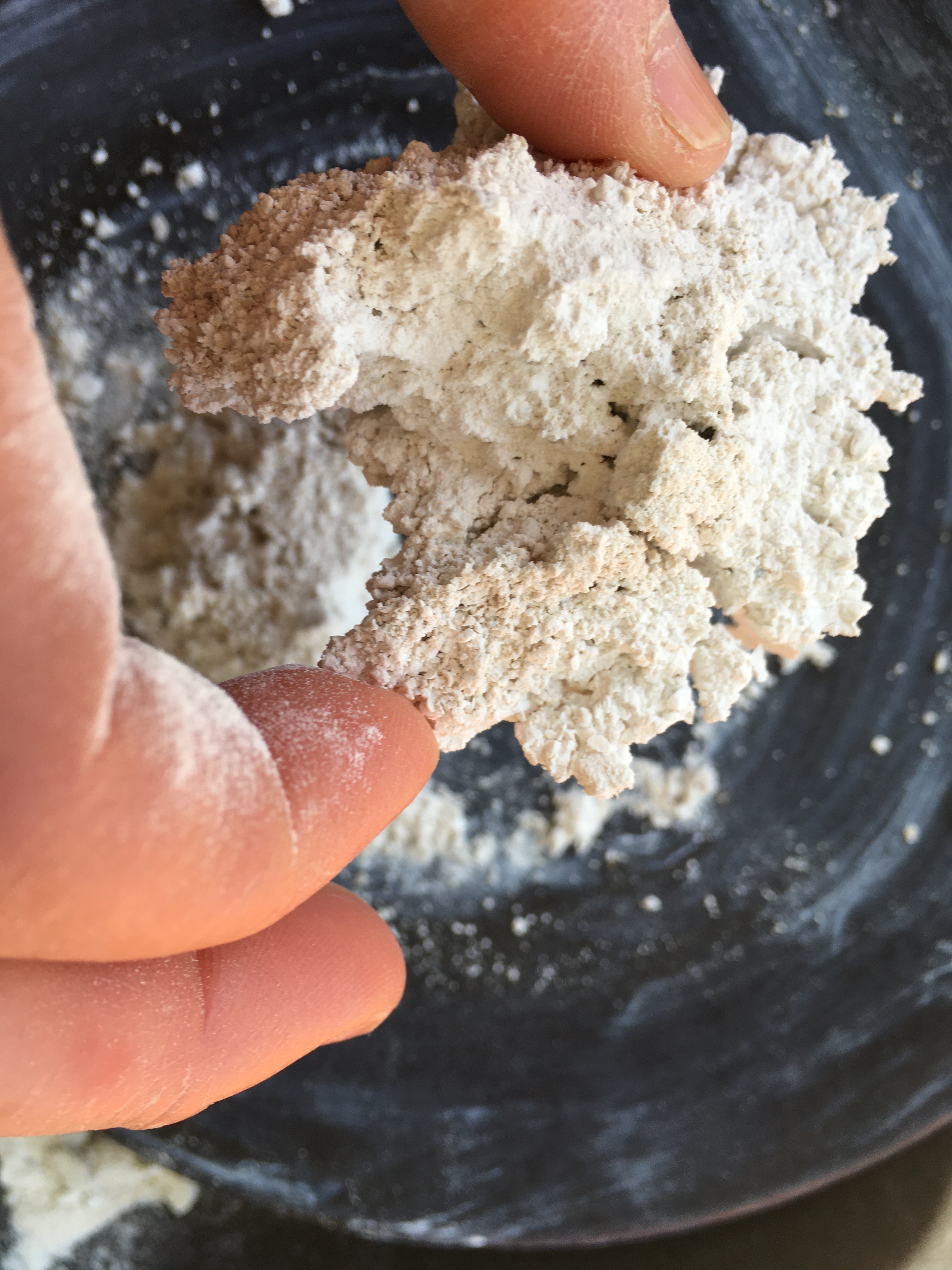
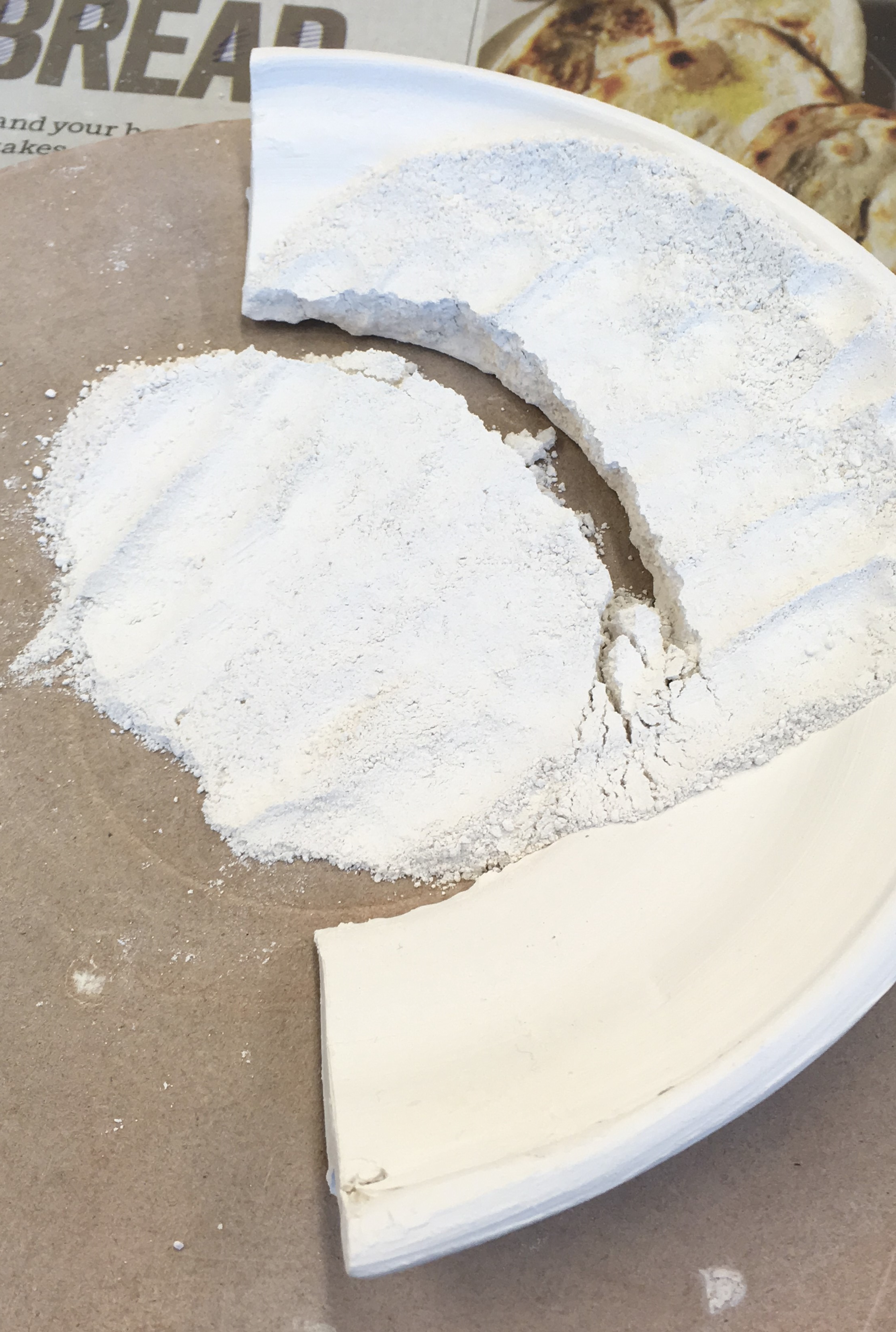
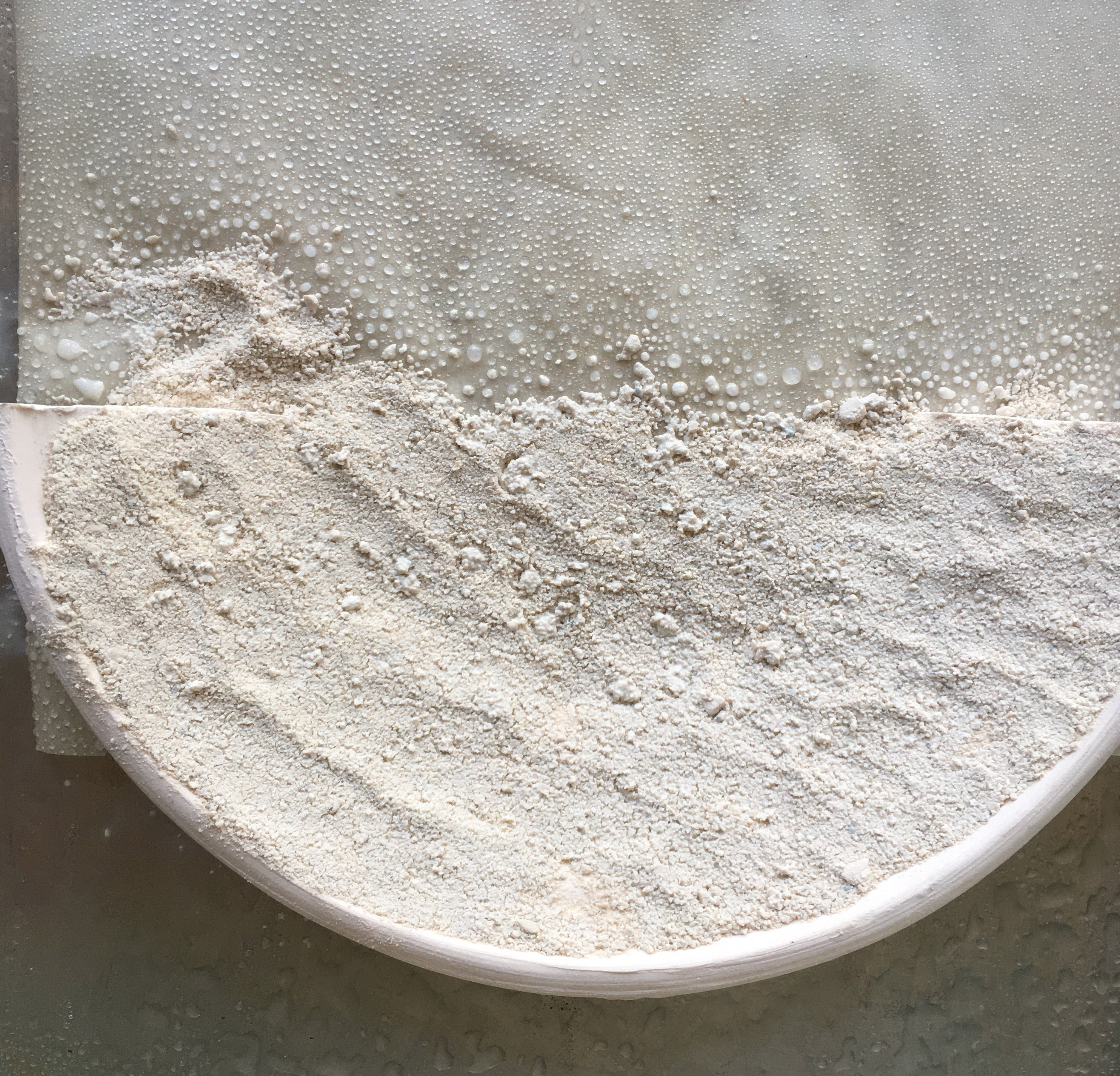
I’m at the stage now where I’ve been trying to throw plates that crack. I’ve done everything right (or should I say I’ve done everything wrong?): not compressing the clay; leaving the bottoms too thick in comparison to the rims; drying them very quickly. Plates are notoriously hard to throw, with cracking being one of the biggest issues, and I don’t consider myself at all an expert thrower (more like an advanced-beginner). But they’re just not cracking. I just don’t get what’s going on. Murphy’s Law?

Our ceramic technician, Darcy Zink, suggested I cut a shallow crack into the bottom-side of the plates and hope that as they dry this fissure will produce a complete crack. I’m awaiting the results from this test. I’ve also just thrown a couple larger plates from reclaimed terracotta that I hope will be thrown poorly enough this time to result in what I’m after.

I’ll keep throwing for another few days, and if nothing cracks, I’ll have to start breaking them apart with force. I’m running out of time for this semester.

Group Studio Arts and Culture Journal, entry 3: Art Gallery of Regina’s annual The Artist Is In talk

Tonight, I attended the Art Gallery of Regina’s annual The Artist Is In talk. Sandee Moore, as curator, introduced the three guest speakers: KC Adams; Brenda Wolf; Carole Epp. All three gave a brief introduction to their work — they were each given eight minutes to summarize what they’re all about… tough to do! To my great fortune, the artists chosen for this talk are all ceramicists, and their ceramic work was the subject. They were meant to also tie their work to Ruth Chambers’ current show at this gallery, Tend.

I’ve still got a virtual stack of essays to grade from my last batch (for the day job), so I’ll have to keep this post brief (lord knows, I do like to ramble on). I’ll spend time here summarizing what I got out of listening to KC and Carole, as their work resonates with me most (though Wolf’s is incredible too).

To begin, here is KC’ bio from her website:

My nêhiyaw name is Flying Overhead in Circles Eagle Woman, my artist name is KC Adams and I am an artist, educator, activist and mentor. I specialize in social activist art and my focus is on the dynamic relationship between nature (the living) and technology (progress). I create work that explores technology and how it relates to identity and knowledge. My process is to start with an idea and then choose a medium that best represents that thought. I work in video, installation, drawing, painting, photography, ceramics, welding, printmaking, kinetic art, adornment art and public art.

I’m immediately interested in the fact that she does “social activist art” AND work on “the dynamic relationship between nature and technology.” This is right up my alley. I’m also interested in the fact that she puts the needs of the work first, finding the medium (or media) that suit it best. While I’ve been focusing (again) on clay/ceramics lately, I’m also planning on using building materials for “Cracked” and, well, dust for “Dust.” I’ve employed other media for previous works, using glass, wood, and water, for example. I’m not set on sticking with ceramics, though I imagine it’ll play a major role in my work for at least some time to come. All of this raises a question to me: at what point does one not get to call oneself a ceramicist?

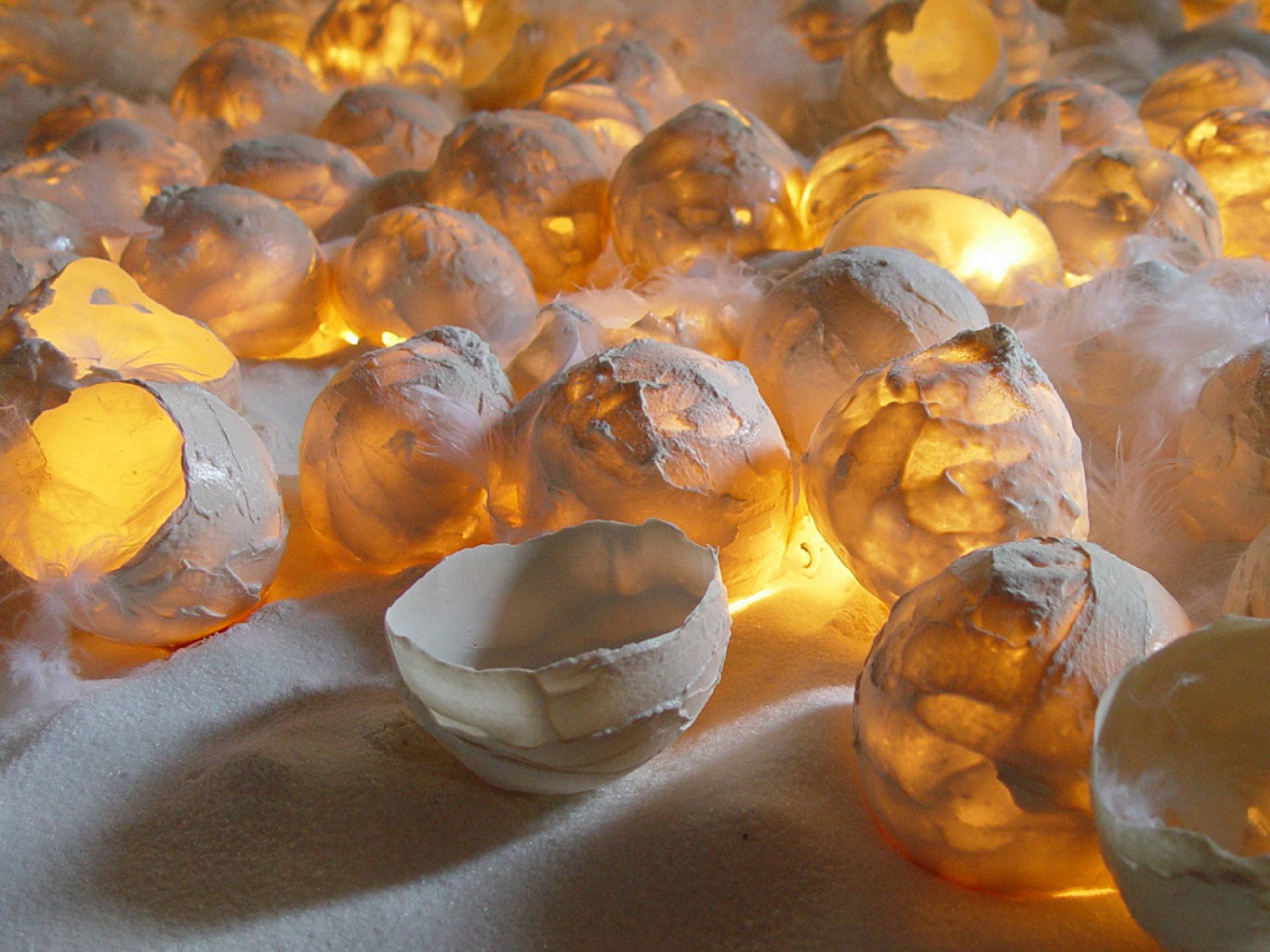
KC showed images of a few of her pieces, including “Cyborg Chicken Eggs”:

image source

In this piece, she says she was working with the idea of genetically modified food. The piece has “a whole bunch of feathers and porcelain eggs, glowing, akin to nuclear chickens that have just hatched, and a sound in the background, sounds like hundreds of chickens clucking and scratching, talking about mutations and our body” (roughly quoted from this talk). This work is very appealing to me. Aesthetically, it’s interesting. It’s also deeply ironic (David), its title is important (Nic Wilson), and its subject matter is connected to issues I care about as well: how we are altering the lifeforms (and therefore the planet); how our health and the health of other organisms are connected; how fragile we and our systems are.

I was also very interested to hear her talk about leaving commercial clays to work with clay she harvests herself from this land. Being First Nations, she spoke about how this turn in her work was an attempt to connect to her ancestors. At first, however, she bemoaned the “new” clay she was attempting to work with. It was much, much more difficult. Yet she knew there was “no turning back.” She said it was “a whole other animal and I had to start all over again; I was like a toddler learning to walk; it connected me to my culture; it ignited my blood memory; it was like coming home” (quoting her talk). Later, during the question and answer period, she spoke about how little time her ancestors had to make their pots: the women were in charge of so much work, and with such a short summer season in Saskatchewan, they simply couldn’t spend a lot of time on their pots. She also said that unlike now, when we often see an artist as someone who devotes their life to making art, back then, being an artist was just a part of being alive. All of these understandings she’s come to are so fascinating to me. I’ll have to process all of this and see if it changes any part of my own path from here.

Carole Epp’s work amazes me, too. I admire her for creating both a functional and sculptural work, and I hope to get the chance to speak with her one day about how she views these two elements of her practice. In her introduction to Carole, Sandee quoted her, saying:

“None of us want to be confronted with the devastation that humanity can cause, but we cannot remain indifferent and inactive when so many suffer around us. Learning how to use my privilege to empower others, rather than to shield and protect my family, is going to be a lifelong journey of self-criticism and growth.” Carole Epp 

(I asked, and Sandee pasted the exact quotation into the chat box on the Zoom call for me — thanks, Sandee)

As you can see, Carole is interested in “confronting” difficult topics in her work. While she claims that with her functional ware, “It’s simple really, I like to make things that make people smile,” she also spoke tonight about incorporating difficult subject material into her plates (she focused on her plates in this talk), pushing herself and people to confront harsh realities. She said that as a 42 year-old with children, she’s finding it harder to ignore the major issues that our world is facing (we have a lot in common):

“I was doing a lot of, I still do a lot of cats and unicorns and rainbows on my dishes and that kind of stuff, but a lot of this darker human condition stuff started coming through in the dishes and that’s what’s really been pushing me in the last couple of years is playing around with that idea of objects that we use every day that have that subject matter on them. People often say well this is great but you’re talking about the news and I want to turn off the news and look away. And I kind of want to force myself to look at these things but maybe also nudge others people to as well, so maybe through these handmade objects that they have in their lives, their coffee cup, they may start to look at the world in a different way” (quoted from the talk).

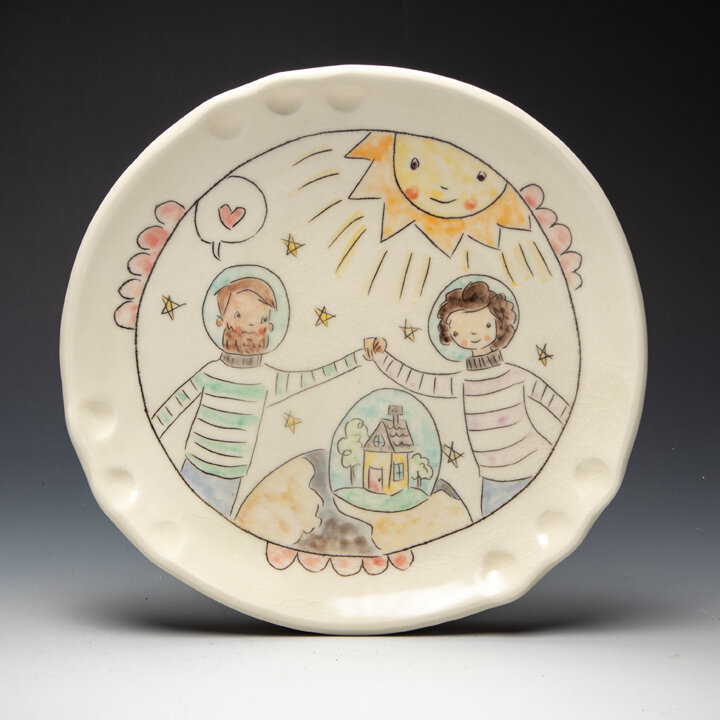
In this piece (above) in particular, Carole is reflecting on both Covid19 (our “bubbles”) and environmental catastrophe — look at the browns and greys of Earth, the house in its own bubble… Yet Carole said that the plate, to her at least, also shows hope. I suppose there’s still a bright smiling sun looking down on everyone, and one of her telltale hearts. There’s also the fact that these smiling characters, holding hands, cannot be anything but happy. We may not know why… but they just are. I’d love to chat with Carole one day about how she finds (or attempts to find) balance between the difficult subjects she’s working on and the pleasure she derives (presumably) from creating these pieces. (Look at those juicy finger imprints, “dimples,” on this plate… I can just feel the pleasure of creating them, of even just holding this plate in my hands). That’s a complexity that I’m facing in my own work right now.

I’m so glad I attended tonight’s talk.