The Wrecking Ball

Risa Question: At what point are ideas in germination, unfixed and in flux (and, thus, worthy of exploration), and at what point are ideas so developed as to abandon them altogether? This question is about your ability and willingness to experiment and explore unencumbered by perfection; vs. being frozen (?) from doing/making with attempting an exploration?

It’s hard for me to answer this question in general terms at this stage in my development as an artist, as I’m just beginning to learn about my practice. Most of the work I’ve done until now was what I would call “low-stakes”: my projects have largely been series of ceramic functional wear pieces, and my learning curve with them only involved solving formal and technical challenges to get the “look” that I wanted these pieces to have. I didn’t need to deal with the extra layer of complexity that conceptual artwork entails.
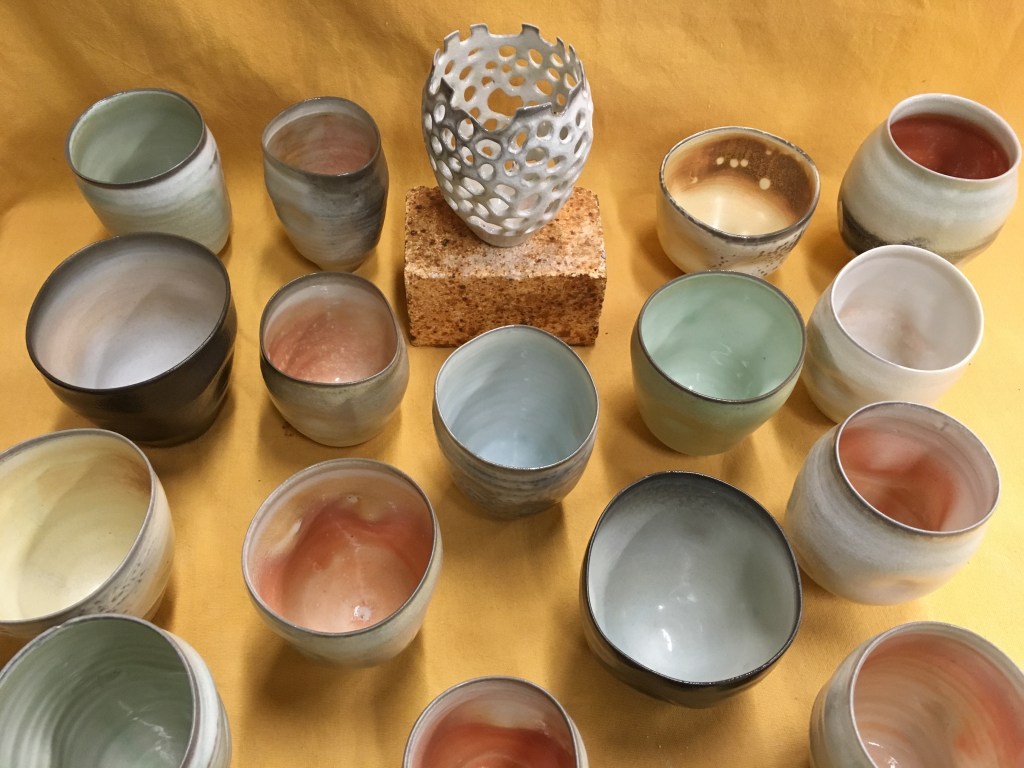
Thin porcelain cups inspired by the vase sponge, callyspongia plicifera

The only other time that had an idea for a project that I dropped was for a Senior Undergrad Group Studio class I took with David in the winter of 2018, and it was also my first time attempting to do anything conceptual. This was my first time attempting to bring a topic (also climate change) into my practice. I spent most of the semester trying to make an idea work — this included trying very hard to understand David’s feedback on the piece that it wasn’t conveying what I wanted it to convey, and trying to find ways to justify to myself and do David/my classmates why it was a worthwhile idea to continue working on. It eventually got through to me that the core of the idea had problems that were likely irresolvable, and I was completely stressed out about what to do with my work for this class.
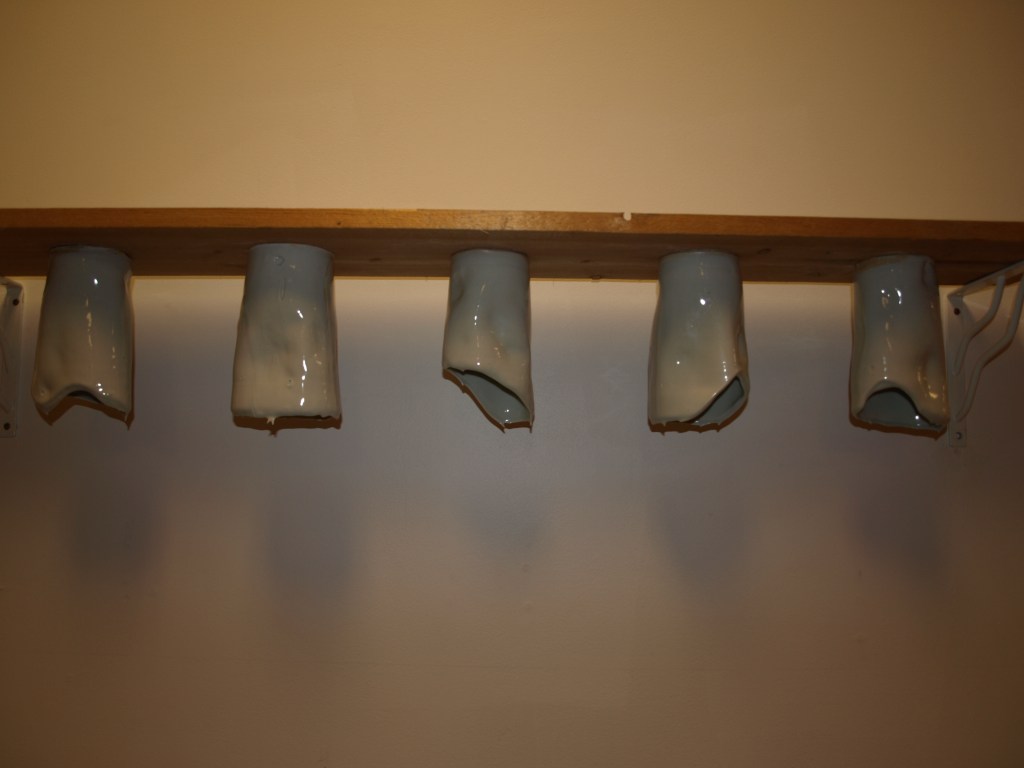
Feeling the melting glacier, anybody?

Yeah-no.

Luckily, I was able to take a break from focusing on this problem. Near the end of the term, I had the great fortune of going to Pittsburgh for a ceramics conference, NCECA. For three days in a row, I wandered around the city by foot, ignoring the free shuttles that conference attendees could make use of, opting instead to walk for hours each day from studio to studio across the city. I think that the combination of walking and viewing so many awesome examples of ceramic artwork was precisely what I needed at that moment.

Just after boarding my return flight, a idea just popped into my head, and I immediately started sketching it in my travel diary. I knew instantly that this idea would convey the meaning I wanted my work to convey in a much clearer way than my original idea. It was at that point that I ditched my original idea, and about two intense weeks later, I was very happy with what I had for that class’ final crit.
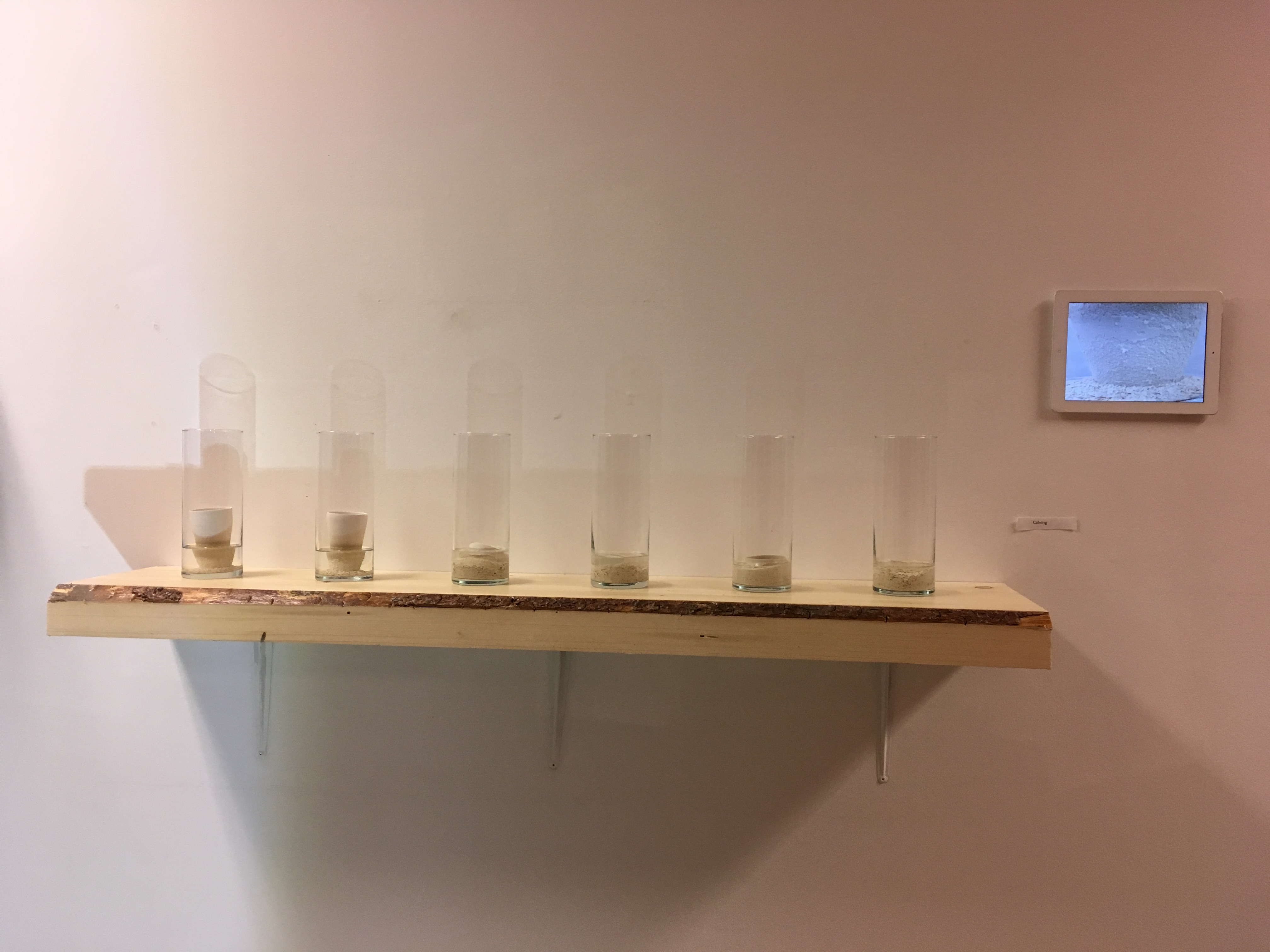
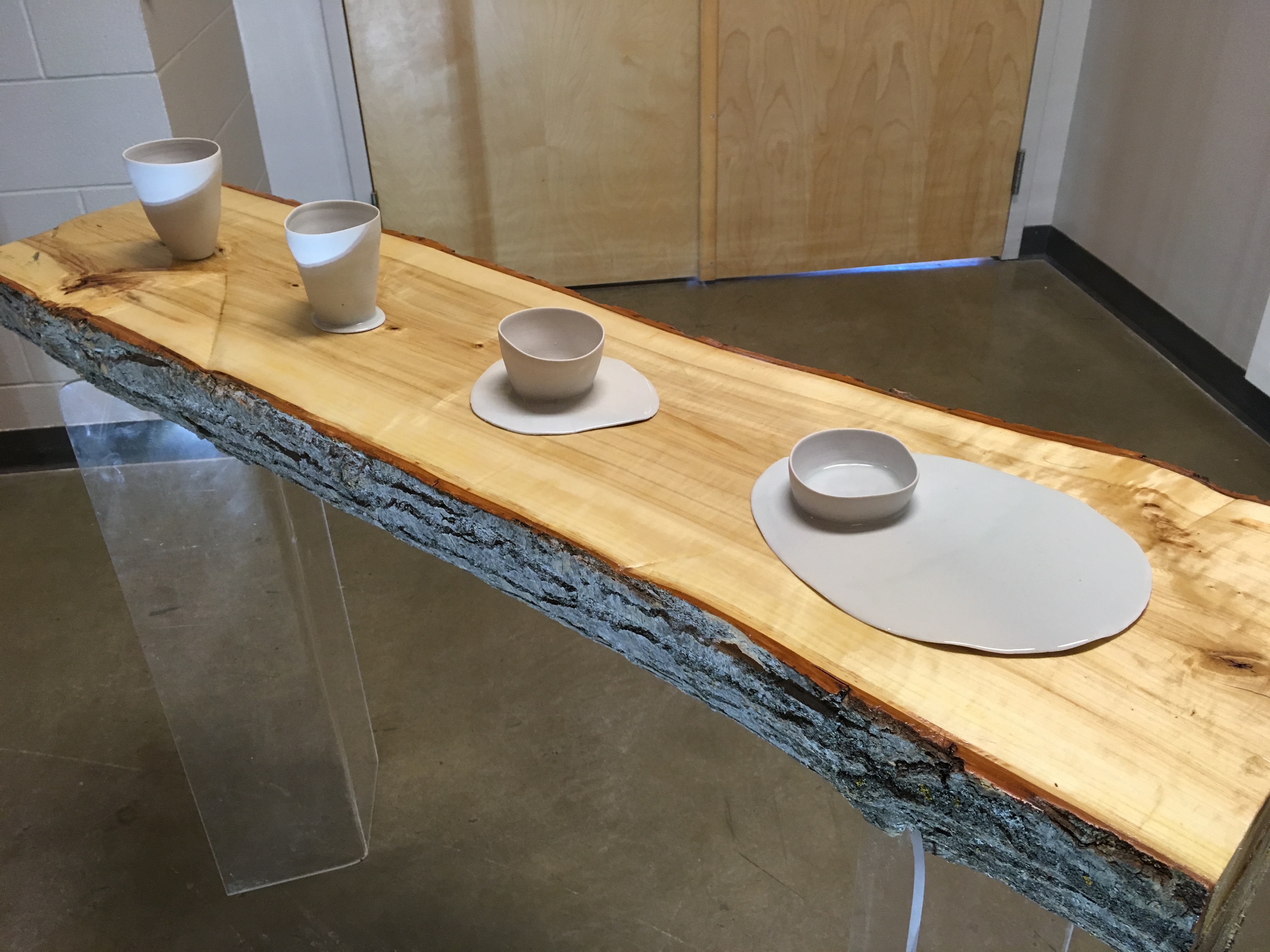
(The pieces above are titled “Calving” and “Athabasca Glacier, 1918-2018,” and they’re part of a series of pieces using a tool use to drink (the cup) to demonstrate glacial loss. In the crit, and subsequently in a show, I’ve been told that the pieces get my point across very clearly.)

I understand that project ideas often need tweaking or even larger-scale revisions. Thinking about this now, I realize that I’ve never been very good at doing the latter; when I used to fancy myself a writer, I found it very hard to make major revisions to any story or poem I’d written. The best feeling ever was when the idea for a piece came to me “out of the blue,” complete and just about ready to go. I could make minor revisions to it, but I’d quickly lose interest in an idea if it needed significant or structural changes in order for it to work. It was easier for me to just start again from scratch.

Is this something I need to work on? For how much time should an artist stick with an idea when she knows that it is fundamentally problematic? At what point is it best to return to the drawing board? These are great questions, and I don’t have any great answer for them. For my original project in Risa’s class this term, I can see parallels to the project idea I’d originally had in David’s class back in 2018: the work I was going to produce would not clearly convey what I wanted it to. In a way, a “seed” of the original idea helped me get to where I eventually ended up, but most of it had to go.

This reminds me of something Annie Dillard says in The Writing Life that was very important to me years ago when I was trying to become a writer. She writes about the way a writer needs to be ruthless at times with her writing, and not pause before destroying what must be destroyed for the project to reach fruition:

The line of words is a hammer. You hammer against the walls of your house. You tap the walls, lightly, everywhere. After giving many years’ attention to these things, you know what to listen for. Some of the walls are bearing walls; they have to stay, or everything will fall down. Other walls can go with impunity; you can hear the difference. Unfortunately, it is often a bearing wall that has to go. It cannot be helped. There is only one solution, which appalls you, but there it is. Knock it out. Duck.

Annie Dillard, The Writing Life

It seems clear to me right now that there is not much I can salvage from the idea I originally proposed to Risa. Perhaps some “brick” from it will become part of a future project, but I don’t want to feel tied down to building a building that I am already convinced isn’t the right one.

I don’t believe that this means I’m being “encumbered by perfection,” and I certainly have a “willingness to explore” in this early early stage in my MFA without any delusions of grandeur that I will produce a masterpiece in the next few months (or years… or ever ). I just feel at this stage that my original idea has already taught me what it can, and I’m ready to move onto exploring and learning from something else.

A false start

I am super excited about beginning this MFA at the University of Regina, and I’m pumped about working with my supervisor, Risa Horowitz. I expect that the directed studio class I’m taking with her, Art and Climate Change, will challenge me in several useful ways. This is a class that will allow me to work with any medium I want to produce work that is on the issue that matters the most to me. Nothing could be better.

However, I’ve hit a road block, or at least a speed bump: I have no idea what to produce.

I never struggled like this to find an idea for a course project in any of the 11 senior undergrad visual arts classes I took over the past five years, and I am trying to figure out what’s causing this block.

I had a proposal in by my Sept 14th deadline, but I’ve since decided not to go ahead with it. I’m going to take some space here to describe the proposal and what led me to realize that it wasn’t one worth following through with.  

The idea was for a two-part project.

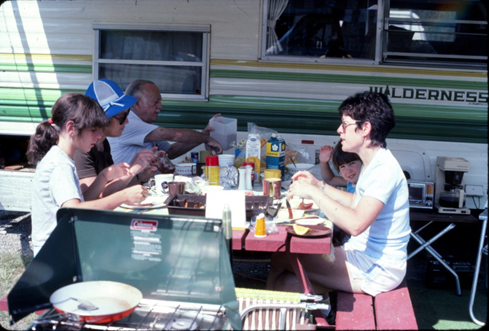
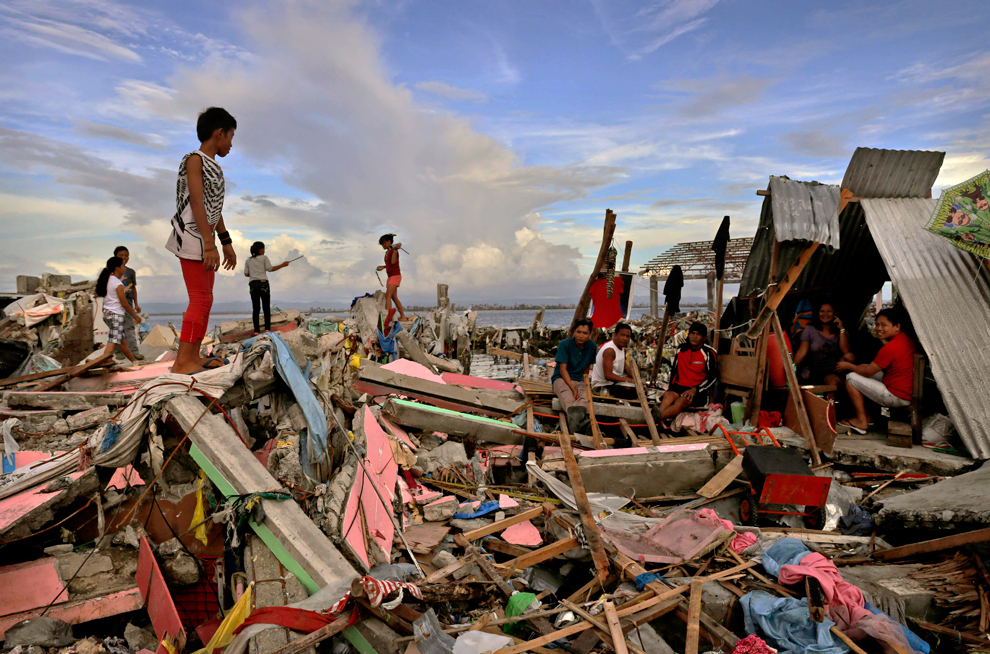
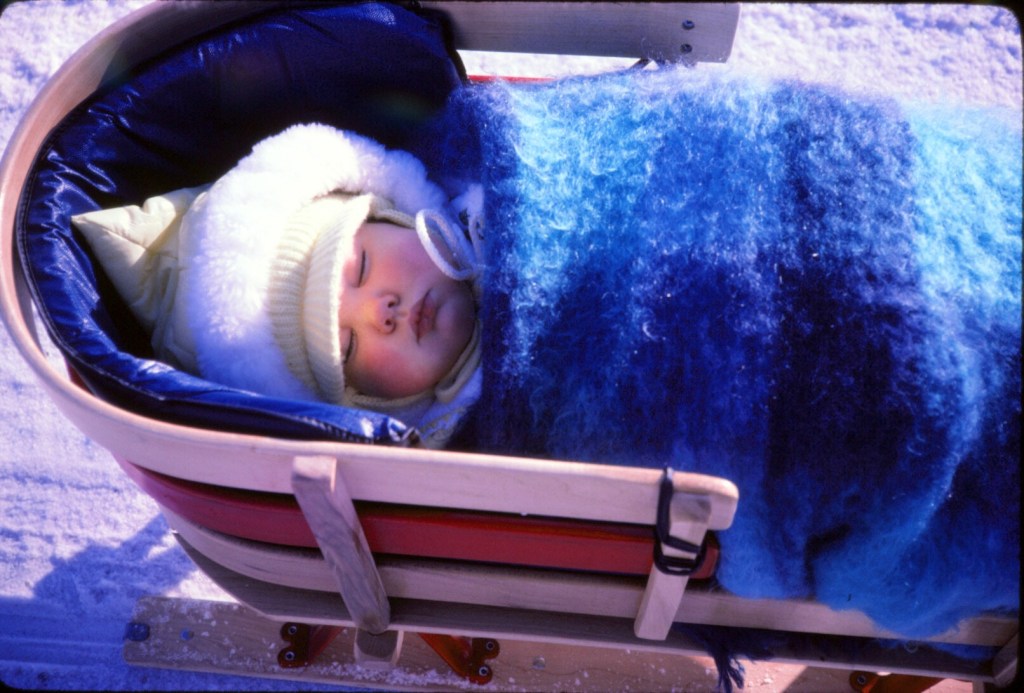
In the first part, I was going to have a few sets of photo-text or photo-photo compilations. An example I for one of these was that I’d have photos from my childhood next to statements and questions about what happened in the last 40+ years that got us to this stage (acknowledging the feelings I have about what’s taken place in my lifetime). Another idea was to pair photos from my childhood with the CO2ppm that existed when they were taken (again, acknowledging that my lifetime has coincided with the period of the most intense ghg emissions, and that I am partially to blame). A third idea was to have photos from my childhood next to images from places in the world that are being devastated by climate change (to acknowledge the wrongness of the situation we’re in, where developed nations are causing the problem and developing nations, least at fault, are the ones suffering the brunt of the consequences).

What I believed I was intending to do with these pieces was to delve into my feelings of grief and guilt regarding my implicated in the climate crisis that we’re facing. I thought that this piece/series would offer me the chance to do some introspection and come to a deeper understanding of what climate change (and my role in it) means to me.

The second part of this proposed project was going to involve going out into the community where I live to interact with the public on the topic of climate change. I planned to use interactive graphs detailing atmospheric CO2 levels over the last millennia made available by The Two Degree Institute.

I believed that this project would give me the chance to have conversations with strangers about climate change and possibly challenge a few people’s perspectives.

Through working on the two parts of this project, I was hoping I’d arrive at a better understanding of “didactic art.” My understanding is that the term “didactic art” refers to art that has the sole purpose of teaching people something about how they should think or act regarding a particular issue. It can easily be patronizing and/or less impactful as art because of its singular focus on getting across a message. I can understand how such pieces could be “boring” (a word Risa used). I believed that this project’s two-part focus – firstly, turning inward and simply “reporting” on my own feelings about climate change, and secondly, turning outward expressly for the purpose of getting others to think about climate change — would be an opportunity for to test my understanding of “didactic art” and how/what type of art that is about climate change is/is not categorically “didactic.”

Rethinking things

Something about these ideas didn’t sit right with me, but I was determined to have a proposal submitted to Risa in the one-week deadline I was given, and I hoped I could turn these ideas into something suitable through the course of developing them over the semester.

Still, I was feeling an inordinate amount of anxiety over the prospect of talking about this proposal with Risa or anyone else. I was actually embarrassed by it, as though it was completely inappropriate or inadequate. I felt wrong about focusing on my own life and relationship to climate change in this way, but I wasn’t sure why. Was it just because I’m not used to making myself the subject of the work I’m creating, because I am too ignorant about the history and theory behind conceptual and performance art, or because I just didn’t have confidence that it was a worthwhile project to pursue? It may have been that all of these issues were what was causing me this anxiety and hesitation.   

Chatting with Risa during our schedule meeting on Monday September 14th, it was clear she wanted to demonstrate a few issues with the project that I’d have to overcome. I don’t believe that she wanted me to drop the proposal, but she raised several difficult questions about it, including:

What is the central issue of this work – is it the art, or is art am I using art as a utilitarian way to do something else?

Could I find a way to speak to people about climate change that doesn’t rely on the trope of melting glaciers – a trope that’s been used a lot, and one that people in Saskatchewan may not identify with?

Have I considered that using images from developing nations may give off the impression that I’m unaware of the exploitative colonialist impression they may convey?  

I was deeply uncomfortable during this meeting, and while she ended it by saying “the proposal is great,” I nonetheless was left feeling like there was something very wrong with it.

I started looking at my childhood photos and testing out what the photo compilations for the first part of my proposal would look like.

Image source

336.12

I wasn’t happy with the results of this test. It was not saying what I wanted it to say, and it was not appealing to look at either.

A full stop.

Friday came, and in that week’s Group Studio class with David Garneau, I presented on three artists whose practice I wish to emulate. I chose Joseph Michael, Ken Lum, and Eve S. Mosher. I talked about how these artists were doing things with their practice and/or using media in a way that I admired.

Eva S. Mosher’s practice in particular is one I admire. She seems to have found a way to merge her activism and her art in a way that is poignant and not preachy.

“My work utilizes art and performance to increase knowledge and understanding around environmental and social issues. My goal with each project is to create a space for participants to have a shared experience from which they learn and continue to share beyond the scope of the initial project.”

Eve S. Mosher

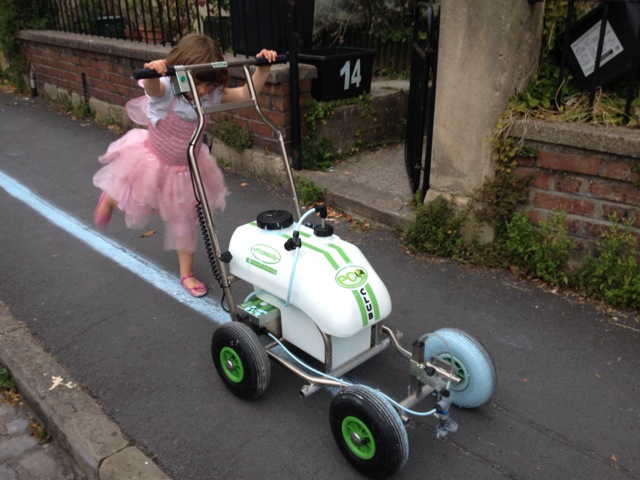
One of her projects, Highwaterline, involved drawing a thick chalk line over 70 miles in New York City and later 36 miles in Bristol, England. The idea is brilliant – it succinctly visualizes the predicted effects of climate change if we do too little to mitigate the situation. It’s obvious to anyone that this visualization represents a problem: the world’s ice is melting; seawater levels are rising; people who live near the coast are going to be fucked. At the same time, the chalk line is visually interesting. I also don’t see this work as being “in your face” didactic. On the contrary, through this performance, Mosher was able to start conversations about climate change in a very matter-of-fact way: this line represents where water will rise to in this city; take from this information what you wish; do something positive with it if you want to.

What a succinct message, and what a novel way to convey it!

This is the type of work I’d like to produce, and I realized after sharing it in the Group Studio that my proposed project would be about as far from being this successful as we are here in Regina from an ocean.

Having so many concerns about my proposal, and knowing that David has created work that deals with political issues, I asked him if we could chat after class, and he agreed. I described my proposal to him and my hesitations about it. We only had a few minutes, so he cut to the chase by asking me a few very direct questions: 

Wouldn’t my childhood photo-text pieces imply that I feel I’ve been victimized?

My answer at first: no.

My answer after thinking about it for another moment: yes.

The truth is – As a child, I didn’t know what climate change was. I didn’t know that I was contributing to global greenhouse gas emissions. I didn’t know that people weren’t doing anything about the situation. Ergo, I can’t hold myself responsible for what I did as a child. Perhaps what I really wanted to say with these proposed photo-text works was: people have fucked up, the whole entire system is fucked up, and it was this way long before I was born.

David also asked me what it was I thought made Mosher’s work successful. I told him what I’ve described above: that it is straightforward and unambiguous. Was my project this simple? No.

And so that was it for this project for me.

Funny, but a few days after speaking with David and deciding to come up with a new project, I see this on my Facebook feed:

It seems that Greta has also been thinking the amount of CO2 released into the atmosphere since she was born.

Perhaps I’ll return to the idea of using my childhood photos in my work somehow, but for now I’m going shelve that idea, do some more reading, talk to a few people, answer a few more questions, give some serious thought to what it is I want to say and how I can best say it, and aim for a fresh start.