For this week’s class, I needed to read “To Say or Not to Say” from Ken Lum’s Everything is Relevant: Writings on Art and Life and answer the question, what does it mean to be self-reflective?
Talking to my Mom about my emerging art practice and is one of the measures I have for determining if my work is real — if it’s a straightforward conversation and I can speak with confidence about what I’m doing, I feel good about things. With her history of severe mental illness and its consequences, including brain lesions from years of being on toxically high doses of antidepressants, she can’t sustain focus for any overly complicated sentences. I need to speak clearly and succinctly; I need to tell her only what is necessary. What is necessary about my current project? Spelling it out for her, I can hear myself as she hears me, and I catch myself asking how real my work is — how meaningful is it to a person who isn’t immersed in art-academia, and how meaningful is it to me? What is the real point of what I’m doing? Is there a point to it, besides (I hope) securing a degree?
Lum talks about how art is losing the battle to remain real in a capitalist (or neoliberal) world that is increasingly cliché. Society, Lum writes (quoting Deleuze), is so saturated with clichés that authentic individualization barely exists. Within this world, he writes, “a paradox is that as art increasingly follows the logic of capital, it becomes deterritorialized to itself” (190). The meaning of art is watered down by its insistence, or requirement, to feed into larger societal systems. One way for art to remain authentic, according to Lum, is for it to acknowledge atrocities of the past. The art world needs to recognize its place in the capitalist, colonialist system that continues to oppress and repress.
Lum starts the piece by talking about an epiphany he had at the Pompideu in 1981, and I believe he ends it with another — an experience he had when he grandmother unexpectedly appeared at an opening to one of his solo exhibitions:
Halfway through the gallery opening, I suddenly heard my grandmother’s voice over the din of chatter. She was loudly calling out my Cantonese name. I remember thinking: Is that my grandmother’s voice? Is she here? Moments later I saw her emerge from the crowd dressed in poor Cantonese attire. […] At first I was completely stunned, even mortified, for I felt completely exposed. My family. My class. My race. My private self as opposed to my public self. My non-artist self as opposed to my artist self. They had been made painfully visible to me and for all to see. (191)
This was an experience of colliding paradigms for Lum, and he writes about it being a moment of realization for him into the “deep disjuncture between art and the real” (194). His grandmother had suffered a harsh life of poverty and persecution; how would she, could she even, read the artworks in her grandson’s show? What meaning would they have to her, or would they be meaningless, created for only a sliver of the general population, that specialized group which comprises the art world?
Being self-reflective, I believe Lum is saying, means asking difficult questions of oneself, such as, for whom am I making this work? Does it communicate something I’d be willing to share about myself with my closest friends and family? Is it really what I need them to know about me and my view on topic x? These questions offer a way to keep the work real, rather than cliché.
Lum’s text itself offers this strategy of keeping the work authentic. By bringing in his personal epiphany and his grandmother alongside theoretical citation, he’s employed the mode of autotheory. In Autotheory as Feminist Practice in Art, Writing, and Criticism, Lauren Fourner describes auototheory as
a term that describes a self-conscious way of engaging with theory–as discourse, frame, or mode of thinking and practice–alongside lived experience and subjective embodiment (7)
and
autotheory points to modes of working that integrate the personal and the conceptual, the theoretical and the autobiographical, the creative and the critical, in ways attuned to interdisciplinary, feminist histories. (7)
Autotheory, I believe Lum would say, is a means of writing and creating that has the potential to remain authentic in the way he’s speaking about in “To Say or Not to Say.” Even the title of this text alludes to the dilemma of how much of the personal one should share in their work. It’s risky to bring the personal into the public sphere for all kinds or reasons. However, I’m guessing Lum would say that “everything is relevant,” and to not take a self-reflexive approach in one’s work is to feed into the capitalist systems that are separating art and what’s real altogether.
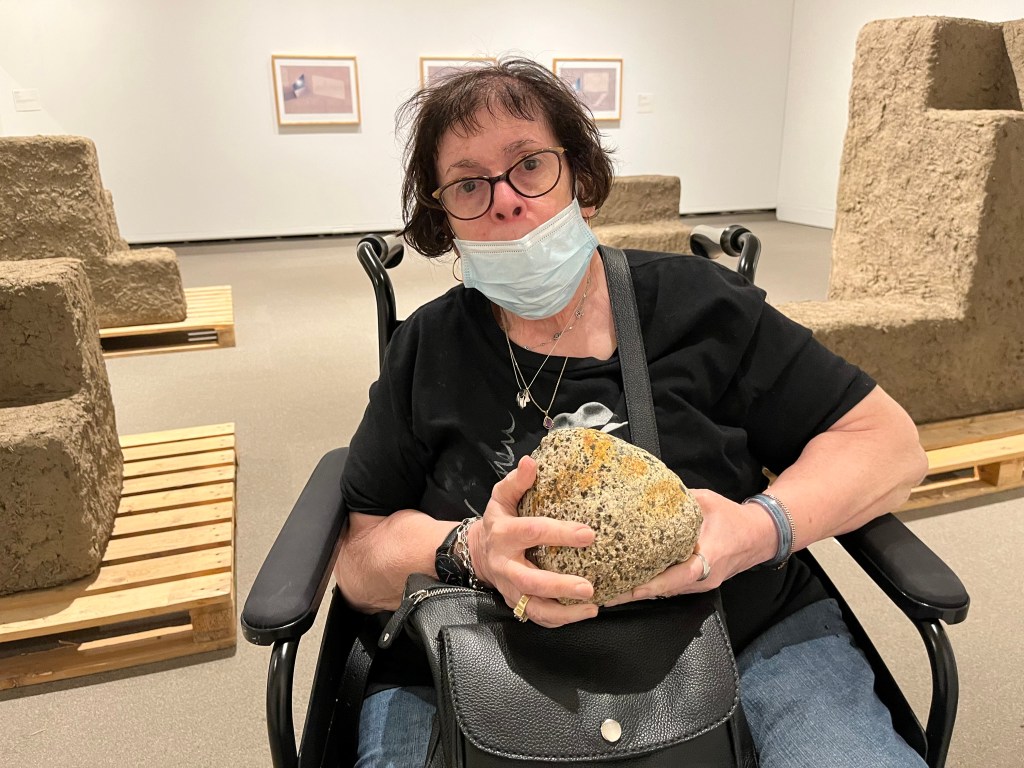
What it means to me to be self-reflexive is to constantly be analyzing the motivations behind my work. I keep this blog as a way of practicing the autotheoretical mode of thinking and writing, and I find it immensely helpful. For example, this past summer I posted a “psychoanalysis of a climate change melancholic,” where I attempted to dig deep into my motivation for making work about climate change. Writing this way helps me ensure I am doing work I can believe in, work that seems as authentic as it can be. In other words, thinking and writing this way helps me out when my Mom asks me what I did today. I can answer her in a way that makes sense to us both.
Fournier, Lauren. Autotheory as Feminist Practice in Art, Writing, and Criticism. MIT Press, 2021
Lum, Ken. “To Say or Not to Say.” Everything is Relevant: Writings on Art and Life, ed Ken Lum and Kitty Scott. Montreal: Concordia University Press, 2020, pp 189-195. Amy Snider