This week’s assignment is to “do some independent research on the concept of ‘community’ and answer the question, ‘what does community mean to you (as an artist and MFA candidate)?'”
My understanding of the role of community in our lives has really only started developing in the last few years. Being from somewhere else (Richmond, BC), I’ve struggled to find community here without even realizing it. What I always felt was just a core of loneliness which was just natural to me. Living alone with my intensely ill mother as a child, and having few friends, I suffered terribly from loneliness. I remember walking across the street to the Safeway late at night (they were open until midnight) to wander the aisles, starting at rows of deodorant, baby products, or whatever, just to be around people. If I was lucky, I’d see someone I’d seen there before. I didn’t even realize how lonely I was, or what exactly I was missing. I know now that I was craving community.
I teach this term to my ESL students, and it’s one they often find hard to fully get. Perhaps it’s through that teaching effort that I really understood what community means to me as well. When I explain that community is a feeling of belonging with others, I realize that I’ve never had that myself. Now, twenty years into my stay in Regina, I’m aware of the communities I’ve formed here. I know the checkout staff at the local Safeway, but while that brings some minor comfort, it’s other communities that mean more to me. The one that means the most, and I’m not saying this just to suck up to my prof, is the Visual Arts department at the University of Regina.
I’ve learned in recent years that real community is not just recognizing others (say, at the grocery store), it’s also about recognizing yourself.
Alongside being lonely my whole early life, I’ve also never really lived for myself. Growing up, I had to take care of others (largely my Mom), and I didn’t have the mental framework to seriously consider what I wanted to do with my life. I knew I enjoyed making art, but when my Dad told me I’d never get a job basket weaving, (literally what he said), I too easily dropped that thought and made my major English with the idea it would lead me to teaching. It did, but I don’t get much sense of community from my workplace. I’ve been teaching ESL here for nearly two decades, yet very sadly, I don’t feel I belong in that program.
On the other hand, when I enter the Visual Arts area now and see the familiar faces of fellow students, techs, custodians, and profs, I feel like I’m at home. I can be myself here, the “myself” I was meant to be. In other words, I recognize myself when I’m in this space among these people. This shows me that if I can form community among artists, maybe, just maybe, I can be one myself.
Now, a school (or university) is a bit of an imposed community; we are all here for some other purpose (study; work). When my times comes to graduate, presumably I’m going to have to leave this space. The thought saddens me; however, I know that I’ll be able to stay in touch with people I’ve met via events such as Art for Lunch and openings, and if I’m very lucky, perhaps I’ll get to do some teaching here too.
According to Evolve Artist and other hits when you search “value of community to artists,” artist communities offer motivation, inspiration, connections, accountability, and feedback. That all makes perfect sense. To me, however, an artistic community means even more that those practicalities. It’s a feeling of connection and belonging that is core to my identity. Internalizing this sense of artistic community is what has shown me that I am an artist… words that I still struggle to fully believe, but I’m slowly making progress with the help of others.
Christina Battle, who will generously be doing studio visits with a few of us MFA’s in a couple of weeks, has the following in her “about” page where she describes her research into disaster studies:
Relating to the overall complexity that disaster studies engages with, ecology is thus defined: “The English word ecology is taken from the Greek oikos, meaning ‘house,’ our immediate environment. In 1870 the German zoologist Ernts Haekel gave the word a broader meaning: the study of the natural environment and of the relations of organisms to one another and to their surroundings. Thus, ecology is the science by which we study how organisms (animals, plants, and microbes) interact in and with the natural world.”
She goes on to say about her own work that
I look specifically to ecological relationships among plants—especially how plants evade, respond to and prepare for disaster—as a way to find strategies for our own communities. It is important to note that my working definition of community is one that also draws from ecology: “many populations of different kinds living in the same place constitute a community,” and necessarily includes both human and non-human entities.
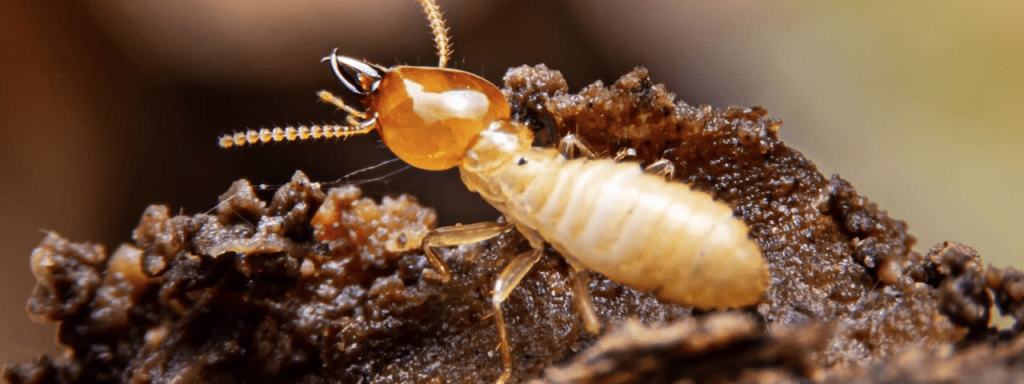
I enjoy this definition of community as tied to ecology. I see that I’ve come a long way from falling asleep listening to “I Am a Rock” as a child to being recognized by others and recognizing myself in the visual arts community at the University of Regina. Now I know that I am not in fact a rock. Now, I am a termite (thanks to Bruno Latour), living and interacting with others in the critical zone of planet Earth, taking care of it and each other. It is from here that I’ll make art.
 Amy Snider