Class post 6: How was your day today?

For this week’s class, I needed to read “To Say or Not to Say” from Ken Lum’s Everything is Relevant: Writings on Art and Life and answer the question, what does it mean to be self-reflective?

Talking to my Mom about my emerging art practice and is one of the measures I have for determining if my work is real — if it’s a straightforward conversation and I can speak with confidence about what I’m doing, I feel good about things. With her history of severe mental illness and its consequences, including brain lesions from years of being on toxically high doses of antidepressants, she can’t sustain focus for any overly complicated sentences. I need to speak clearly and succinctly; I need to tell her only what is necessary. What is necessary about my current project? Spelling it out for her, I can hear myself as she hears me, and I catch myself asking how real my work is — how meaningful is it to a person who isn’t immersed in art-academia, and how meaningful is it to me? What is the real point of what I’m doing? Is there a point to it, besides (I hope) securing a degree?

Lum talks about how art is losing the battle to remain real in a capitalist (or neoliberal) world that is increasingly cliché. Society, Lum writes (quoting Deleuze), is so saturated with clichés that authentic individualization barely exists. Within this world, he writes, “a paradox is that as art increasingly follows the logic of capital, it becomes deterritorialized to itself” (190). The meaning of art is watered down by its insistence, or requirement, to feed into larger societal systems. One way for art to remain authentic, according to Lum, is for it to acknowledge atrocities of the past. The art world needs to recognize its place in the capitalist, colonialist system that continues to oppress and repress.

Lum starts the piece by talking about an epiphany he had at the Pompideu in 1981, and I believe he ends it with another — an experience he had when he grandmother unexpectedly appeared at an opening to one of his solo exhibitions:

Halfway through the gallery opening, I suddenly heard my grandmother’s voice over the din of chatter. She was loudly calling out my Cantonese name. I remember thinking: Is that my grandmother’s voice? Is she here? Moments later I saw her emerge from the crowd dressed in poor Cantonese attire. […] At first I was completely stunned, even mortified, for I felt completely exposed. My family. My class. My race. My private self as opposed to my public self. My non-artist self as opposed to my artist self. They had been made painfully visible to me and for all to see. (191)

This was an experience of colliding paradigms for Lum, and he writes about it being a moment of realization for him into the “deep disjuncture between art and the real” (194). His grandmother had suffered a harsh life of poverty and persecution; how would she, could she even, read the artworks in her grandson’s show? What meaning would they have to her, or would they be meaningless, created for only a sliver of the general population, that specialized group which comprises the art world?

Being self-reflective, I believe Lum is saying, means asking difficult questions of oneself, such as, for whom am I making this work? Does it communicate something I’d be willing to share about myself with my closest friends and family? Is it really what I need them to know about me and my view on topic x? These questions offer a way to keep the work real, rather than cliché.

Lum’s text itself offers this strategy of keeping the work authentic. By bringing in his personal epiphany and his grandmother alongside theoretical citation, he’s employed the mode of autotheory. In Autotheory as Feminist Practice in Art, Writing, and Criticism, Lauren Fourner describes auototheory as

a term that describes a self-conscious way of engaging with theory–as discourse, frame, or mode of thinking and practice–alongside lived experience and subjective embodiment (7)

and

autotheory points to modes of working that integrate the personal and the conceptual, the theoretical and the autobiographical, the creative and the critical, in ways attuned to interdisciplinary, feminist histories. (7)

Autotheory, I believe Lum would say, is a means of writing and creating that has the potential to remain authentic in the way he’s speaking about in “To Say or Not to Say.” Even the title of this text alludes to the dilemma of how much of the personal one should share in their work. It’s risky to bring the personal into the public sphere for all kinds or reasons. However, I’m guessing Lum would say that “everything is relevant,” and to not take a self-reflexive approach in one’s work is to feed into the capitalist systems that are separating art and what’s real altogether.
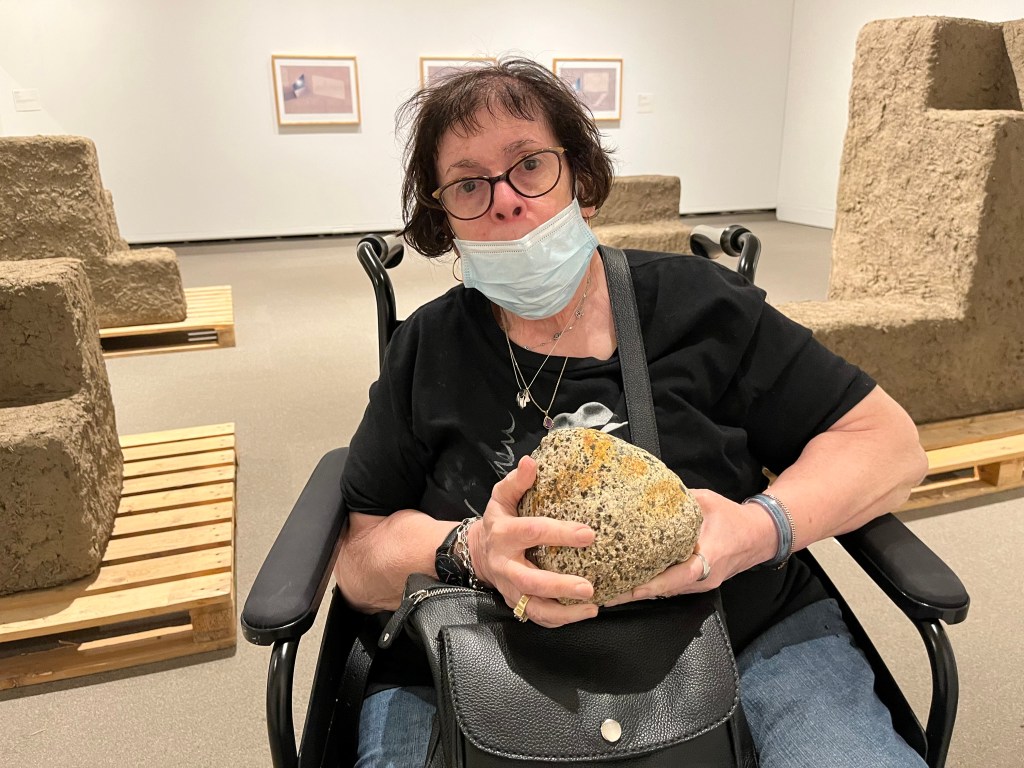
My Mom at the MacKenzie Art Gallery, June 2022, wondering about this rock

What it means to me to be self-reflexive is to constantly be analyzing the motivations behind my work. I keep this blog as a way of practicing the autotheoretical mode of thinking and writing, and I find it immensely helpful. For example, this past summer I posted a “psychoanalysis of a climate change melancholic,” where I attempted to dig deep into my motivation for making work about climate change. Writing this way helps me ensure I am doing work I can believe in, work that seems as authentic as it can be. In other words, thinking and writing this way helps me out when my Mom asks me what I did today. I can answer her in a way that makes sense to us both.

Fournier, Lauren. Autotheory as Feminist Practice in Art, Writing, and Criticism. MIT Press, 2021

Lum, Ken. “To Say or Not to Say.” Everything is Relevant: Writings on Art and Life, ed Ken Lum and Kitty Scott. Montreal: Concordia University Press, 2020, pp 189-195.
Class post 5: I am an artist termite

This week’s assignment is to “do some independent research on the concept of ‘community’ and answer the question, ‘what does community mean to you (as an artist and MFA candidate)?'”

My understanding of the role of community in our lives has really only started developing in the last few years. Being from somewhere else (Richmond, BC), I’ve struggled to find community here without even realizing it. What I always felt was just a core of loneliness which was just natural to me. Living alone with my intensely ill mother as a child, and having few friends, I suffered terribly from loneliness. I remember walking across the street to the Safeway late at night (they were open until midnight) to wander the aisles, starting at rows of deodorant, baby products, or whatever, just to be around people. If I was lucky, I’d see someone I’d seen there before. I didn’t even realize how lonely I was, or what exactly I was missing. I know now that I was craving community.

I teach this term to my ESL students, and it’s one they often find hard to fully get. Perhaps it’s through that teaching effort that I really understood what community means to me as well. When I explain that community is a feeling of belonging with others, I realize that I’ve never had that myself. Now, twenty years into my stay in Regina, I’m aware of the communities I’ve formed here. I know the checkout staff at the local Safeway, but while that brings some minor comfort, it’s other communities that mean more to me. The one that means the most, and I’m not saying this just to suck up to my prof, is the Visual Arts department at the University of Regina.

I’ve learned in recent years that real community is not just recognizing others (say, at the grocery store), it’s also about recognizing yourself.

Alongside being lonely my whole early life, I’ve also never really lived for myself. Growing up, I had to take care of others (largely my Mom), and I didn’t have the mental framework to seriously consider what I wanted to do with my life. I knew I enjoyed making art, but when my Dad told me I’d never get a job basket weaving, (literally what he said), I too easily dropped that thought and made my major English with the idea it would lead me to teaching. It did, but I don’t get much sense of community from my workplace. I’ve been teaching ESL here for nearly two decades, yet very sadly, I don’t feel I belong in that program.

On the other hand, when I enter the Visual Arts area now and see the familiar faces of fellow students, techs, custodians, and profs, I feel like I’m at home. I can be myself here, the “myself” I was meant to be. In other words, I recognize myself when I’m in this space among these people. This shows me that if I can form community among artists, maybe, just maybe, I can be one myself.

Now, a school (or university) is a bit of an imposed community; we are all here for some other purpose (study; work). When my times comes to graduate, presumably I’m going to have to leave this space. The thought saddens me; however, I know that I’ll be able to stay in touch with people I’ve met via events such as Art for Lunch and openings, and if I’m very lucky, perhaps I’ll get to do some teaching here too.

According to Evolve Artist and other hits when you search “value of community to artists,” artist communities offer motivation, inspiration, connections, accountability, and feedback. That all makes perfect sense. To me, however, an artistic community means even more that those practicalities. It’s a feeling of connection and belonging that is core to my identity. Internalizing this sense of artistic community is what has shown me that I am an artist… words that I still struggle to fully believe, but I’m slowly making progress with the help of others.

Christina Battle, who will generously be doing studio visits with a few of us MFA’s in a couple of weeks, has the following in her “about” page where she describes her research into disaster studies:

Relating to the overall complexity that disaster studies engages with, ecology is thus defined: “The English word ecology is taken from the Greek oikos, meaning ‘house,’ our immediate environment. In 1870 the German zoologist Ernts Haekel gave the word a broader meaning: the study of the natural environment and of the relations of organisms to one another and to their surroundings. Thus, ecology is the science by which we study how organisms (animals, plants, and microbes) interact in and with the natural world.”

She goes on to say about her own work that

I look specifically to ecological relationships among plants—especially how plants evade, respond to and prepare for disaster—as a way to find strategies for our own communities. It is important to note that my working definition of community is one that also draws from ecology: “many populations of different kinds living in the same place constitute a community,” and necessarily includes both human and non-human entities.

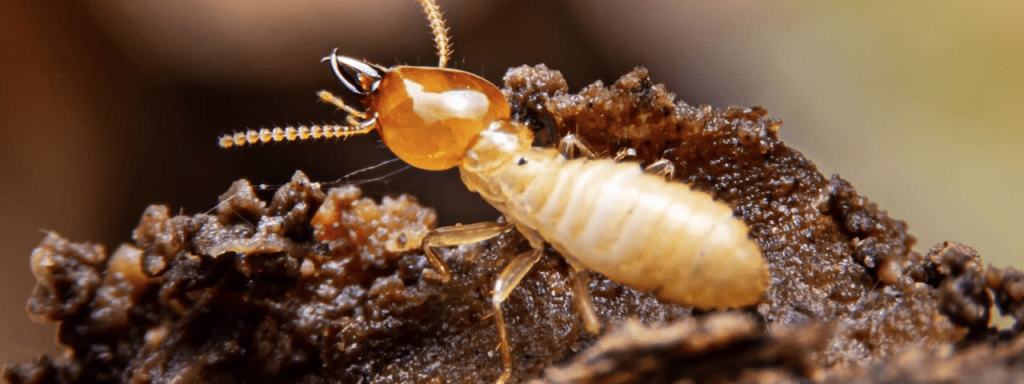
I enjoy this definition of community as tied to ecology. I see that I’ve come a long way from falling asleep listening to “I Am a Rock” as a child to being recognized by others and recognizing myself in the visual arts community at the University of Regina. Now I know that I am not in fact a rock. Now, I am a termite (thanks to Bruno Latour), living and interacting with others in the critical zone of planet Earth, taking care of it and each other. It is from here that I’ll make art.

image source

Class Post 4: the precarious study of precarity

This week for class, I needed to watch Irit Rogoff’s lecture, “Becoming Research,” and answer the question, “What is research for *You*?” As optional other reading, Risa gave us Marquard Smith’s “Why ‘What is Research in the Visual Arts?: Obsessions, Archive, Encounter?'” and Christopher Frayling’s “Research in Art and Design.”

Rogoff’s talk is dense with valuable insight. Among the many points she makes, I am very interested by what she says about our times being of precarity, and how

spatially, technologically, atmosphereically and in terms of social conditions we are in states of extreme instability. […] So, given that these are our conditions, the modes by which we study, we excavate, we investigate, we try and ask questions about, themselves cannot be stable.

14:32

As she puts it elsewhere, “we need a complete reconfiguration of how to know” (13:23 emphasis mine). What is, she asks, “the precarious study of precarity?” (16:25). I would love to have a clear answer to this question as it applies directly to my own research.

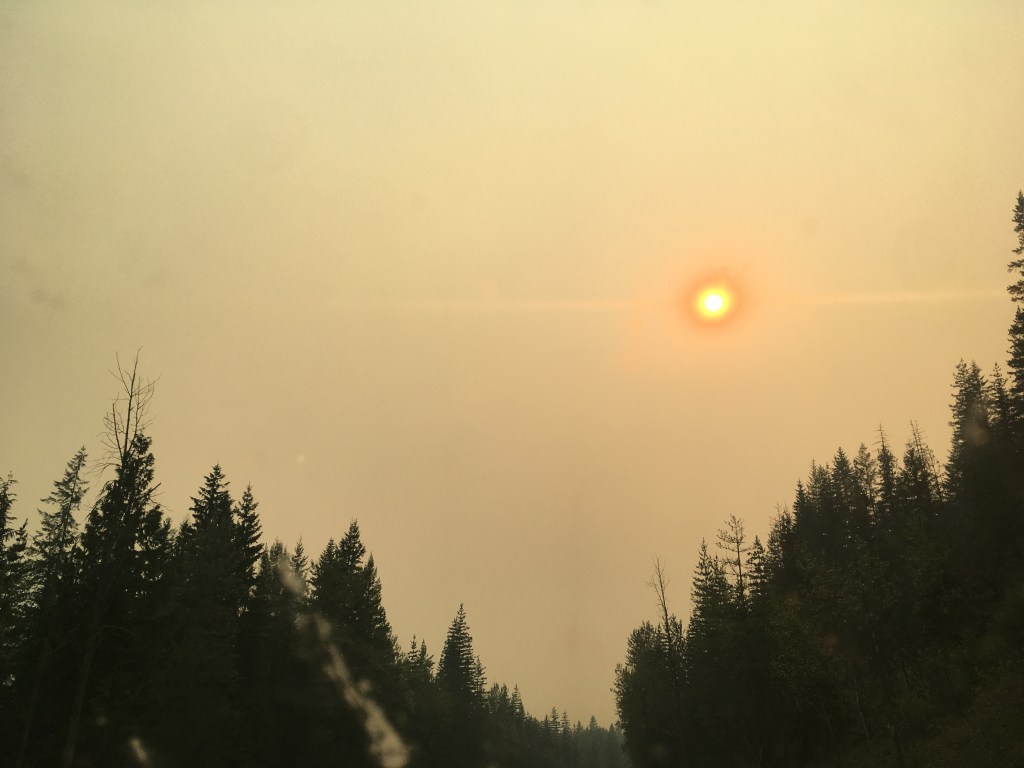
I’m fascinated by this notion of there being a necessity for a completely new epistemology for the times we’re in. My current project, my MFA graduating show, is an installation dealing precisely with precarity, instability, and ephemerality. My inquiry is into how others will respond when confronted with the danger and violence of impending environmental collapse at our hands. How will they feel? Will they understand the term solastalgia for the first time, or will they refuse to enter into that understanding, walking away from my show rather than implicating themselves in it by stepping on any of the thousands of super-fragile pieces that will be lining the gallery floor? This is the research I’m interested in doing, and in a sense it’ll be a “new way of knowing” in that this exact show has never before taken place, and it is not based on existing knowledge. It is about the condition of uncertainty and anxiety that I experience and whether others experience it too. It could include a follow-up questionnaire, interview, or survey, but it won’t. I’ll allow it to remain a more private study for each visitor-participant, one about entering into this condition experientially, being in it as I have been in the recent past, say when camping under a blanket of forest fire smoke that made the sky an unmistakeable shade of warning-orange.

In this way, this research stems from my “daily life,” my own “emotional sea changes” and my “crises of identity and security”:

Research is not some elevated activity requiring a great deal of prior knowledge, nor is it simply the urge to find things out. It is in many ways the stuff of daily life. Every form of hardship encountered, whether one is an immigrant or living out catastrophic conditions, affected by emotional sea changes or crises of identity or of security, generates research, and everyone researches. (18:00)

Stuff of daily life should, in my view, include the acknowledgement of the disasters we are creating for ourselves and future generations, though for understandable reasons (psychological survival), it makes sense that we wear significant blinders. Research for me involves allowing in fragments of knowledge and fragments of thought amid general delusion and pleasure, the way I’ll glance at the headlines in the news and then immediately bike to my studio to throw some pots on the wheel, or how I’ll drive past the remains of recent forests fires on my way to soak in some visceral enjoyment of water at Lac La Ronge Provincial Park, later turning into practice (my show) the awareness that my every move is contributing to the problem while I must somehow still enjoy pottery and lakes nevertheless. This is my research, and it’s ongoing throughout every moment of my life until, as happened recently, the precarity of my situation lays its hand down on me in just such a way that I’m broken, unable to say or make anything, and must somehow find a way to come out of that brokenness with more in me to create. This is my precarious study of precarity, and this is what research means to me.

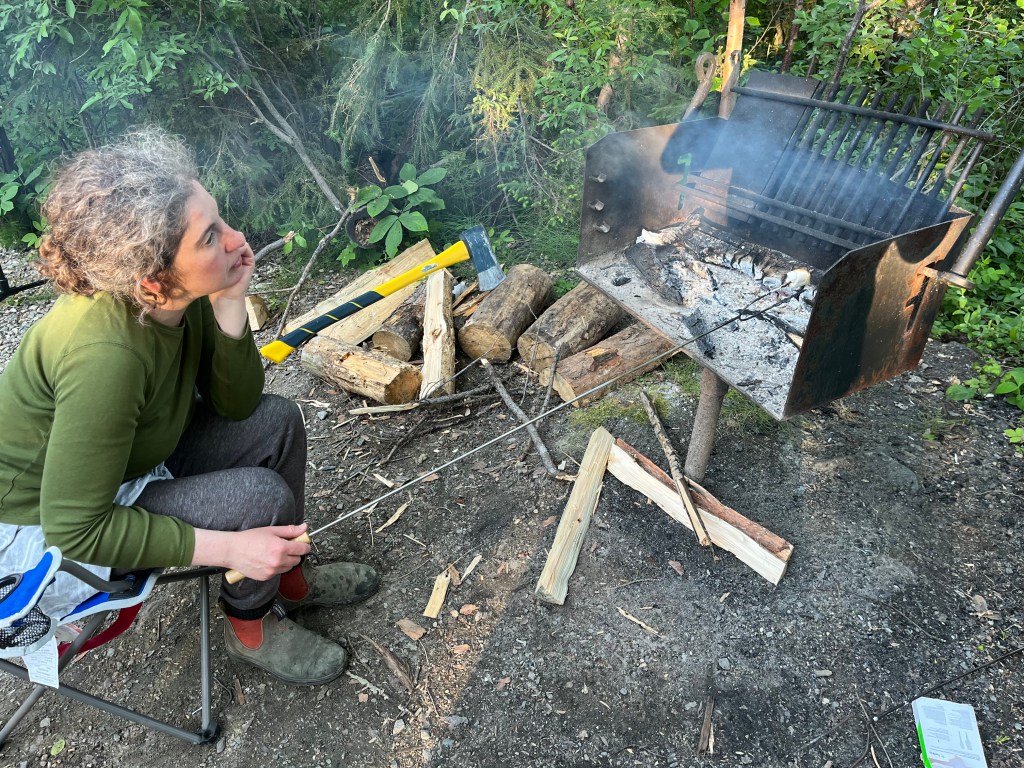
Photo credit: Michael Trussler