While working with the clay I dug from Madeleine Greenway’s garden last summer, I noticed it has a peculiar quality. Liquid clay that would hit the splash pan on the pottery wheel would peel off as it dried, unlike any other clay I’d ever thrown with before. I carefully collected and fired a few of these pieces, finding them intriguing and thinking that perhaps I’d find a way to work with them one day.
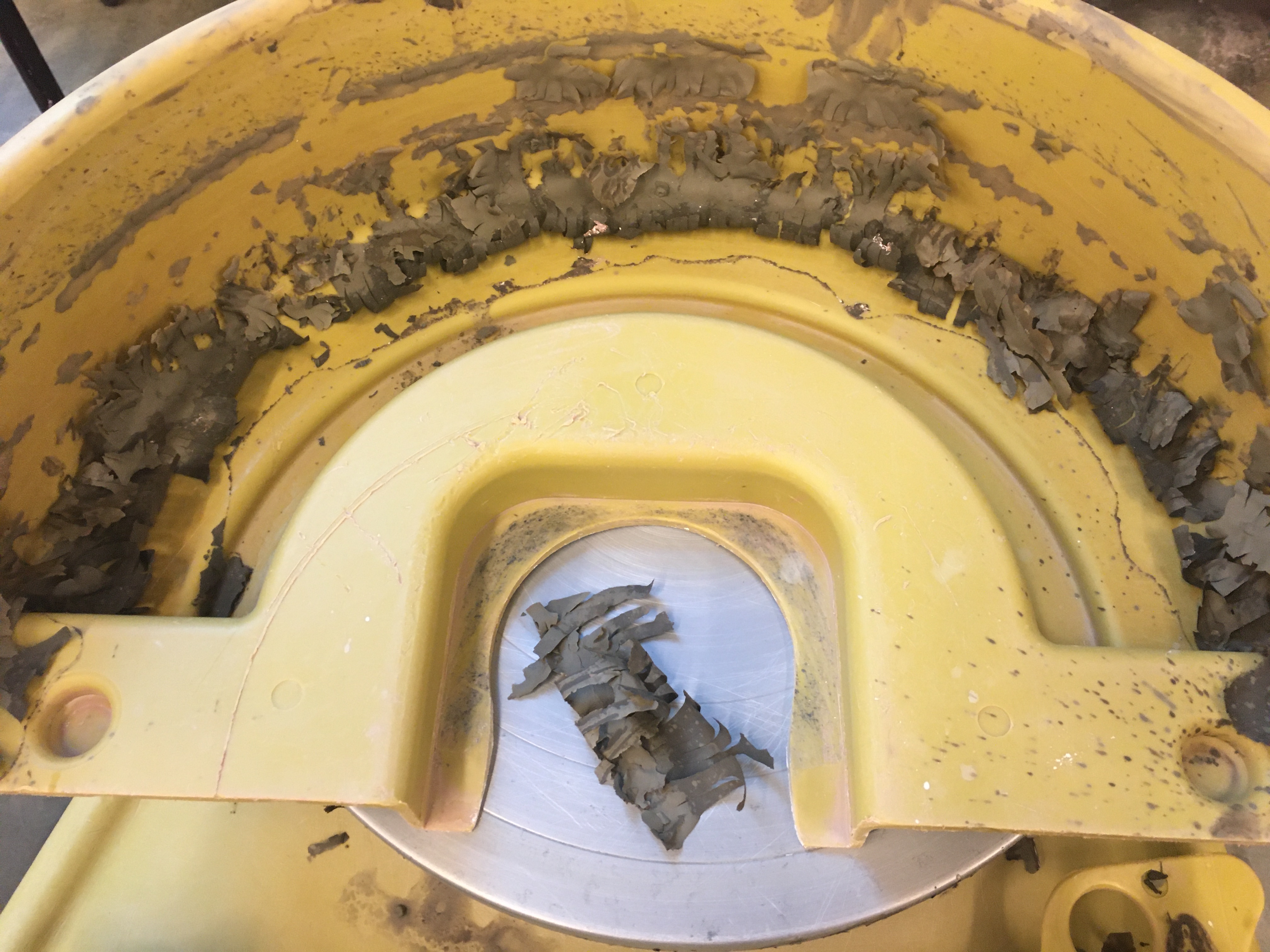
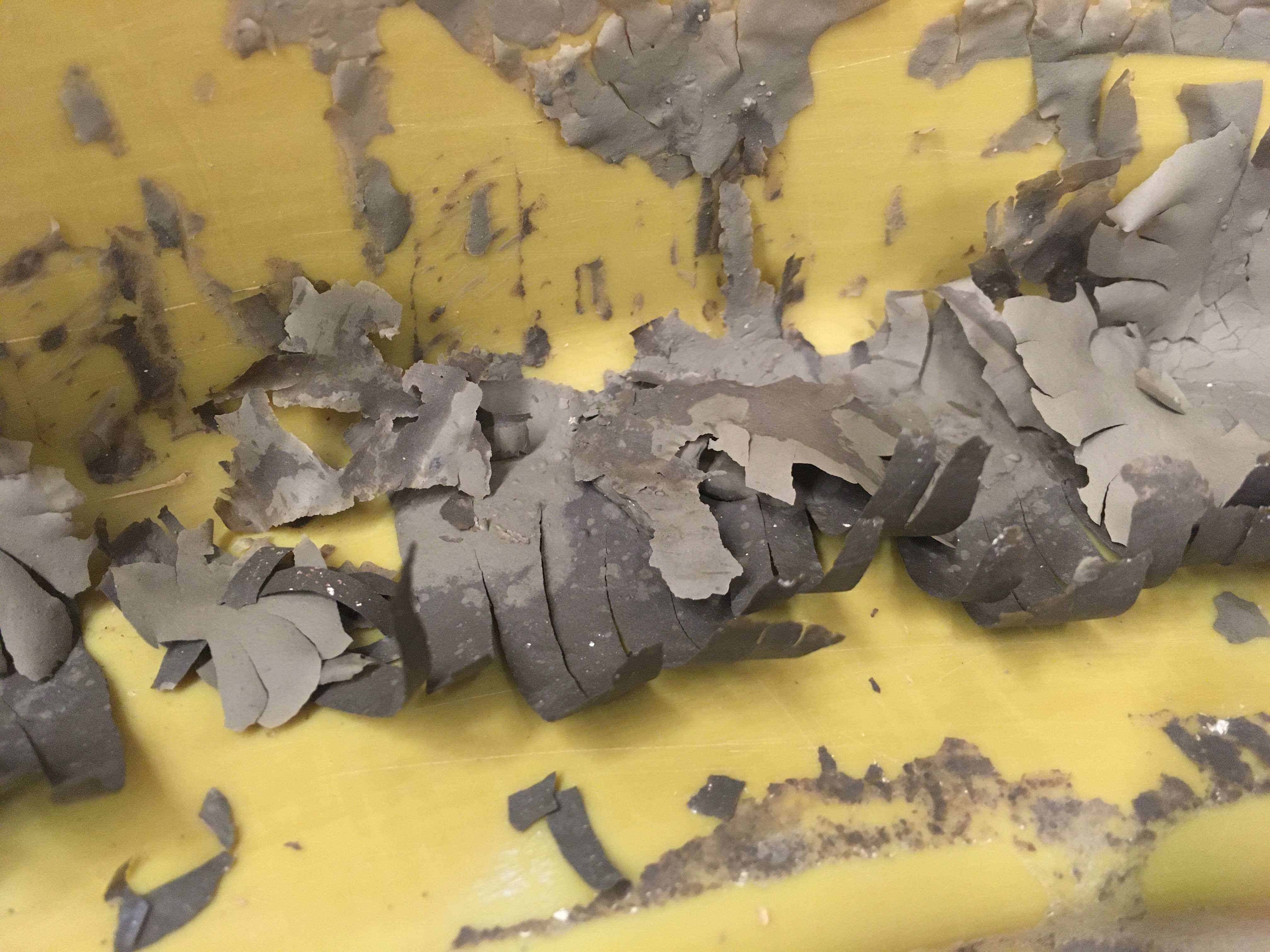
This clay body goes bright orange when fired:
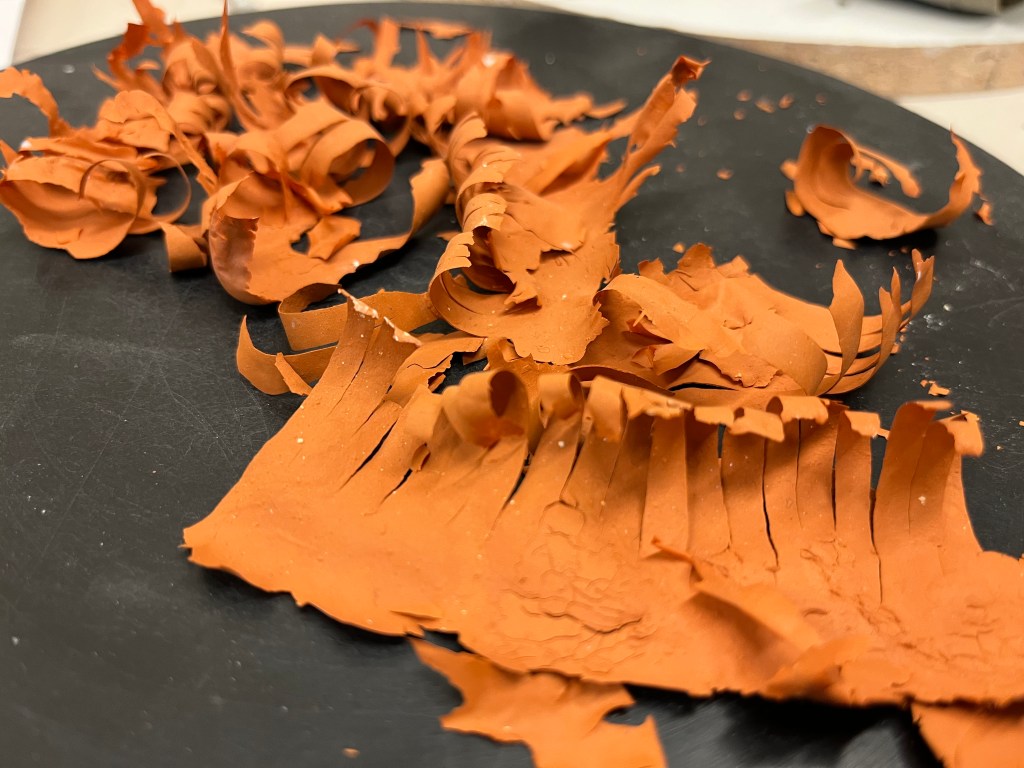
This semester, while lost and looking around for an idea, I decided to explore this clay some more. I wondered, what does this material want to do, and what potential could it have? This is what I’ve discovered.
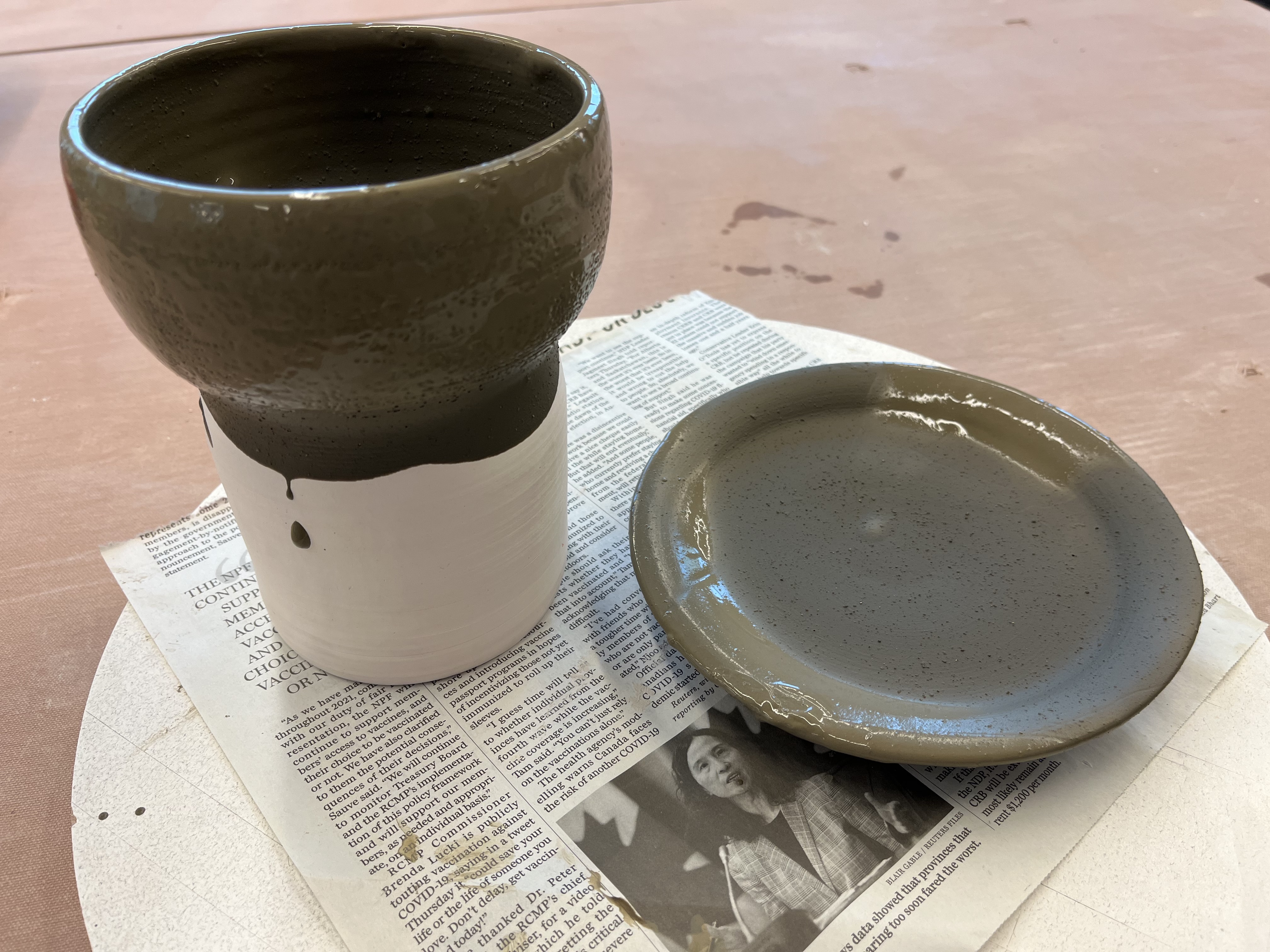
When poured onto a bisqued ceramic pot, rather than remain stuck to the surface as other slips do, behaving as a glaze, it dries and peels off.
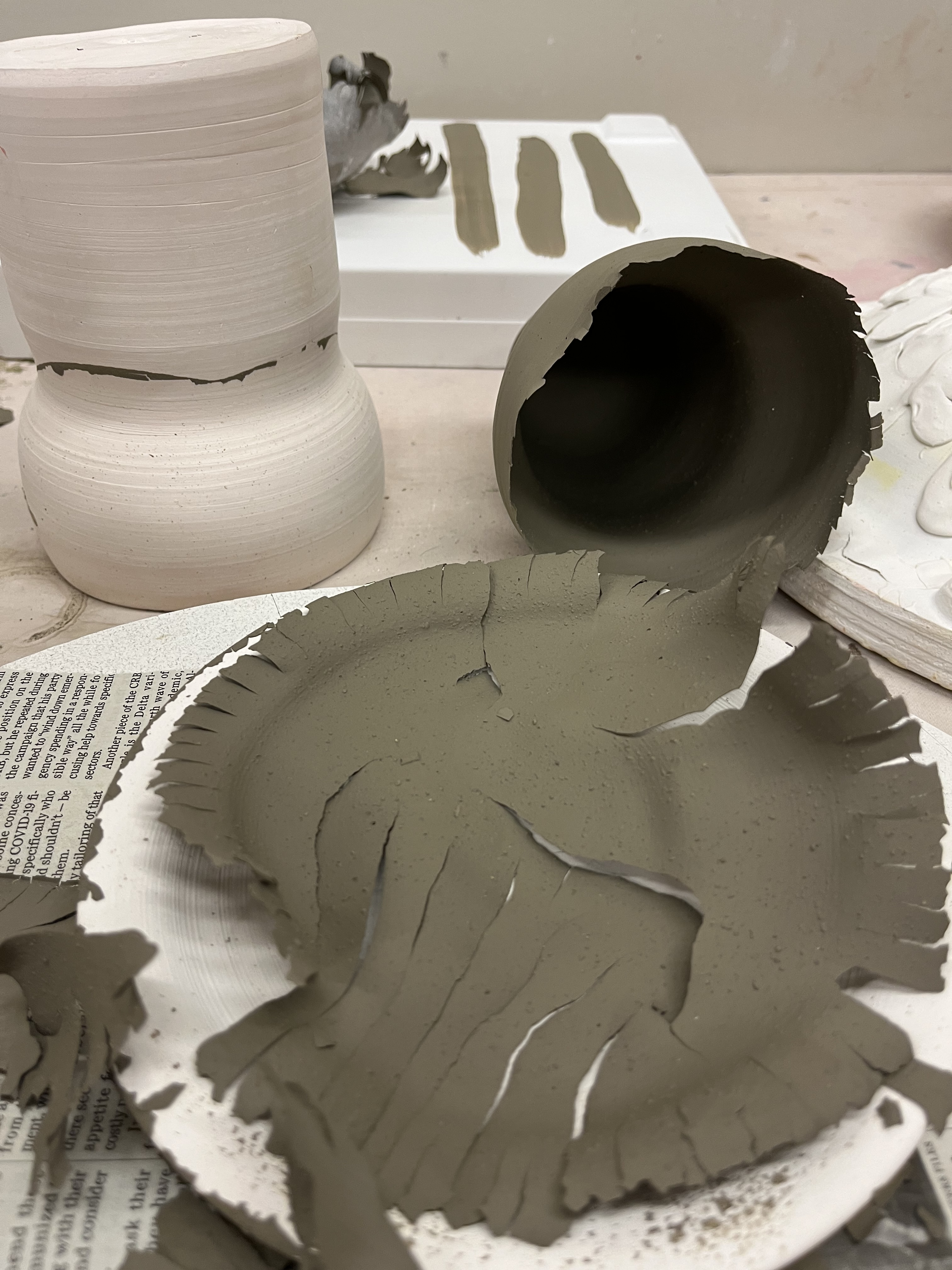

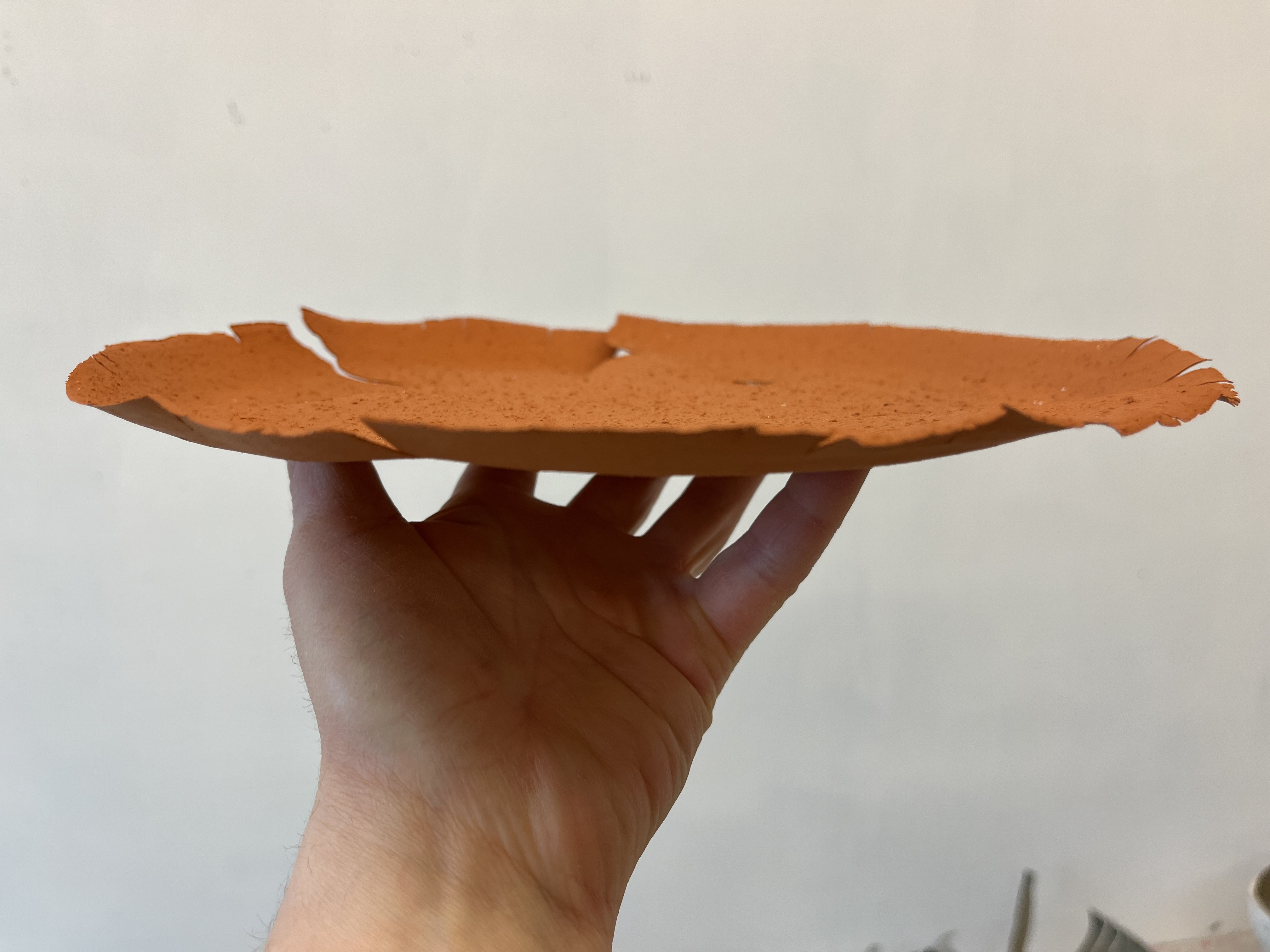
When poured into a plaster mould, which absorbs moisture more quickly than bisqued ceramic, this effect is magnified:
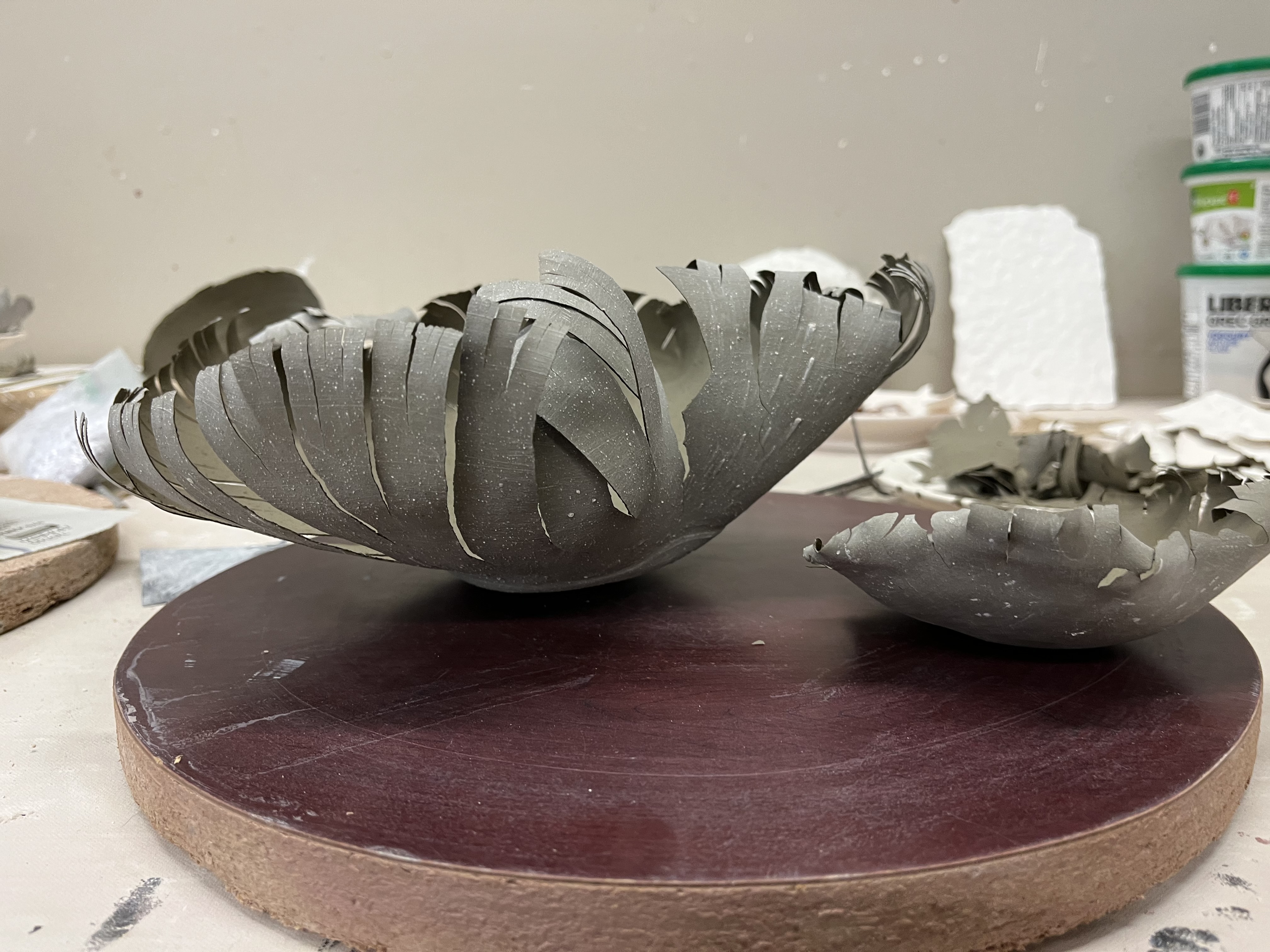
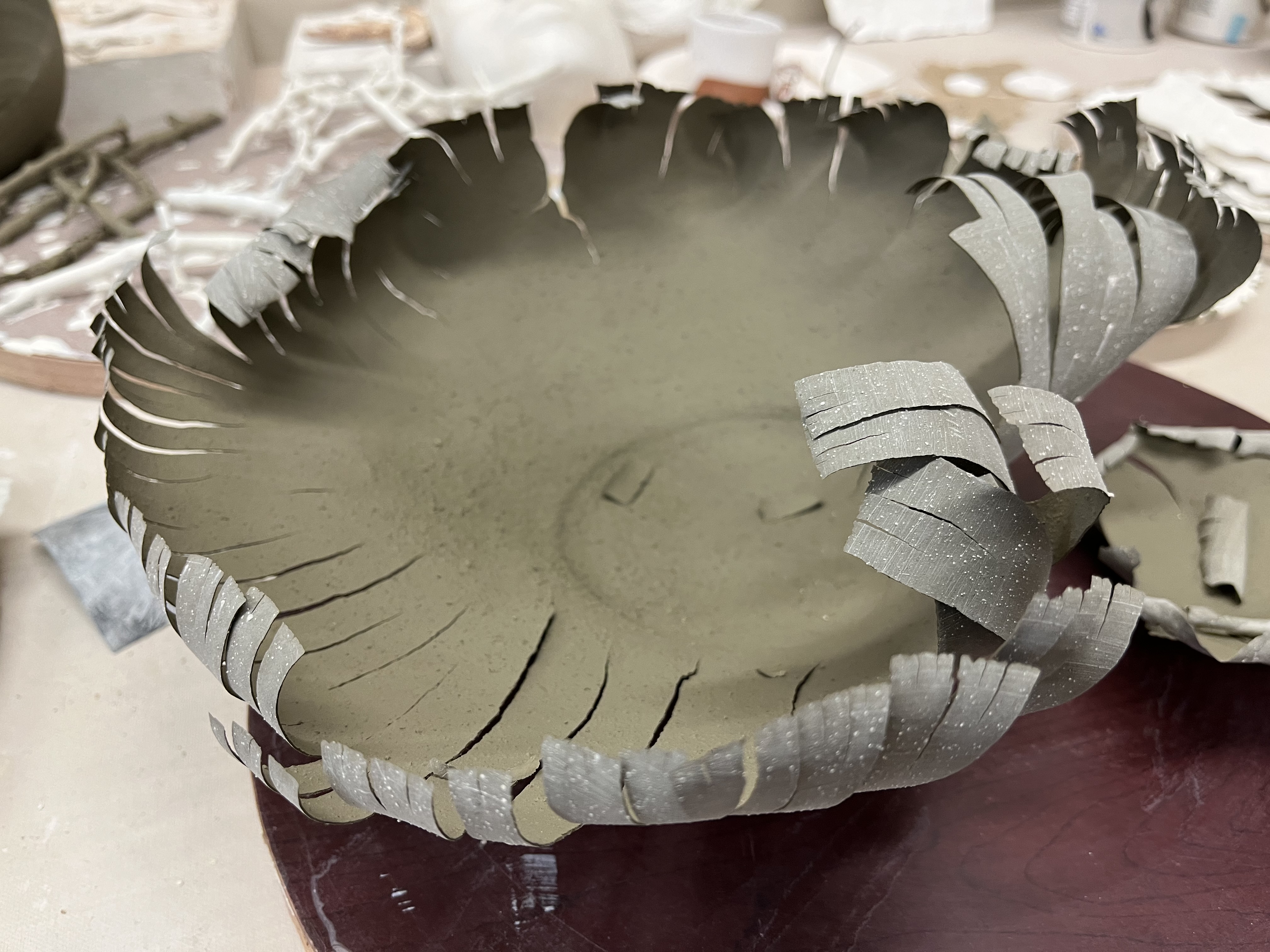
It even does this when poured on the floor. Very unusual! Other local clay dries out in a more predicable way (see Ruth’s).
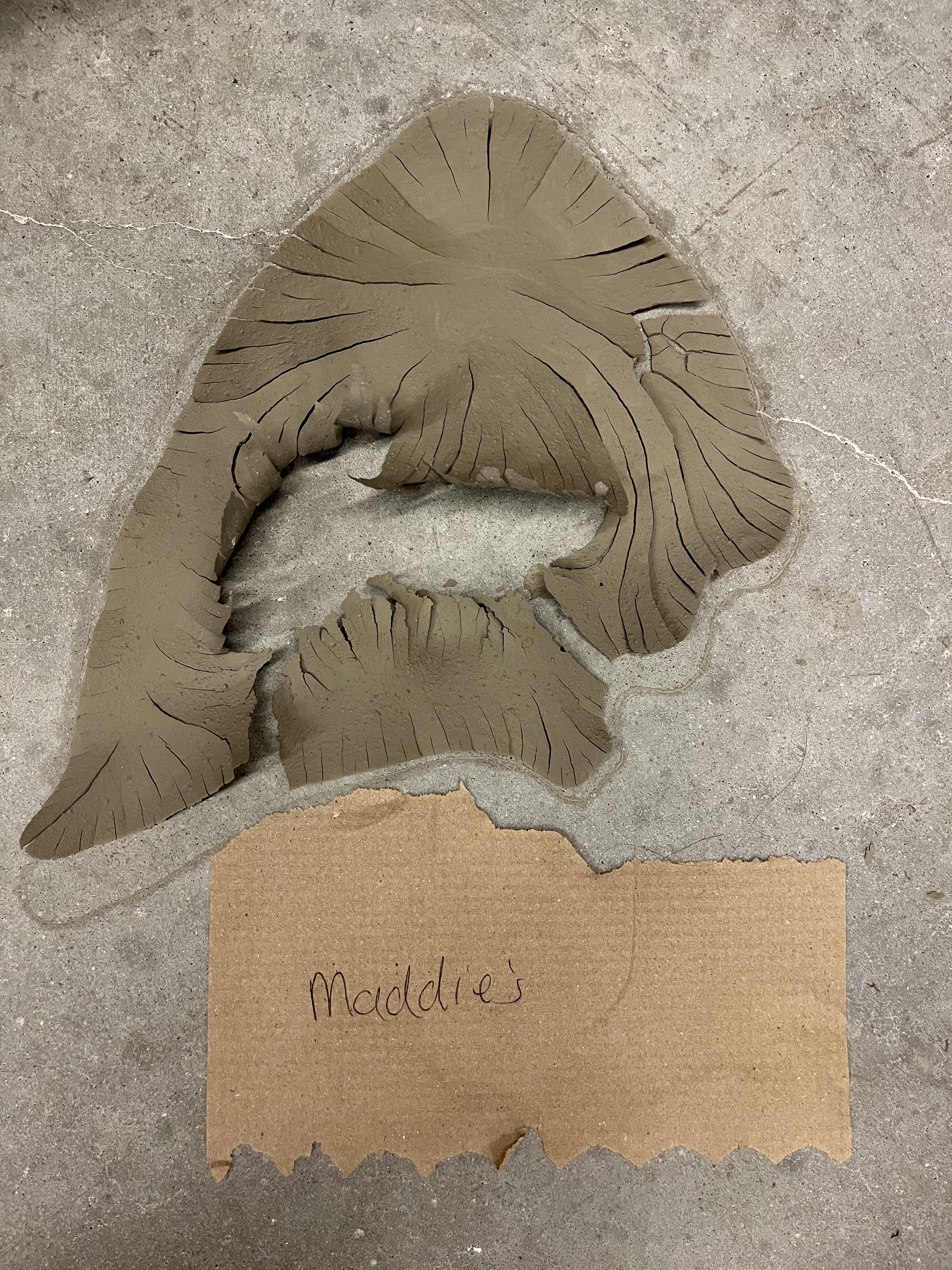
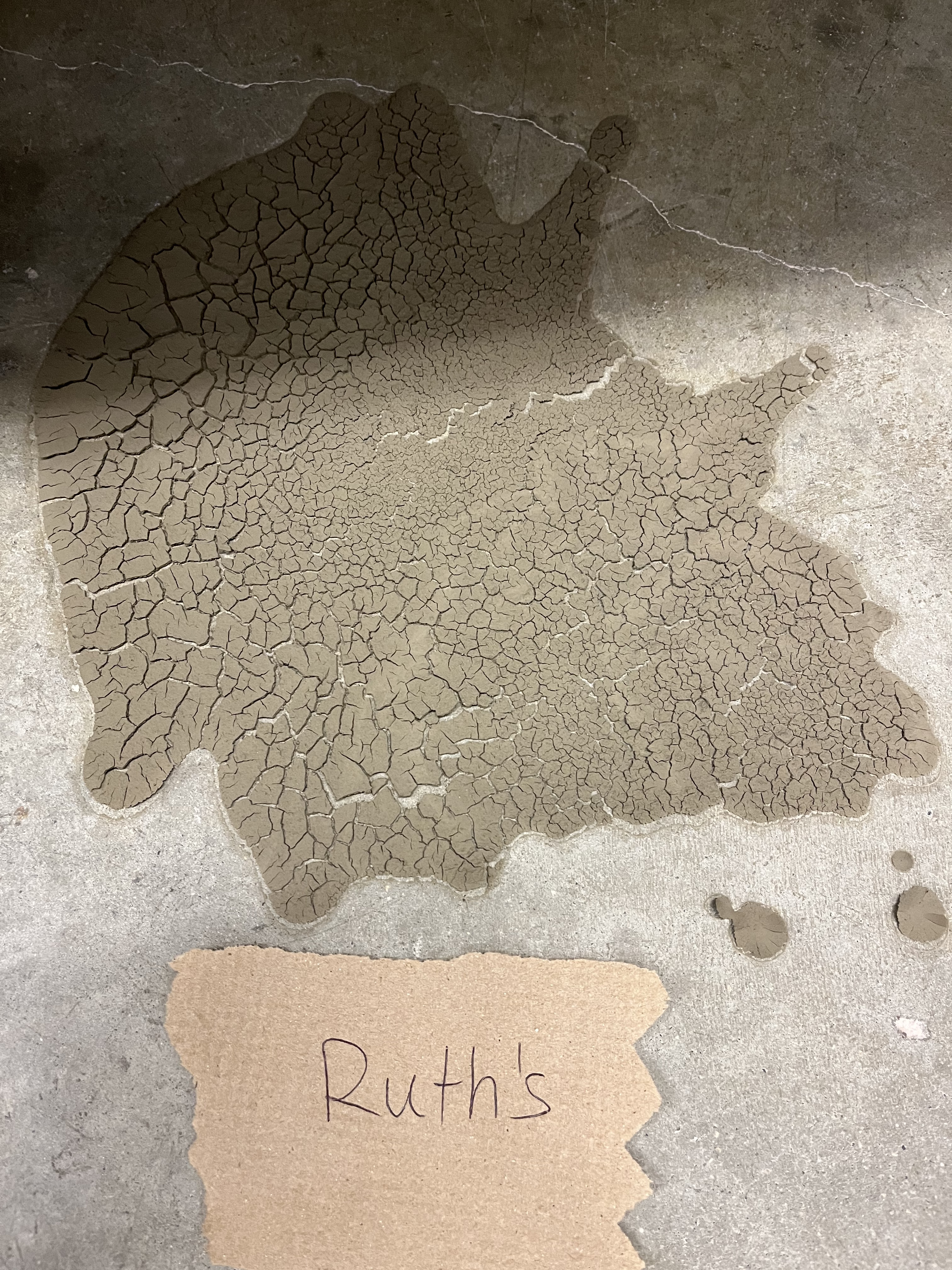
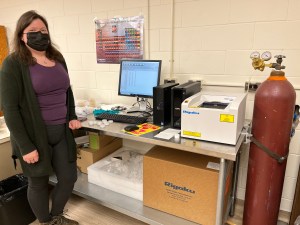
To determine what properties cause this difference in how the two backyard Regina clays act, I had them analyzed by the Department of Chemistry. Fortunately, the Department will, for a fee, run analyses for the public on their Rigaku X-Ray Diffractometer. This is a machine that can determine a substance’s composition of elements heavier than sodium. Rebecca Jamieson, the Department’s technician, enthusiastically ran these tests for me.
I have yet to meet with Rebecca to glean from her what these results can tell us, and the secrets of these clays are not apparent to me upon examination of the test results. Both clays have almost identical chemical makeup (I also tested silt from Blaeberry River as I’m interested in working with it as well, and I included terracotta as the test’s standard).
| Maddie’s Clay | Ruth’s Clay | Terracotta | Blaeberry Silt | |
| Remaining | 50 | 53.2 | 52.4 | 55.2 |
| Silicone (Si) | 26.7 | 26.2 | 28.3 | 22.1 |
| Alumina (Al) | 8 | 7.68 | 11.2 | 10.7 |
| Calcium (Ca) | 2.93 | 2.81 | 0.249 | 7.76 |
| Iron (Fe) | 4.16 | 3.94 | 3.27 | 3.99 |
| Potassium (K) | 2.05 | 1.98 | 2.69 | 2.89 |
| Magnesium (Mg) | 1.43 | 1.36 | 0.616 | 1.51 |
| Titanium (Ti) | 0.446 | 0.414 | 0.732 | 0.525 |
| Sulfur (S) | 0.0892 | 0.0917 | 0.0638 | 0.13 |
| Manganese (Mn) | 0.0711 | 0.068 | 0.0297 | 0.0716 |
| Strontium (Sr) | 0.0158 | 0.0155 | 0.0113 | 0.0376 |
| Vanadium (V) | 0.0411 | 0.0403 | 0.0602 | 0.0354 |
| Barium (Ba) | 0.058 | 0.0579 | 0.184 | 0.0332 |
| Chromium (Cr) | 0.0282 | 0.0308 | 0.0233 | 0.0302 |
| Nickel (Ni) | 0.0229 | 0.0226 | 0.0224 | 0.0229 |
| Chlorine (Cl) | 0.0183 | 0.0182 | 0.014 | 0.018 |
| Zirconium (Zr) | 0.0148 | 0.0139 | 0.0252 | 0.0141 |
| Zinc (Zn) | 0.024 | 0.0238 | 0.0127 | 0.0138 |
| Rubidium (Rb) | 0.0109 | 0.0101 | 0.0117 | 0.0134 |
| Copper (Cu) | 0.0153 | 0.0148 | 0.0127 | 0.0134 |
| Gallium (Ga) | 0.0034 | 0.0031 | 0.0039 | 0.0035 |
| Lead (Pb) | 0.0088 | 0.0093 | 0.0034 | 0.0029 |
| Yttrium (Y) | 0.0027 | 0.0022 | 0.0032 | 0.0025 |
| Niobium (Nb) | 0.001 | 0.0005* | 0.0019 | 0.0018 |
| Arsenic (As) | 0.0018 | 0.0015 | 0.0011 | 0.0006 |
| Silver (Ag) | 0.0007* | 0.0006* | 0.0009 | 0.0004 |
| Phosphorus (P) | 0.0627 | |||
| Cadmium (Cd) | 0.0021 | 0.0019 | 0.0018 | |
| Tin (Sn) | 0.0020 |
As an aside, I’d always thought that raw local clay was pretty innocuous stuff, and it is, but I wasn’t expecting to find trace amounts of arsenic, cadmium, and barium (among other highly toxic elements). Goes to show that not everything natural is good for you. I suppose one shouldn’t eat too much dirt.
I’ve continued playing around with the clay from Madeleine’s garden, seeing what we could come up with together.
I tested it out in a pre-made plaster mould I found lying around:
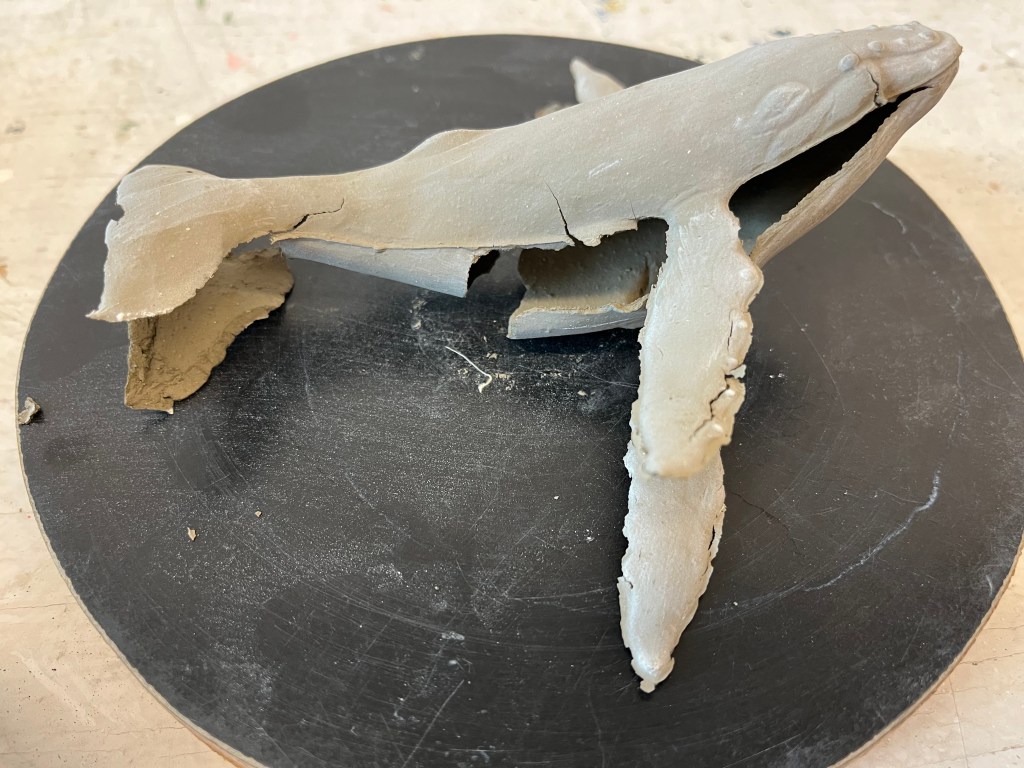
This could take me somewhere, but I’m not yet sure where.
I then returned to my project of using cups, bowls, and plates to speak about climate change and created another super fragile cup:
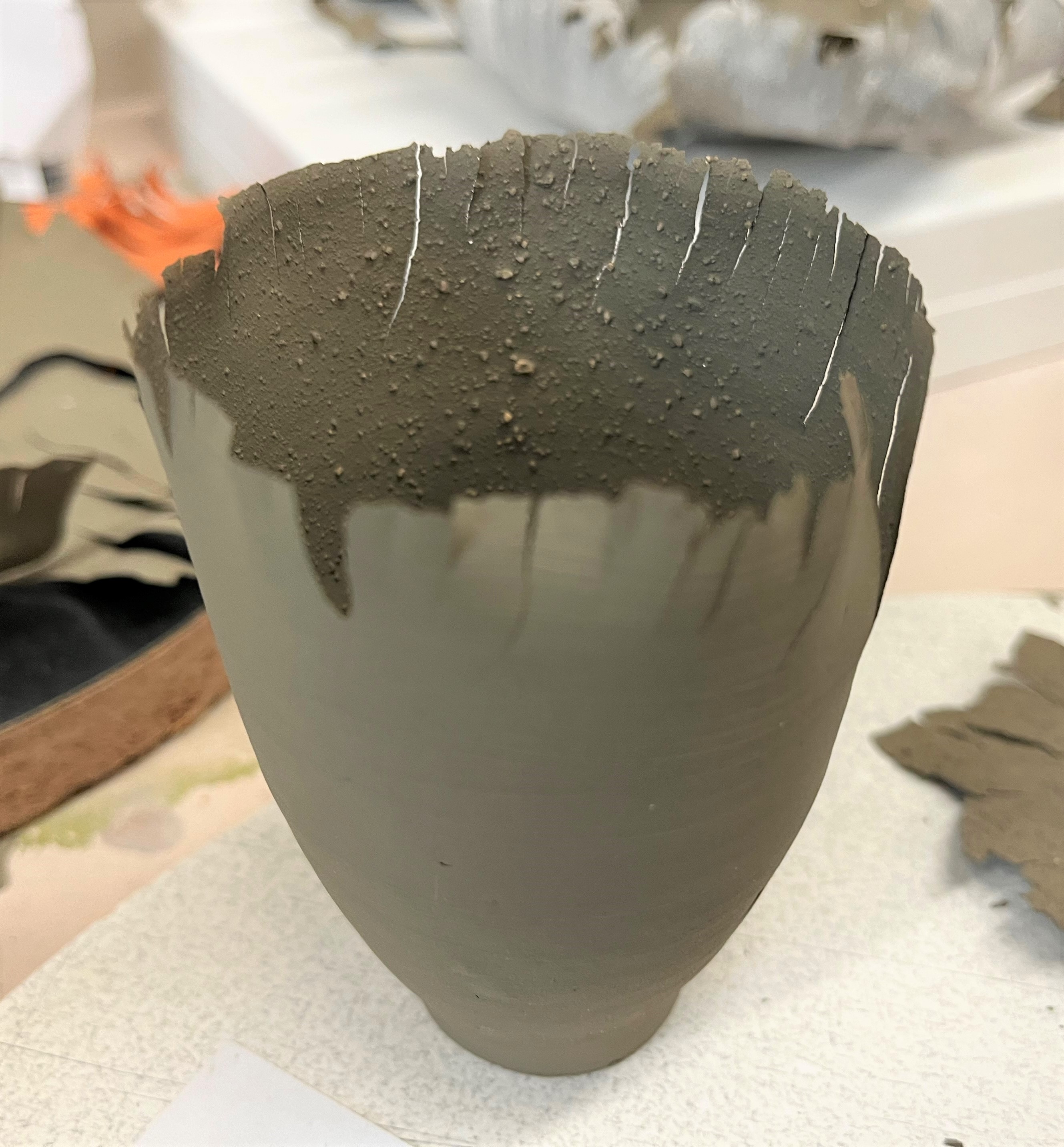
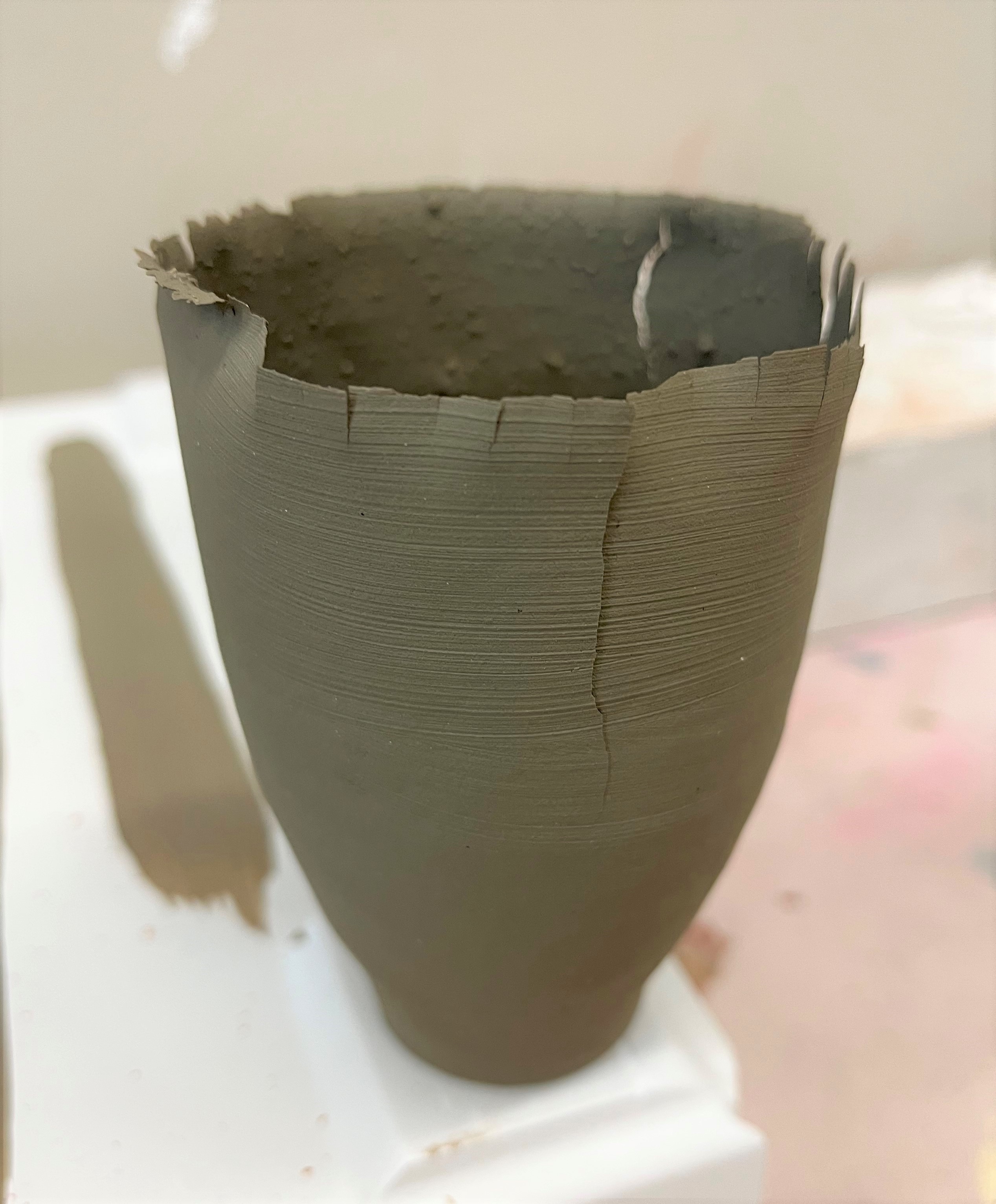
David suggested I think about a vessel that is more significant to me than the cup, and for some reason I immediately thought of my son. I decided to cast his face and turn it into a mould:
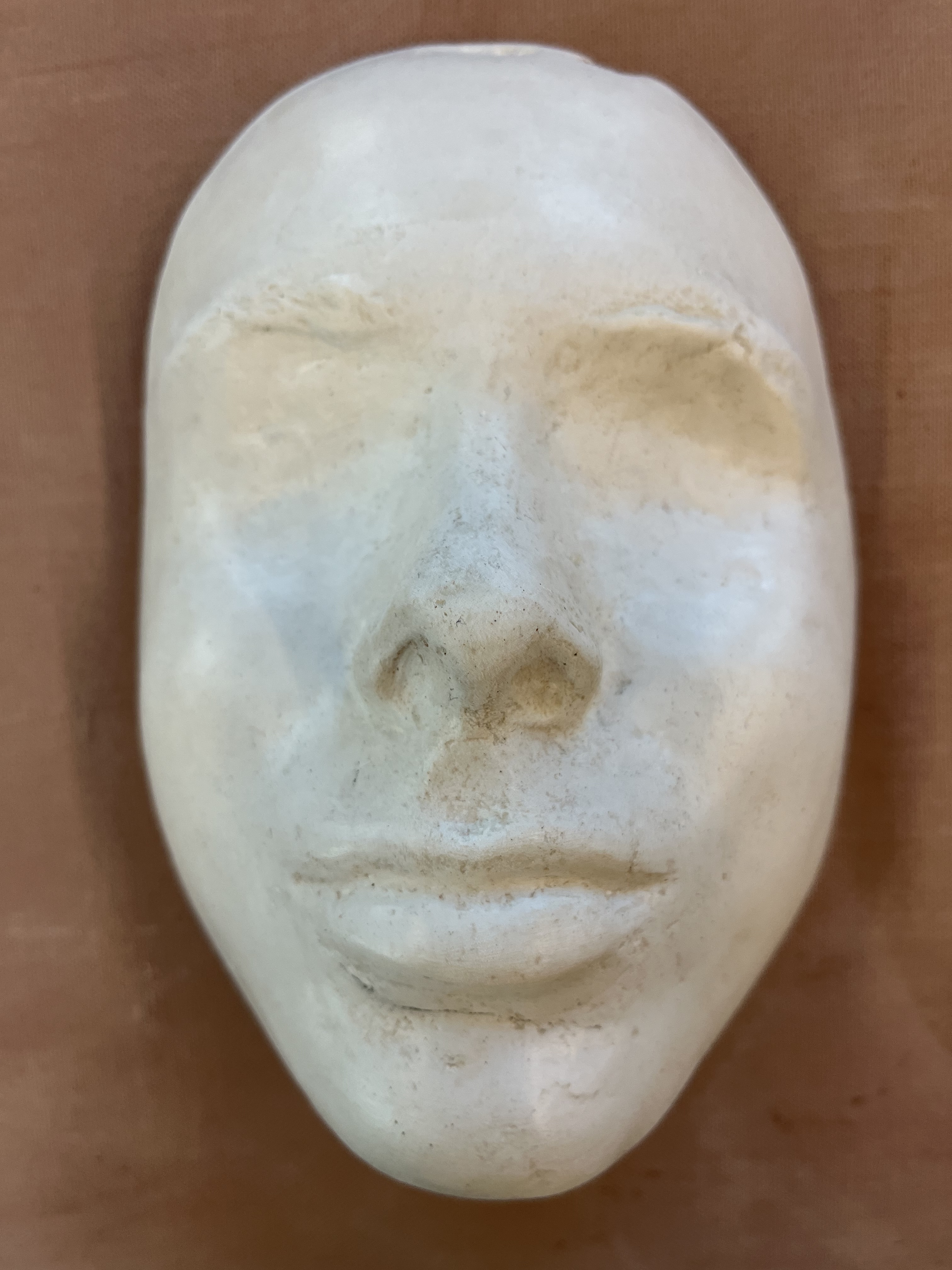
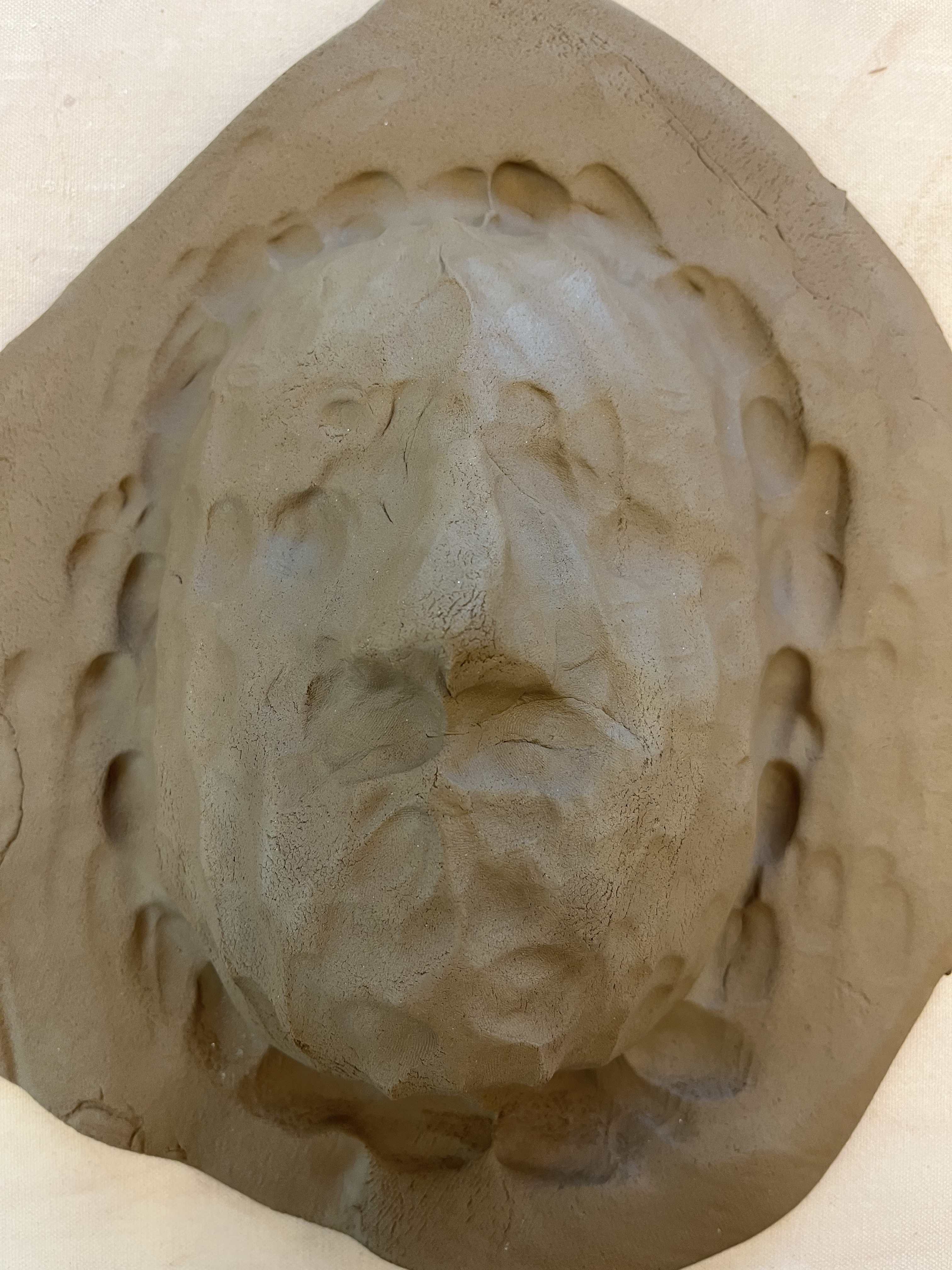
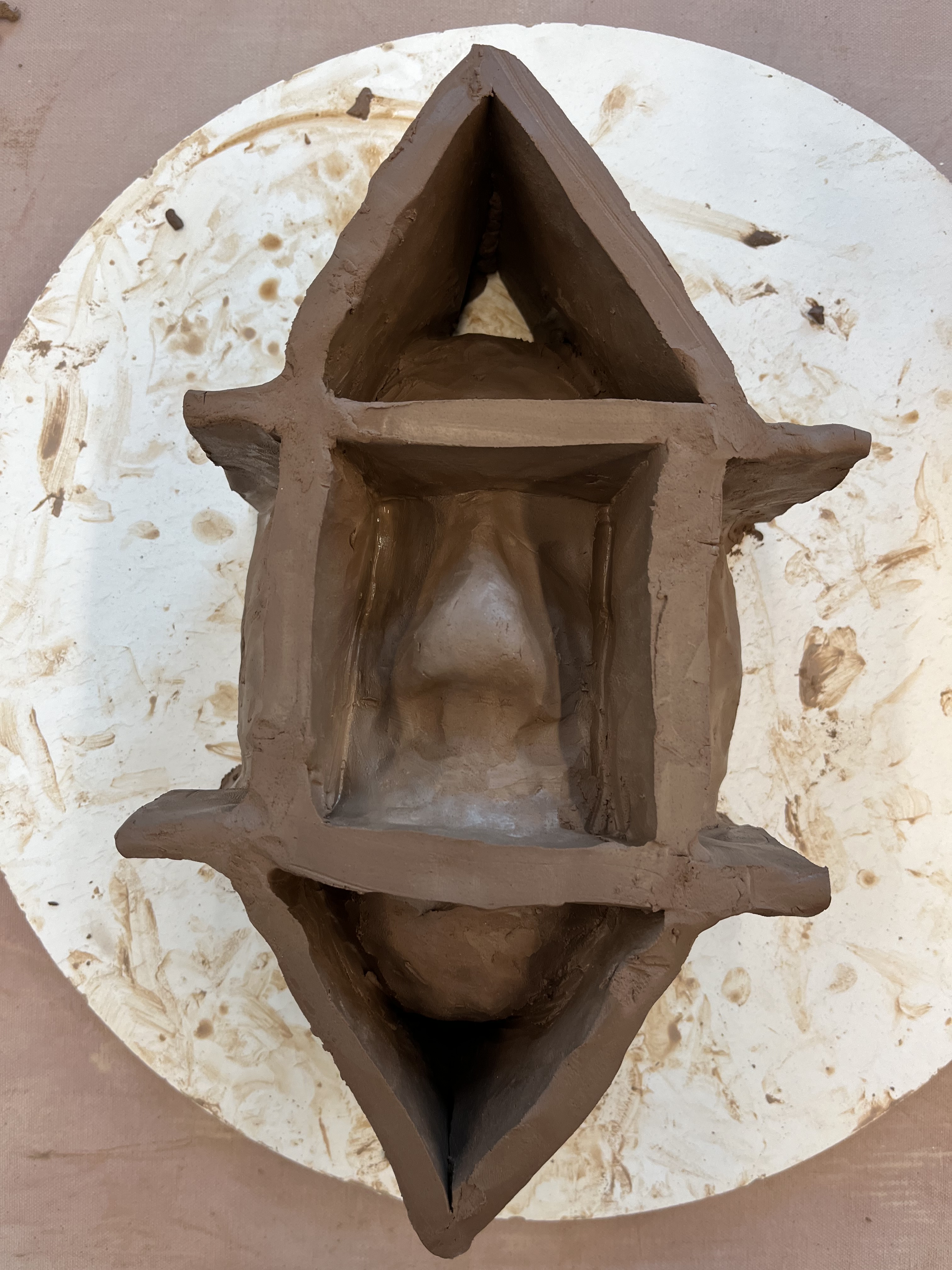
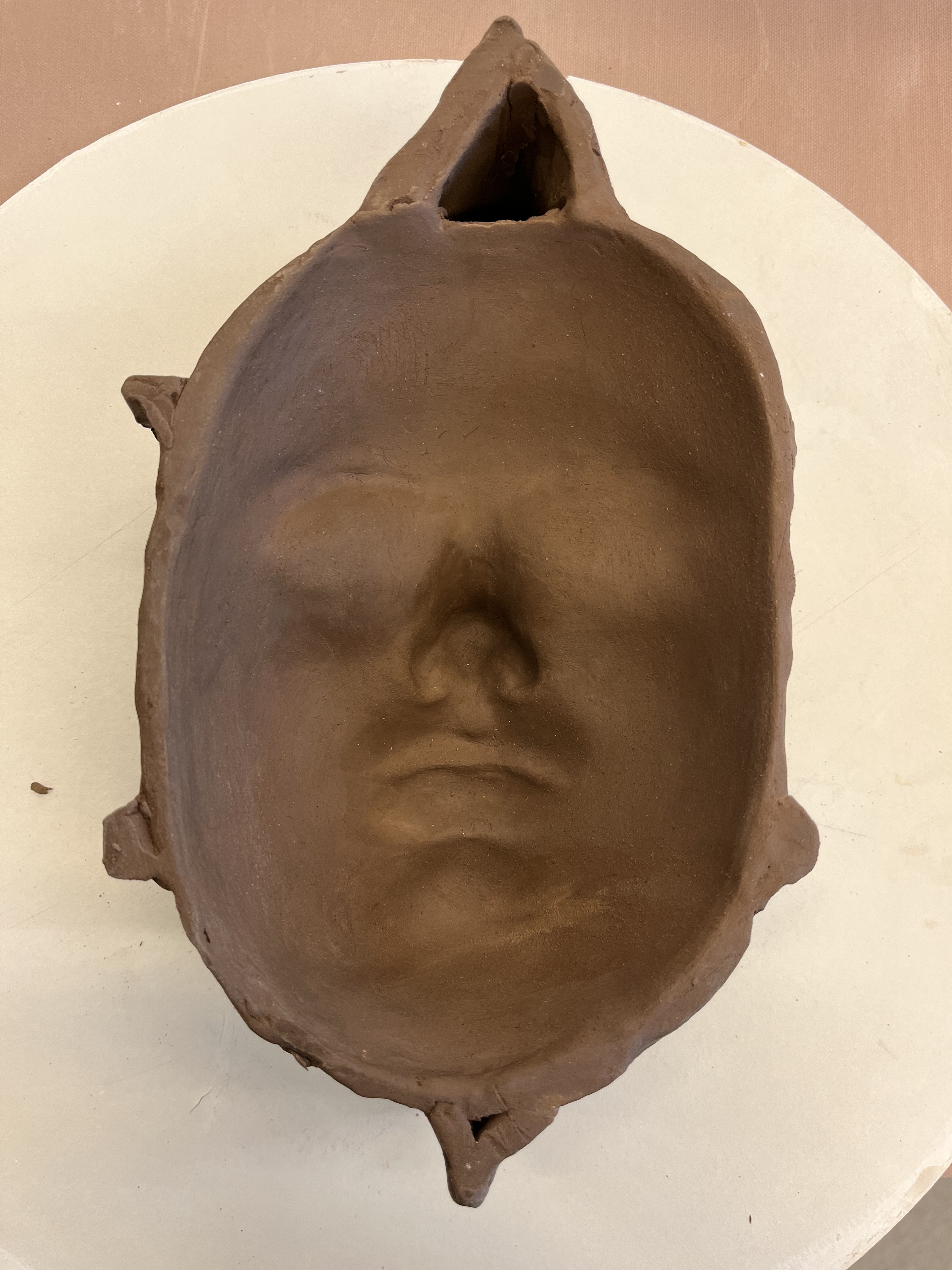
And with this mould I can create super fragile copies of my son’s face:
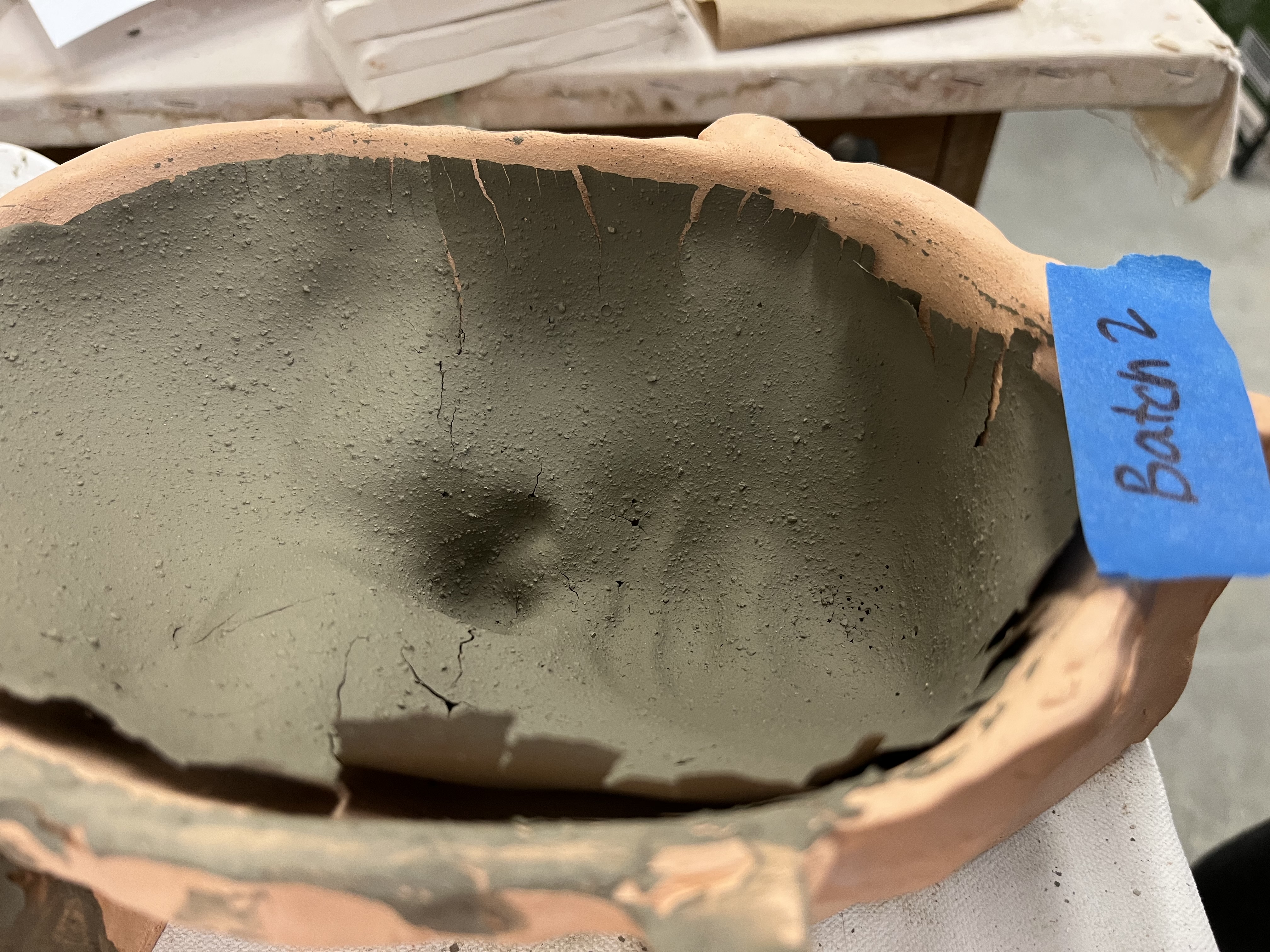
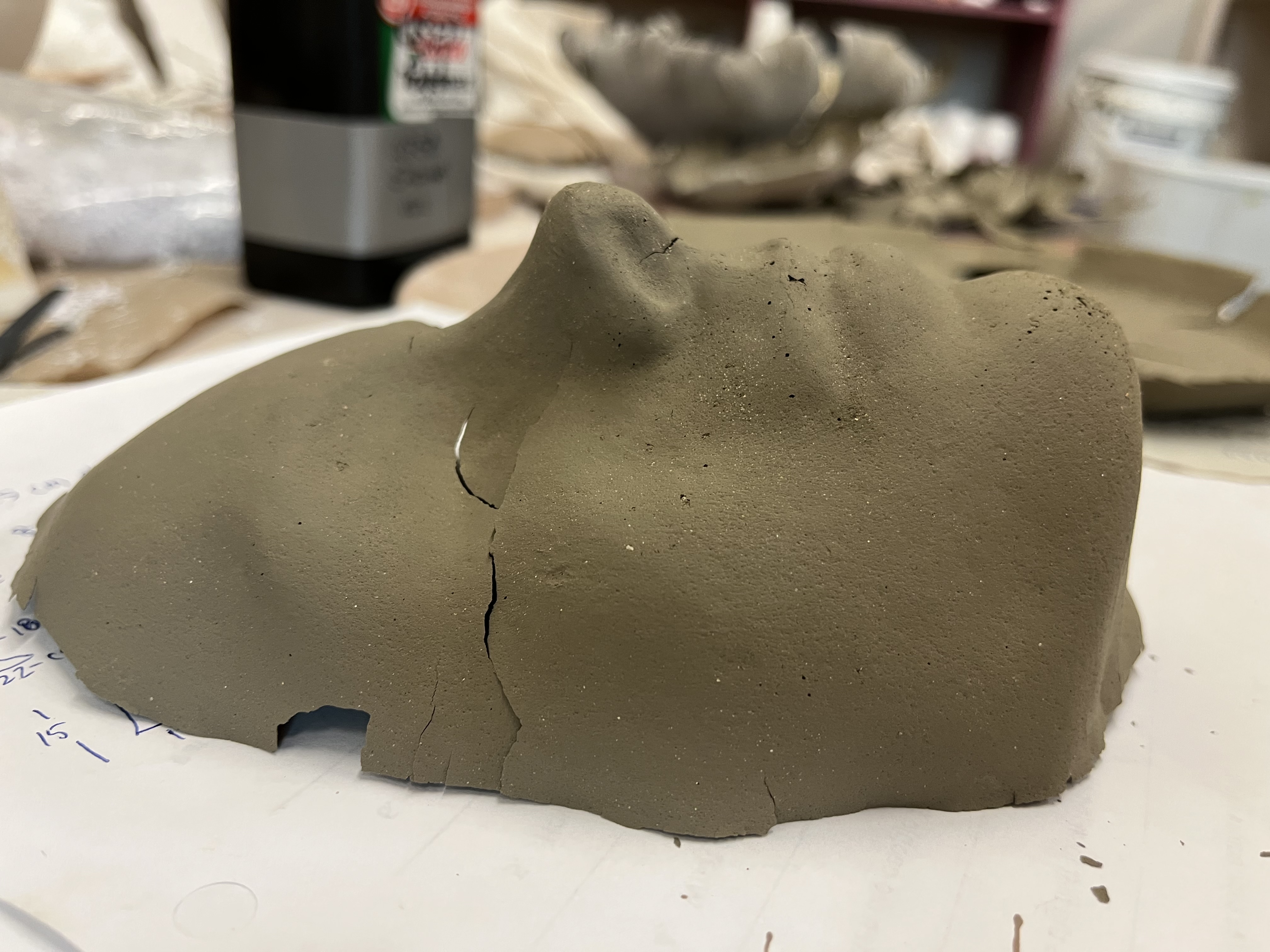
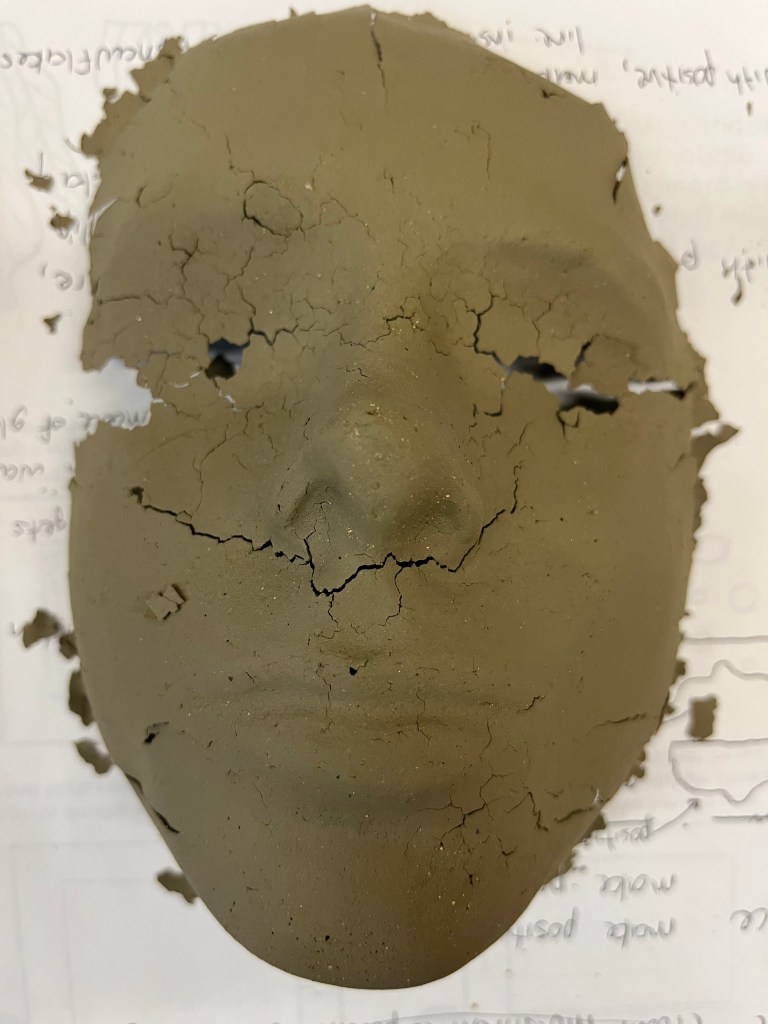
I have some more thoughts to share on why I think I jumped to my son’s face, and what I believe this above object conveys, but I’ll save those for another post.
I feel there’s something I can work with here, with this clay in general, and something I’d like to carry forward with while planning my MFA graduating exhibition. I imagine creating an installation that would include the audience in some way. I also know now that my work has crossed over from being about the effects of climate change on the world to the effects of climate change on me. I think David must have been right when he joked once that all student work ends up being about the student. Guilty as charged.
 Amy Snider
3 thoughts on “at the limits of a vessel”