Here are a few photos and then a few thoughts about where I’m at with this project at this time.
- From experimenting with a bowl-mold I threw (using only porcelain and water to create the “dust bowl”):
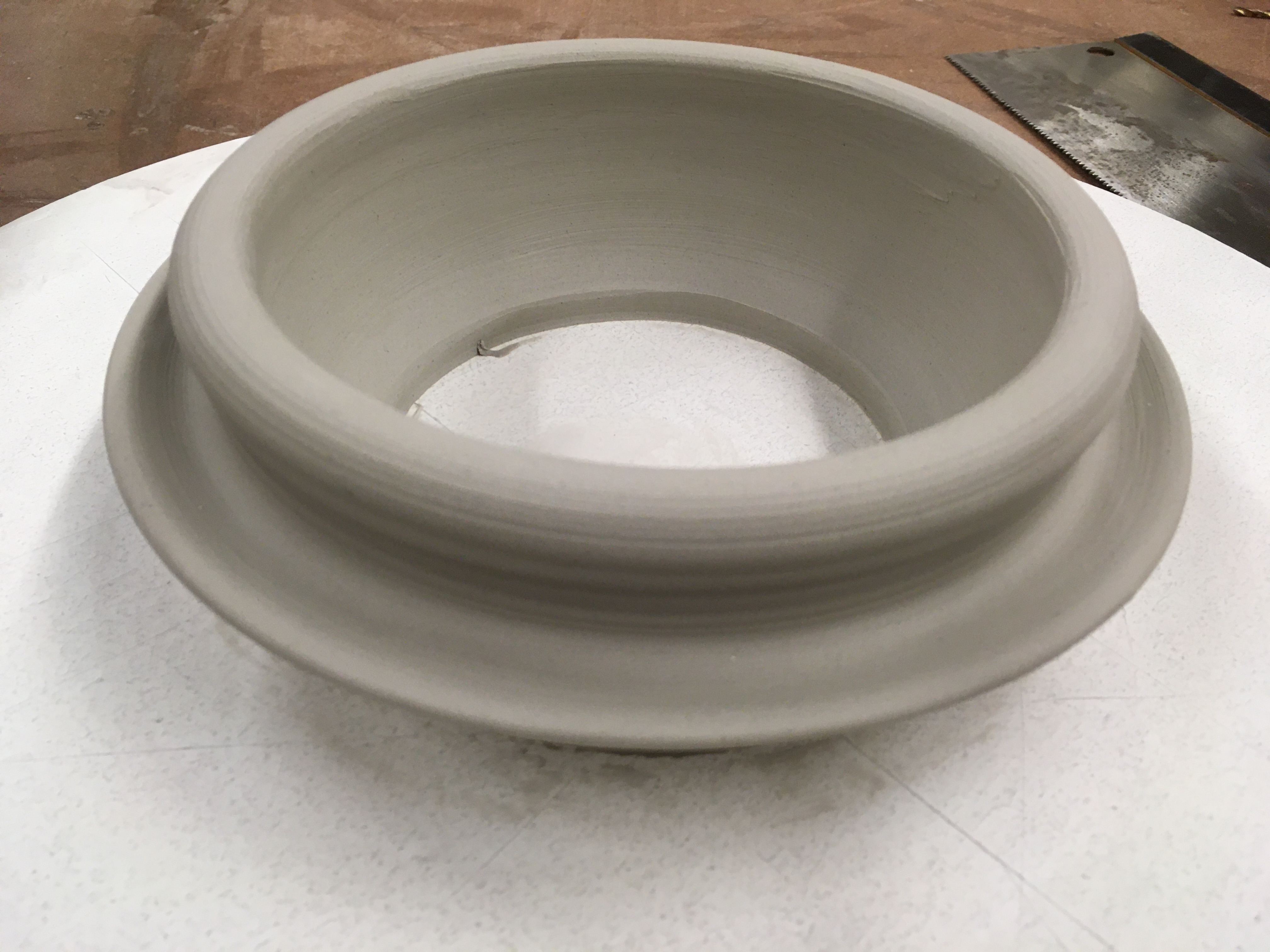
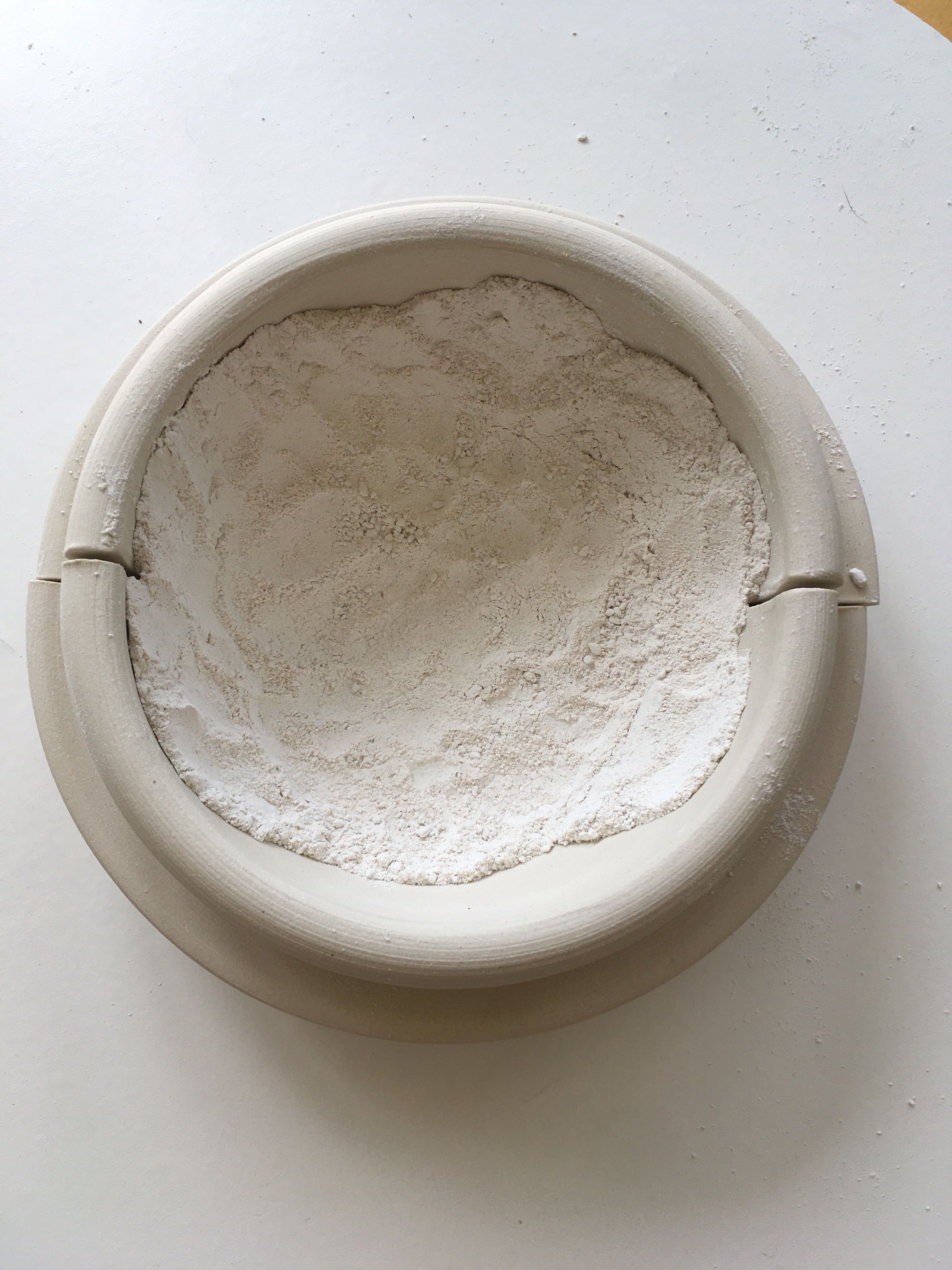
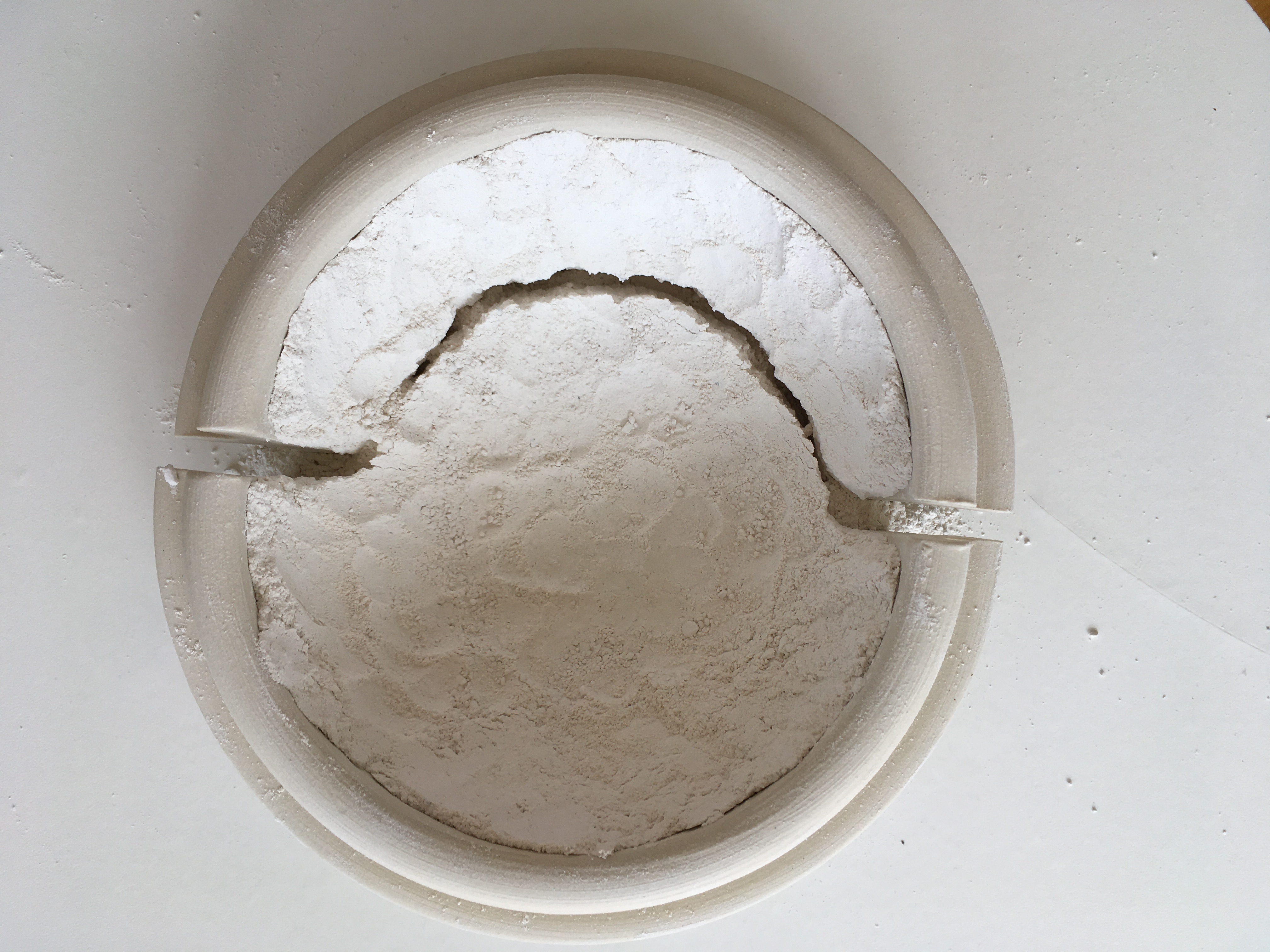
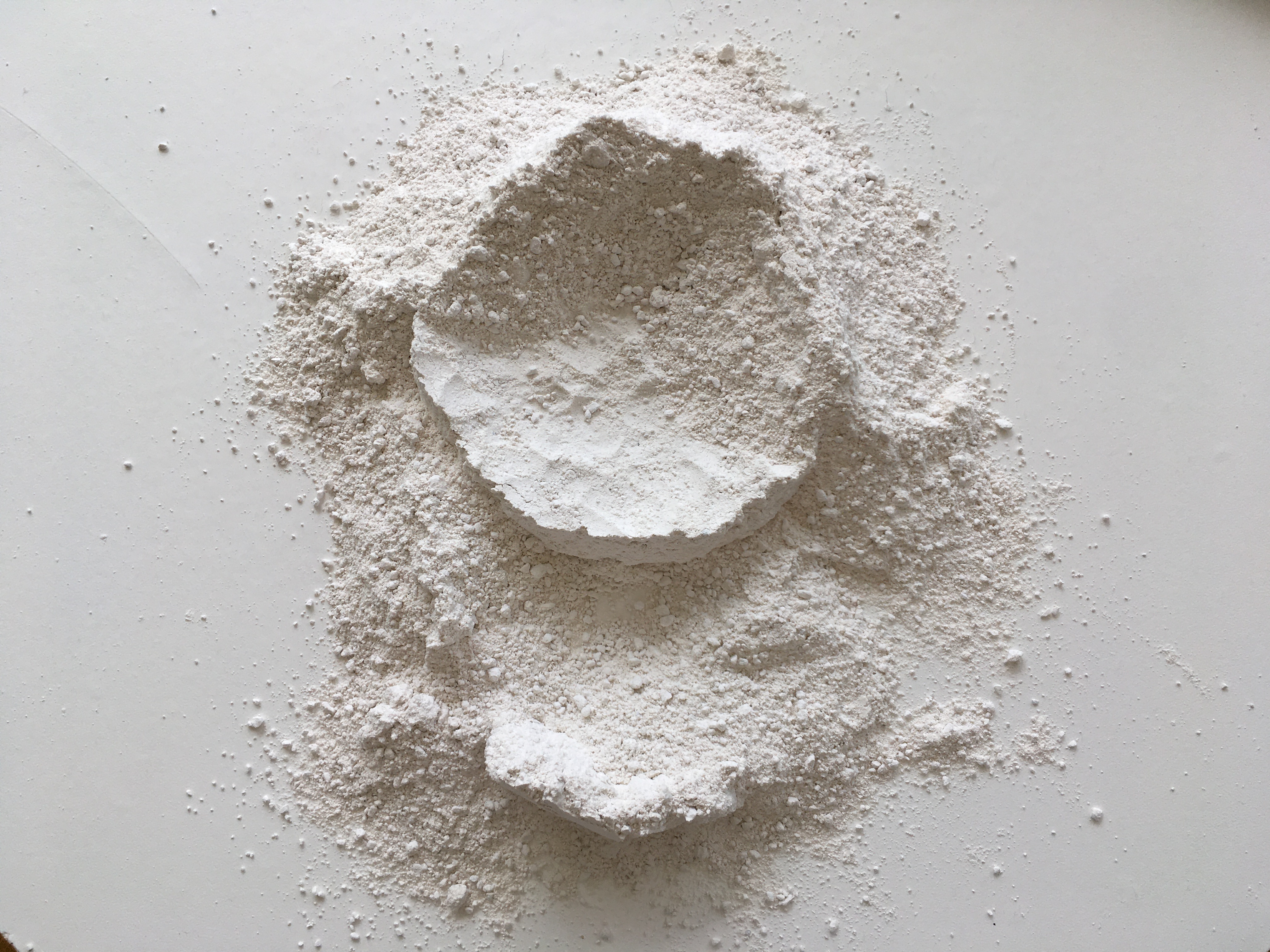
Result of the bowl mold: It could work, but on its own the bowl form is no easier to use than the plate form.
2. From experimenting with adding aquafaba (the liquid in a can of chickpeas)* as a natural adhesive:
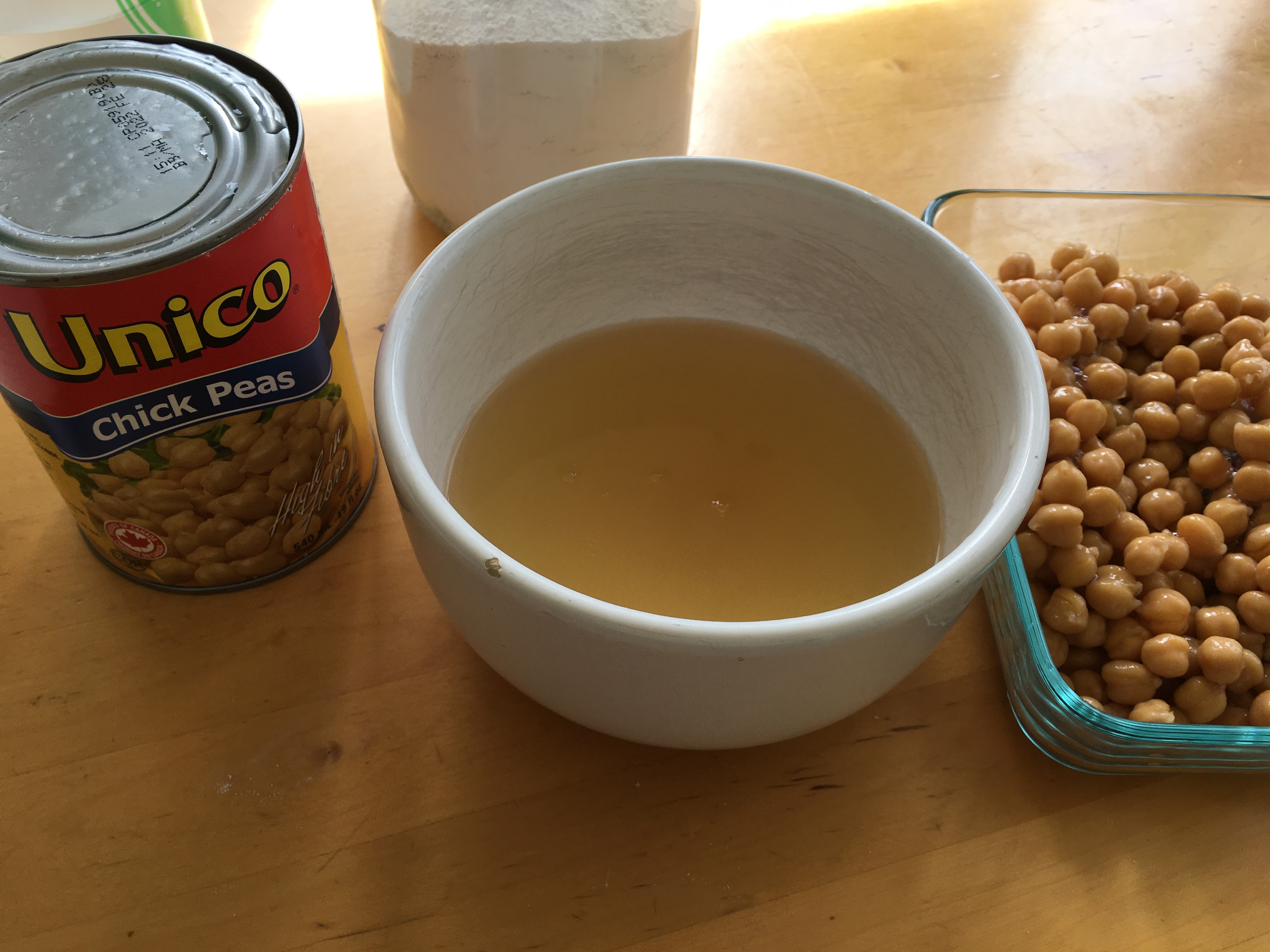
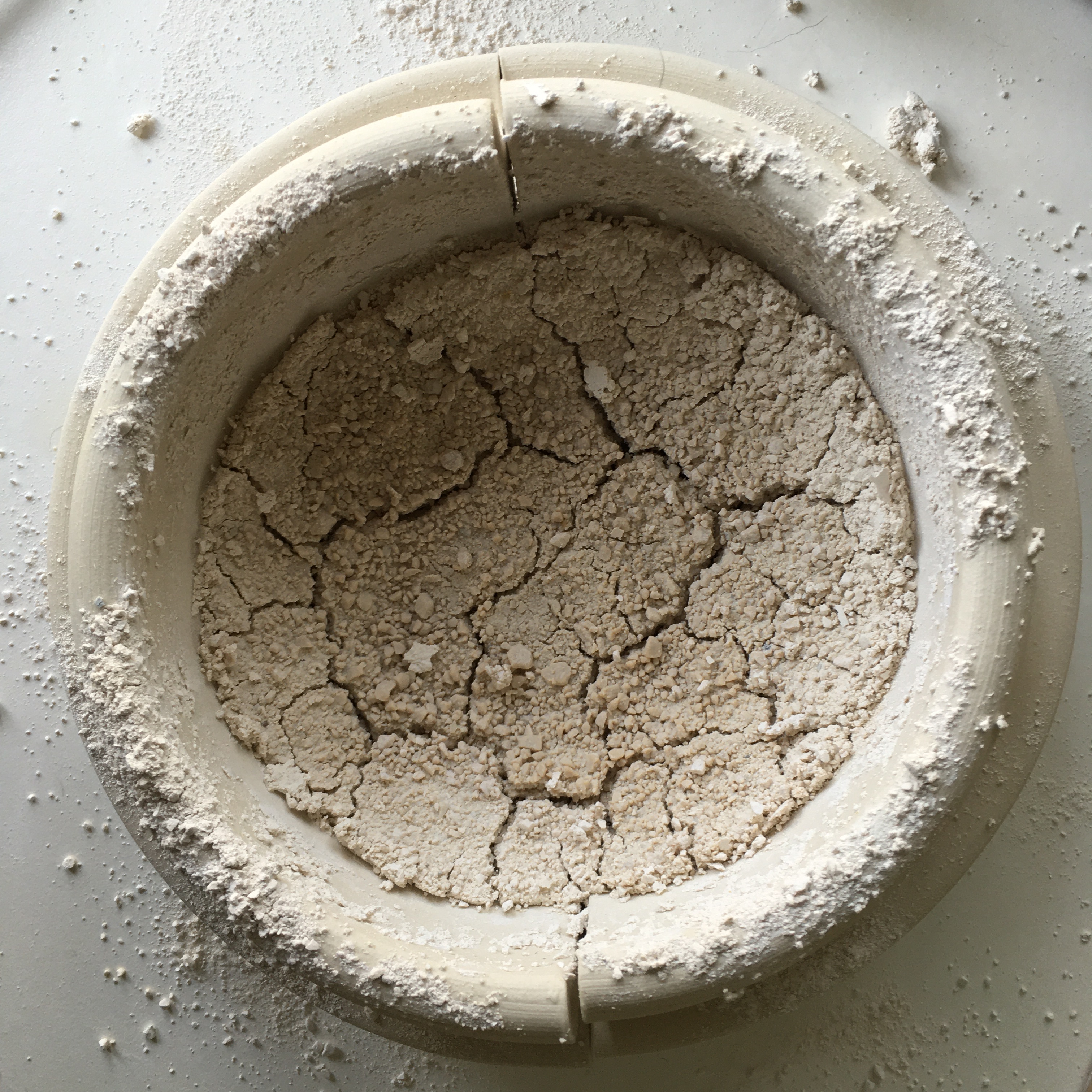
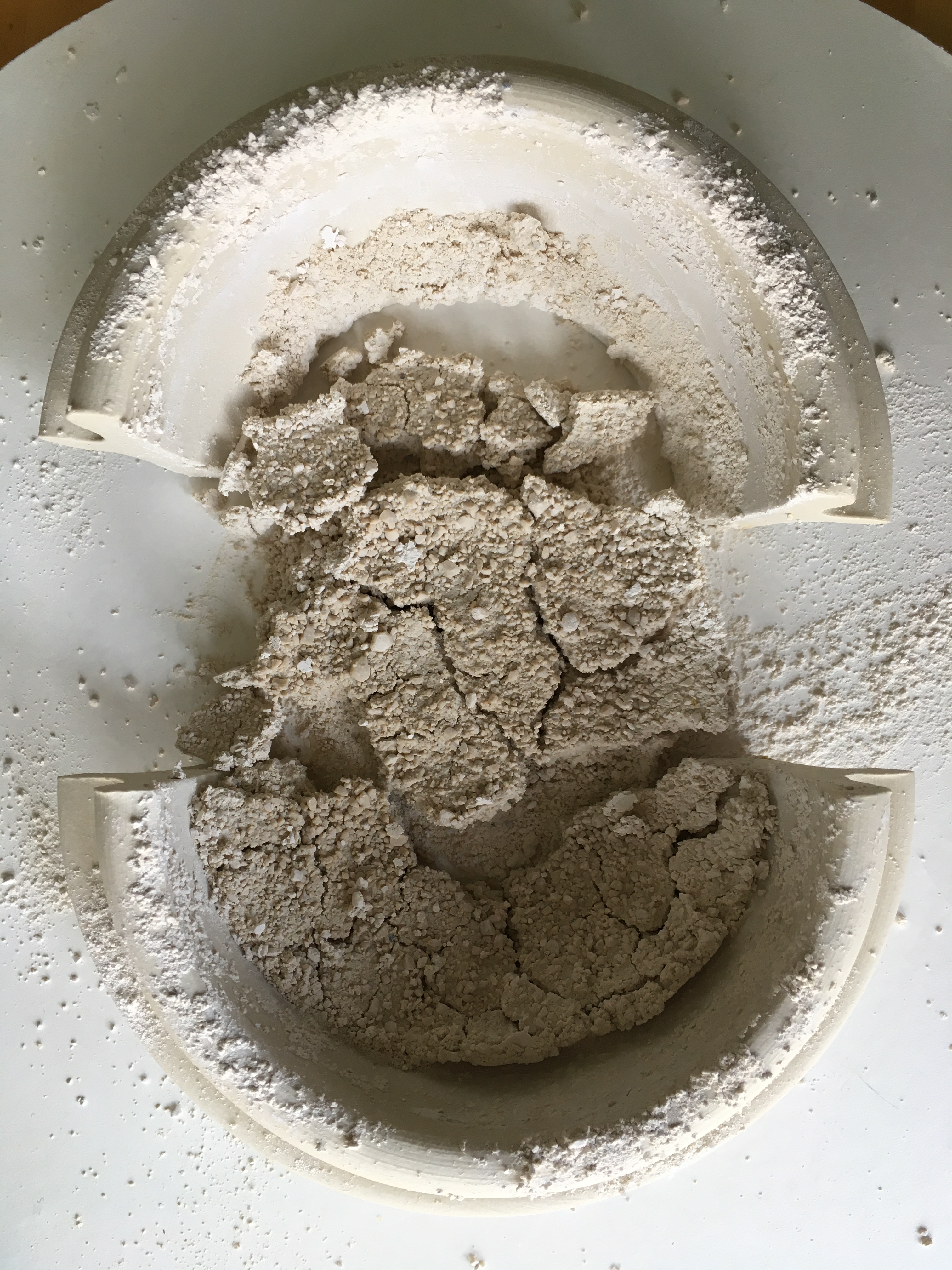
Result of aquafaba and likely any liquefied adhesive: clumpy and not all that useful.
*My closest friend is a vegan; she’s taught me a thing or two about reducing my meat and dairy consumption, and one trick is to use aquafaba as a substitute for egg white.
3. From experimenting with covering the plate mold in plastic-wrap and in aluminum foil (back to porcelain and water; misting the water while sprinkling the porcelain, not in layers):

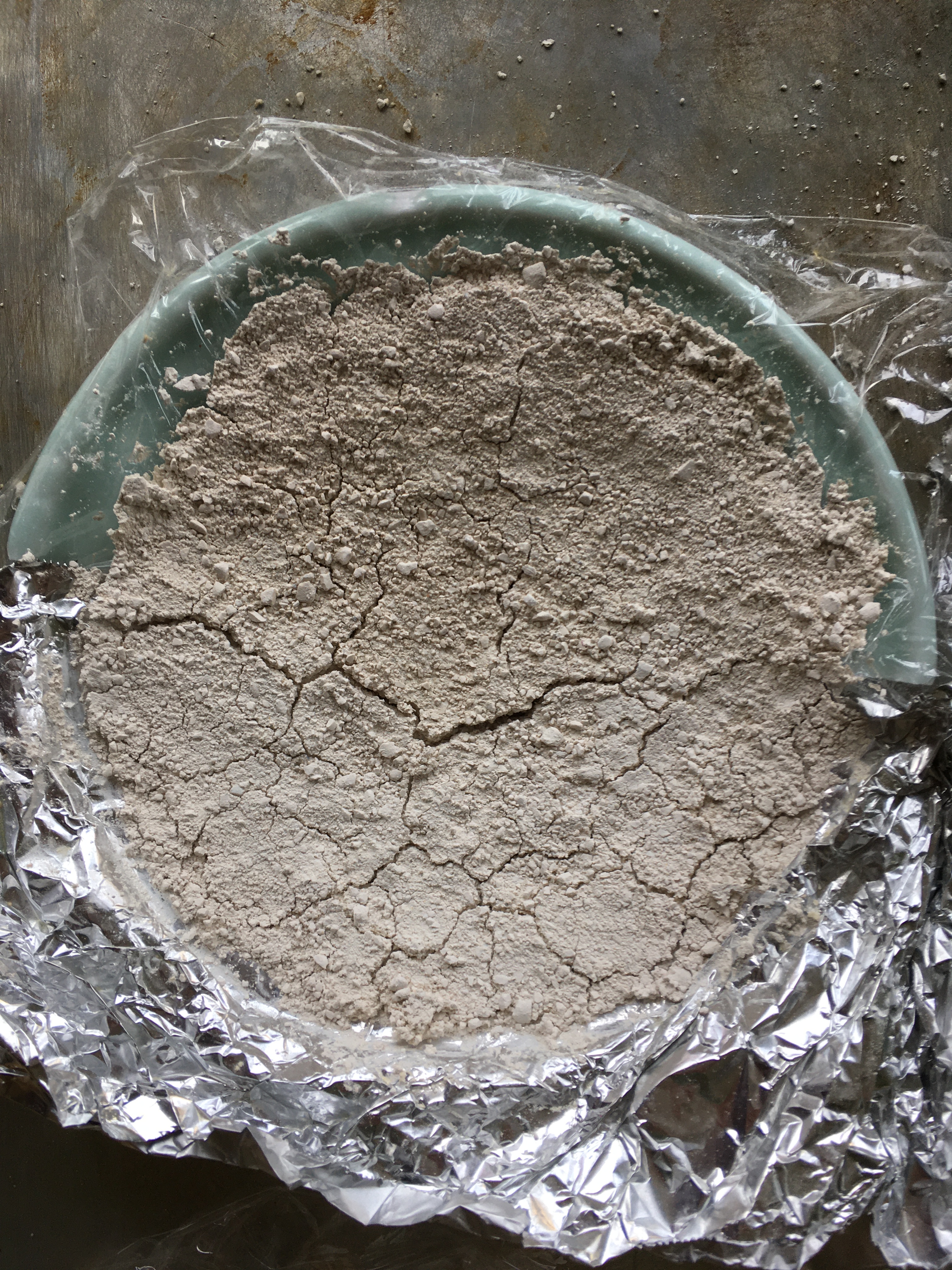
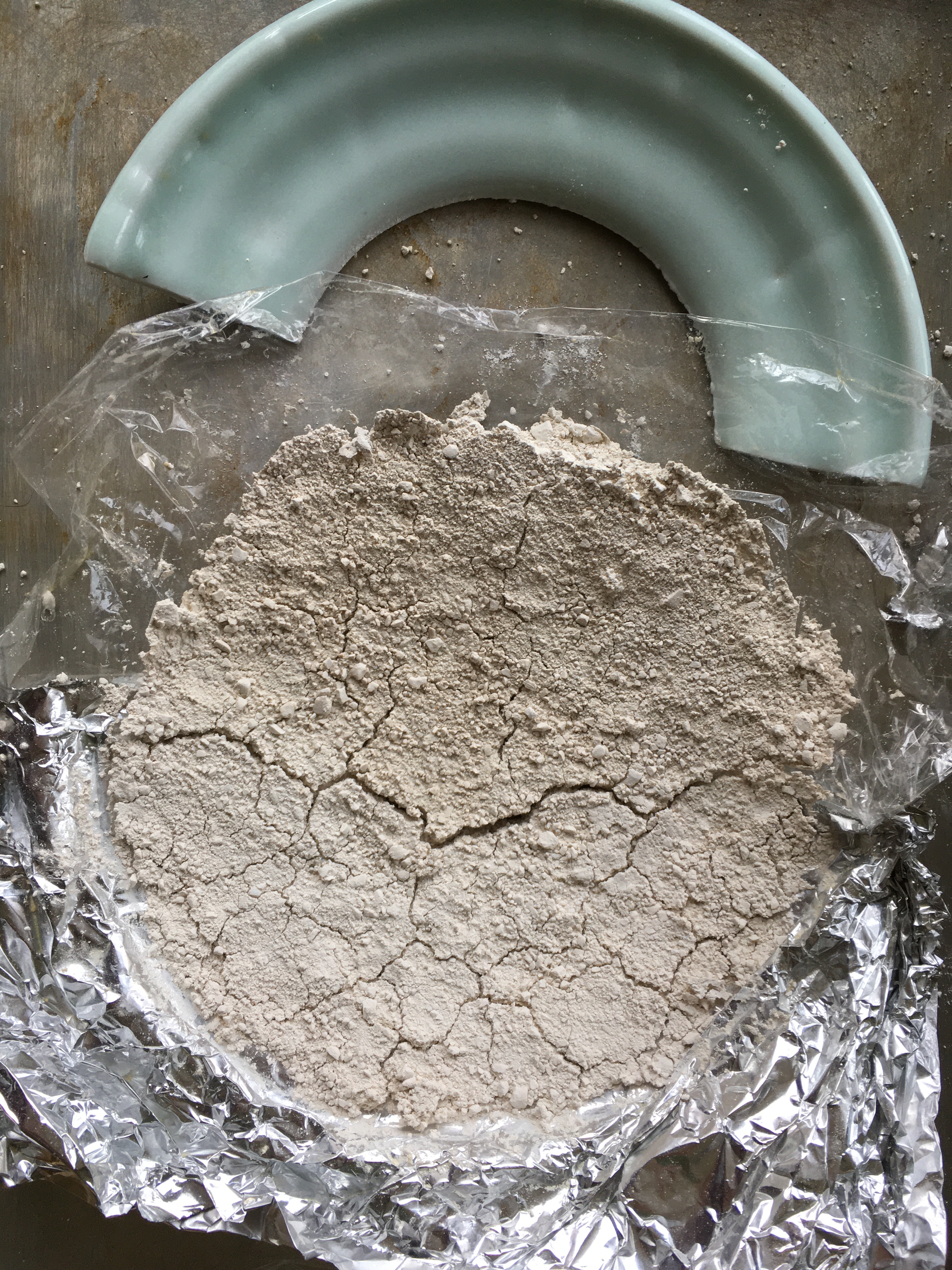
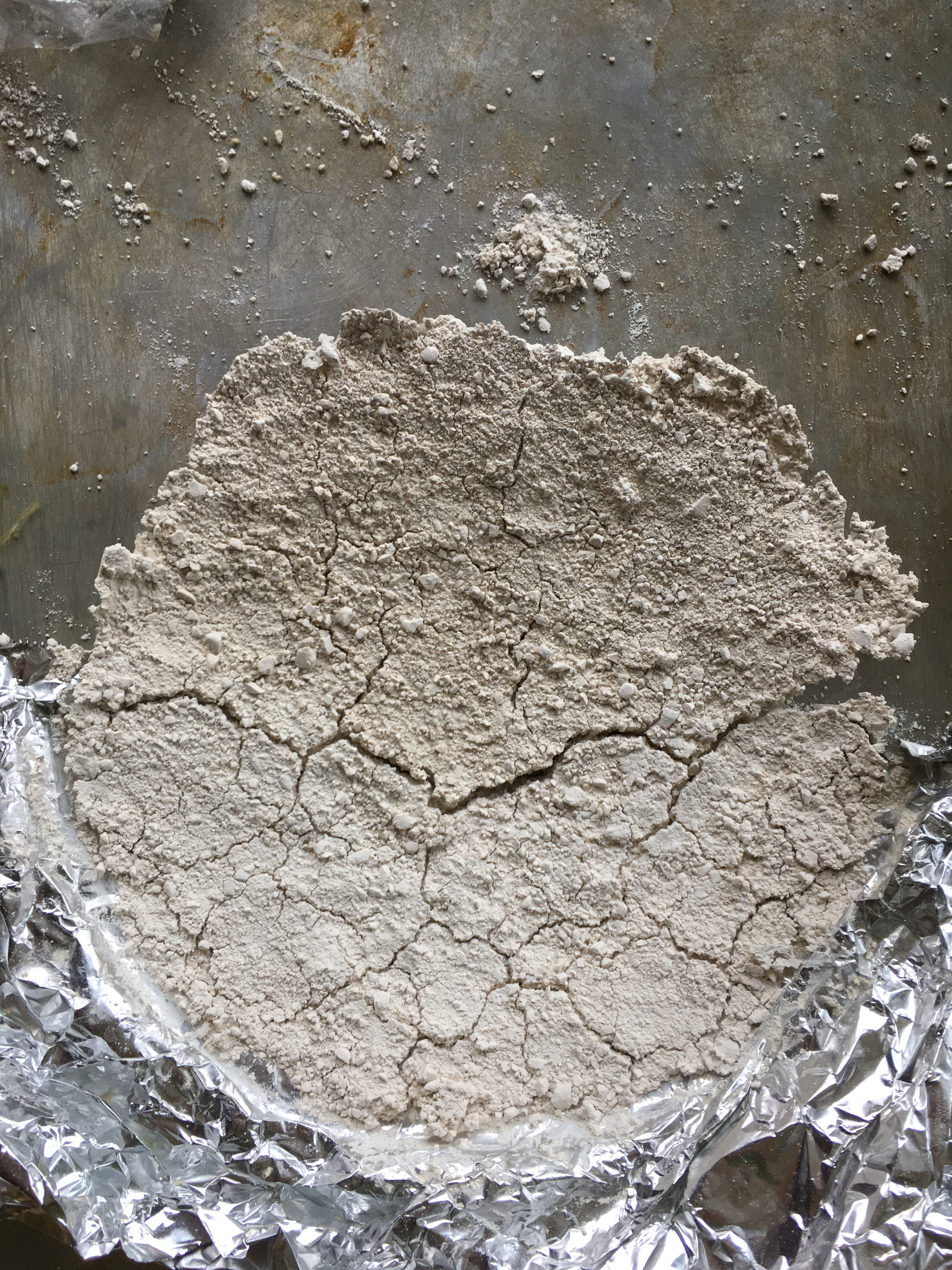
Aha! The plastic wrap was the ticket. If I unstuck it from the glazed mold as the dust was drying, I was then able to slide the mold out from under the clay without disrupting the clay at all. THE PLATE STAYED STANDING:
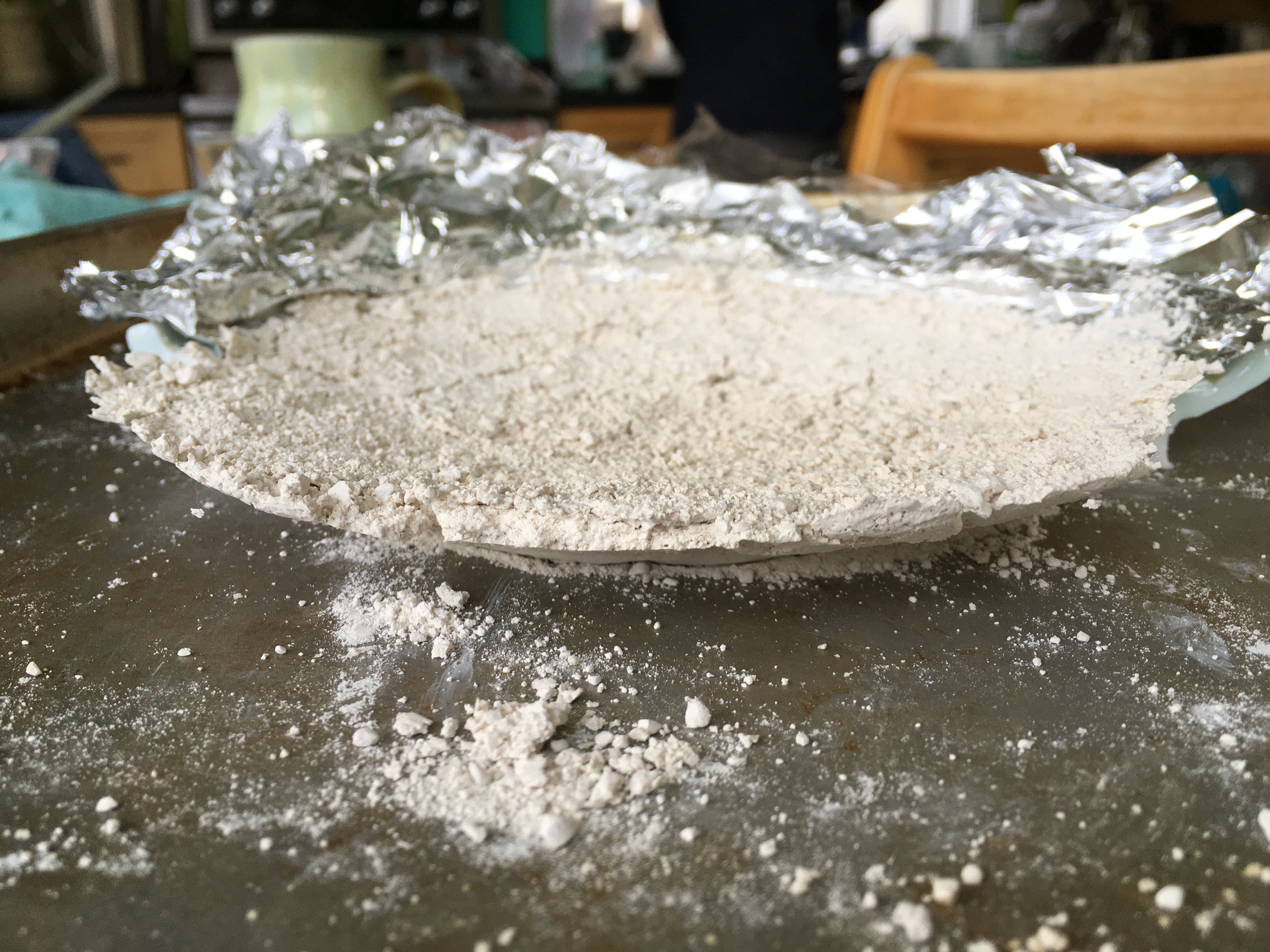
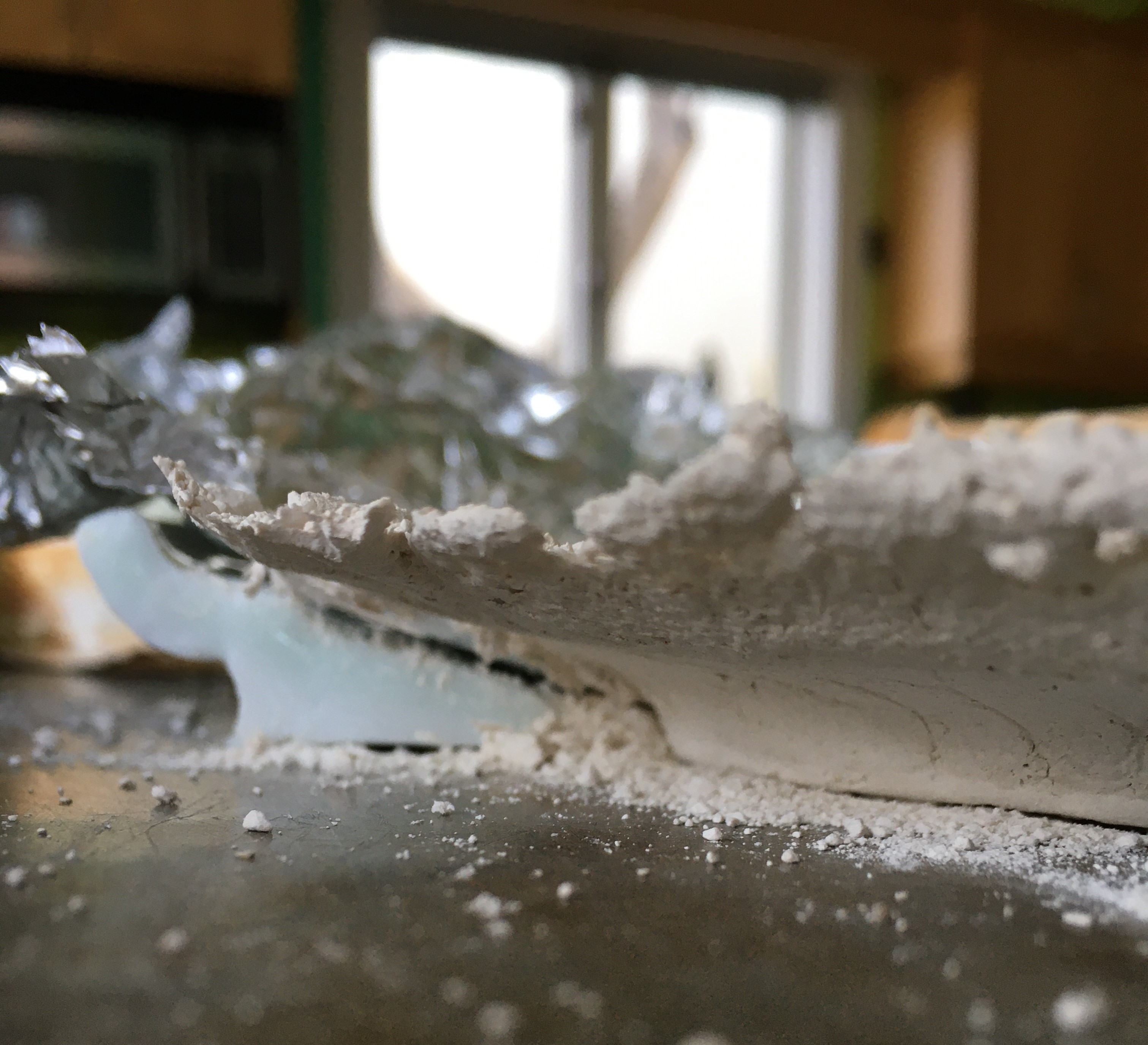
This tells me a few things: it is possible to do this(!); the mold doesn’t need to be fired (or glazed); paper may also work, which would be better if I choose to fire these pieces.
4. Speaking of firing, this is what the material looks like when fired:

As expected, the clay dust is much whiter when fired to temperature (the temperature at which the clay-body vitrifies, which is Cone 6, a bit over 2000 degrees Fahrenheit). I now have a dilemma: to fire or not. While aesthetically more pleasing when fired, firing this clay means creating CO2 through the burning of fossil fuels that an electric kiln uses… our electricity in this place (Saskatchewan, Canada) is predominantly created through burning natural gas and coal.

It seems to be black and white: burning CO2 is hypocritical when producing work about the climate crisis; ergo, don’t do it. However, I don’t know if it’s that simple. Just as people who view people like me as and environmental nut-bar are quick to point out, I still burn gas to heat my home. In other words, the line of argumentation is false: it’s not being a hypocrite to have behaviours that you in general are striving to reduce. In the scheme of things, the electricity I’d be using to fire part of a kiln (I’d coordinate with others students to fill the kiln) is minimal. Compare firing a kiln to burning a private jet. (I don’t have a private jet). Besides, we’re already screwed, right? What may slow down our fall will be mass changes to institution, corporation, and government policy. I work towards influencing those changes in my activist life. Does all of this mean I shouldn’t fire a kiln? Unlikely. However, I know that the medium is always part of the message, and that the message is all that matters (if anything matters) in a work like this. For the moment, I’ll leave these plates unfired. Clay is clay; ceramic is ceramic. Ashes to ashes, dust to dust and all that jazz. Besides, I can always fire them later.
I’m now waiting for five large plate molds to dry sufficiently so that I can use them (unfired). I’m due to install work in the Neutral Ground (a local artist-run gallery) in three days for a show of Master of Fine Arts students titled endings + beginings. I’m planning to create four of these dust plates on my dining room table while installing in the gallery this Thursday. Wish me luck.

One last update on this project, and one other dilemma, is the clay itself. I’ve just today procured (via a trade for local eggs) some local clay — clay that was dug up on land just about two hours north of Regina. It’s brown in colour. I plan to grind it tomorrow and test out what it looks like in dust-plate form. So…. porcelain (highly processed; ingredients from far far away) or local clay taken from the very soils of the province where I live? Local, right? The dilemma stems from aesthetics (I’m realizing this semester how much I like the colour white in my work) and from content: most plates in our homes are made of some form of porcelain. I have exactly one and a half days to figure this and everything else out before I install something in Neutral Ground.
 Amy Snider