In our weekly meeting this past Monday, David got me thinking about my purpose in making art. This isn’t a question I’m new to, but I think our conversation has helped me move further along in my ongoing response to it.
These are my notes from / responses to what David had to say about the overall direction/trajectory I see my work taking.
1. I’m an atheist. I don’t believe there’s any greater being out there/any great purpose to anything happening down here.
2. I don’t subscribe to the “pro-Anthropocene” (a new term to me) movement; that is, I don’t believe that our technology, the very thing that got us into this situation we’re in, is going to be what gets us out of it. I think there’s a chance we can slow down this catastrophe, but I don’t believe we’re going to come up with one or one set of solutions that will just solve it. It’s not just that we’re not smart enough to build such technology, as nothing we create can be as intelligent as the systems we’ve messed up, but it’s that we’re not smart enough to be able to work together to implement any single solution at the scale necessary to deal with the problems we’re facing.
3. I’m not about to check out of society, as in, I’m not going to go live in an off-grid 100% self-sufficient domicile where I take advantage of zero of society’s technologies and live as close to a zero-footprint life as possible. I don’t see doing this as a solution, and in fact I see it as deeply problematic — leaving the world to its problems just because one has the interest—and privilege—to do so.
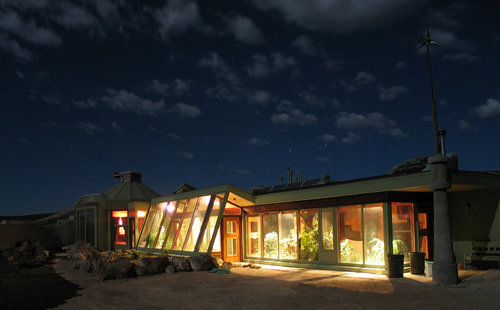
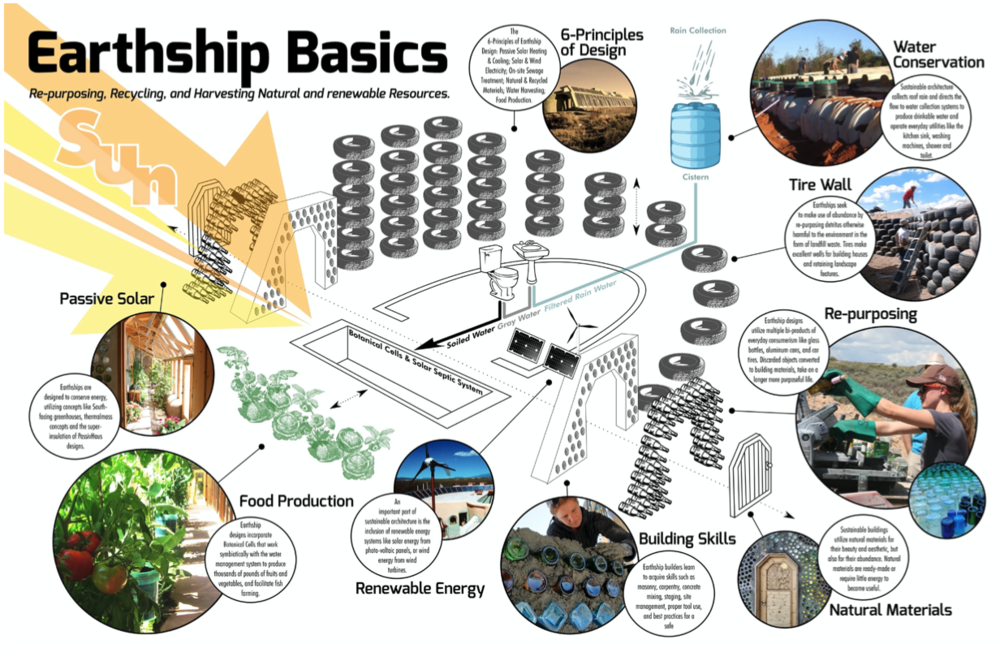
(Yes, the idea of an earthship is interesting and appeals to the fear that apocalypse brings me [this was especially bad a decade ago while I was watching The Walking Dead… I wanted to buy a gun, jerrycans, and beef-up my relationship with a farmer I knew so I could go live on his land], but no, I don’t plan on building one. I don’t have the money nor skill sets to do so.)
I also don’t agree with or wish to further the “all or nothing” mentality regarding climate change. Yes, I do what I can. Yes, I’m very concerned — terrified — about what we’re doing to the planet. But yes, I heat my home. This doesn’t make me a hypocrite. And no, living in a cave is not a solution for any or all of us. Just as how Barbara Kingsolver points out in “Setting Free the Crabs” that saving one orchid from a doomed rain forest to bring to Canada and cherish is about as useful as leaving it there to die.
4. So, David asked me, if I don’t turn to a greater purpose (metaphysics) for guidance or meaning in all of this, I don’t see technology as our solution, and I’m not about to leave everyone and everything behind… what do I see as the “solution”? If I see none, he says, I’m a nihilist.
Fair enough.
The question then is, what do I believe, and, again, what do I believe is the purpose of my art?
Good questions.
I believe we’re most likely fucked. I have a shred of hope that the species will survive, but to be honest, apart from my son and step-children, and my nieces and nephew… hmm… well, it’s hard to care all that much for the future of our species. As a species, we suffer and inflict suffering of unimaginable proportions. (A question I’ve asked myself when studying the Holocaust is whether the suffering of many actually adds up to more than the suffering of one. Is there such a thing as collective suffering? My intuition is that there is not. This doesn’t at all undermine the horrors of an individual’s experience of pain [physical, emotional, whichever kind]. But I don’t put much weight in “the suffering of a nation,” for instance. Where is that actually felt? We each feel our own pain, nothing more and nothing less. There is empathy, but empathy is not pain. That’s my view, anyways.)
One big problem of course is that my son and step-children, and my nieces and nephew, all need there to be other people on this planet. From whom will my son buy his iPad, who will build the bloody thing, who will work to channel the electricity to run it, who build the couch on which he sits with it, who will heat the home in which he uses it… if we aren’t all here?
I’m being facetious of course.
Back to my art.
5. Do I have any hope? I guess I do. Just a tiny bit, but it’s there. Either that, or I simply cannot face collapsing in front of complete acknowledgment of the situation we’re in — aka, I’m allowing myself some healthy denial.
5. David, I believe, suggested that if I really do see the situation as “nihilistically” as this — impending extinction of the species — then I should consider how to align my art practice with this belief/philosophy. I believe he said it would be “brave” to toss aside any pretext of trying to change people. I believe he means that didactic art, as Risa pointed out to me early last term, is limited, or at least that it may not match what I really believe is true about the situation and what my work conveys. Asking people to take action (ie. change a light-bulb, lower their thermostat) is ridiculous if what I believe is that we’re facing extinction, and these pieces simply make that point and no other. This is an “if” I need to consider, though.
To me, the grief I feel at the thought of extinction is not limited to us, but to all of life. It’s the kingdoms: animalia; plantae; fungi; protista; eubacteria; archaebacteria.
:max_bytes(150000):strip_icc():format(webp)/six-kingdoms-of-life-373414-Final1-5c538e2446e0fb00013faa3c.png)
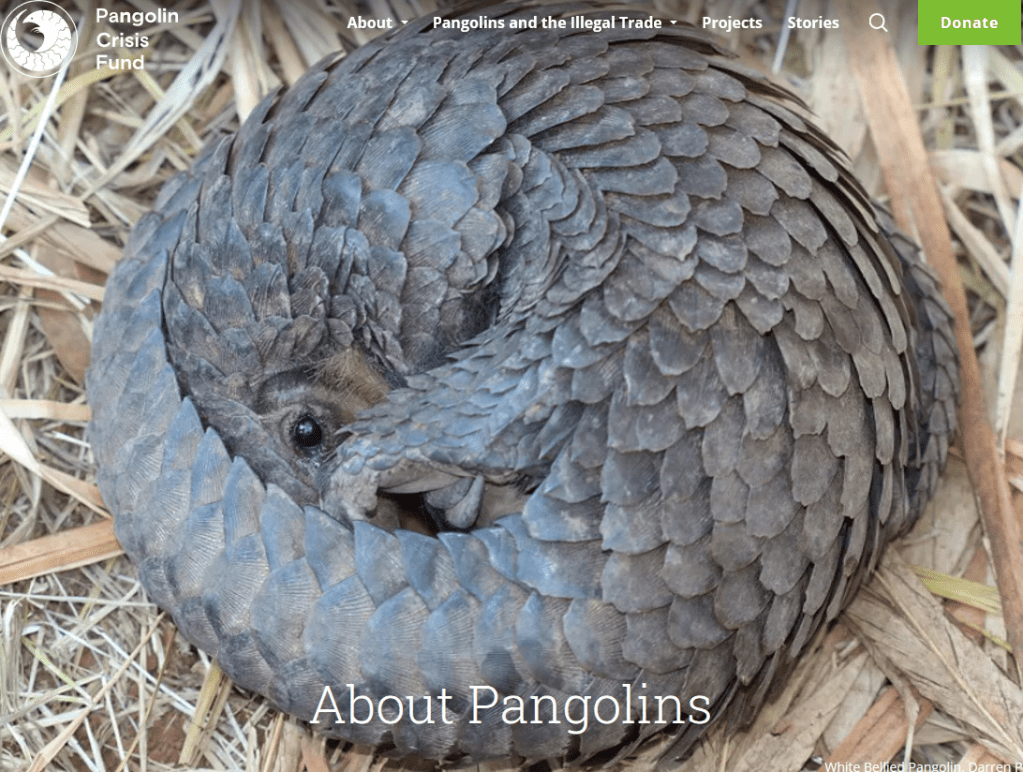
I don’t know where this love came from, but I feel a love for life on this planet. I understand that I am made up of the same elements as the mountains, the trees, and many other animals. I raised my son from when he was an infant on just about no tv other than our dvds of David Attenborough’s documentaries; together, we feel in love with Life on Earth, the film, and the real thing. How the hell did earth come up with creatures such as the dumbo octopus, living four kilometers below the ocean’s surface? The zombie worm? The bubbler crab? The pangolin? (I have a soft spot for pangolins).
(When my son was five, he identified a picture of an opossum in his animal encyclopedia one night in bed. When asked how he knew what it was, as he couldn’t yet read, he said to me matter-of-factly, “Isn’t it obvious? From the opposable thumb and the prehensile tail!” My love for my son grew with his love of life on this planet, and to this day, as I become a more active environmental activist, he becomes more compassionate. I hope he won’t be totally screwed as a result, but hey, Philip Larkin said it best in “This Be the Verse”:
They fuck you up, your mum and dad.
They may not mean to, but they do.
They fill you with the faults they had
And add some extra, just for you.
But they were fucked up in their turn
By fools in old-style hats and coats,
Who half the time were soppy-stern
And half at one another’s throats.
Man hands on misery to man.
It deepens like a coastal shelf.
Get out as early as you can,
And don’t have any kids yourself.
In my reading of this poem, from my family’s perspective, the fault is hope, and the “fools in old-style hats and coats” is all of us, but most especially those who arrived on this land (and too many lands), stole it, and brought us to where we are today.)
Whoa, what a digression. In short, I really really care for the life on this planet, and I can’t give up some tiny shred of hope that it’ll go on long after my immediate family is gone. I suppose, if the beauty of life is all I care about, I shouldn’t worry too much. Something will remain, even if it’s nothing like what it is today. New kingdoms, likely unnamed, will grow. We won’t be around to see them, but so what? I’m not alone in having this opinion, of course. This must be why Jill Ho-You‘s work with bacterial and mold speaks to me so well.
As for my work, I still haven’t answered David’s question. What is its purpose?
6. Can I be brave and only focus on what we stand to lose… not waste my time asking people to change?
A simple answer for now, but really a question: Does it matter what my intent is, anyways? I’m a modernist at heart. Whether or not my artist statement asks viewers to go to a website or participate in local politics, the work is what will catch people’s attention and hold a tiny space in their memory, not what I have to say on the side, the “supplemental” material as I believe David called it. Does it matter if this material is “didactic”? Really, does art itself matter, or is it all just play at this point, as my husband calls it? These are questions I still have to — will likely always have to — wrestle with, as long as I continue down this path.
 Amy Snider