Does art change anything?

My supervisor, David Garneau, and I have wonderfully intense weekly meetings. I joked just yesterday while we were meeting face-to-face in his office for the first time in weeks (a nice break from Zoom) that I needed a chaise lounge (and he needed a beard and a cigar) as he basically forced me to dive deeper into the real reasons why I’m creating the art I’m creating. Again we talked about nihilism, apocalypse, what got us here (on the brink of planetary life-system collapse), what I am trying to do about it as a mother/activist/artist, what I’m really saying in my work. It was difficult. It was marvelous.

It’s great when the work you’re doing for different university classes coincides in such a way that you’re allowed to spend all your time focused on what you need to focus on at that moment in your degree. I’m lucky that this is happening for me this semester.

For my Group Studio class this term, our prof, Holly Fay, is asking us to give a presentation / facilitate a discussion in the class on a topic that interests us. The assignment description is as follows:

“Determine an art topic relevant to contemporary studio practice to discuss in class. This topic should be something you are interested in for your own practice, but which is timely and relevant to students in the class besides yourself. If you need help deciding on a topic, I can assist you. Form a persuasive ‘thesis’ about your topic and find materials in the form of writing, lectures, video interviews, etc. by artists, critics, curators, or theorists to support your position. Your 20-minute seminar presentation which includes an opening presentation and a facilitated discussion. You will present a 10 min. opening, prepare and provide questions/activities  to facilitated  a 10-minute discussion with your seminar participants.”

The topic I’ve chosen is one from the list that Holly had prepared:

Does art change things? / Can art make a difference in societal thinking?

My thesis statement is: art changes things… for some people, for some things.

From what I’ve been learning, we’re dealing with a spectrum of responses to these questions, and I don’t believe there are definitive answers. Art will not “change things” for all people. Neither can all art “make a difference in societal thinking,” certainly not one that can be measured. I’ll spend some time here looking at these questions from a few different angles.

In the Winter 2020 semester, I took a newly minted MAP course designed and taught by Sarah Abbott titled “Engaging Climate Change: Creativity, Community, Intervention.” For that class’ research paper, I began with the following paragraph:

“Climate change puts each of us in a position that we have no means of fully understanding as there has never been a situation like it in human history. How do we begin to acknowledge that we are potentially devastating not only our own future but also the future of nearly all life forms on the planet? How does this fact disturb our ontological understanding of our place in the world? What agency do any of us have to change this situation? Artists who are aware of the seriousness of climate change may feel the urge to turn their practice into a form of activism. Some would argue that the world “needs artists” more now than ever before for the precise reason that more awareness of, more conversations about, and more action on tackling the problem of climate change is vital. In a video showing an Extinction Rebellion sit-in at the Cannes Lions Festival of Creativity in November 2019, a reporter explains that the ‘main message here is to use your creativity, use your imagination for good and fight the climate crisis. It’s up to people like you and I to share creative work, to support creatives, and if you’re a creative, to produce content and spread awareness’ (Extinction Rebellion 2:13).”

If we look at this video, at the 1:40 mark, you’ll here this message:

I’ve been told by my husband and at least one prof that art which is explicitly (and only) trying to make a point — trying to change people — is either boring or at least simply ineffective. I quickly learned that the word “didactic,” when used as in “that work is didactic,” is a pejorative. However, why do most if not all artists make art if not because they are trying to communicate something — and that “something” is often a type of call: look at this; see what I see; pay attention; maybe even do something.

Case in point: climate change art.

I’ve spent hours looking at artist statements and other writings on how artists perceive the role of art in facing/responding to/advocating action when dealing with climate change. In addition to well-known artists who deal with climate change in their work, such as Edward Burtynsky, Ai Wei Wei, and Marina Abramović, less well-known artists I’ve recently discovered who have done powerful work on environmental issues include Eve S. Mosher, Jason DeCaires Taylor, and Morgan Wedderspoon, just to name three of the dozens I’ve encountered. I was particularly inspired by the words of David Opdyke quoted in a New York Times article from January 18th 2018:

“For years I’ve been feeling the need to do something about the dismal future into which we all seem to be sleepwalking. And yet,” he paused before continuing, “I’m constantly haunted by worry. Can such artistic gestures ever really make any difference, especially given the sheer scale of the challenge?”

David Opdyke in “To Get This Artist’s Message, You Have to Look Really Closely”

So, where would he fall on the spectrum of answers to the question of “does art change anything”? This next citation holds his response:

Reminded of Auden’s line to the effect that “Art makes nothing happen,” Mr. Opdyke seemed to rally, countering, “Yeah, but Eudora Welty says that ‘Making reality real is art’s responsibility,’ and maybe that’s what most needs doing now: making the stakes involved in our current crisis real and tangibly visible for people. One ends up hoping that pieces like this might propel the urgent changes in vision, one person at a time, necessary to provoke an appropriate mass response.” (emphasis mine)

David Opdyke in “To Get This Artist’s Message, You Have to Look Really Closely”

There are so many artists out there with similar stances. There are academic articles and critical theory books on this topic. There are even artist organizations specifically devoted to activism on different social causes; one that interests me is The Center for Artistic Activism. The Center has created this primer to help answer “why artistic activism?”

  1. Artistic activism mobilizes affect and effect
  2. Artistic activism thrives in the contemporary landscape
  3. Artistic activism has been used throughout history
  4. Artistic activism creates openings
  5. Artistic activism is accessible
  6. Artistic activism stimulates a culture of creativity
  7. Artistic activism energizes people and organizations
  8. Artistic activism is about the long game
  9. Artistic activism is peaceful and persuasive

It appears there are many supporting points proving the thesis that art can change things. In fact, there is likely a group supporting artists doing work on any societal issue. (Another group supporting artists who want to “make a difference” with their work is Artists and Climate Change.)

But does this mean that art actually makes a difference? Can art actually change things?
My husband, Michael Trussler, is an English prof here and a creative writer, and one of his areas of interest is ekphrasis (the literary device of describing works of visual art in words). In what he calls his “best article ever,” he discusses this “particularly thorny dilemma” of “what communicates ‘meaning’ better, image or text?”:

“More than any other single painting this century [20th], Guernica has focused discussion on the relationships between art and politics, aesthetic form versus ideological content. To Peter Weiss, ‘the paining scream[s] out in memory of every past period of oppression’ (220), providing a narrative of revolution […]. Equally convinced of the painting’s power, but wary that aesthetic grandeur might seduce us from the anguish experienced by those who suffered the event itself, Norbert Lynton warns that Picasso ‘is so successful that we have to discipline ourselves lest the bombing itself should be diminished by his picture into little more than a… prerequisite for it’ (qtd. in Masheck 217). Although Guernica points to history for its authority, the relationship between aesthetic transformation and praxis is indeterminate. Jean-Paul Sartre’s response to the painting in ‘What is Writing?’ is blunt: ‘[D]oes anyone think that it won over a single heart to the Spanish cause? And yet something is said that can never quite be heard and that would take an infinity of words to express’ (28). Sartre’s diffidence regarding Guernica accentuates his questions regarding representation in the essay as a whole — what communicates ‘meaning’ better, image or text?” (Trussler 266-67)

In other words, for all it has done, Guernica didn’t prevent any future deaths. No art does. Art on the subject of climate change will not either.

Needless to say, we have intense dinner conversations at our place. (Our 11 year-old is already proficient in keeping up with such conversations). We sometimes talk about art and what it can/cannot do. I have the great advantage (sometimes disadvantage: he always wins arguments on art or philosophy) of Mike’s enormous library.

One of the many books he’s brought to my attention when we’ve talked about what art can and cannot do is Jean Améry’s, At the Mind’s Limits: Contemplations by a Survivor on Auschwitz and Its Realities.

Near the beginning of his book, Améry describes something that occurred to him while walking back to his bunker one evening at Auschwitz after a day of grueling labour. It was winter, and he noticed a flag waving as he passed by an unfinished building. A stanza came to him from a Johann Christian Friedrich Hölderlin poem: “The walls stand speechless and cold, the flags clank in the wind” (7). Améry recited the line out loud a couple of times, “But nothing happened. The poem no longer transcended reality. There it was and all that remained was objective statement: such and such, and the Kapo roars ‘left,’ and the soup was watery, and the flags clanking in the wind” (7). He goes on to say that maybe this line of poetry (art) would have had another meaning in this place and at that moment had he had a comrade with whom to share it. But he did not. Even when he recalled at that moment the Parisian philosopher he had “searched out, not without effort and risk,” (7) he remembers that the philosopher was silent: “We trudged through the camp streets with our tin ration can under our arm, and, to no avail, I attempted to get an intellectual conversation underway. The philosopher gave monosyllabic, mechanical answers and finally grew silent entirely” (7). What, speculated Améry, was the cause for his silence?: “He simply no longer believed in the reality of the world of the mind, and he rejected an intellectual word game that here no longer had any social relevance” (7-8).

Skipping ahead a few pages, Améry tells us that what he learned in Auschwitz is that “for the greatest part the intellect is a ludus and that we are nothing more—or, better said, before we entered the camp we were nothing morethan homines ludentes” (20). Homines ludentes translates from Latin to English as basically a species (homines – our species) that plays. And this, Mike tells me, is how he (Mike) views art—and us: we play. Everything we do is play. Nothing is transcendental.

To Améry, this perspective brings with it both freedom from unjustified pretense as well as a loss of one’s sense of self: “With that [awareness of being homines ludentes] we lost a good deal of arrogance, of metaphysical conceit, but also quite a bit of our naive joy in the intellect and what we falsely imagined was the sense of life” (20).

What does this mean to one making art? Basically, it means that nothing we do matters. It’s all just part of the game.
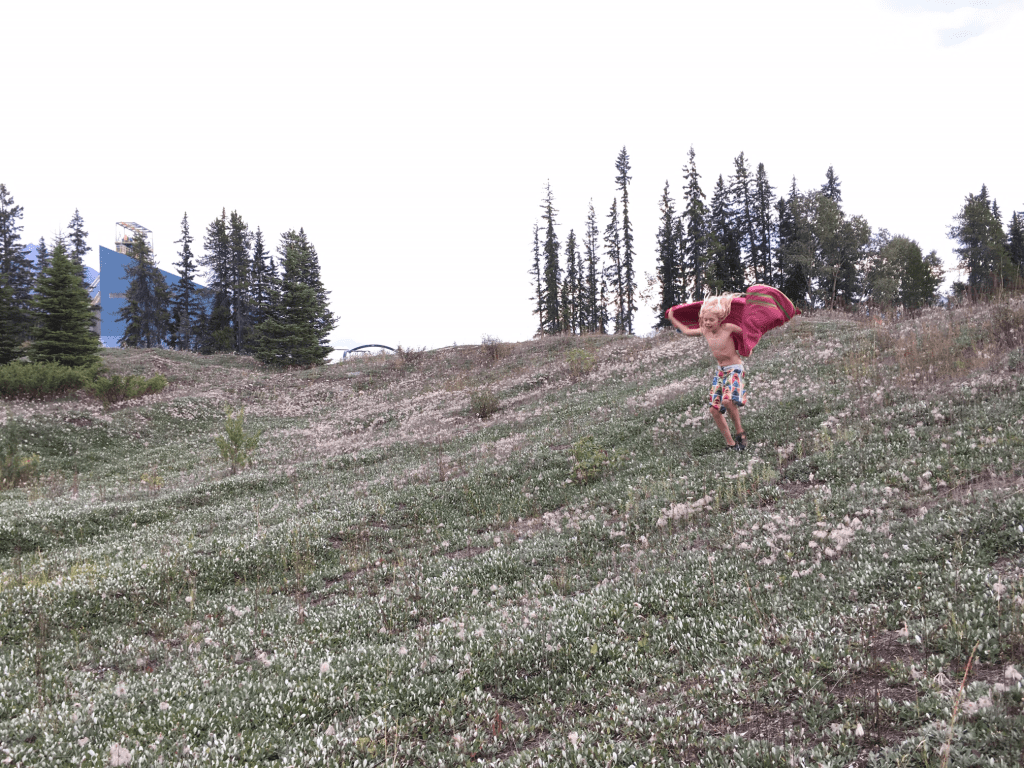
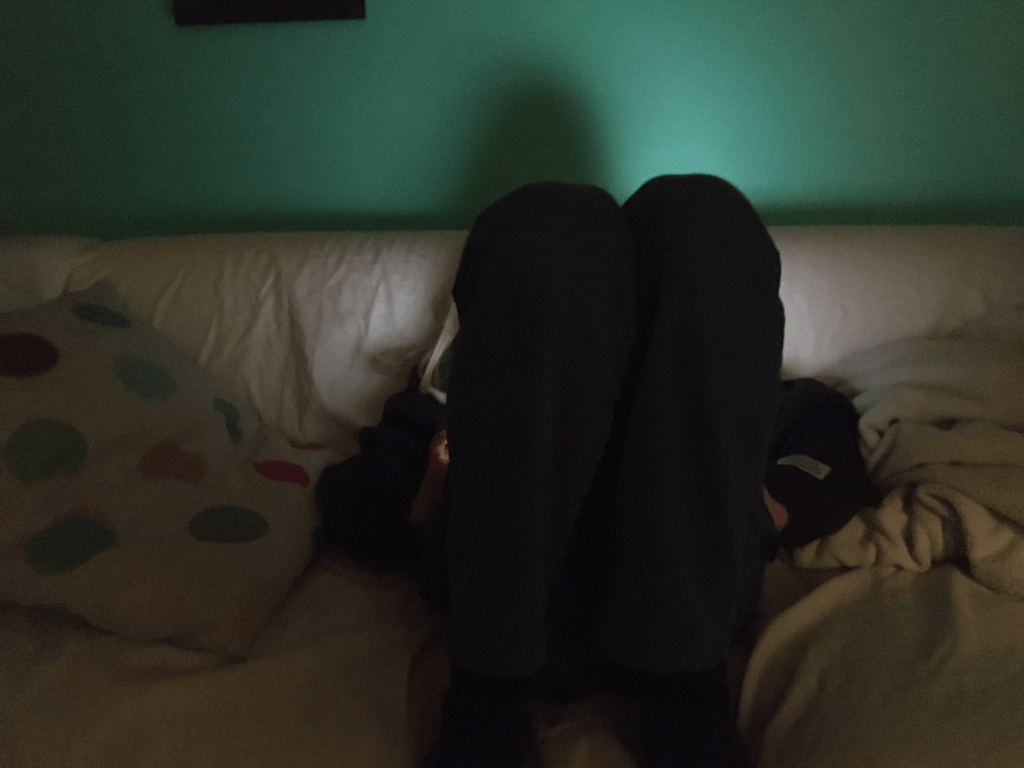
(I don’t place this photo here, amid writing about Auschwitz, lightly; I’m very aware of how lucky I am that my family left Poland four generations ago)

At least, this is one perspective. To continue with another example from a concentration camp survivor, Tzvetan Todorov writes in Facing the Extreme: Moral Life in the Concentration Camps that people in the camps were desperate for books (for art). As books were banned (with the threat of death for being caught with them), prisoners resorted to their memory of books they’d read. A fellow inmate, Ginzburg, “knew by heart the works of countless writers from Pushkin to Pasternak,” and “never missed a chance to recite from them, much to the enjoyment of those around her” (92). On one occasion, she was overheard reciting a book and threatened that if she could not prove she’d recited it from memory (not read from a hidden physical book) by doing so for half an hour, it would “the irons for you” (93). She won the “bet,” reciting from this book she’d memorized (Eugene Onegin) for well over half an hour. Ginzburg “continued to believe in this kind of resistance throughout her incarceration: ‘I felt instinctively,’ she wrote, ‘that as long as I could be stirred to emotion by the sea breeze, by the brilliance of the stars, and by poetry, I would still be alive, however much my legs tremble and my back bend under the load of burning stones'” (93).

Primo Levi, also a survivor, writes from a similar perspective in Survival in Auschwitz: The Nazi Assult on Humanity. He recounts a moment when he had a few lines from Dante’s Divine Comedy stop him as he worked:

‘Think of your breed; for brutish ignorance

Your mettle was not made; you were made men,

To follow after knowledge and excellence’

qtd. in Levi 113

And Levi writes about this memory: “As if I also was hearing it for the first time: like the blast of a trumpet, like the voice of God. For a moment I forgot who I am and where I am” (113).

I think about these remarks of Todorov and Levi when I think about David’s question to me of what my work really means or what I am really trying to say. Do I think my art will “make a difference”? No, I’m quite certain it won’t. I’m certain that at this point, all the climate activism going on around the world may slow our fate somewhat, but it’s not going to be enough to save us. And my art projects, certainly, are not going to give us any extra second worth of time, keep but one glacier any more frozen, save but one insect species from extinction, etc, etc. But I’m compelled to make these objects — these statements — nonetheless.

I reflected on this topic at the end of a personal essay I wrote last semester, “on clay.” I ended the essay this way:

I cannot do much to change the course of climate change beyond the time and money I give to environmental organizations. In fact, I feel like the busyness of participating in activism amid a day job, art-making, and parenting is proving to be too much. With the urgency I know this crisis demands, and my urgency to raise as much awareness of the situation as I can, I’ve been missing something important – that sustainability must also involve the personal as well as the global. I need to be able to sustain myself, and recently, I’ve become attuned to a major lack in my life: joy. Without it, it’s hard to keep fighting for the future, for “[i]f we kill all pleasure in the actual processes of life, what sort of future are we preparing for ourselves?” (Orwell qtd in. Scranton 324).

Does art change things? Does art make a difference in societal thinking? In other words, does it matter? These questions have different answers depending on who you ask, their personalities, what they know, and what their circumstances in life are at the time of the question. (For one thing, there’s usually some amount of privilege that allows one to make art, and often times, privilege involved in being able to view it).

I’m learning that art matters to me (and learning to recognize my own privilege). It may bring me joy at times, such as the tactile joy it brings me of sinking my hand into a pail of terracotta slip, or intellectual joy of discovering a solution to a technical problem. However, at other times, working with this subject matter, researching the Dirty Thirties and what drought is in store for us now, for instance, art-making doesn’t bring me any joy at all. Neither do I get joy from seeing other people’s art, however brilliant or well-executed, that is dealing with climate change. I think we make this type of art because we feel the personal need to — perhaps it’s about feeling alive, or about feeling human, or about not forgetting who we are. In other words, we do it for ourselves, and at the very least, it changes us.

This is as far as I’m able to get (for now) in answering your question, David. Hey! I just remembered that you told the class last semester that every MFA student ends up making art that’s about them self. I guess I’m no exception.

Now, to get this into a ten-minute presentation for my class!

No photo description available.

Works Cited

Améry, Jean. At the Mind’s Limits: Contemplations by a Survivor on Auschwitz and Its Realities. Translated by Sidney Rosenfeld and Stella P. Rosenfeld. Indiana: Indiana UP, 1980.

Levi, Primo. Survival in Auschwitz: The Nazi Assult on Humanity. Translated by Stuart Woolf. New York: Simon and Schuster, 1996.

Scranton, Roy. We’re Doomed. Now What?: Essays on War and Climate Change. New York: Soho Press Inc., 2018. 

Trussler, Michael. “Literary Artifacts: Ekphrasis in the Short Fiction of Donald Barthelme, Salman Rushdie, and John Edgar Wideman.” Contemporary Literature 41, no 2 (2000): 252-90.

Tzvetan Todorov writes in Facing the Extreme: Moral Life in the Concentration Camps. London: Weidenfeld and Nicolson, 1999.
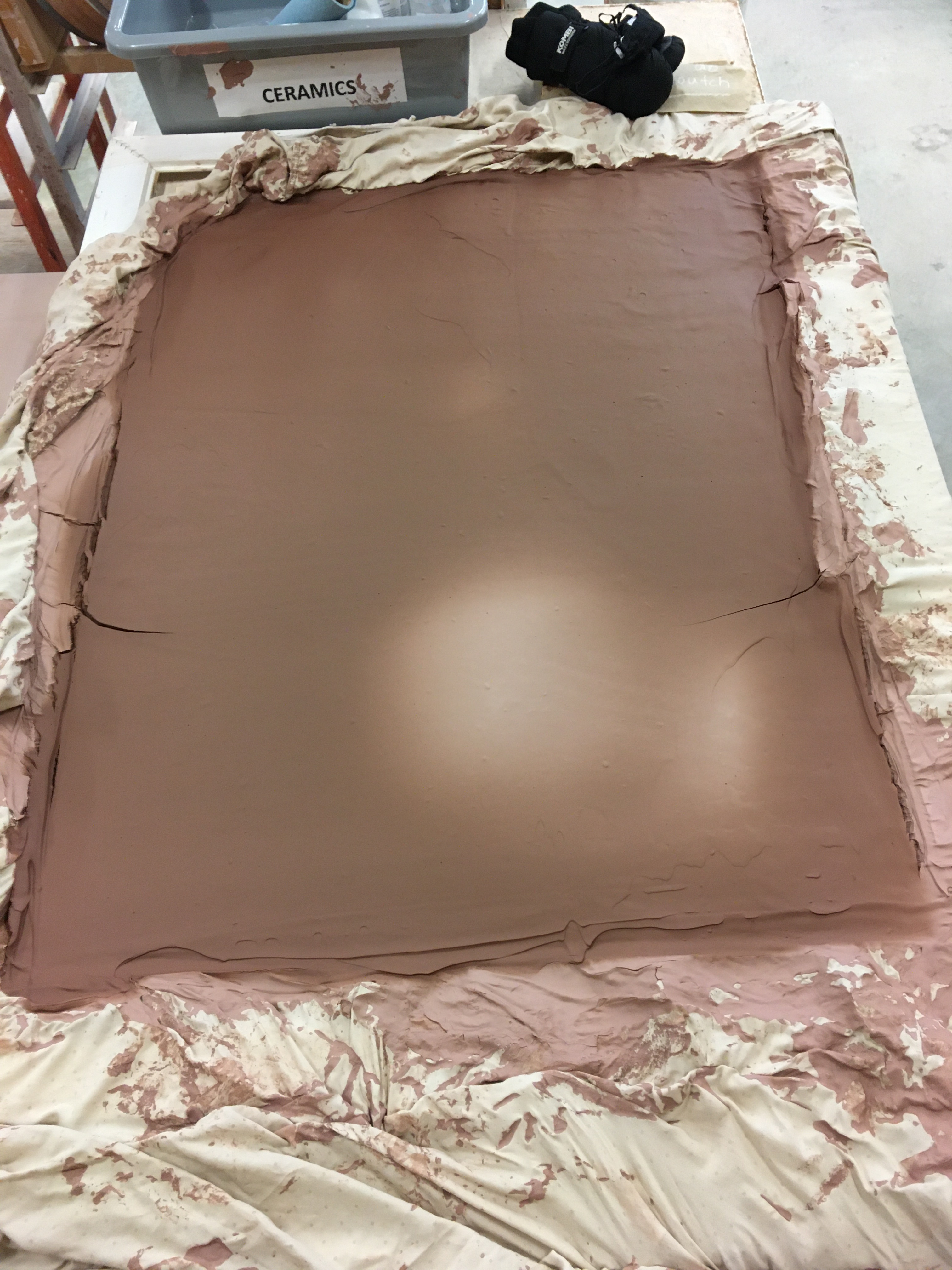
cracked update: not cracked enough

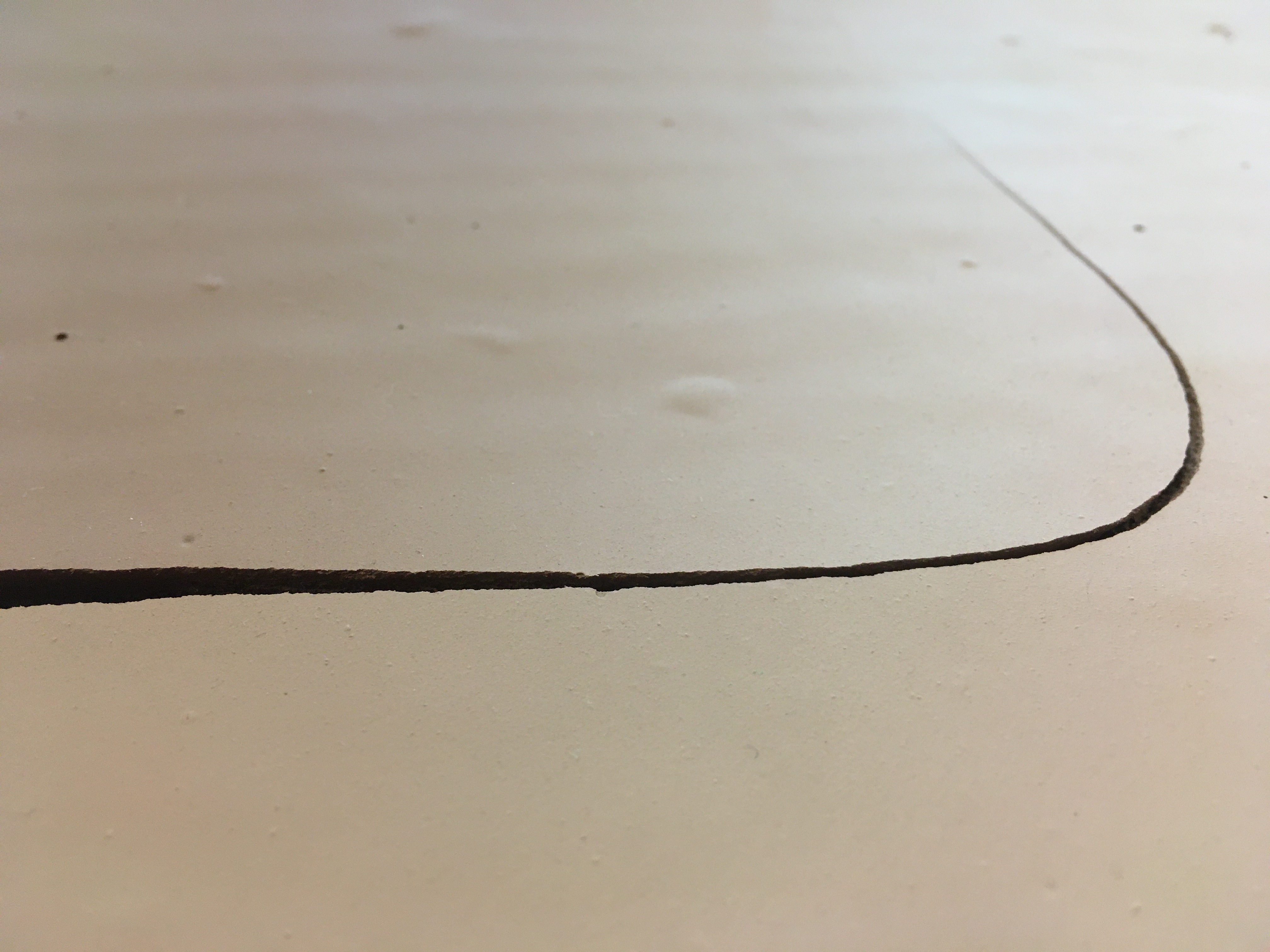
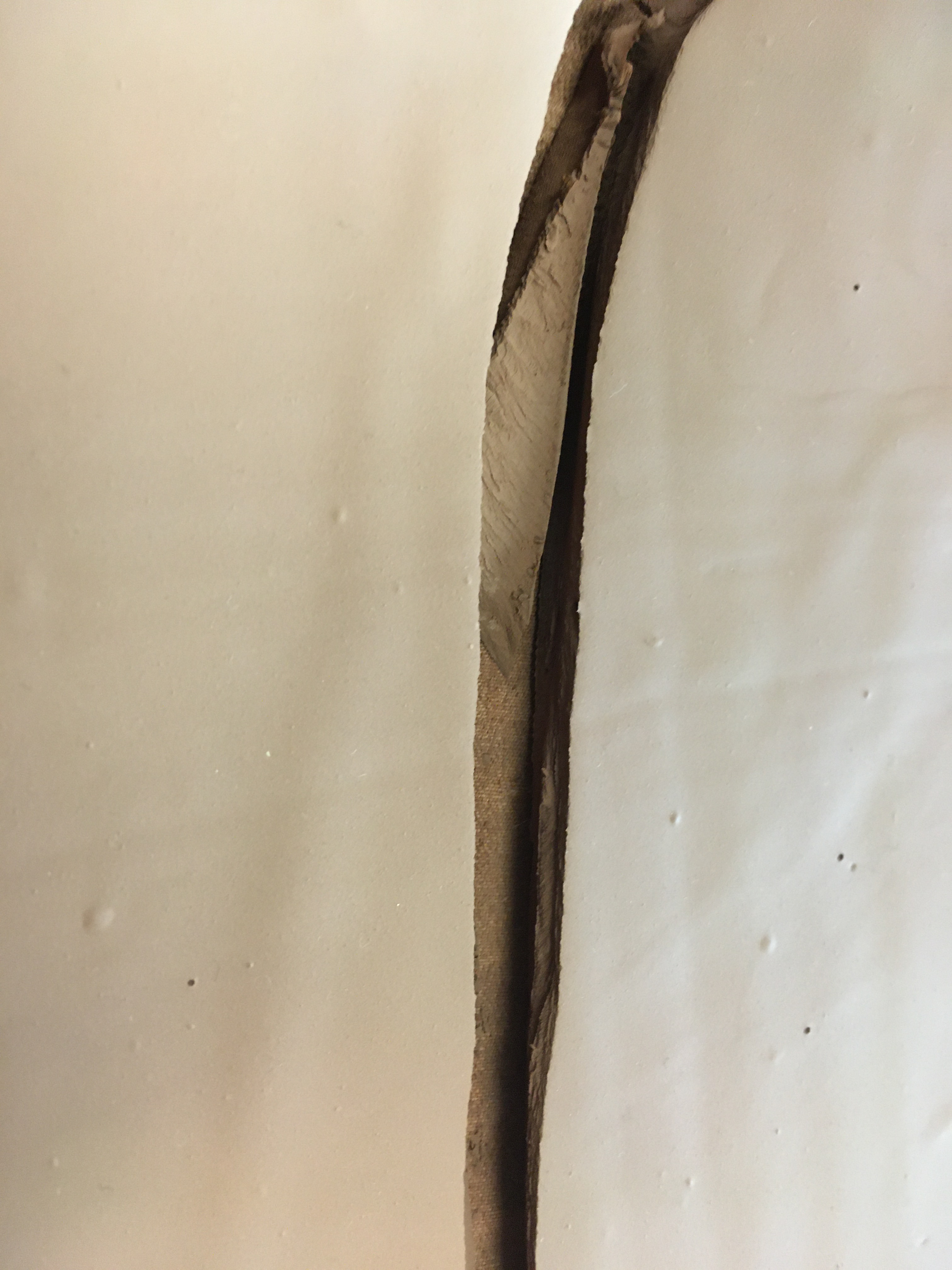
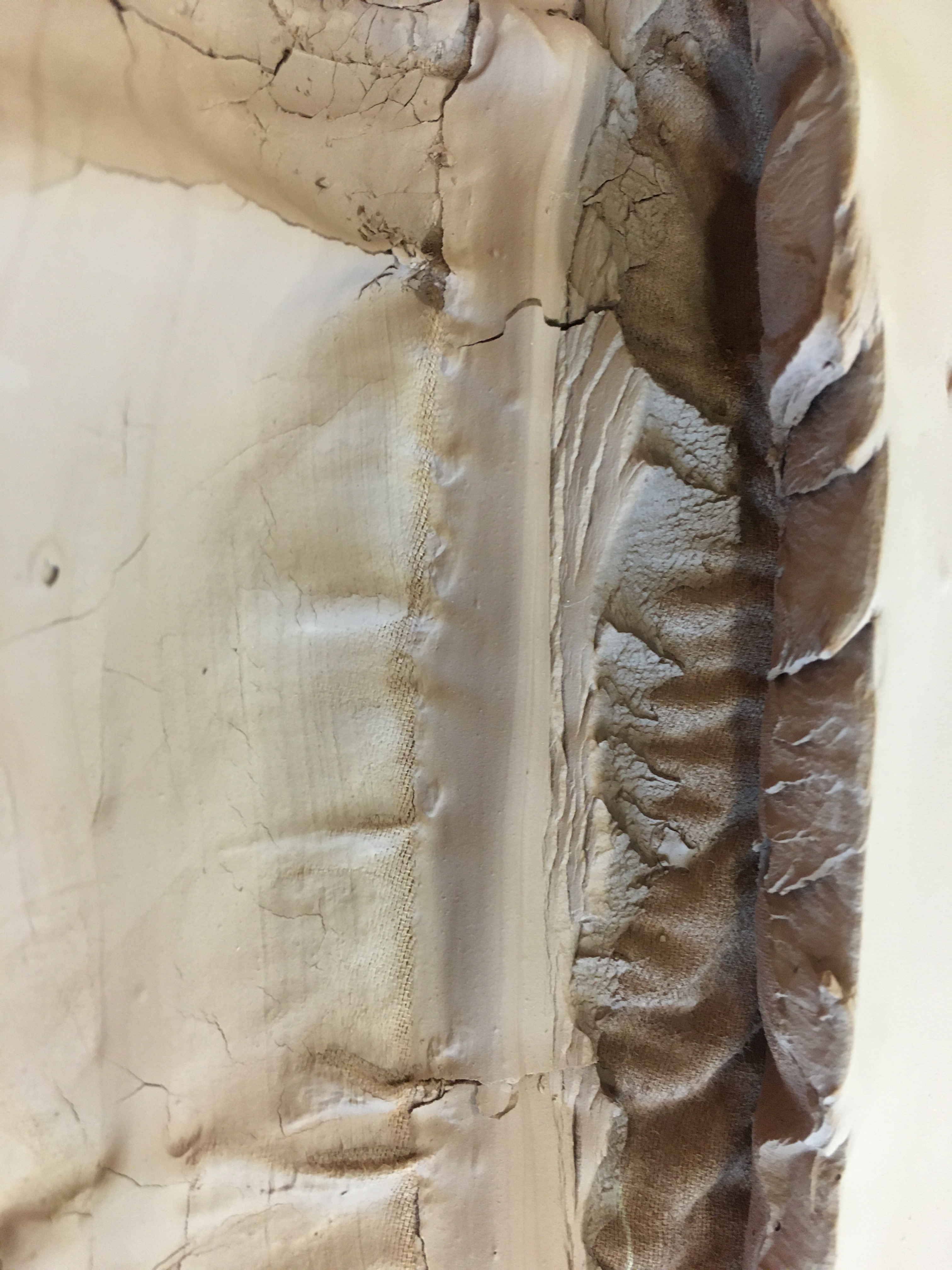
It seems my first crack at “Cracked” did not give me the results I was after.

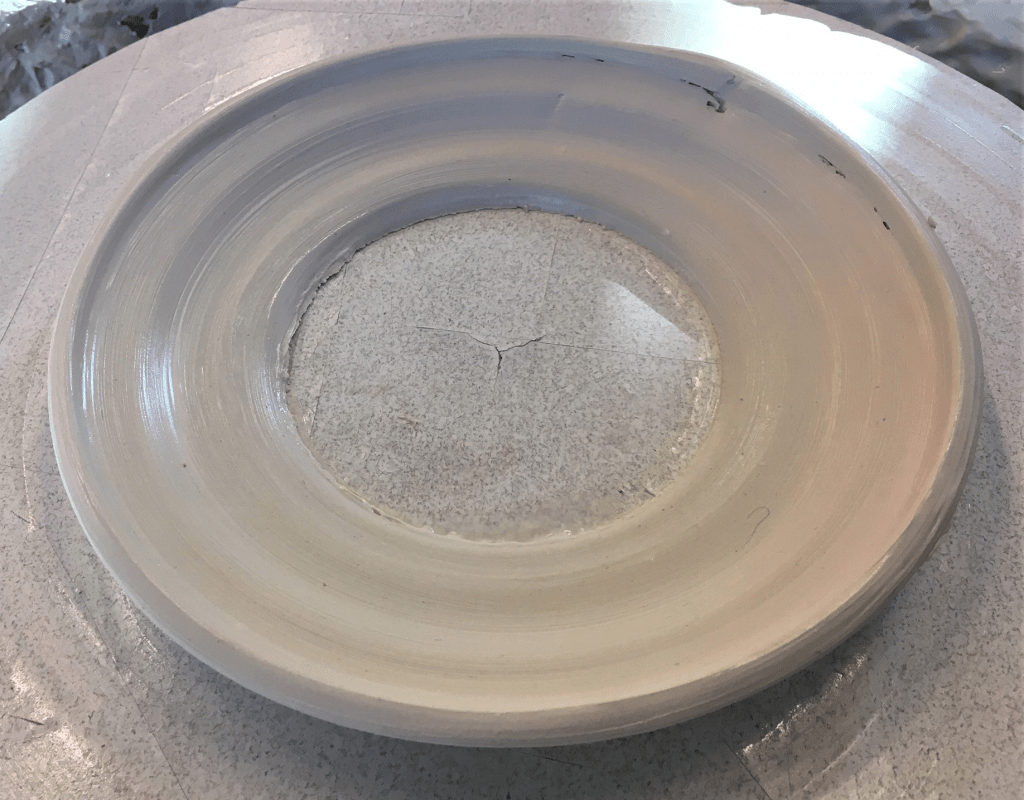
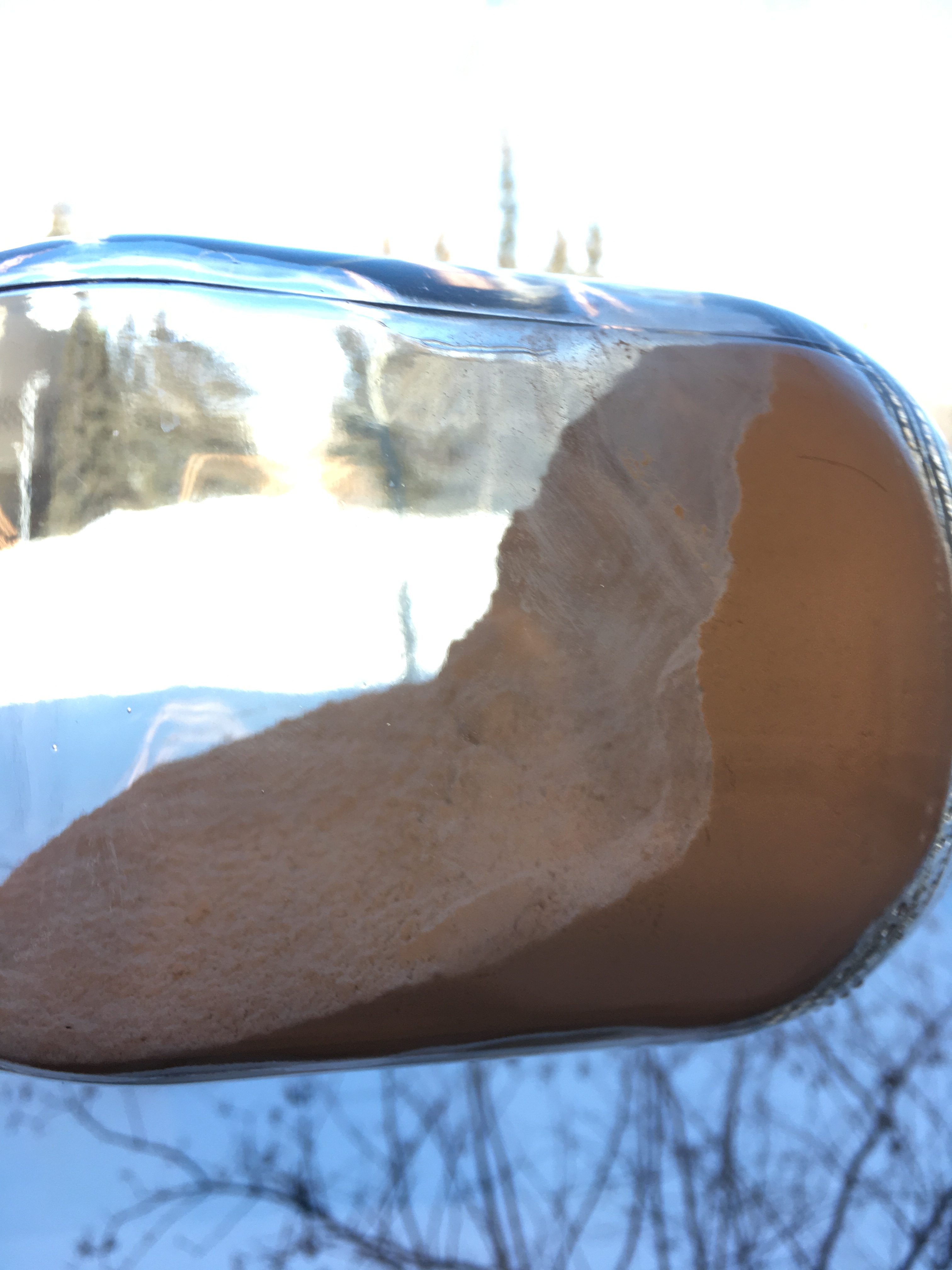
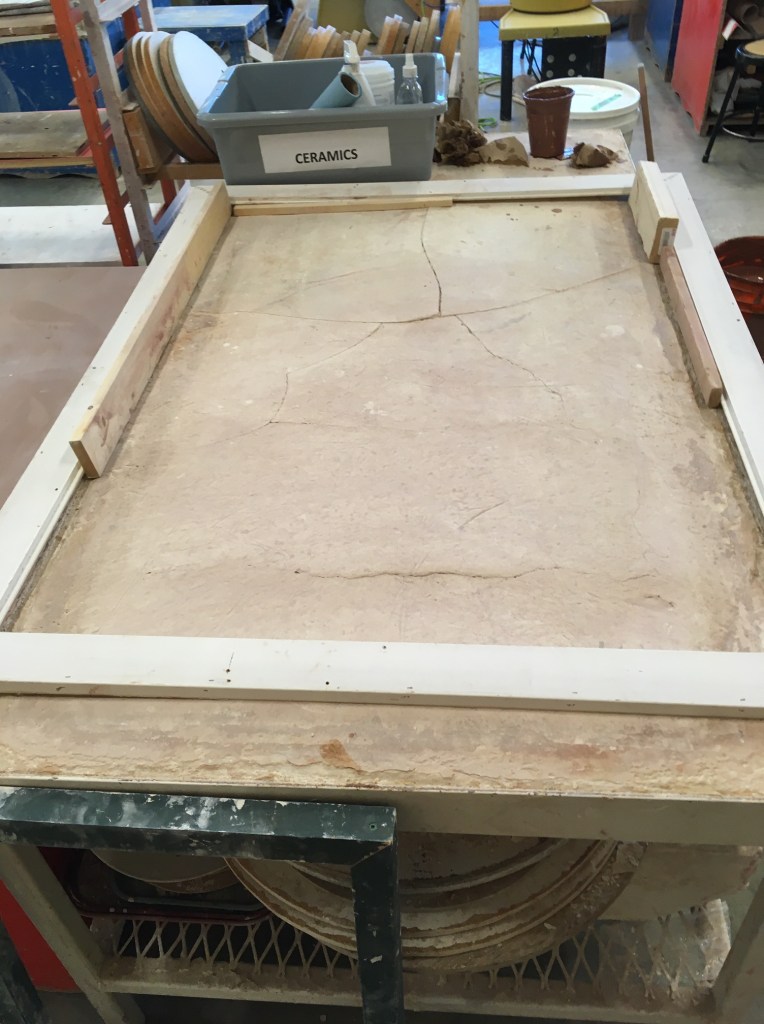
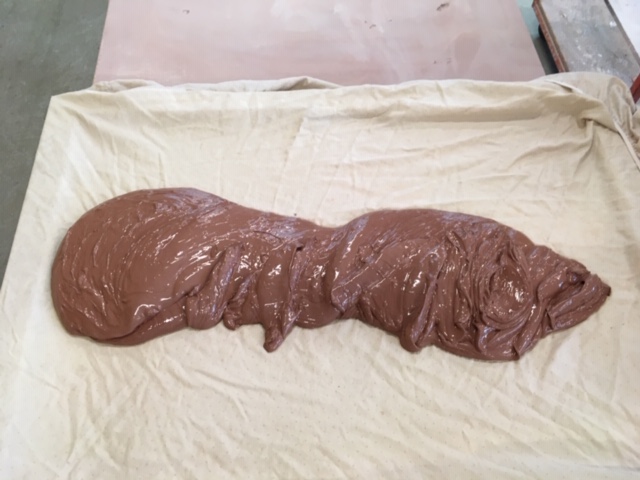
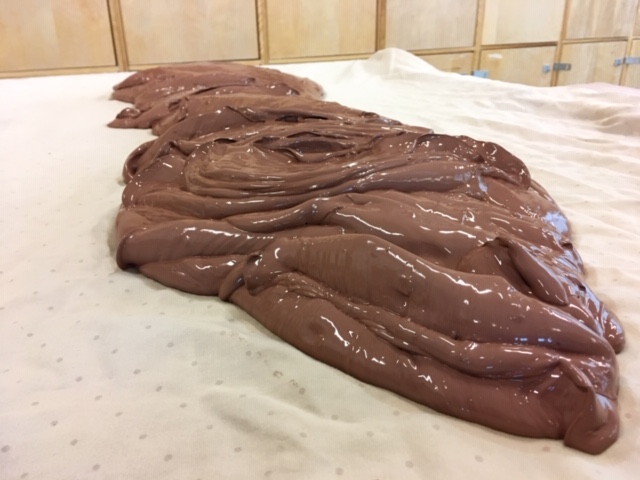
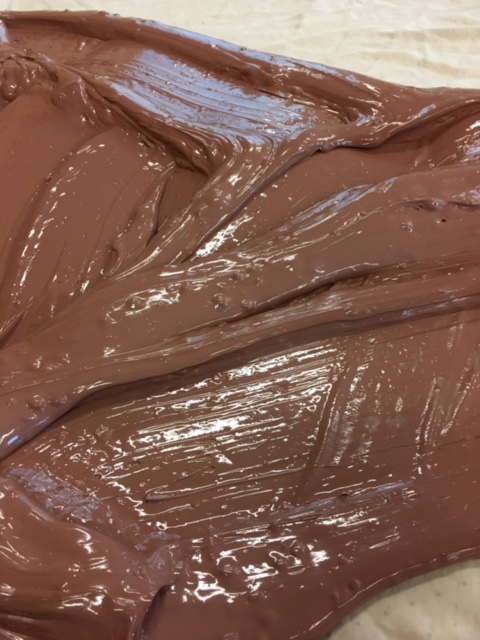
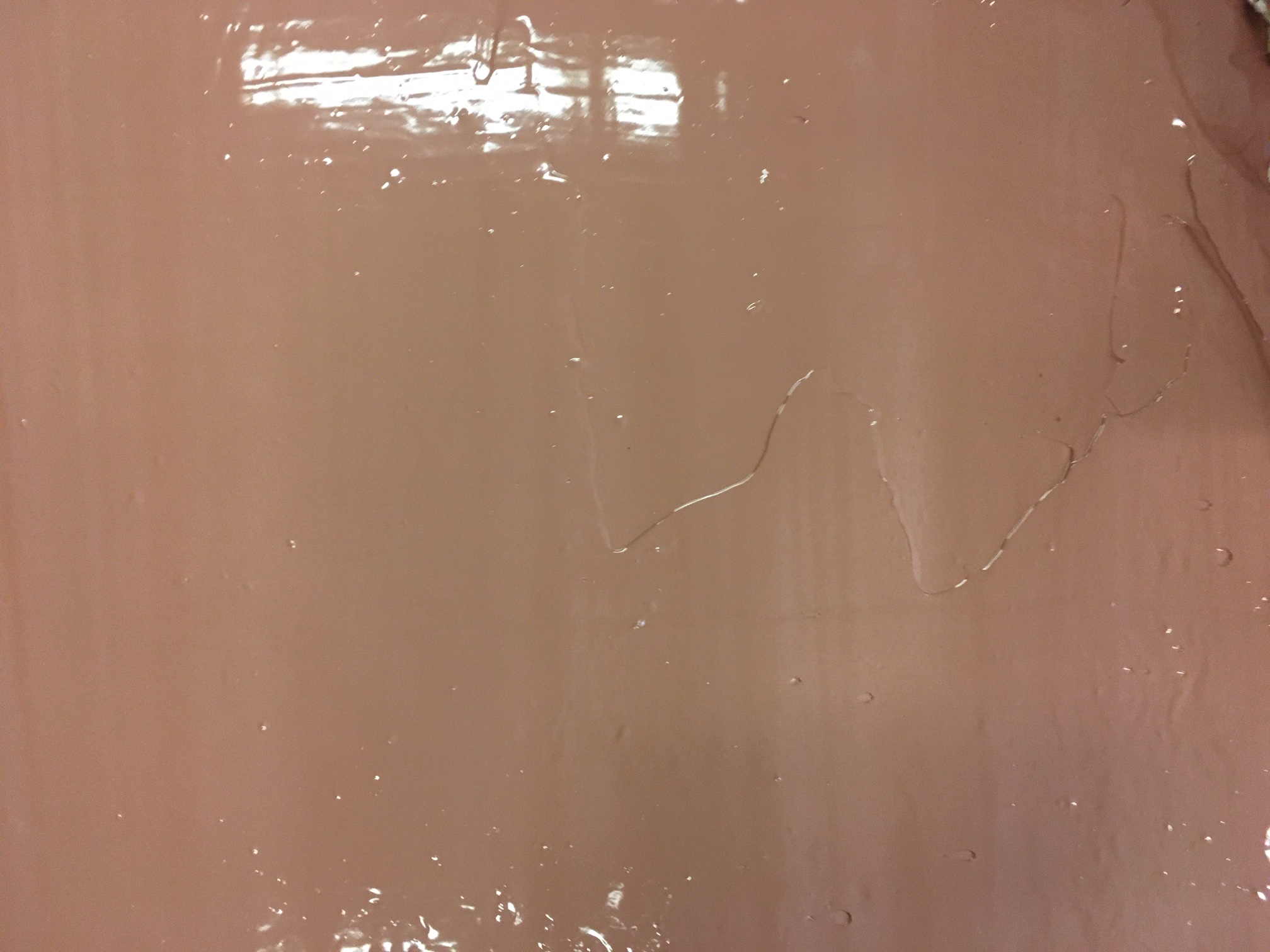
The clay (slip) dried in just a few days. The photos above were taken three and four days after I poured it. I could tell already that things were likely not going to work out well, but I left it to dry further, hoping more cracks would form.
By day eight I realized it was hopeless. One likely problem was indeed the sheet under the clay providing too much structural support. I think the clay was too thin, too. Perhaps having two or three inches of height would help. Still, I thought a few of the details from this failure were still somehow interesting.

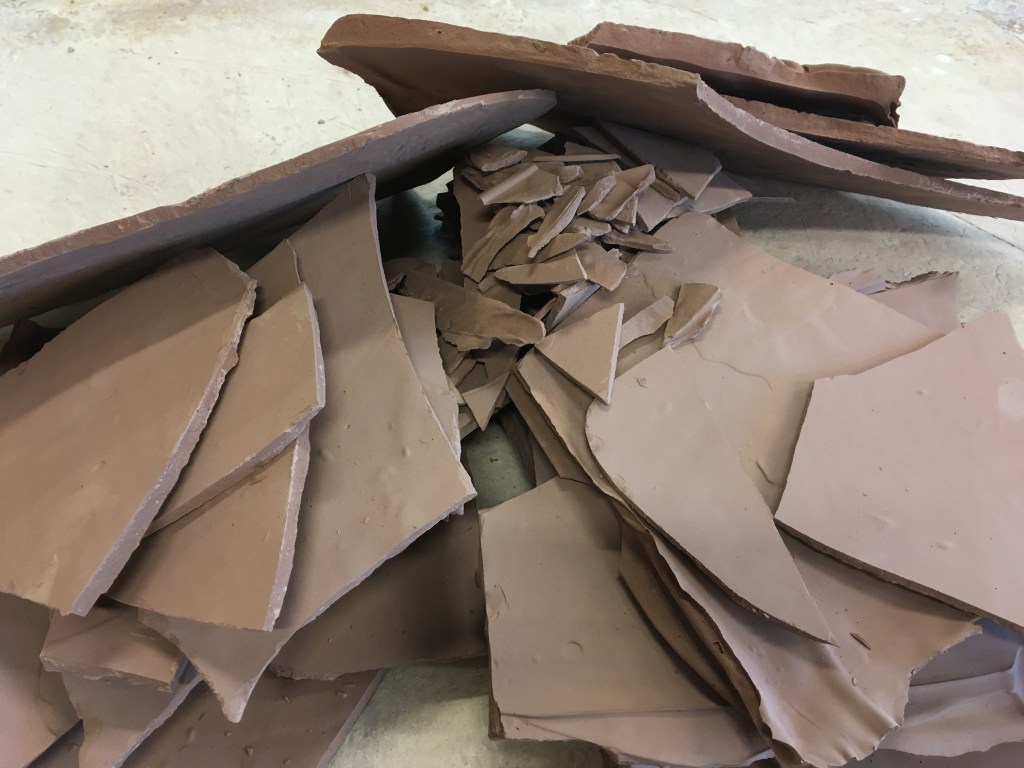
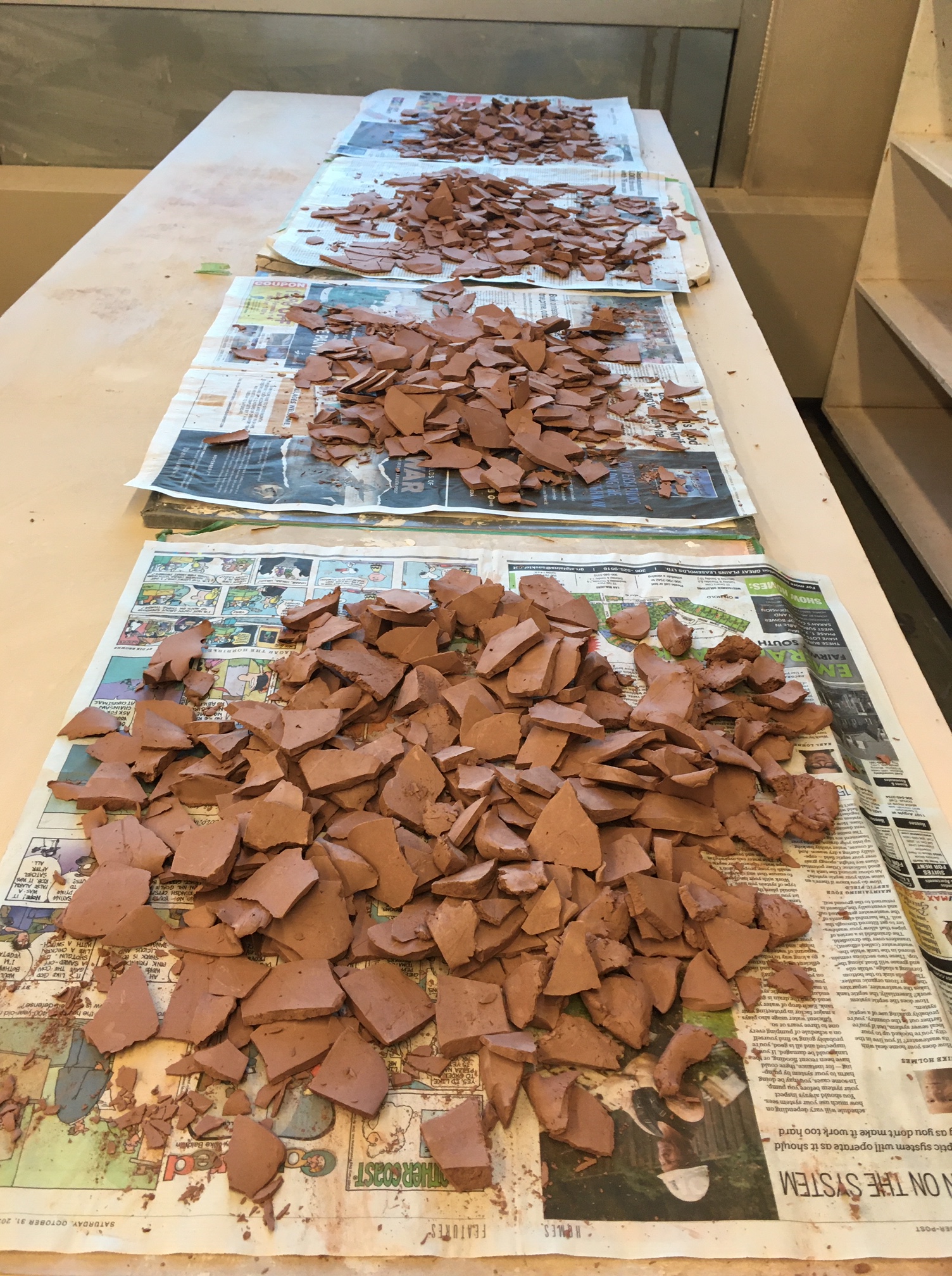
Other students needed the drying table, and no plate-sized pieces of cracked clay were miraculously forming, so it was time to break this mess up.

Milk chocolate, anyone? Maybe for April Fools day?

I suppose I could simply crack the clay into the shapes I want rather than waiting for it to crack into pieces by itself… Somehow, I’d rather have this process happen naturally, or as naturally as I can get it to happen.

It’s now slaked down in a pail of water again, waiting for it’s next act. I’ve been waiting for warmer weather — I have a half a cubic metre of brick sand in my back yard that’s been frozen solid lately. It’s supposed to get up to seven degrees in a couple of days … a world away from the -40 we’ve been at … and I plan to take a few shovelfuls of it to the studio. I’ll lay out a smaller area, put down the sheet, add an inch of sand, pour two inches of slip, and then wait for evaporation to do its trick. Again, I’m not too optimistic. I’ve been realizing I may need to wait for summer (also Ruth’s thought) for when I don’t need to try to mimic the conditions of the outdoors. Sun, wind, and an earthen surface that doesn’t absorb and hold all the moisture may need to be in my toolbox.

Meanwhile, I may also experiment with throwing plates on the wheel that end up with the dreaded “S-crack” – the crack in the centre of a poorly thrown or poorly dried plate that is a potter’s bane. This time, I’d put one there intentionally. I’ll see if this idea can take me anywhere for the time being, while summer is still a ways away.

dust update 1: failure, of course

My first attempt at constructing a plate out of porcelain dust has failed, unsurprisingly.

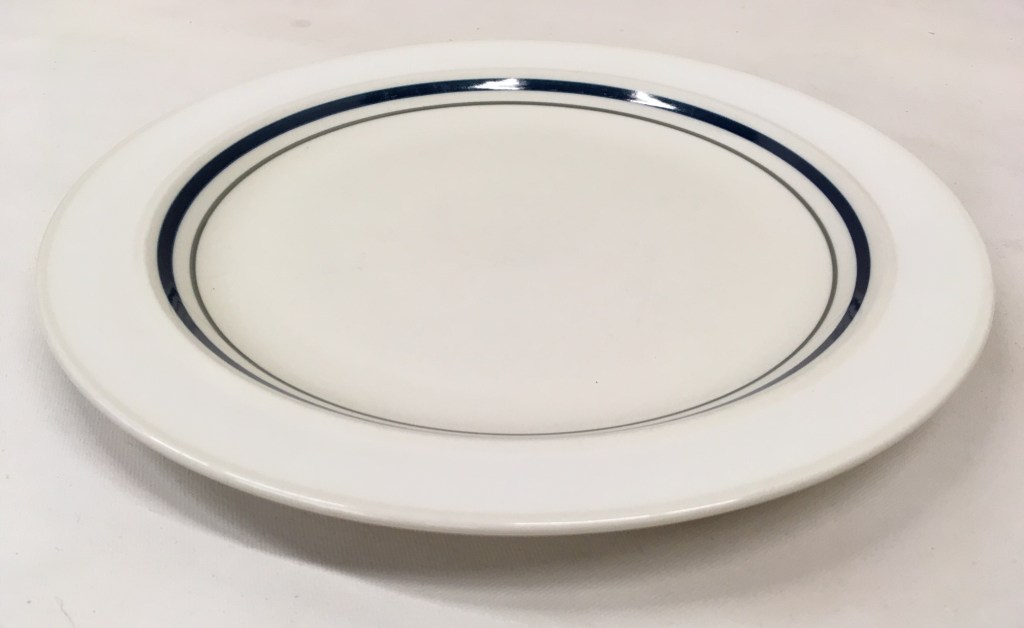
I threw a sort of press-mold to use for this project a few days ago. The form of the mold is of the space that exists between the bottom of a plate and the surface it rests on. I used one of my grandparents’ plates to create the form. The idea I have is that I would compress the powdered porcelain I’ve made onto this press-mold. Ideally, I’d not have to fire the mold, so it could be recycled once I’m finished with it.

Creating this mold was much harder to do than I’d anticipated. Throwing a ring of clay the exact form of the bottom side of a plate is tricky. Of course, pressing the plate itself onto the ring of wet clay to get this form creates a suction … meaning that it’s nearly impossible to remove the plate without ruining the mold. It took a lot of fussing, and the result wasn’t great, but I figured it would serve well enough to tell me if this approach to making the dust plate would work.

I sliced this in half while it was wet, and then left it to dry. When I checked on it yesterday, I was disappointed to see that it was drying in such a way that the two halves no longer aligned seamlessly… this was problem A I’ve encountered thus far.

Today, I excitedly went into the studio to test it out. I figured that I could fire the mold if necessary to press the dust down firmly enough, but before doing so, I should play around with the it on the mold to see how they get along. They didn’t get along well, or to be more accurate, they got along too well. The porcelain dust stuck onto the mold (not much of a surprise) to the extent that it was 100% impossible to move the mold out from under it. Problem B.

My next step is going to be building a plaster mold of my model plate. I’m not sure how I’ll get a mold that can come apart into at least two different pieces, but I’m ready to learn. Maybe things will work better if I have a complete mold with pieces that align properly, and one that I can add something to in order to make it slippery. Wetting the porcelain dust is another trick I have up my sleeve. I hope I get other ideas, as I’m quite sure that neither of these will solve the problem.

I really don’t know at this point if I’ll be able to achieve creating a dust plate at all this term (or ever). I’m not going to give up, but after thinking about this project for a few weeks, now, after handling it physically, I realize how difficult it is going to be. If it weren’t for the success I had with the Saskatchewan Glacier cups, I probably wouldn’t be taking this risk. I can still hear the ceramics technician telling me that what I wanted to do with those porcelain snowflakes was impossible. Well, if I did the impossible once, maybe I’ll find a way to do it again. Or maybe not.

dust

There must be very few if any alive today who remember the Dust Bowl of the Dirty Thirties. It really wasn’t that long ago, even though looking at photos from that time make it seem so.

The drought of the Dirty Thirties caused the suffering of millions was a largely man-made event. Ninety years later, we are likely not going to hang dead snakes belly-up as way to put an end to drought any longer (see “Fact 9” in “25+ Mind-blowing Facts about the Dust Bowl that Happened in the 1930s“), but that doesn’t mean we’ve made much progress in learning how to stop causing it in the first place. In fact, here in Canada, we’ve undone a lot of the environmental protection support systems meant to protect us, a few which were created following the 30s. According to Marc Fawcett-Atkinson writing for Yorkton This Week in “A 1930s-era federal agency helped farms recover from an ecological crisis: It’s time for a replacement, advocates say”:

“The crisis [of the Dirty Thirties] led the federal government to create the Prairie Farm Rehabilitation Administration (PFRA), an institution that brought together agricultural researchers, engineers, and extension (community outreach) staff to help farmers use their land sustainably — a sort of Medicare for farms. “It became a body of expertise and understanding of grassland ecosystems, and grazing relationships, and biodiversity. In more recent years they were really looking into how the pasture land sequestered carbon,” said Cathy Holtslander, director of research and policy at the National Farmers Union. The PFRA endured for the next 77 years, helping Prairie farmers deal with water supply issues, develop drought and flood resilience plans, diversify their crops, and farm sustainably. Researchers with the organization also restored failed farmland into ecologically vibrant grasslands and offered free tree seedlings to farmers who supported native pollinators, slowed wind erosion, and captured carbon. “These were (among the) federal government’s positive contributions to the public good that people really valued. It was a living, concrete argument for public interest investment in people’s lives,” she said. The organization was dismantled by Stephen Harper’s Conservative government in 2013.”

Drought is going to be one of the most serious consequences of climate change that this region of Canada experiences. It’s going to get dusty.

I’ve had an interest in dust for a long time. My research paper for my MA in English (2005) was titled “‘On every new thing there lies already the shadow of annihilation’: The Fragment and Photography in W. G. Sebald’s Fiction.” Sebald is one of my favourite writers, and dust, a type of fragment, plays a major role in his books. This is most clearly displayed in the character of a painter, Ferber, in The Emigrants. Ferber’s relationship with dust is described as follows:

Since he applied the paint thickly, and then repeatedly scratched it off the canvas as his work progressed, the floor was covered with a largely hardened and encrusted deposit of droppings, mixed with coal dust, several centimeters thick at the centre and thinning out towards the outer edges, in places resembling the flow of lava. This, said Ferber, was the true product of his continuing endeavours and the most palpable proof of his failure. It had always been of the greatest importance to him, Ferber once remarked casually, […] that nothing further should be added [to the studio] but the debris generated by painting and the dust that continually fell and which, as he was coming to realize, he loved more than anything else in the world. There was nothing he found so unbearable as a well-dusted house, and he never felt more at home than in places where things remained undisturbed, muted under the grey, velvety sinter left when matter dissolved, little by little, into nothingness. (161-62)

The Emigrants. New Directions, 1997.

About this citation, I wrote that “Ferber’s ‘lava,’ ‘debris’ and ‘dust’ are clear examples of the type of physical fragment that Sebald pays special attention to in each of his books: similar to Dakyns’ office landscape of shards of written information, the remains of a charcoal drawing which is constantly erased form a collection of individual pieces of debris and dust that ultimately harden and form a different type of ‘whole’ – an encrustation of a previous fragmentation – that is also a constant reminder of an act of destruction. That this debris and dust is the ‘true product of his continuing endeavours and the most palpable proof of his failure,’ explains why Ferber’s studio interested Sebald’s narrator – he had come across another person who was so closely engrossed in the process of matter’s breakdown ‘into nothingness’ and the material remains of ruination.”

In this paper I wrote nearly 16 years ago, I was grappling with the philosophical questions of what makes a whole vs. what is a fragment, and what is artistic creation vs. destruction or failure. (All of this past study of mine was part of why I nodded when Larissa Tiggeler’s asked me if “failure” was a subject of my own work and if “it could be generative” during my End of Semester Review last term). Drought and climate change were no where on my mind back then. Now, I’ve returned to pondering dust, but more as a way of imagining what will likely be our future here on this prairie. Still, I think it’s time I refresh my memory of Sebald as well as of a few of the books in my research paper’s works cited page, including Simon Critchley’s Very Little… Almost Nothing: Death, Philosophy, Literature. I feel like there is likely something connecting this work I did in my MA and the work I’m doing now for my MFA. I also wonder what it’ll be like to reread these texts with a climate change lens.

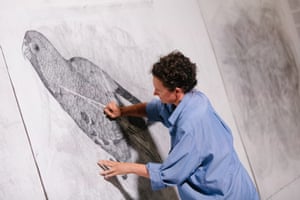
As an aside, I came across this project by Lucienne Rickard in The Guardian three weeks ago: “‘I almost cracked’: 16-month artistic performance of mass extinction comes to a close

Lucienne Rickard erases the swift parrot.

Rickard used 187 pencils and 25 erasers to create and then erase 38 drawings of endangered species.

Rickard went through 25 erasers and 187 pencils during the project.

This image from the article instantly reminded me of Sebald’s description of Ferber’s studio

No photo description available.

and of the porcelain snowflakes of “Saskatchewan Glacier” that collected on the floor of the Fifth Parallel Gallery.

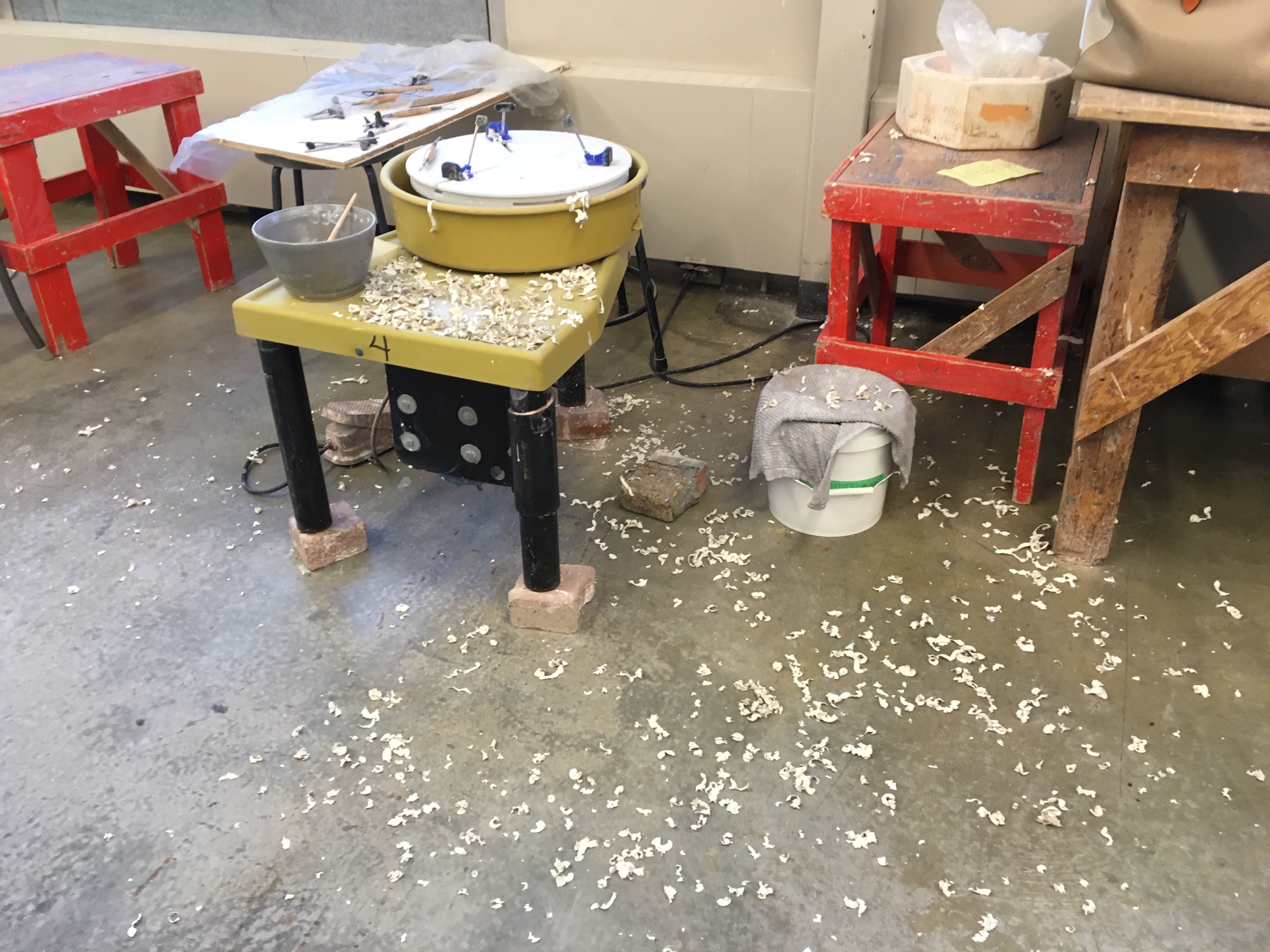
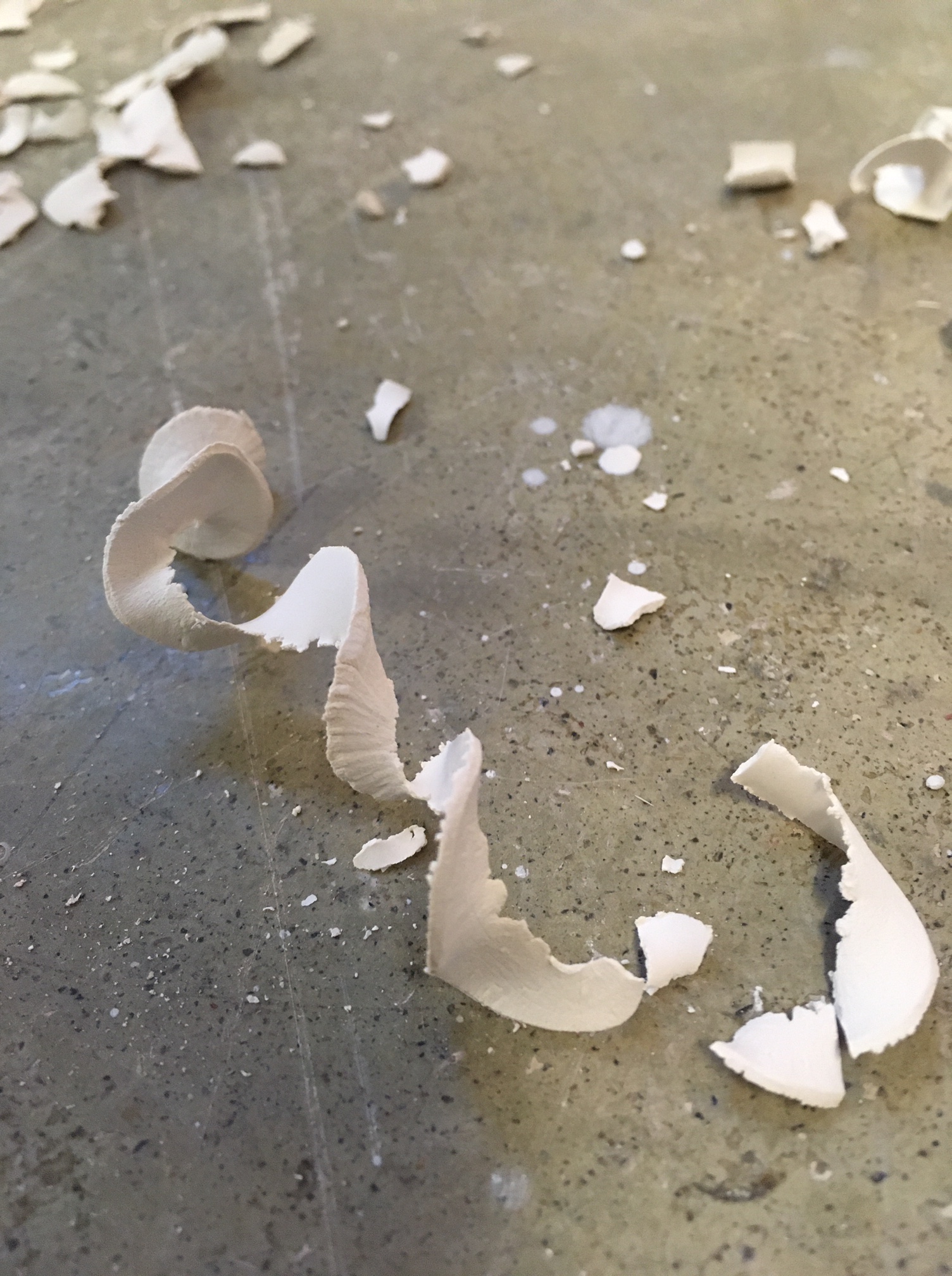
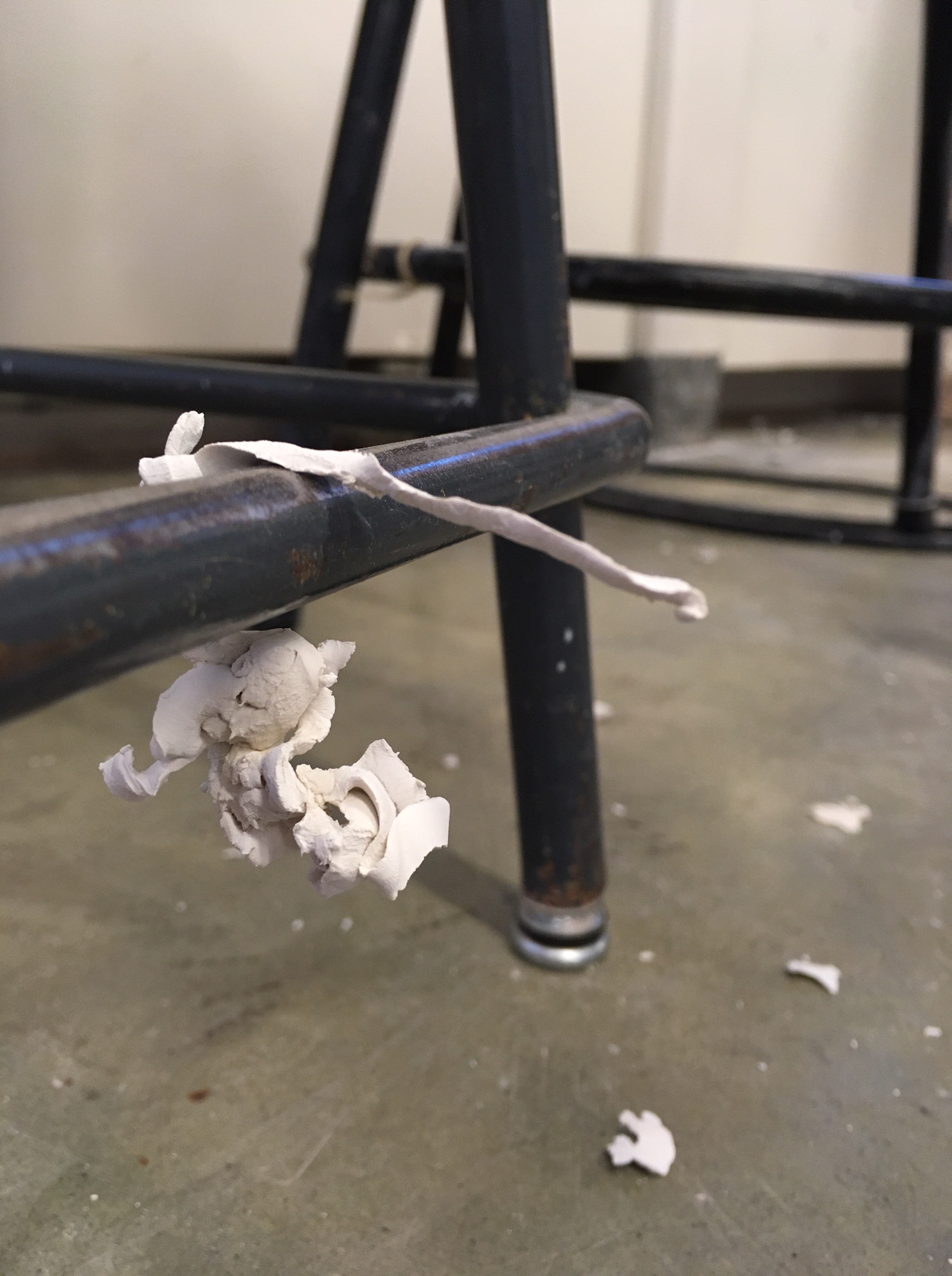
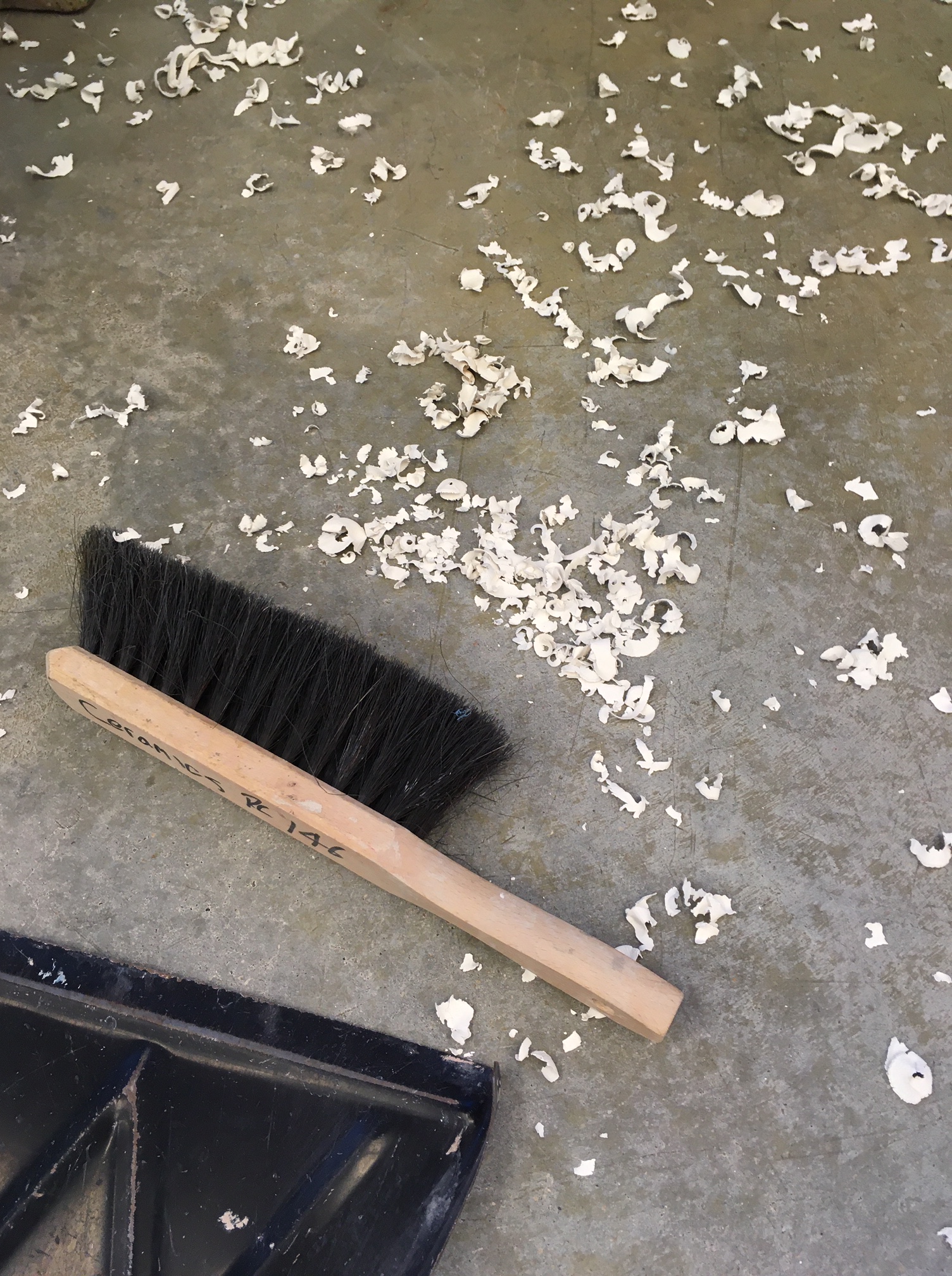
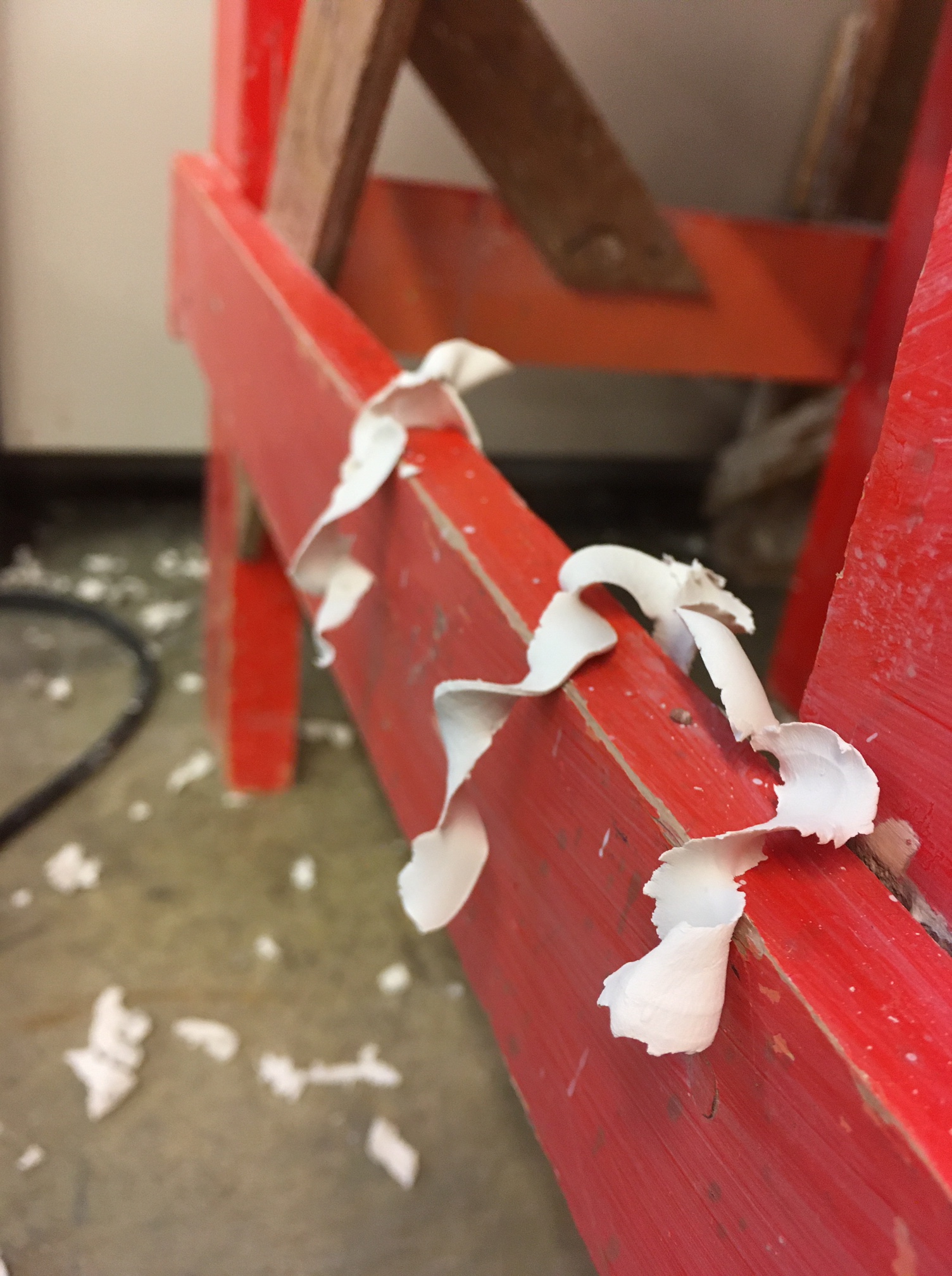
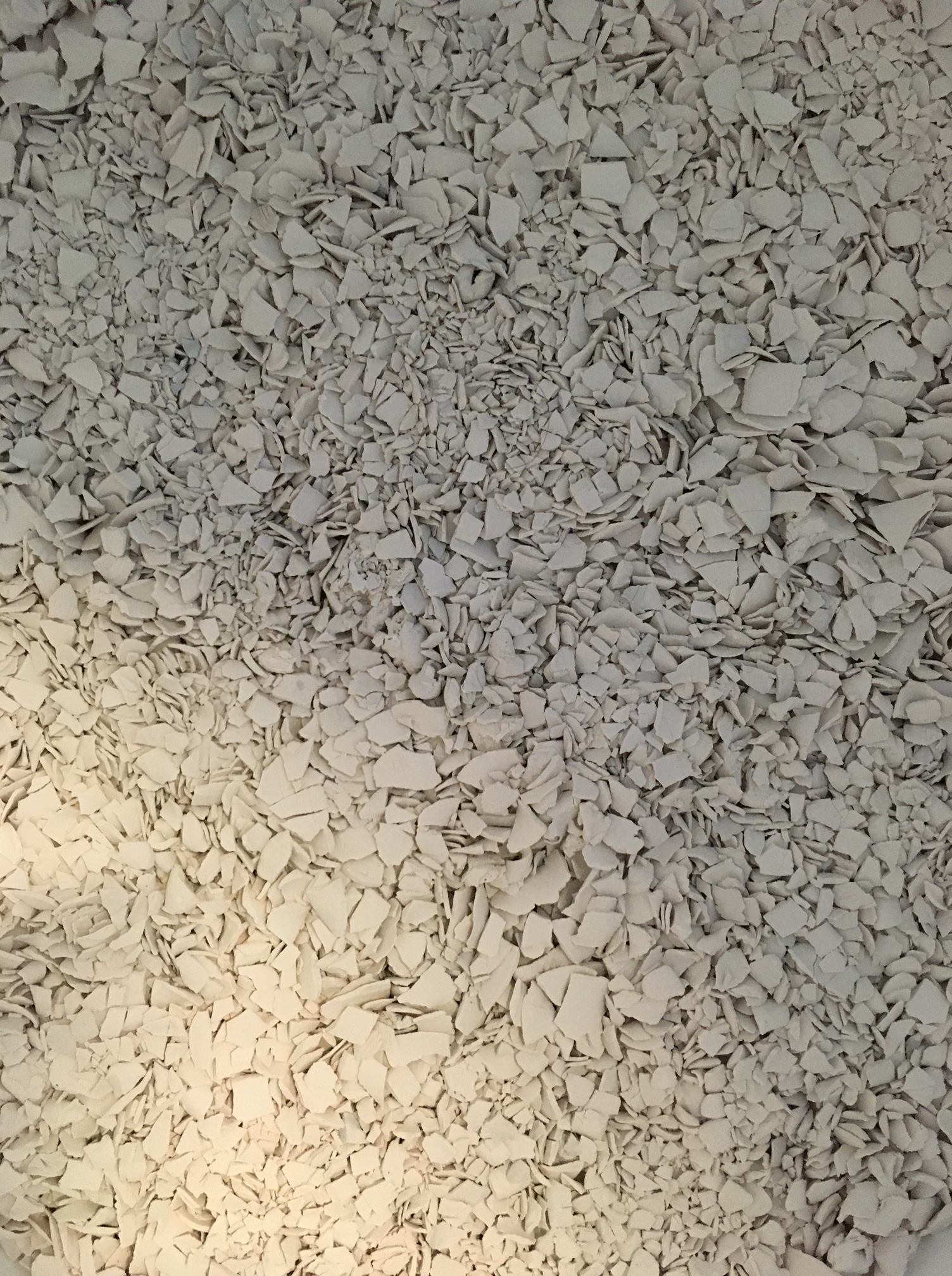
I’ve started out with a stroke of luck — I happened to be in the ceramics classroom the other day when a fellow ceramics student was trimming her pots made out of my favourite porcelain, “Polar Ice.” I asked if she’d be sweeping up the refuse to slake down and reuse, sure that her answer would be affirmative. She told me that she actually doesn’t have the time to go through that process, so she throws these scraps in the garbage. (Insert wide-eyed emoji showing shock). Of course I quickly volunteered to clean up her “mess” so that I could use these fragments for this project. How serendipitous! Not only can I now rest assured that this precious porcelain material wasn’t wasted nor mined in England and transported here for me, but I also enjoyed the process of reclaiming it from the floor and surrounding furniture, gently sweeping up the smaller pieces and lifting the larger ones carefully by hand. I felt like a mushroom hunter or wildflower collector who’d stumbled upon the finding of a lifetime.

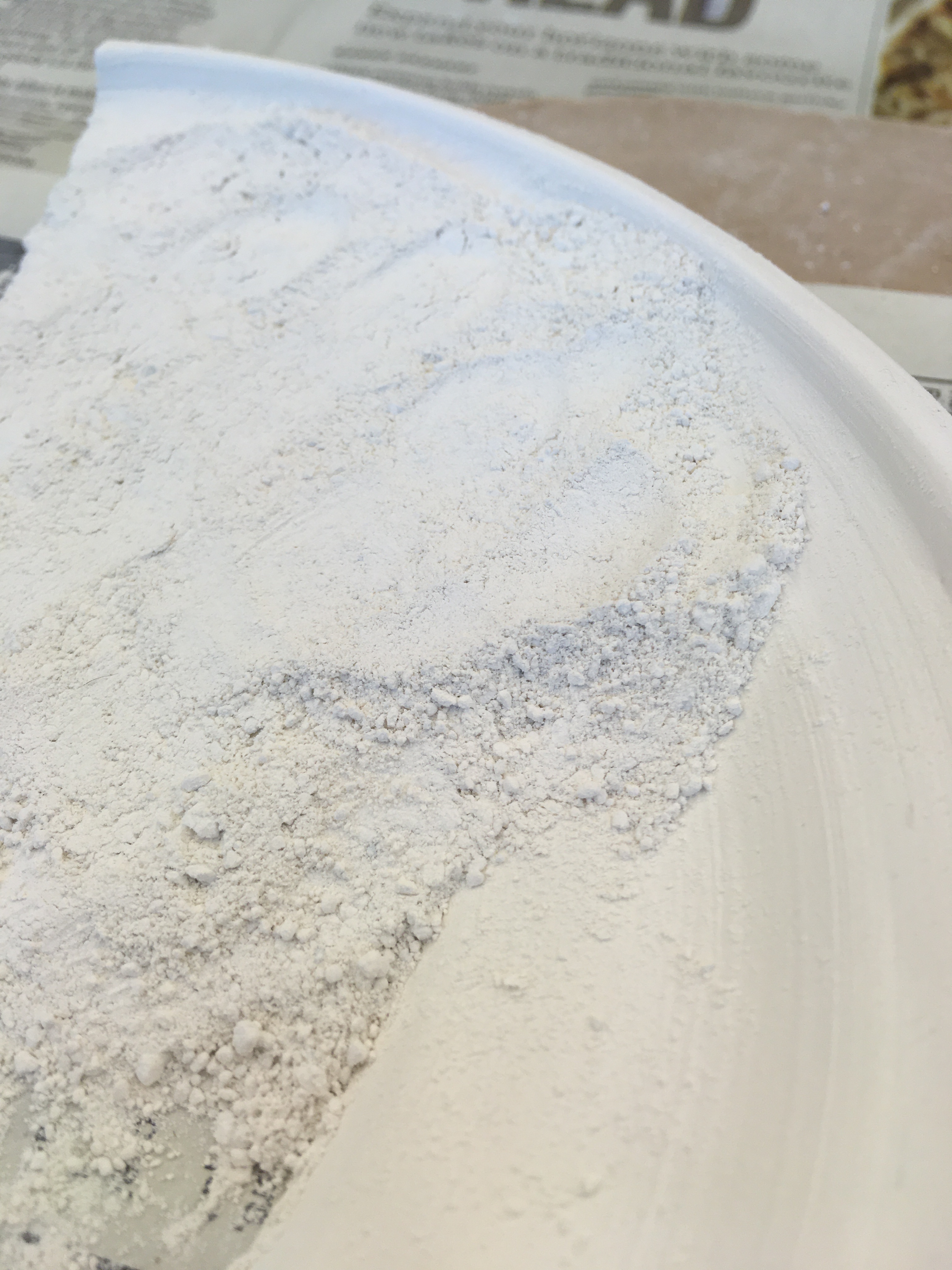
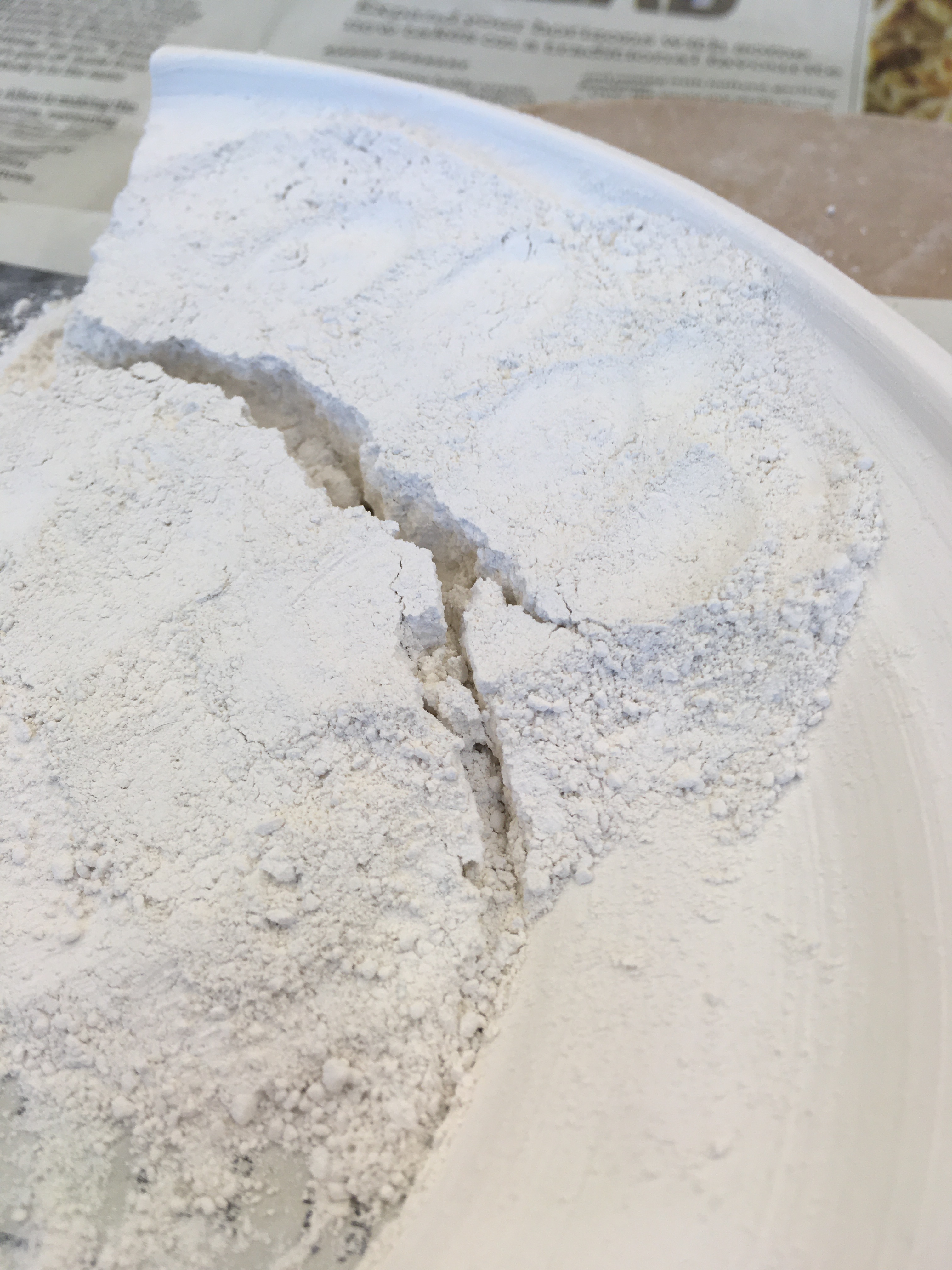
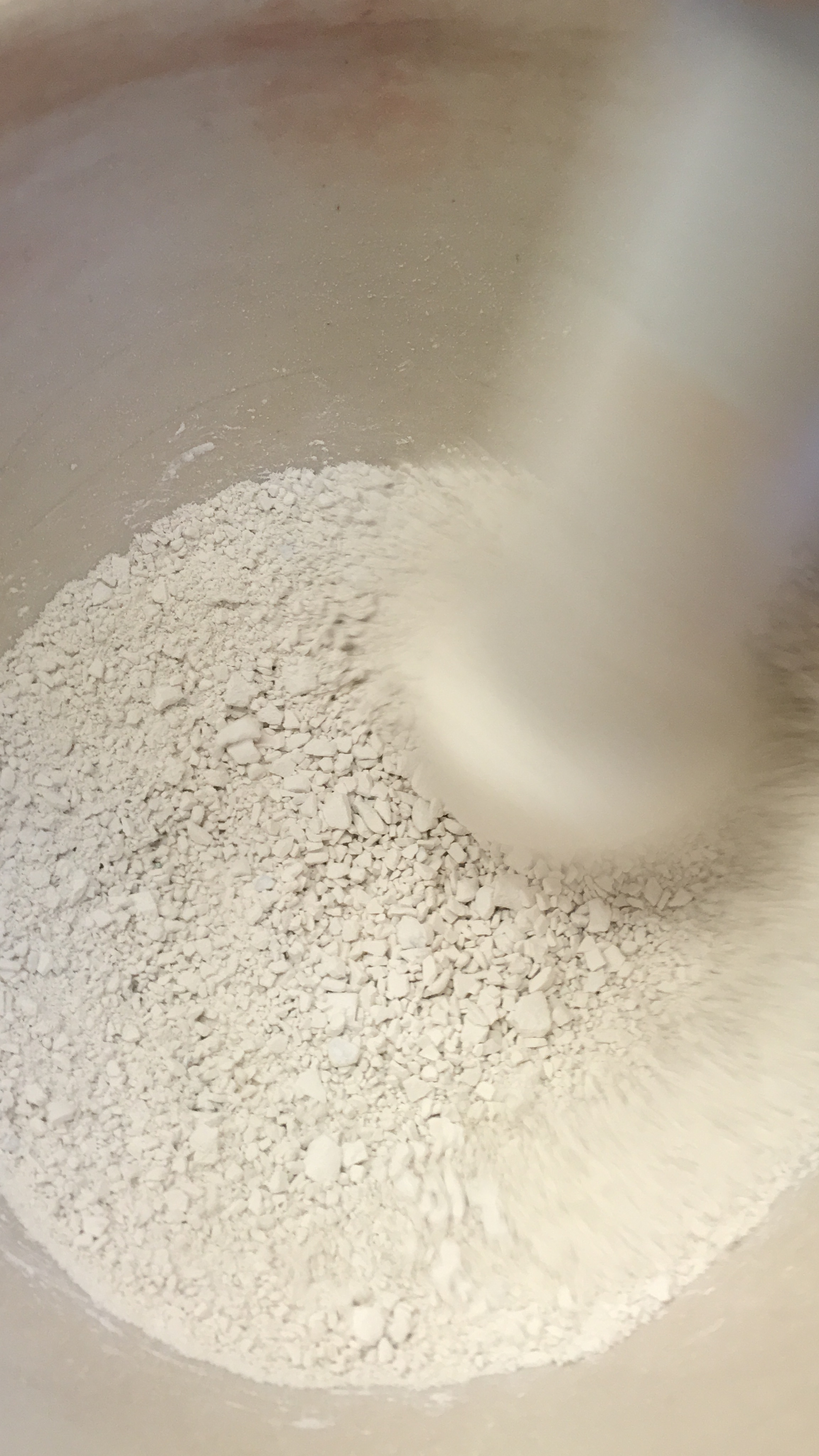
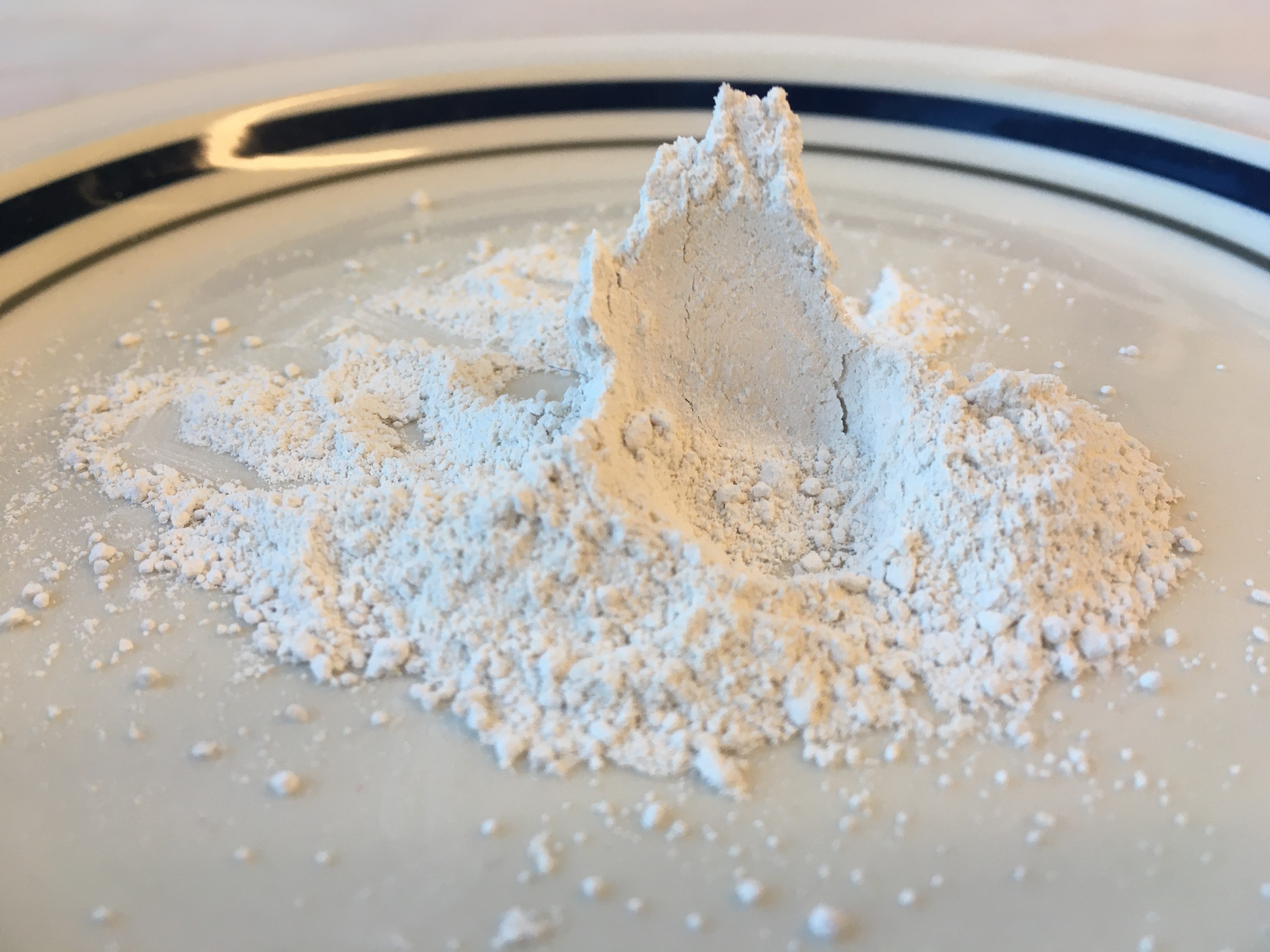
Once collected in my basket (five gallon pail), I first crushed the pieces using a heavy brick and then, in very small batches, went at them with a mortar and pestle until I had a fine porcelain “dust.”

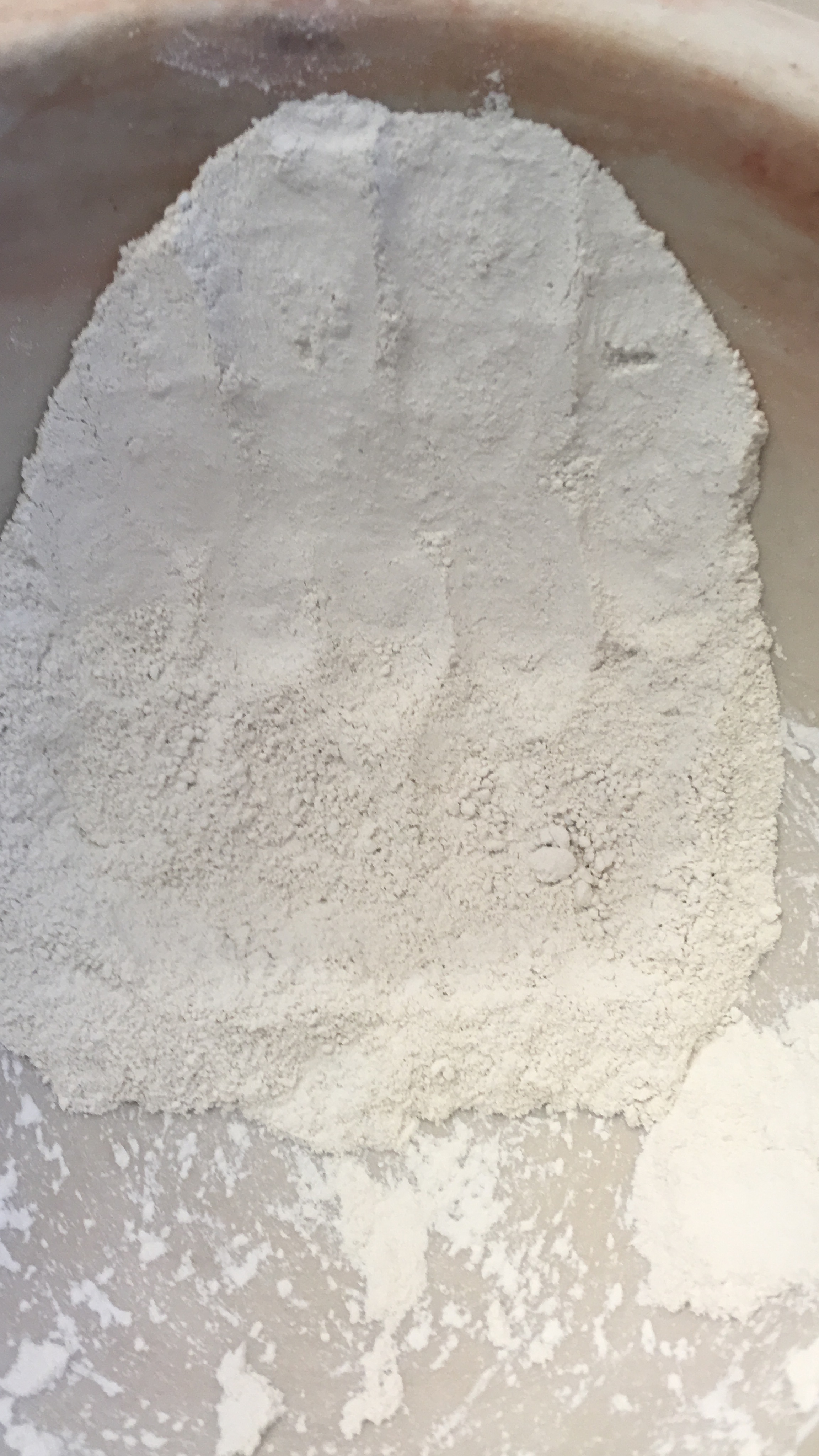
I am so pleased that this fine dust has some structural integrity to it when pinched or pressed, as you can sort of make out in the photos below. This leaves me cautiously optimistic that my plan may succeed.

Next step is to make a press mold of this plate (which was my maternal grandmother’s)…

… and then, well, I have no idea how I’ll accomplish this, but I hope to end up with a plate made up of exclusively porcelain dust that I can then blow away.

Of course, I know this isn’t real dust — it’s not collected from drought-ridden farmers’ fields, composed of soil and atmospheric particles, nor is it contemporary household dust, comprised of pollution and dead skin cells. (Real dust these days says much about our lifestyle, often composed of microscopic plastics, traces of metals such as lead, and known carcinogens such as polychlorinated biphenyls (PCBs)). Still, I’ll call this porcelain power “dust,” and it’ll do the trick for the metaphor I’m working with here. After all, plates are often made of porcelain, and plates are used to hold food. Food is hard to grow during a drought.

prairies — agriculture — food —> plates <— dust — hunger — drought

Group Studio Arts and Culture Journal, entry 2: Whitney Museum of American Art: “Art History From Home: Making Knowing.”

On Feb. 4 2021, I “attended” (watched) a program put on by the Whitney Museum of American Art: “Art History From Home: Making Knowing.”

The objective of the talk was to:

“Explore how artists have used the materials, methods, and strategies of craft to challenge the power structures that determine artistic value and reclaim visual languages that have typically been coded as feminine, domestic, or vernacular. Some expand techniques with long histories, such as weaving, sewing, or pottery, while others experiment with textiles, thread, clay, beads, and glass, among other mediums. Featured artists include Mike Kelley, Miriam Schapiro, Marie Watt, and LaToya Ruby Frazier.”

The speaker was Grant Johnson, and this is his bio that accompanied the event post on Facebook:

“Grant Johnson is a Ph.D. candidate in the department of art history at the University of Southern California and a Joan Tisch Teaching Fellow at the Whitney. His dissertation, Sheila Hicks: Weaving to the World, traces the first critical history of the prolific American artist, weaver, and pioneer of global contemporary art. An active curator, critic, and writer, he has published work in Artforum, Frieze, The Brooklyn Rail, Garage, and Performa magazine, where he was a writer-in-residence from 2012 to 2014.”

I’ll quote from and summarize Johnson’s analysis of three of the works he showed during this talk, and I’ll respond to what he said by considering my own practice alongside the points he made. All quotations below are as direct (word for word) as I could type up while he was speaking.

Showing an image of a quilt by Rosie Lee Tompkins, Johnson made the comment that “craft is an opportunity for understanding ourselves in a larger world, in the way that the squares are pieced together in the cover quilt by Tompkins.” I find this idea beautiful: that for craft artists, craft-making provides a way to reflect on our own life and relation to others/the world. Not only through spending time on often monotonous and repetitive motions can craft artists have this space for reflection, but there is also something taking place in the action of making physical connections (between pieces of cloth, here) itself that somehow helps us elucify the non-physical connections that also make up a life. At least, this is what I thought about as I heard Johnson talk about Tompkins’ work.

The next piece he showed was a painting by Charles Sheeler — “Interior” 1926. I’m afraid I can’t find a colour image of it that I’m able to copy, so here it is in black and white:

Johnson described how “decorative arts have often been at the core of how we define American art – iconographic, material culture, one that doesn’t come from the so-called fine arts — but one that comes from craft arts.” By doing a reading of this painting, he showed us the place that handmade, “craft” objects have indeed long held in what has traditionally been defined as the fine-arts; within this painting which hangs on museum walls is the meticulously hand-built wooden table in the foreground; the ceramic pitcher and plate; the rugs and quilt that adorn the room.

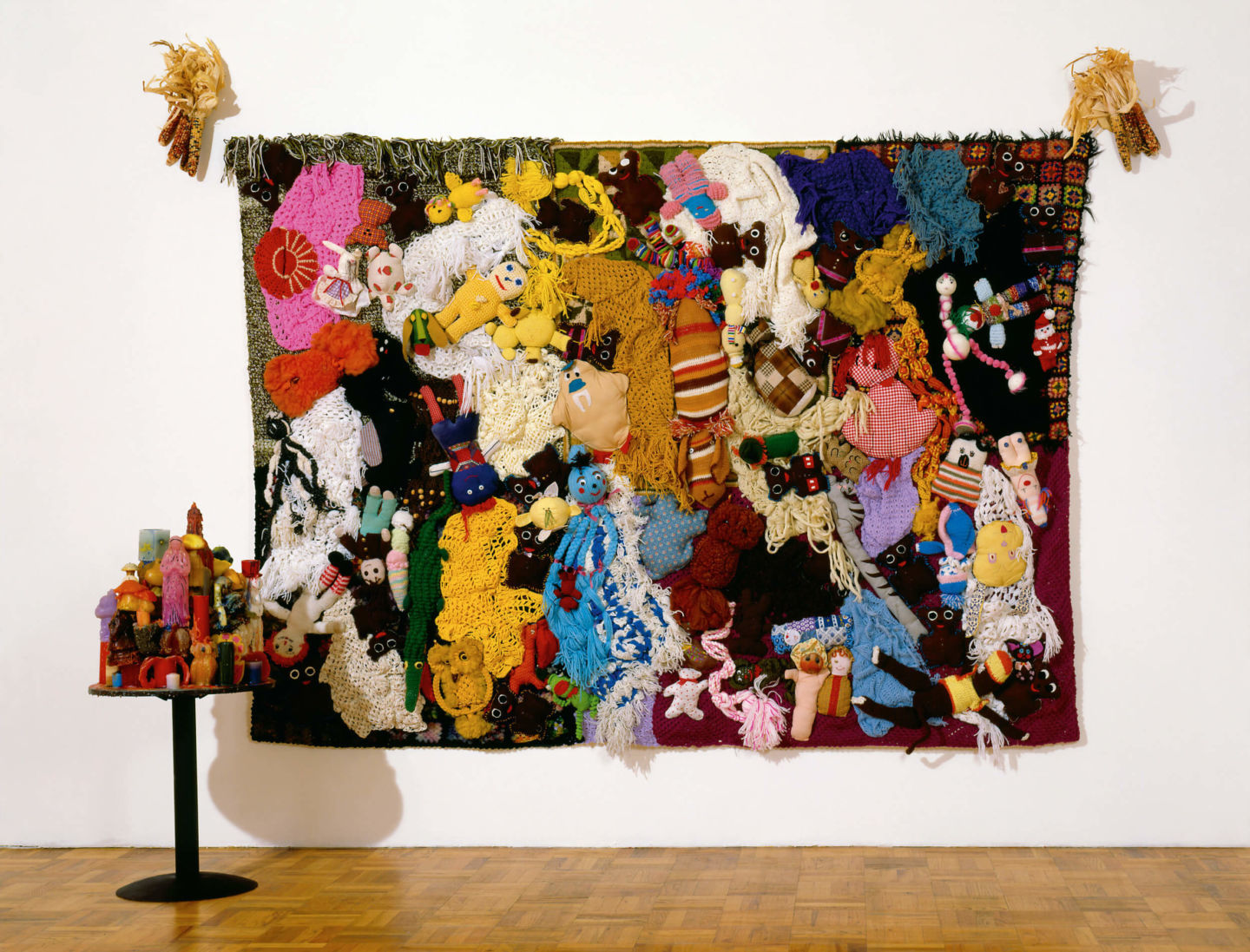
Another work that Johnson talked about is Mike Kelley’s More Love Hours that Can Ever Be Repaid and The Wages of Sin 1987:

Installation view, Rosamund Felsen, Los Angeles, 1987.
image source

I especially appreciated listening to what Johnson had to say about this work. Forgive the long quotation, but I’d like to keep a record of this here so I can return to it and think with it again and again:

“There’s a value and a psychological weight and a kind of index in them of a gift and emotional economy (the love hours) but then also the aspect of trauma of the fact that that is a perpetual debt economy – the love hours will never be repaid in full, there’ll always be a kind of inequality there, and maybe also partially for Kelley to put them into an art object had to be found in a discarded context (good will store, Salvation Army) blankets, stuffed animal, clothing, thing that indicate a life previous to being in this context. You can tell that this is an original object, not something made in a factory – each one of these objects represents some real human individual life and a kind of investment we put into our objects, and that also is what the piece moors [?] — the eternal cycling of objects, material, things, that really does lead us to a melancholic place, especially if we think or question the ecological crisis and sustainability that have become more ever-present in everyone’s mind. In case anyone decides to question this further, the candles on the left-hand side and the corn husks on the corners sort of cue us into the idea that this is a ceremonial alter, that it has a religious or spiritual significance, the candle also signifies the kind of things you’d find in a teenager’s bedroom, moody broody spiritual. So there is something playful and ironic happening here that is typical a of Kelley and the 80s moment.”

I was taken in by what Johnson said about is piece because, despite he fact that its content is in most ways very different from the content of my work, I can see a few parallels between between what Kelley was doing here and what I’m attempting to do in my work. I too feel that I put “love hours” into the making of my pieces, and while the pieces themselves are not meant to be gifts to an individual in the way that a handmade teddy bear or a crochet blanket normally is, I’d like to think of them as something close to a gift all the same.

I also appreciate, of course, Johnson’s analysis of how each object in the piece “represents some real human individual life and a kind of investment we put into our objects.” These days, it’s hard to find anything that isn’t factory-made, and we generally have very few physical “investments.” I’m not sure if Johnson was speaking about the melancholy surrounding the loss that comes with no longer having hardly any such objects or the melancholy of the “ecological crisis” that is “ever-present in everyone’s mind” (as a side note: I only wish it were true that this crisis were on everyone’s mind). Maybe I missed something he said here on the melancholy point. I agree that handmade objects signify a return to that level of care and investments for the objects that adorn our lives.

I noted Johnson’s choice of the word “ironic” as the idea of art that works with irony is one that David and I recently chatted about. I definitely see at least a couple levels of irony here. Of course there is that the thrift-store sourced soft objects, usually relegated to the worlds of women and children, are here presented in a rectangle on a gallery wall, and with a title. Then there’s the title itself and the concept it communicates: that these objects represent countless hours of love, only to have been abandoned. Even that which we cherish the most (the love that went into these pieces) isn’t appreciated forever and always. In a sense, this should be devastating for me to consider as an environmentalist. If this Kelley piece shows us that even familial love simply fails to maintain for us the significance of objects for very long, who can expect us to care enough to “repay” our debt to that “mother” (nature) which is so far removed from us that we hardly acknowledge our reliance on it? In the context of environmental preservation, it makes sense that we take what we want and throw away what we no longer need of the planet’s resources — we don’t even maintain an appreciation for the investment that goes into objects our loved ones make for us by hand. Perhaps this is something Johnson was alluding to as well.

One last quotation from what Johnson said:

If you’re not able to get to a museum right now, take this example in mind and turn your attention to works of function, decorative art in your own home and appreciate them in the way you would in a museum. If we saw this as a piece on a white wall in the Whitney, we’d see it as art. What happens when we start to appreciate these arts [craft arts] in that way?

This reminded me of the post I made about my love of clay, and how the few cups, bowls, and plates of my own that I have at home have become more valuable to me in the last year that I have not been producing any new ones. I’m still not sure if I’d call these pieces of mine “art,” but I also wonder if that distinction doesn’t matter much — I can enjoy these objects and value them as investments just as much as if they’d been in a gallery and had a title.

Cracked

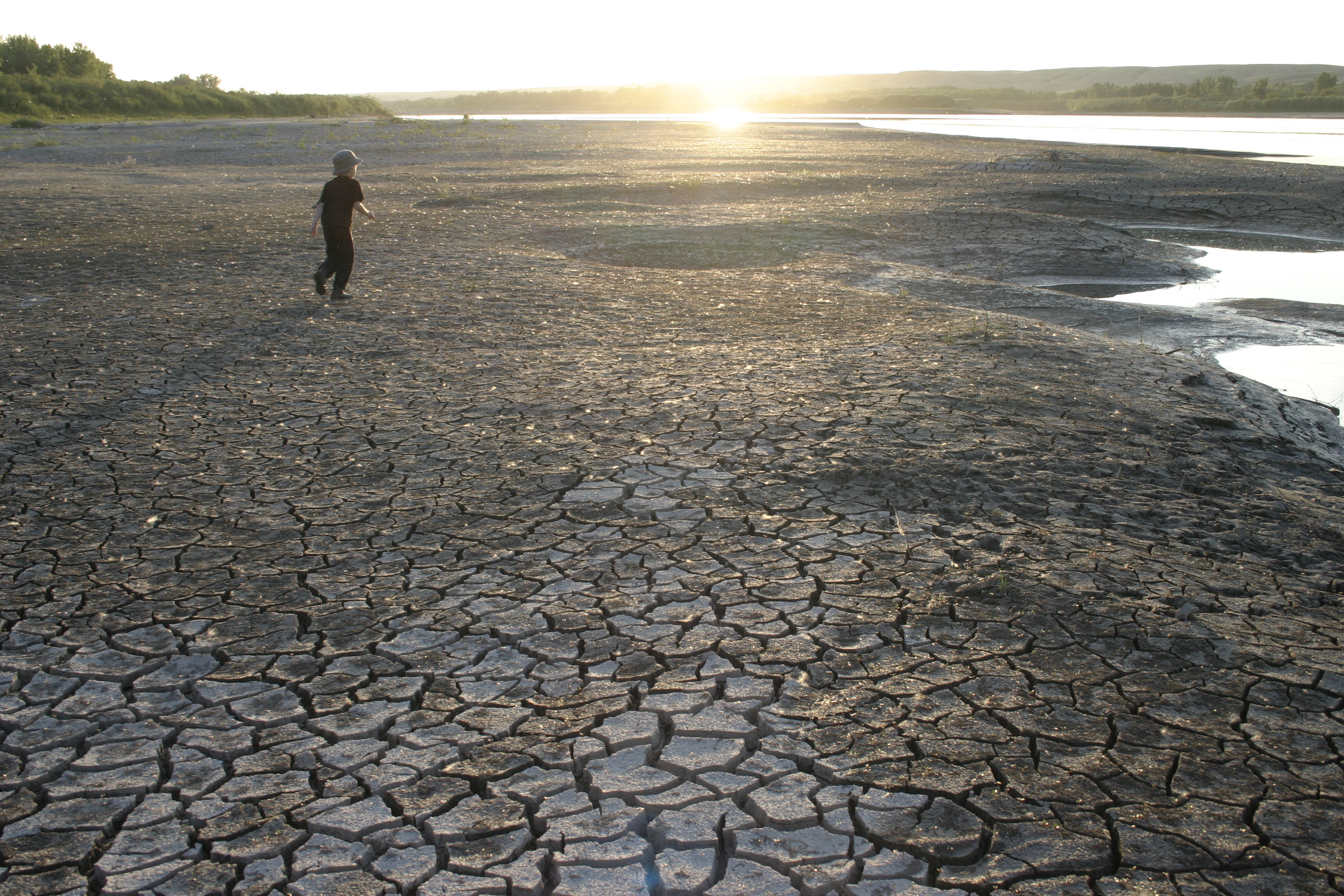
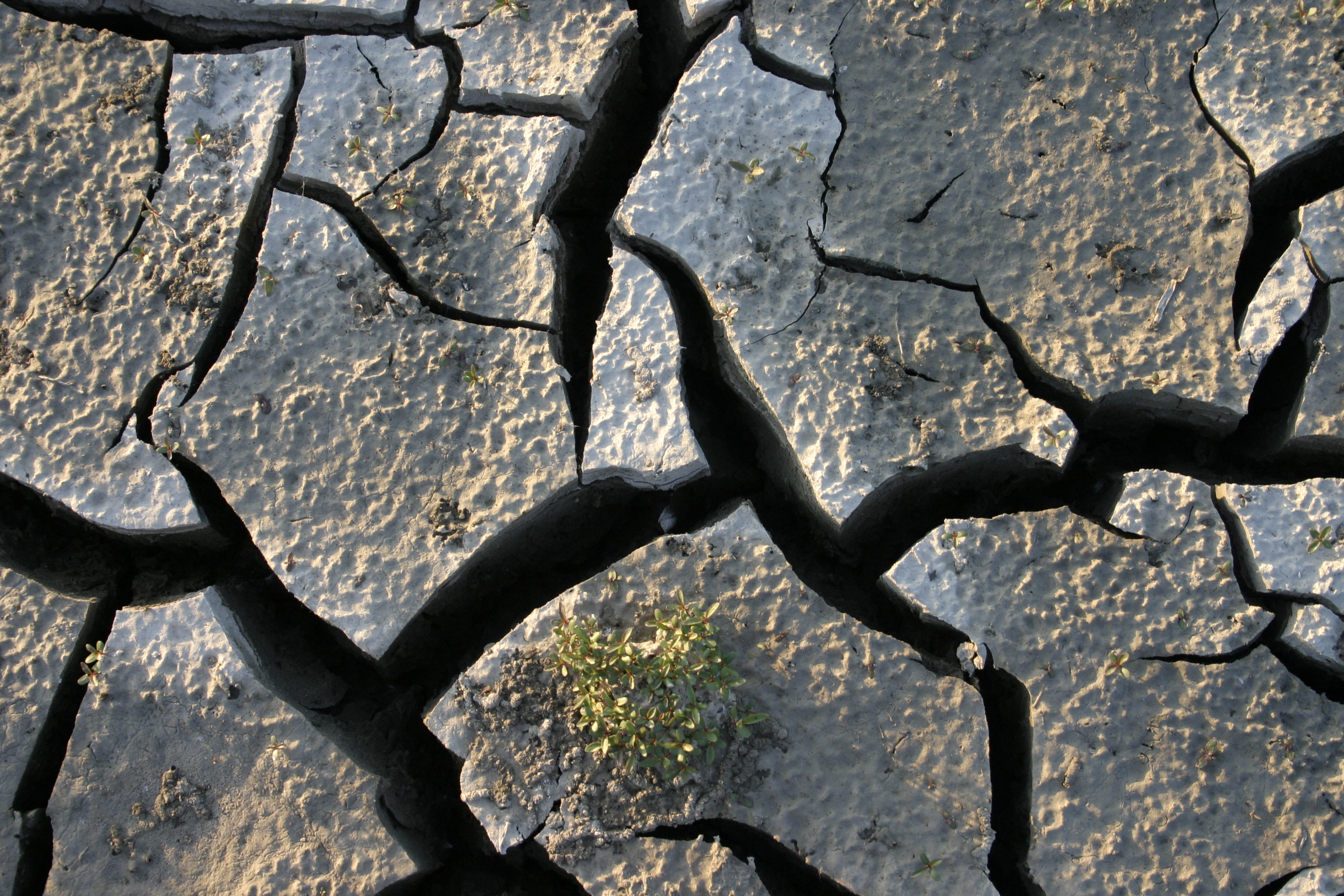
I’m tentatively calling this project “cracked” — this is to be the set of plate-like pieces that resemble river mud that’s dried to the point of cracking:

My plan is to create pieces of terracotta (unfired) that have formed into irregular shapes similar to what we see in these photos above. With each piece, I’d put them upside-down on the wheel and trip a foot, making it so that from that vantage point, they’d read as plates. I can imagine setting a table with several of these “plates,” arranging them as a puzzle, or stacking them.

I was happy to get 20 pounds of terracotta clay that had been left behind by previous students. This is clay that would likely have been reclaimed for use by future students, so I don’t consider it entirely “salvaged” or “recycled,” but I feel just slightly better than if I’d gone out and purchased some myself. If this becomes a project worth further development, I could see using actual riverbed mud… how wonderful would it be to return to the North Saskatchewan River, “borrow” a few of these naturally-made shapes of dried mud, and then throw (or attach) a foot to each of them? I could even return them to the riverbed once I was done with them. Hmmmm… For now, I’m testing out this idea with terracotta.

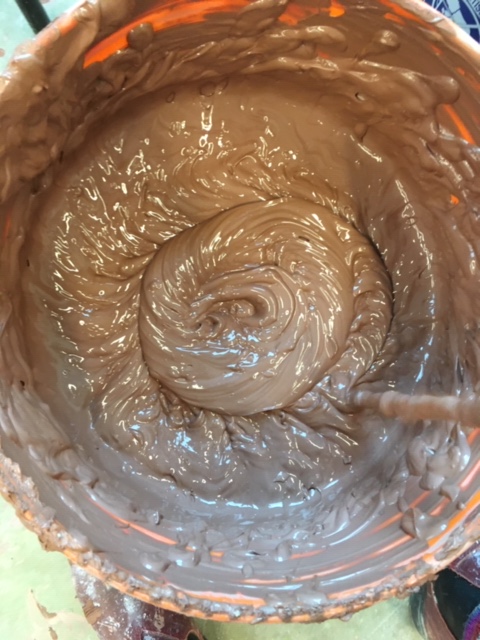
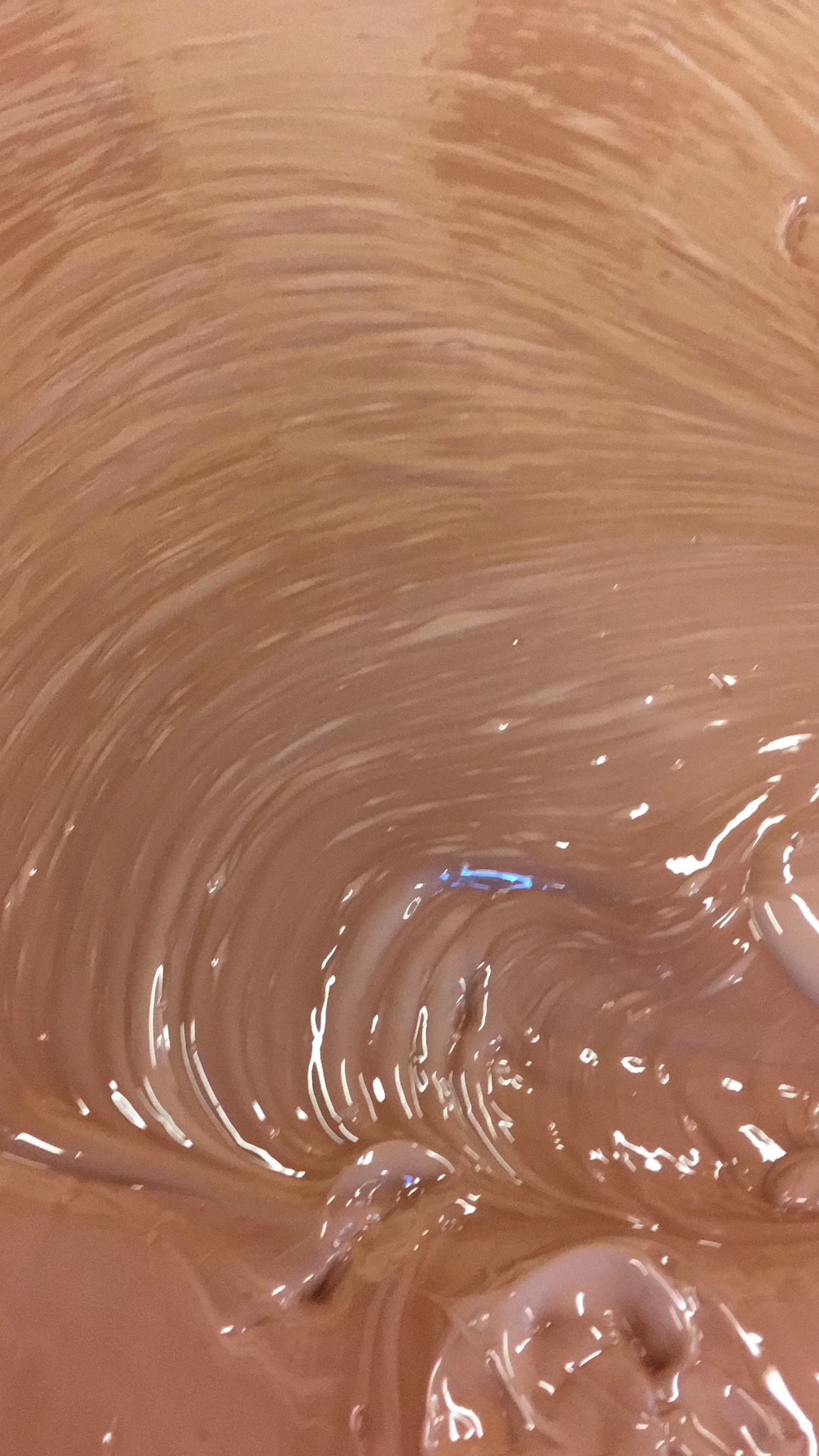
I dried and crushed the clay before soaking it in just enough water to cover it (“slaking it down”) to turn it into slip, a liquid form of clay.

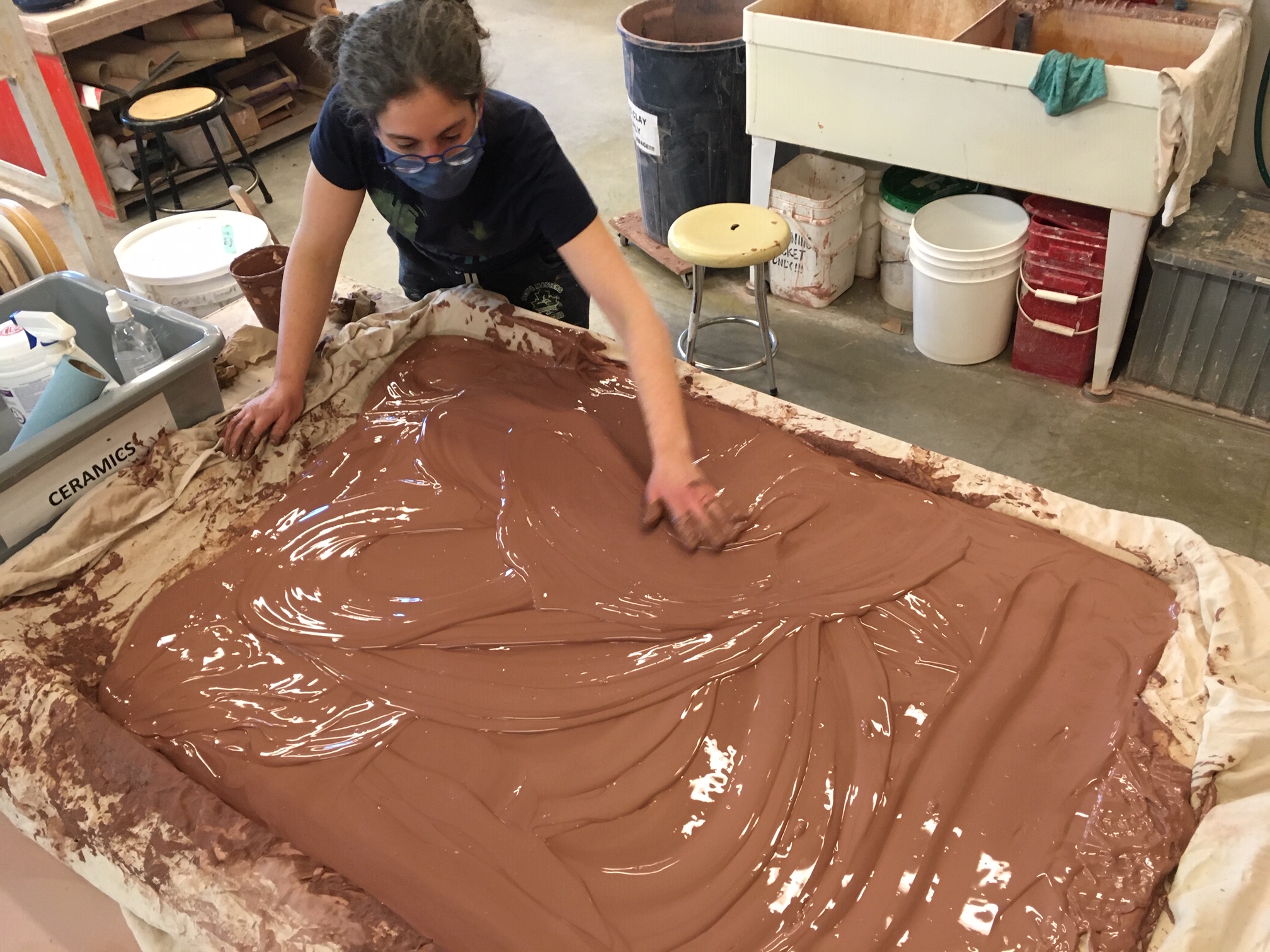
I prepared the plaster drying table in the classroom with “walls” to contain the slip, then covered it with a bed-sheet.

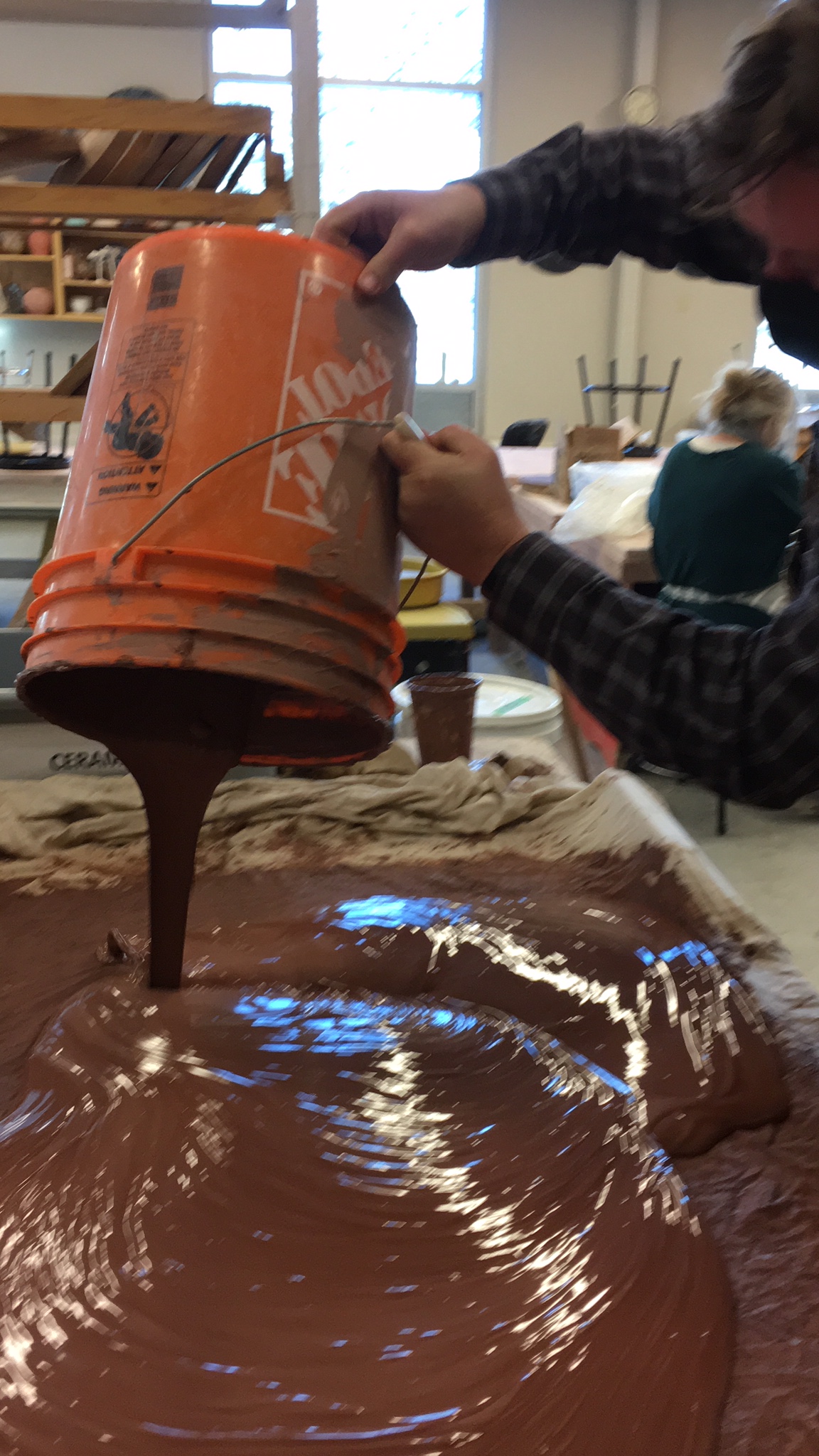
I thought it would be best for the slip to be as thick as possible so that there’d be less water to evaporate out of it before it dried. However, when the five gallon pail of it was dumped onto the table (thanks to Jesse Goddard for his help lifting it), I realized it was too thick. I wanted it to fill out the space I’d made for it evenly, but instead it just sat where it landed, a large… well… something between pudding and turd.

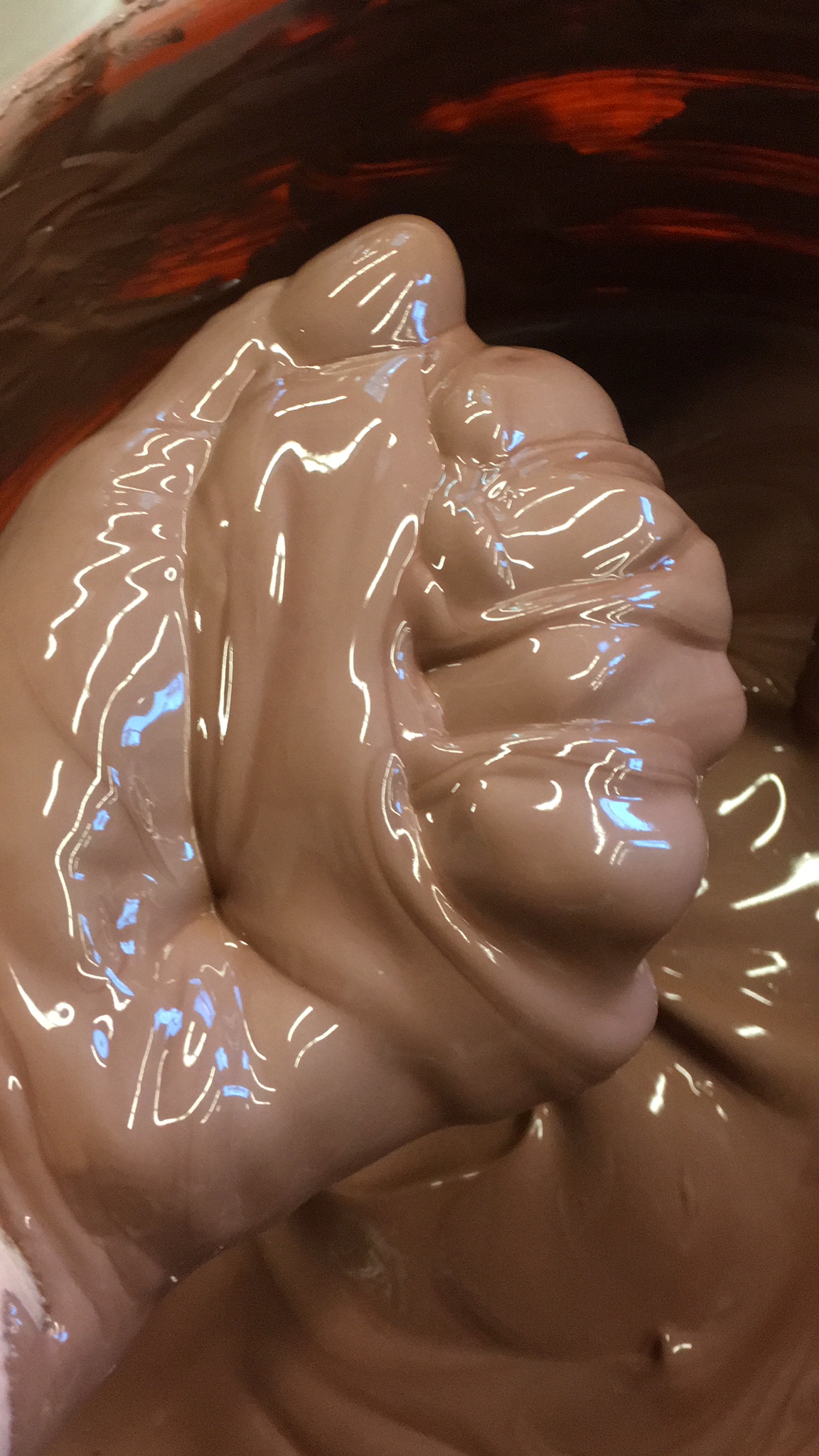
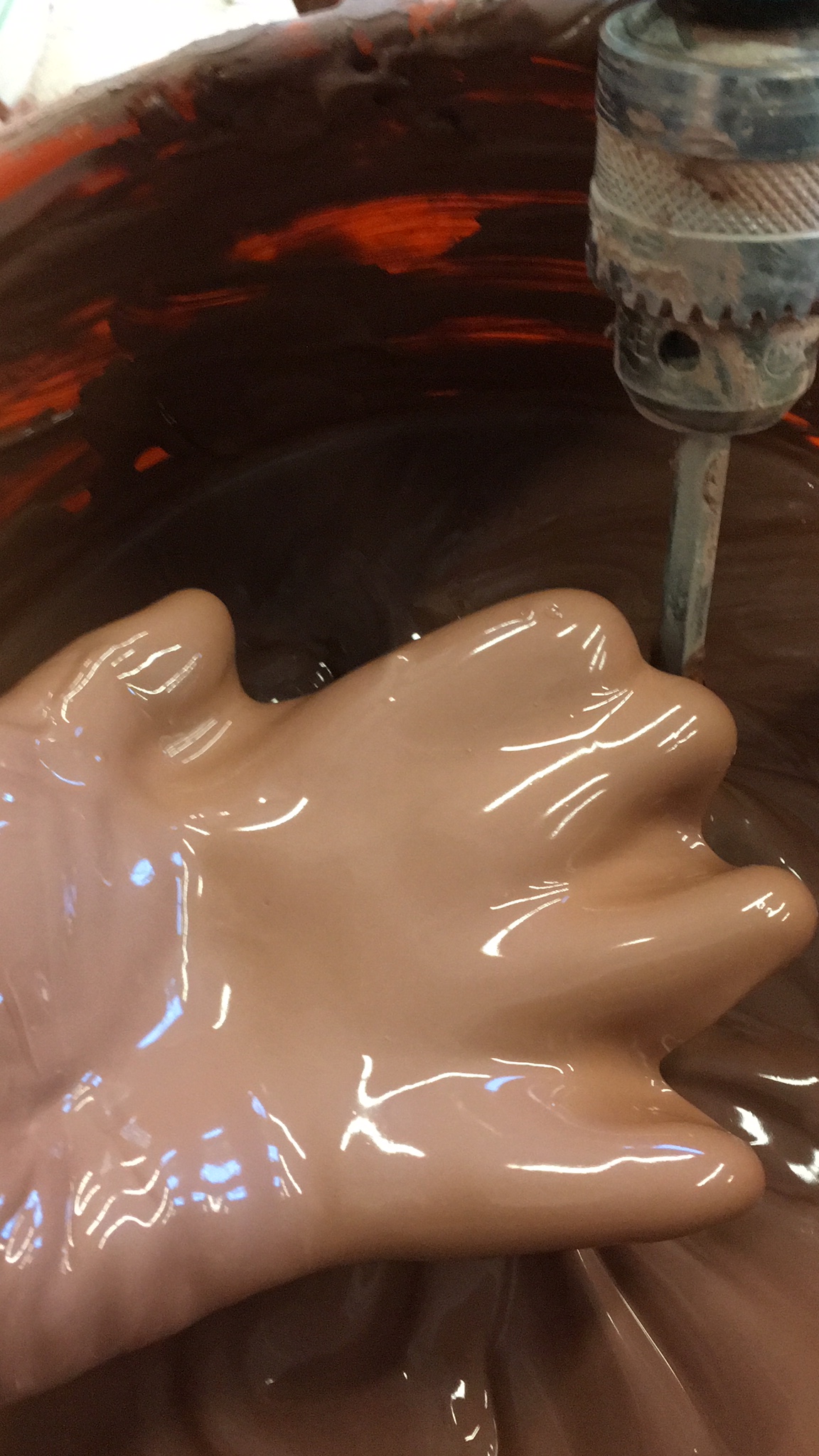
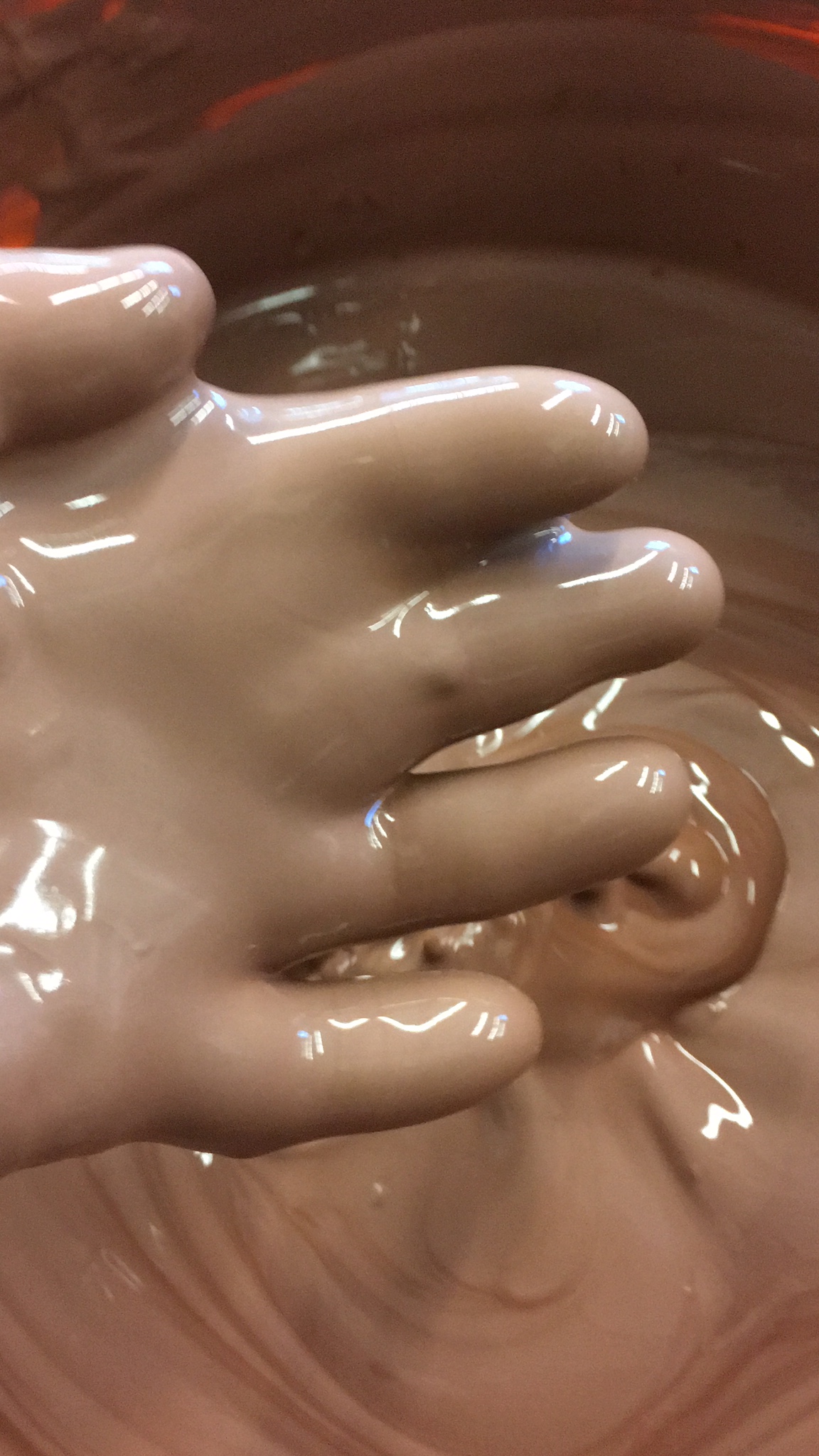
I added water, one yogurt-container-full at a time, and mixed, waiting for it to be a consistency that would run through my fingers (six containers total). In the middle picture below, the slip wasn’t quite there yet. In the picture on the right, it is.

I used water that I’d saved from the process of cleaning off the other tools I’d used (stir stick; drill with blender attachment) in the container I’d used for the slaking down of the clay (it needed cleaning too). These attempts at reducing the environmental footprint of my work are really just gestures at this point, but perhaps they’ll have some significance to my practice one day.

And yes, this was the most glorious tactile experience I’ve had in a long time. I realized two things: just how much I’ve missed working with clay; that while it’s not throwing on the wheel, which is my happy place (when far from mountain silt), I can actually achieve that same sensation of deep-body wellness, peacefulness, just from sinking my hand into a bucket of slip. I made noises.

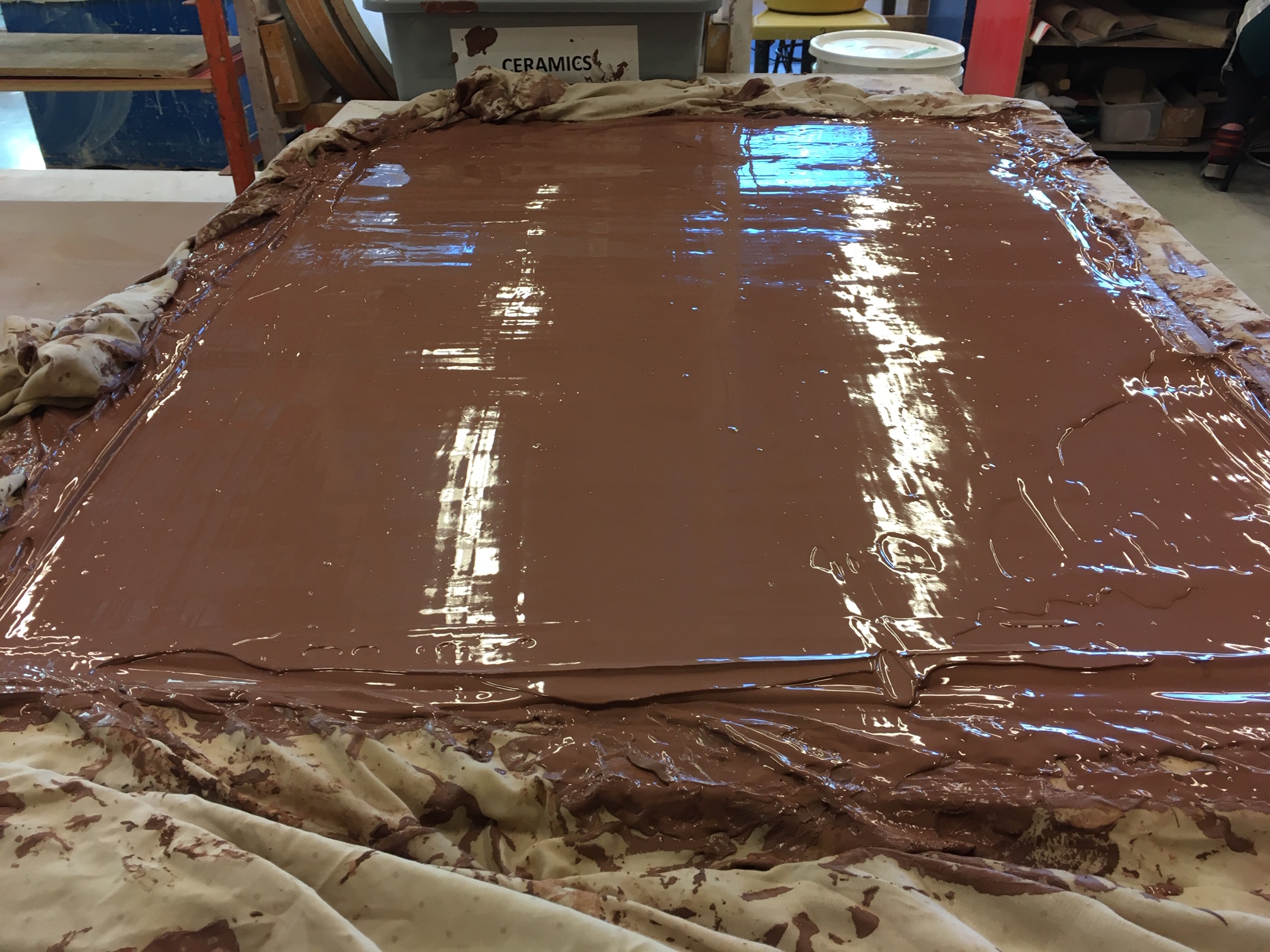
Second attempt at pouring the slip. It was still too thick to spread by itself, but it eventually worked out. A long piece of 1×3 wood helped smooth it over.

How I left it. I’m excited to see how it dries.

My prediction is that this will not produce the effect I’m after. Having a sheet under the slip (which I thought was necessary to keep it contained and to clean up the table afterwards) and using a plaster table will obviously cause the clay to dry differently from how mud dries on riverbed, but we’ll see. If this doesn’t work, I plan to dry it, smash it, slake it, mix it, and pour it again, perhaps on a 1″ bed of sand.

Experimenting is fun!

nihilism, with a dash of hope?

In our weekly meeting this past Monday, David got me thinking about my purpose in making art. This isn’t a question I’m new to, but I think our conversation has helped me move further along in my ongoing response to it.

These are my notes from / responses to what David had to say about the overall direction/trajectory I see my work taking.

1. I’m an atheist. I don’t believe there’s any greater being out there/any great purpose to anything happening down here.

2. I don’t subscribe to the “pro-Anthropocene” (a new term to me) movement; that is, I don’t believe that our technology, the very thing that got us into this situation we’re in, is going to be what gets us out of it. I think there’s a chance we can slow down this catastrophe, but I don’t believe we’re going to come up with one or one set of solutions that will just solve it. It’s not just that we’re not smart enough to build such technology, as nothing we create can be as intelligent as the systems we’ve messed up, but it’s that we’re not smart enough to be able to work together to implement any single solution at the scale necessary to deal with the problems we’re facing.

3. I’m not about to check out of society, as in, I’m not going to go live in an off-grid 100% self-sufficient domicile where I take advantage of zero of society’s technologies and live as close to a zero-footprint life as possible. I don’t see doing this as a solution, and in fact I see it as deeply problematic — leaving the world to its problems just because one has the interest—and privilege—to do so.

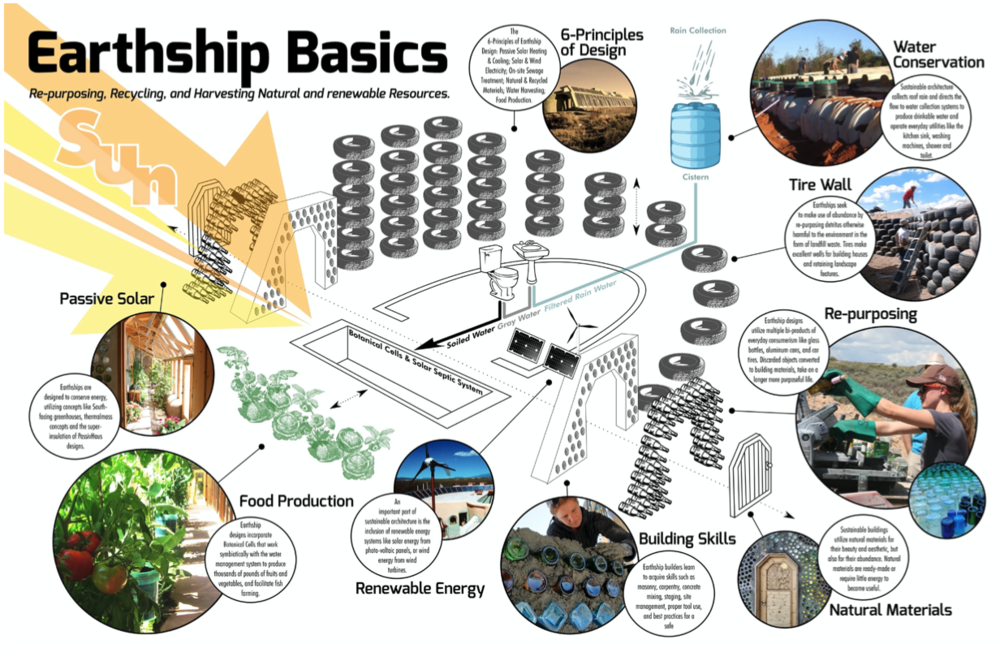
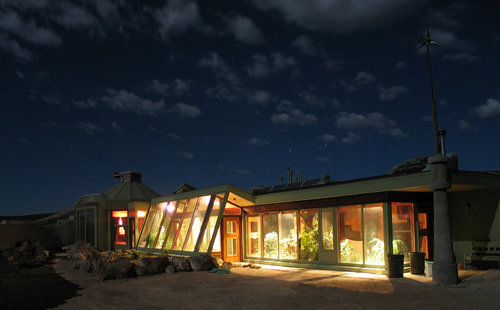
(Yes, the idea of an earthship is interesting and appeals to the fear that apocalypse brings me [this was especially bad a decade ago while I was watching The Walking Dead… I wanted to buy a gun, jerrycans, and beef-up my relationship with a farmer I knew so I could go live on his land], but no, I don’t plan on building one. I don’t have the money nor skill sets to do so.)

image source (both images)

I also don’t agree with or wish to further the “all or nothing” mentality regarding climate change. Yes, I do what I can. Yes, I’m very concerned — terrified — about what we’re doing to the planet. But yes, I heat my home. This doesn’t make me a hypocrite. And no, living in a cave is not a solution for any or all of us. Just as how Barbara Kingsolver points out in “Setting Free the Crabs” that saving one orchid from a doomed rain forest to bring to Canada and cherish is about as useful as leaving it there to die.

4. So, David asked me, if I don’t turn to a greater purpose (metaphysics) for guidance or meaning in all of this, I don’t see technology as our solution, and I’m not about to leave everyone and everything behind… what do I see as the “solution”? If I see none, he says, I’m a nihilist.

Fair enough.

The question then is, what do I believe, and, again, what do I believe is the purpose of my art?

Good questions.

I believe we’re most likely fucked. I have a shred of hope that the species will survive, but to be honest, apart from my son and step-children, and my nieces and nephew… hmm… well, it’s hard to care all that much for the future of our species. As a species, we suffer and inflict suffering of unimaginable proportions. (A question I’ve asked myself when studying the Holocaust is whether the suffering of many actually adds up to more than the suffering of one. Is there such a thing as collective suffering? My intuition is that there is not. This doesn’t at all undermine the horrors of an individual’s experience of pain [physical, emotional, whichever kind]. But I don’t put much weight in “the suffering of a nation,” for instance. Where is that actually felt? We each feel our own pain, nothing more and nothing less. There is empathy, but empathy is not pain. That’s my view, anyways.)

One big problem of course is that my son and step-children, and my nieces and nephew, all need there to be other people on this planet. From whom will my son buy his iPad, who will build the bloody thing, who will work to channel the electricity to run it, who build the couch on which he sits with it, who will heat the home in which he uses it… if we aren’t all here?

I’m being facetious of course.

Back to my art.

5. Do I have any hope? I guess I do. Just a tiny bit, but it’s there. Either that, or I simply cannot face collapsing in front of complete acknowledgment of the situation we’re in — aka, I’m allowing myself some healthy denial.

5. David, I believe, suggested that if I really do see the situation as “nihilistically” as this — impending extinction of the species — then I should consider how to align my art practice with this belief/philosophy. I believe he said it would be “brave” to toss aside any pretext of trying to change people. I believe he means that didactic art, as Risa pointed out to me early last term, is limited, or at least that it may not match what I really believe is true about the situation and what my work conveys. Asking people to take action (ie. change a light-bulb, lower their thermostat) is ridiculous if what I believe is that we’re facing extinction, and these pieces simply make that point and no other. This is an “if” I need to consider, though.

To me, the grief I feel at the thought of extinction is not limited to us, but to all of life. It’s the kingdoms: animalia; plantae; fungi; protista; eubacteria; archaebacteria.

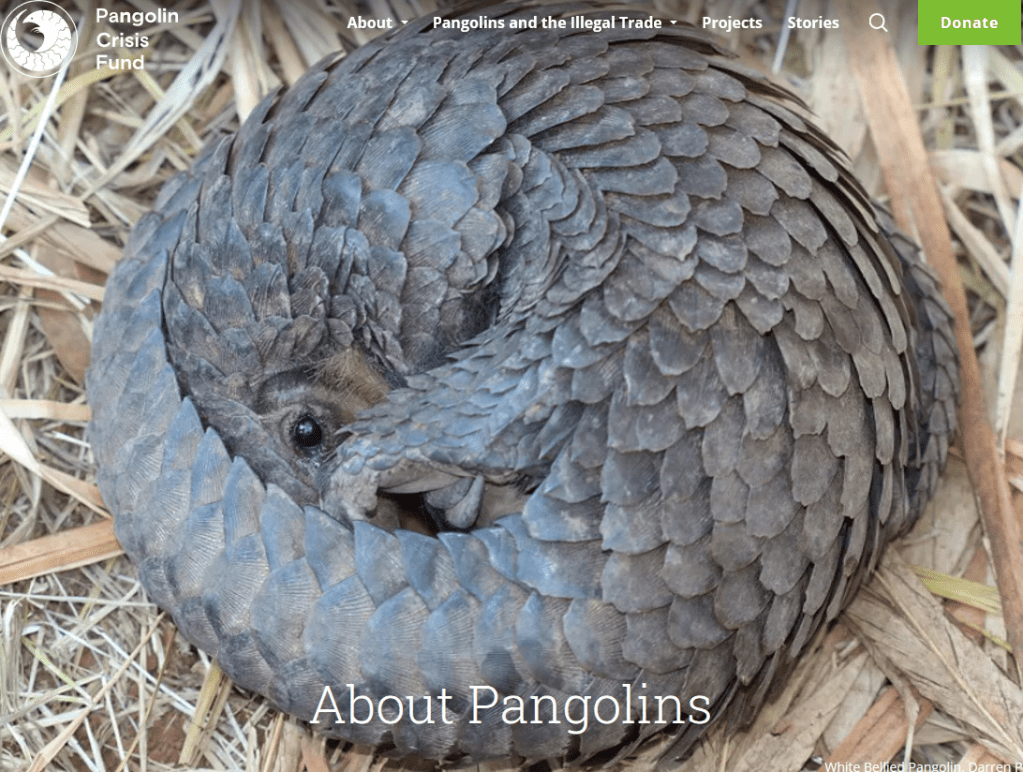
I don’t know where this love came from, but I feel a love for life on this planet. I understand that I am made up of the same elements as the mountains, the trees, and many other animals. I raised my son from when he was an infant on just about no tv other than our dvds of David Attenborough’s documentaries; together, we feel in love with Life on Earth, the film, and the real thing. How the hell did earth come up with creatures such as the dumbo octopus, living four kilometers below the ocean’s surface? The zombie worm? The bubbler crab? The pangolin? (I have a soft spot for pangolins).

image source

(When my son was five, he identified a picture of an opossum in his animal encyclopedia one night in bed. When asked how he knew what it was, as he couldn’t yet read, he said to me matter-of-factly, “Isn’t it obvious? From the opposable thumb and the prehensile tail!” My love for my son grew with his love of life on this planet, and to this day, as I become a more active environmental activist, he becomes more compassionate. I hope he won’t be totally screwed as a result, but hey, Philip Larkin said it best in “This Be the Verse”:

They fuck you up, your mum and dad.   
    They may not mean to, but they do.   
They fill you with the faults they had
    And add some extra, just for you.

But they were fucked up in their turn
    By fools in old-style hats and coats,   
Who half the time were soppy-stern
    And half at one another’s throats.

Man hands on misery to man.
    It deepens like a coastal shelf.
Get out as early as you can,
    And don’t have any kids yourself.

source

In my reading of this poem, from my family’s perspective, the fault is hope, and the “fools in old-style hats and coats” is all of us, but most especially those who arrived on this land (and too many lands), stole it, and brought us to where we are today.)

Whoa, what a digression. In short, I really really care for the life on this planet, and I can’t give up some tiny shred of hope that it’ll go on long after my immediate family is gone. I suppose, if the beauty of life is all I care about, I shouldn’t worry too much. Something will remain, even if it’s nothing like what it is today. New kingdoms, likely unnamed, will grow. We won’t be around to see them, but so what? I’m not alone in having this opinion, of course. This must be why Jill Ho-You‘s work with bacterial and mold speaks to me so well.

As for my work, I still haven’t answered David’s question. What is its purpose?

6. Can I be brave and only focus on what we stand to lose… not waste my time asking people to change?

A simple answer for now, but really a question: Does it matter what my intent is, anyways? I’m a modernist at heart. Whether or not my artist statement asks viewers to go to a website or participate in local politics, the work is what will catch people’s attention and hold a tiny space in their memory, not what I have to say on the side, the “supplemental” material as I believe David called it. Does it matter if this material is “didactic”? Really, does art itself matter, or is it all just play at this point, as my husband calls it? These are questions I still have to — will likely always have to — wrestle with, as long as I continue down this path.